As an Amazon Associate, we earn from qualifying purchases. Some links on this site are affiliate links at no extra cost to you. Our recommendations are based on thorough research and editorial judgment.

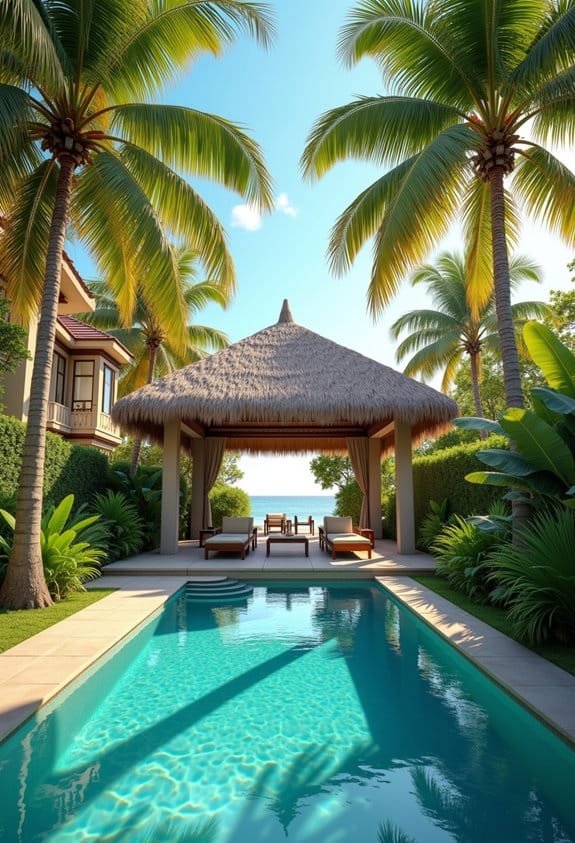
Creating a Natural Pool Cabana With Palm Coverage

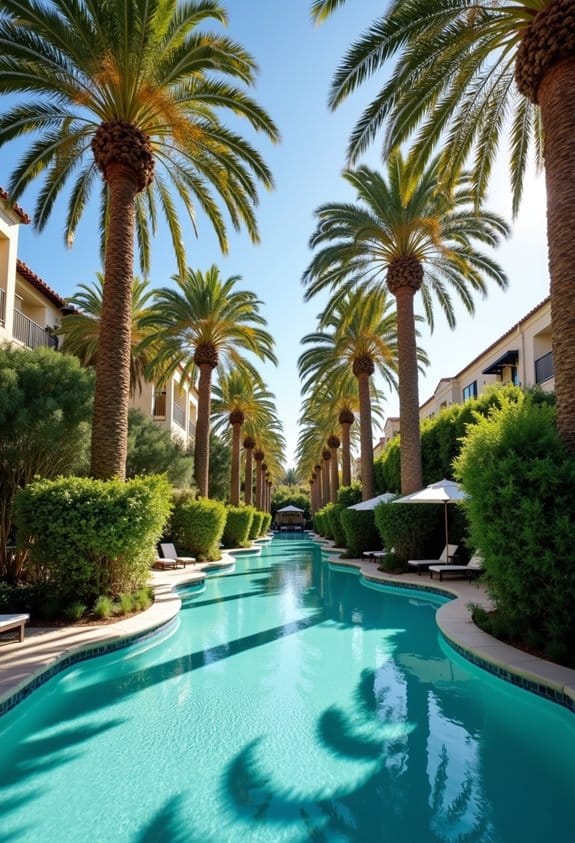
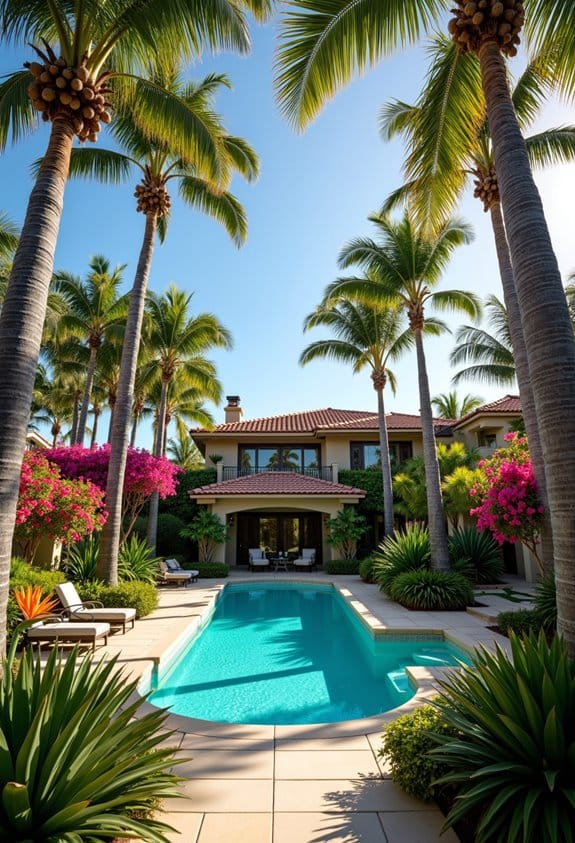
Creating a natural pool cabana with palm coverage involves selecting palms like Piru Queen or Canary Island Date Palms, which provide 30-60 feet height and ample shade up to 15 square meters. Clustering tall and medium palms grows privacy and tropical ambiance suited for zones 9-11. Layer palms with complementary plants such as hibiscus, adding seasonal color and lush foliage. Combined with water features and subtle lighting, this blend creates a serene, inviting poolside retreat. Further insights detail optimizing design and maintenance.
Key Takeaways
- Select a mix of tall and medium palms like Piru Queen and Canary Island Date Palms for layered shade and tropical ambiance around the cabana.
- Cluster palms strategically around seating areas and cabana perimeter to maximize shade and privacy while enhancing natural aesthetics.
- Integrate water features such as a natural waterfall or fountains near palms to boost sensory relaxation and visual appeal.
- Use warm, energy-efficient lighting like stake lights and string lights to highlight palm fronds and create a cozy evening atmosphere.
- Maintain palms with regular pruning, pest checks, and moderate watering to ensure healthy growth and lasting poolside beauty.
Benefits of Palm Trees for Poolside Relaxation
When designing an inviting poolside environment, incorporating palm trees such as the Piru Queen Palms™ enhances both comfort and aesthetics by providing ample shade coverage spanning up to 15 square meters. Palm trees create ideal lounging spots by reducing heat during warm weather, making afternoons more enjoyable. Their broad fronds contribute greatly to shade and establish a tropical vibe that elevates ambiance around the pool area. Clusters of palm trees improve privacy, establishing an intimate, cozy environment for poolside relaxation. These towering palms serve as natural focal points, adding substantial aesthetic appeal without overcrowding the space. Additionally, palm trees are low-maintenance with non-invasive roots, preventing damage to pool infrastructure and limiting debris in the water, thereby ensuring durable, attractive landscaping ideal for any outdoor gathering space. Using ceramic planters with drainage holes can also help maintain palm trees indoors near pool cabanas by promoting healthy root systems.
Selecting the Ideal Palms for Your Pool Cabana
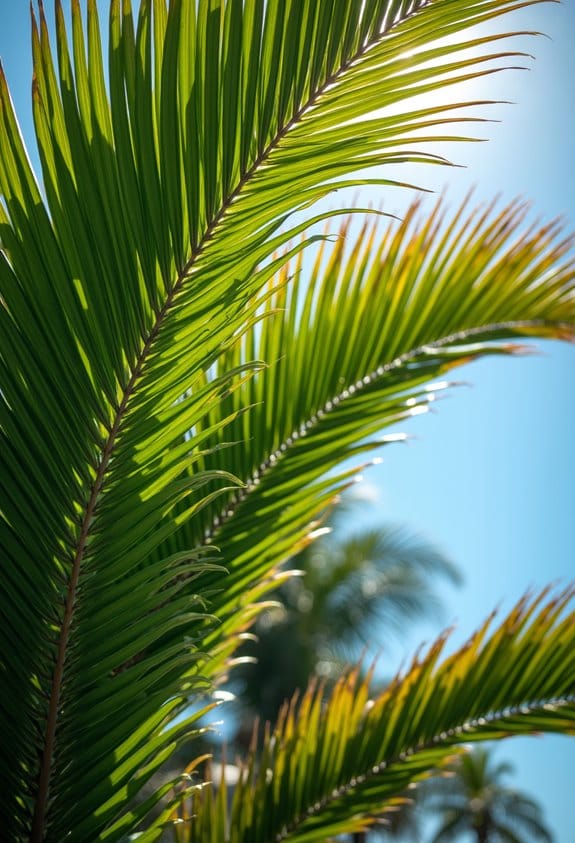
Selecting the ideal palms for a pool cabana builds upon the benefits provided by specific species around pool areas, emphasizing both shade and visual appeal. Resort-Style Date Palms offer majestic height up to 75 feet and provide dense shade, suitable for zones 9-11. Canary Island Date Palms, reaching 40-60 feet, combine broad crowns with effective palm coverage, enhancing cabana aesthetics. Piru Queen Palms thrive in zones 9-11, ideal for clustering to create a tropical ambiance with moderate height around 30 feet. The Pygmy Date Palm, a low maintenance option growing 6-12 feet tall, suits smaller spaces well. Mexican Blue Fan Palms add striking color with blue-green fronds, thriving between 20-30 feet in zones 9-11. Many available palm tree décor options are designed with UV resistance to ensure durability and vibrant appearance in outdoor settings.
Recommended Products

🌴This 10 feet majestic artificial phoenix palm tree features large, vivid palm fronds filled with countless arching feather-like leaves with realistic palm texture. It looks so natural and great! If you're aiming for a tropical paradise atmosphere, this is definitely the best choice. Your friends, partners, and relatives will be in awe as this extra tall palm tree awaits to dance in the warm tropical breezes

Instantly Lush & Lifelike Paradise: Enjoy the vibrant, full look of mature tropics year-round! Features a single realistic coconut trunks and abundant fronds with countless detailed leaves boasting authentic palm texture. Arrives ready to shape for a perfectly natural silhouette.

【UV Resistant】This artificial palm trees for outdoors indoor uses very detailed craftsmanship to make the plant looks lifelike. It has real bark, big leaves, full shape, realistic texture, natural connections. It will be a beautiful scenery in your home or office.
Designing Shade With Palm Tree Placement
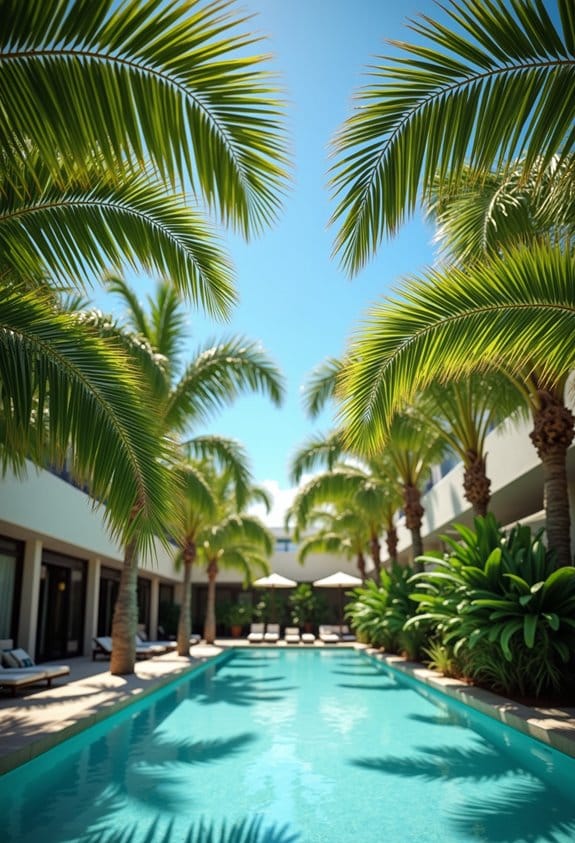
How can strategic palm tree placement enhance shade and comfort around a pool cabana? Positioning tall palm trees, such as Piru Queen Palms, around the cabana generates natural coverage with wide fronds, effectively cooling the outdoor space during temperatures above 85°F. Medium-sized palms fill gaps between taller ones, expanding shade throughout the day. Clustering palms tightly around seating areas creates an intimate atmosphere, promoting comfortable lounging without additional shade structures. Small palms placed along the perimeter increase visual interest while providing peripheral shade. This thoughtful arrangement balances height and density to optimize shade, sheltering roughly 150 square feet around the cabana. Proper palm tree placement guarantees continuous, dynamic shade as the sun shifts, improving usability of the cabana for relaxation. Overall, strategic palm clustering enhances natural shade and aesthetic appeal seamlessly. For added tropical ambiance and quick decorative setup, consider incorporating inflatable palm tree accents around the cabana.
Recommended Products

FLAME TROPICAL WATER SLIDE: Bright orange-and-red inflatable with palm accents. Turns any backyard into a fiery centerpiece for birthdays, summer parties, or family gatherings. Hours of outdoor fun for kids and adults.

TROPICAL PALM TREE BACKYARD OASIS:Bring the vacation vibes straight to your lawn! Featuring a fun, vibrant tropical palm tree design, this giant 21ft single-lane inflatable water slide instantly transforms any yard into an elite island holiday resort. Perfect for summer beach-themed birthday parties, family BBQs, and sunny neighborhood gatherings—making your home the ultimate splash entertainment zone.

Majestic Size & Design: Standing at 8 feet tall with triple trunks, this large artificial palm tree features 30 long, lifelike palm fronds. Its sturdy trunks are perfect for hanging LED lights or decorative pendants (not included), adding a warm, inviting glow to any space.
Layering Palm Trees for Visual Depth and Privacy
Although palm trees offer shade and tropical charm individually, layering them by height—from tall specimens reaching 40 to 60 feet, such as Piru Queen Palms, to medium varieties around 15 to 25 feet—creates pronounced visual depth and enhanced privacy near a natural pool cabana. Layering palm trees strategically establishes focal points with taller palms anchoring the design, while medium and smaller palms fill spaces for a balanced look. Clustering palms together not only adds lush greenery and variety but also forms natural barriers promoting privacy and shade. This approach fosters an immersive tropical experience, blending layered palms to enhance the tropical vibe. The combination of layered palms crafts a relaxing environment, resulting in visually rich surroundings that elevate the cabana’s appeal without sacrificing openness or light. For an easy and maintenance-free option, consider integrating artificial lady palms with UV-resistant materials for year-round vibrant greenery and durability.
Combining Palms With Complementary Tropical Plants
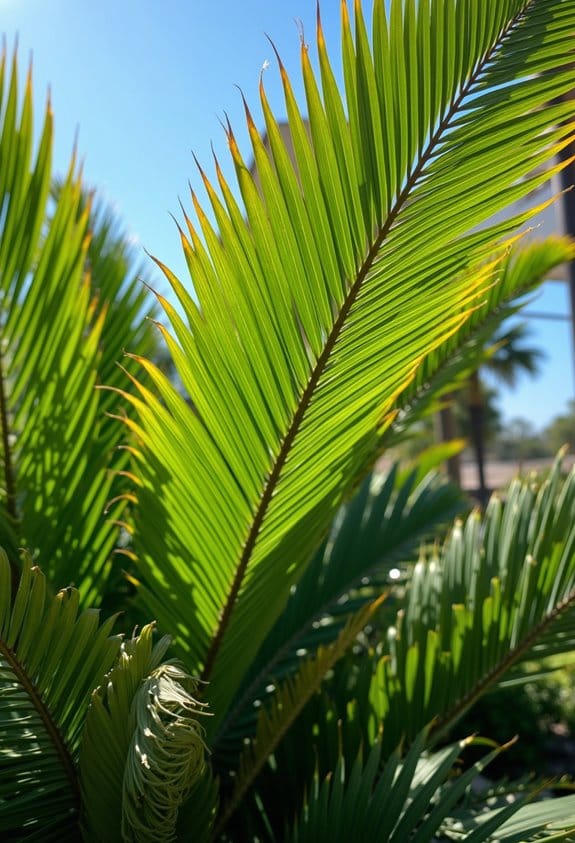
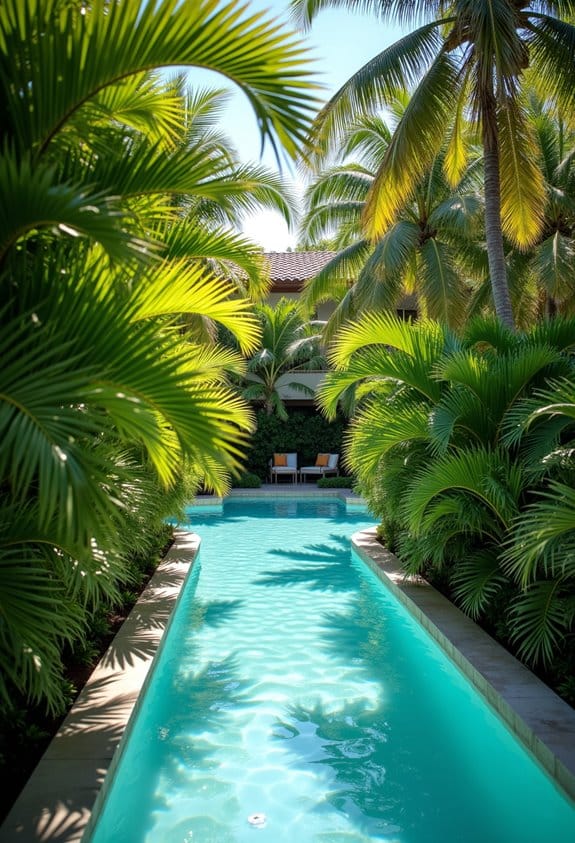
A well-designed tropical landscape integrates palms with complementary plants like hibiscus and bird of paradise to enhance color, texture, and depth near the natural pool cabana. Layering medium-sized palm trees, such as Pygmy Date Palms reaching 6-10 feet, with broad-leaf tropical plants like elephant ears creates lush foliage and visual interest. Incorporating vibrant colors from seasonal blooms improves the outdoor space’s liveliness, particularly around the pool area. Ground cover plants like liriope soften edges near palm bases, retain soil moisture, and reduce maintenance demands. Selecting tropical plants that thrive in 70-90°F temperatures and USDA zones 9-11 guarantees health and sustainability. This strategic layering and plant combination fosters a harmonious, natural setting that enhances both aesthetics and function while accommodating the climate conditions essential for robust growth. Enhancing the space with UV-resistant artificial palm trees can maintain vibrant foliage appearance year-round with minimal upkeep.
Materials and Styles for Natural Pool Cabanas
When selecting materials for natural pool cabanas, sustainable options like bamboo and reclaimed wood stand out due to their eco-friendly nature and natural durability in USDA zones 9-11. These materials withstand humidity and temperatures ranging from 20 to 45°C, ensuring longevity in tropical landscapes. Thatch roofing, popular in these regions, provides effective weather resistance and ventilation, enhancing both comfort and visual appeal. Styles span from traditional Hawaiian huts to sleek modern designs, offering diverse integration options within natural surroundings. Incorporating climbing plants and tropical foliage around the cabana further blends the structure seamlessly into the environment, boosting aesthetic charm. The combination of eco-friendly materials, thatch roofing, and thoughtful plant integration creates natural pool cabanas ideal for relaxing and lounging amid tropical scenery. Adding outdoor features like weather-resistant designs can further enhance the durability and functionality of these natural structures.
Creating Comfortable Seating Areas Amid Palm Coverage
Seating areas nestled beneath palm coverage benefit from careful placement to optimize shade and comfort in USDA zones 9-11, where midday temperatures often reach 35°C or higher. Positioning comfortable seating areas under larger palms creates a natural, shaded spot essential for respite from intense sunlight. Incorporating lounge chairs paired with wide, canopy-style umbrellas enhances versatility and relaxation throughout the day. Choosing weather-resistant materials for furniture guarantees durability in humid conditions typical of tropical environments. Adding outdoor cushions with vibrant aesthetic patterns inspired by tropical plants increases comfort while visually linking seating zones with surrounding foliage. Surrounding these areas with lower-growing tropical plants fosters an intimate atmosphere, softly enclosing the space without obstructing airflow. This combination of strategic placement and material selection results in inviting, enduring seating arrangements that harmonize seamlessly with palm coverage. For optimal comfort and durability, incorporating weather-resistant cushions with at least two inches of high-density foam is recommended.
Enhancing Ambiance With Lighting Around Palm Trees
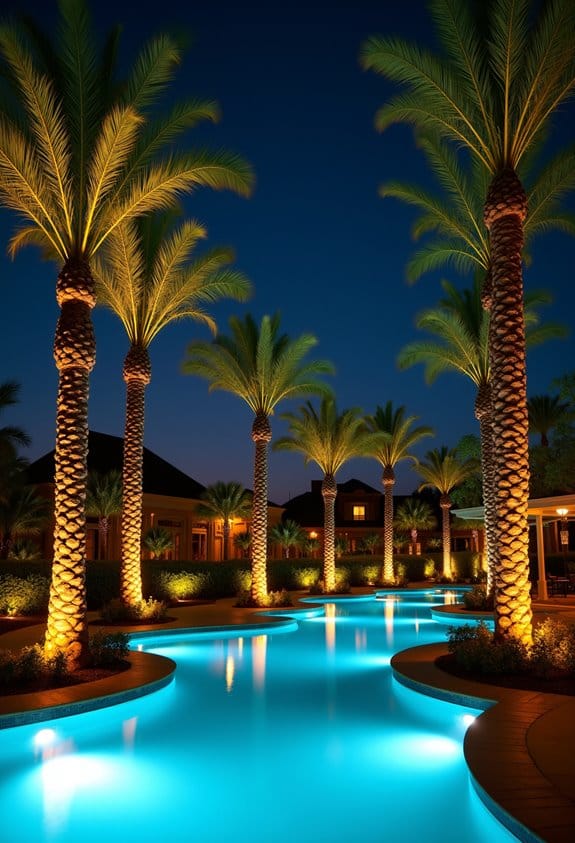
Although natural daylight fades rapidly in USDA zones 9-11, carefully designed lighting around palm trees can dramatically elevate the evening ambiance of a pool cabana area. Strategically placed soft lights, such as warm white stake lights or uplights, illuminate palm trees to reveal their textured trunks and broad fronds, creating enchanting tropical visual effects. String lights draped through fronds offer a whimsical glow, ideal for evening gatherings under gentle illumination. Spotlights directed at larger palms emphasize their scale and help define pathways within the landscape design. Solar-powered or low-voltage lighting solutions provide energy-efficient options that reduce electricity consumption while enhancing safety and aesthetic appeal around palms. These lighting choices combine function with style, reinforcing a natural, inviting atmosphere ideal for both relaxation and social events along the poolside. Using solar-powered palm tree lights with timers and dimmable settings can further increase convenience and energy savings in your outdoor lighting setup.
Maintaining Palm Trees to Keep Your Pool Area Pristine
Maintaining palm trees in USDA zones 9-11 requires regular care to preserve both health and the polished aesthetic of a poolside environment. To maintain an immaculate pool area, inspect palms frequently for pests and diseases, addressing any issues promptly to avoid damage. Prune dead or low-hanging fronds to reduce debris and keep foliage tidy, enhancing the visual appeal. Employ appropriate watering techniques: consistent, moderate moisture levels prevent root rot and stress, supporting steady growth. Rinse palm leaves with water periodically to remove dust and contaminants, promoting a clean atmosphere around your pool. Finally, apply a slow-release palm fertilizer during active growth phases to strengthen roots and maintain vibrant, lush foliage. Using concrete palm tree planters with proper drainage can also help optimize water management and support healthy root development.
Integrating Water Features to Complement Palm Coverage
A natural waterfall measuring three to five feet in height can greatly enhance a pool cabana by providing gentle, consistent water sounds that relax the surrounding area shaded by palms. Integrating water features such as ponds or streams near palm coverage increases visual interest while attracting local wildlife, enriching biodiversity. Strategic placement of fountains adjacent to palm groves maximizes the cooling effect beneath natural shade, improving comfort. Using natural stones around these water features aligns with the tropical theme, creating natural seating and blending elements seamlessly. Adding carefully positioned lighting highlights waterfalls and fountains at night, producing a magical ambiance that complements the cabana’s palm coverage. This thoughtful combination of water features and palms fosters a serene atmosphere, balancing auditory and visual elements effectively. For optimal durability and vibrant aesthetics, incorporating UV-resistant palm trees around water features ensures year-round visual appeal and low maintenance.
Frequently Asked Questions
How Do Palm Trees Affect Local Wildlife Near My Pool Cabana?
Palm trees near a pool cabana create valuable wildlife habitat by attracting birds, small mammals, and pollinators, offering nesting areas and natural pest control. They support biodiversity benefits but may cause habitat competition, impacting ecosystem balance and insect populations.
Can Palm Roots Damage Pool Structures or Plumbing?
Palm root behavior can pose property damage risks by affecting structural integrity and plumbing near pools. Effective tree root management, barrier installation methods, excavation precautions, flexible plumbing systems, and landscaping solutions are essential pool maintenance tips after growth patterns analysis.
What Is the Average Lifespan of Palms Around a Pool Cabana?
Beneath swaying fronds near a pool cabana, the average palm lifespan ranges 30-70 years, influenced by palm tree care, climate impact analysis, pruning, diseases, and seasonal growth, all shaping pool cabana aesthetics and aligning with landscaping trends.
Are There Any Pests Unique to Palms That Could Impact My Pool Area?
Palm pests such as aphid infestations, spider mites, scale insects, weevil attacks, thrips damage, leaf spot, coconut beetles, and palm caterpillars can impact the pool area. Effective pest management is essential to protect palms and maintain aesthetics.
How Do Seasonal Weather Changes Affect Palm Tree Health Near Pools?
Studies show 70% of palm damage arises from seasonal temperature effects. Winter cold sensitivity and summer heat stress impact health, while humidity impact factors, drought adaptations strategies, rain exposure challenges, and soil nutrient requirements dictate maintenance timing considerations and disease resistance patterns.