As an Amazon Associate, we earn from qualifying purchases. Some links on this site are affiliate links at no extra cost to you. Our recommendations are based on thorough research and editorial judgment.

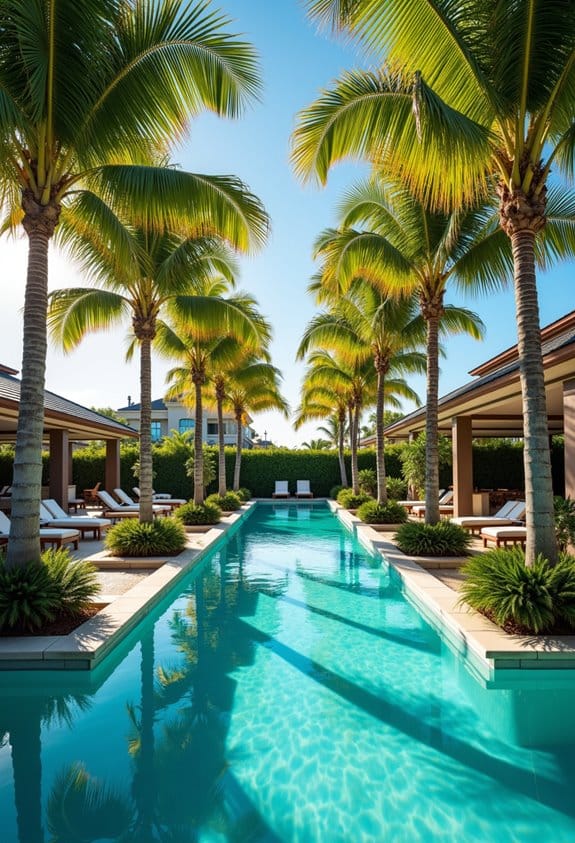
Preventing Pool Damage From Palm Tree Roots

Preventing pool damage from palm tree roots involves selecting shallow-rooted species like Queen or Pygmy Date palms, planting at least 8 to 12 feet from pool edges, and using 3×3 or 5×5-foot planter boxes with proper drainage. Installing vertical root barriers 24 to 36 inches deep redirects roots downward, protecting pool walls and plumbing. Regular professional inspections detect early damage, while prompt repairs maintain structural integrity. Exploring these methods further reveals essential maintenance and safety strategies for poolside palm care.
Key Takeaways
- Plant non-invasive, shallow-rooted palm species like Queen or Pygmy Date palms to minimize root interference near pools.
- Maintain a minimum distance of 8 to 12 feet between palm trees and pool edges to protect pool structures.
- Use appropriately sized planter boxes with waterproofing and drainage to contain palm roots near pools effectively.
- Install deep root barriers (24–36 inches) to redirect roots downward and prevent lateral growth under pool decking.
- Regularly inspect pools for root damage and perform timely repairs to prevent costly structural issues.
Understanding Palm Tree Root Systems
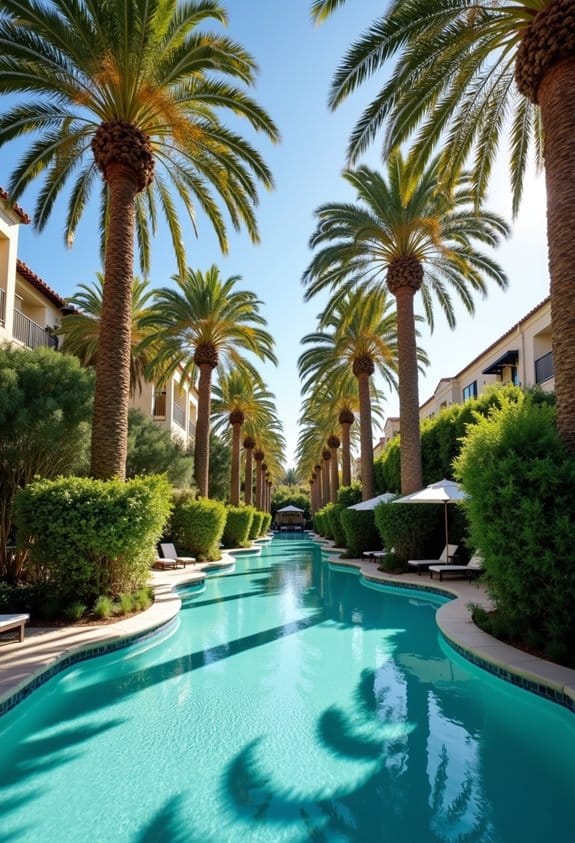
Although palm tree roots are often misunderstood as aggressive, their root systems typically grow horizontally and remain within the top 12 to 36 inches of soil. Palm roots form a fibrous network that spreads broadly but stays shallow, reducing the risk of damaging nearby structures like pools. These roots rarely exert enough pressure to crack concrete or fiberglass surfaces, making palms generally safe for landscaping around swimming pools. Fine palm roots can extend near or slightly beyond the canopy’s edge, yet they seldom interfere with underground pipes or foundations. Significantly, the Royal palm is an exception, with more vigorous roots requiring placement at least 10 to 12 feet from pool edges to avoid problems. Regular monitoring and maintenance are essential to catch potential root-related issues early. For added safety and ambiance around pool areas, installing waterproof palm tree string lights can enhance outdoor spaces without risk of interference from roots.
Identifying Suitable Palm Species for Pool Areas
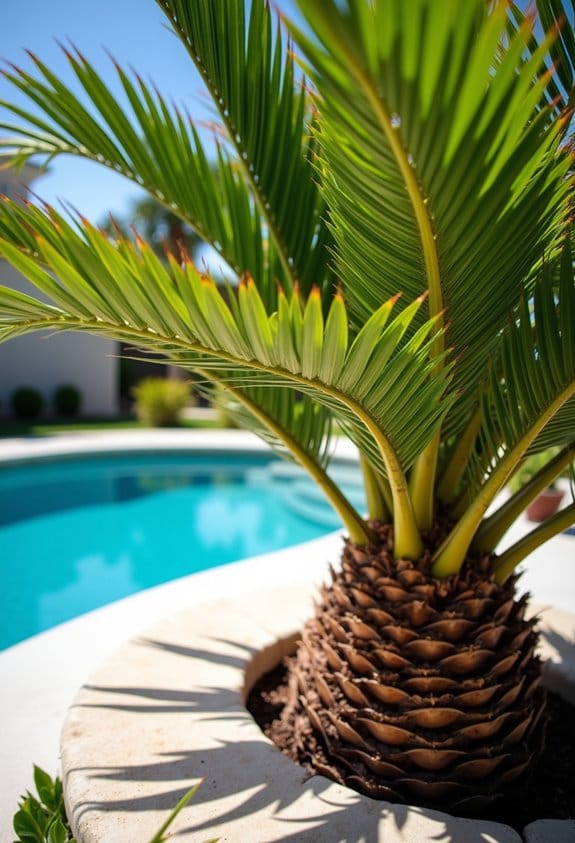
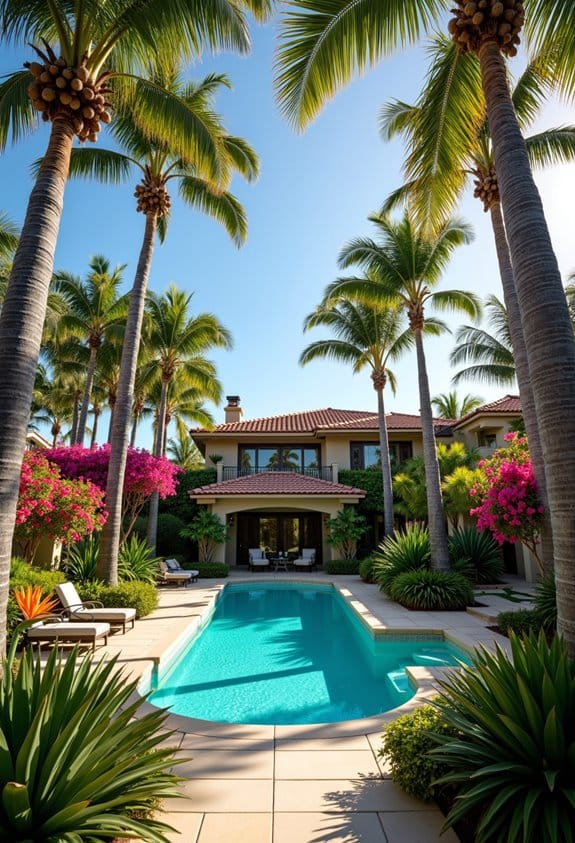
When selecting palm species for poolside planting, it is crucial to choose those with non-invasive root systems that pose minimal risk to pool structures and plumbing. Palms near pools, such as Queen, Pygmy Date, and Mediterranean Fan palms, feature shallow, fibrous root growth typically confined within the top 12 to 36 inches of soil, reducing potential damage. These species offer aesthetic appeal and require less maintenance, producing fewer falling fronds or seeds. Conversely, Royal palms exhibit aggressive root growth and should be grown in large planter boxes measuring at least 5 by 5 feet if placed near pools. This careful selection guarantees root systems remain manageable, preserving pool integrity while enhancing the surrounding landscape’s visual charm, optimizing both safety and design. Additionally, choosing palm trees with weather-resistant materials can further ensure durability and low maintenance in poolside environments.
Recommended Products

This 10 feet majestic triple tropical palm faux tree has 31 large vivid palm fronds filled with countless arching feather-like leaves with realistic palm texture, three thick dragon-scaled trunks are awe-inspiring, it looks so lush and great, it will create a tropical paradise atmosphere for you and those around you, now this extra tall triple palm tree is waiting to dance in the warm tropical breezes

Instantly Lush & Lifelike Paradise: Enjoy the vibrant, full look of mature tropics year-round! Features a single realistic coconut trunks and abundant fronds with countless detailed leaves boasting authentic palm texture. Arrives ready to shape for a perfectly natural silhouette.

HOME DECOR ACCENT: Capture those feel good summer vibes with our faux Areca palm tree, the perfect piece for those who want the tropical feels without the hassle. Each branch is designed to be shaped, allowing for a personalized touch that makes your tree truly unique. This palm tree has been meticulously crafted through a special process to withstand the elements, making it suitable for both outdoor patios and indoor space
Recommended Distances Between Palms and Pools
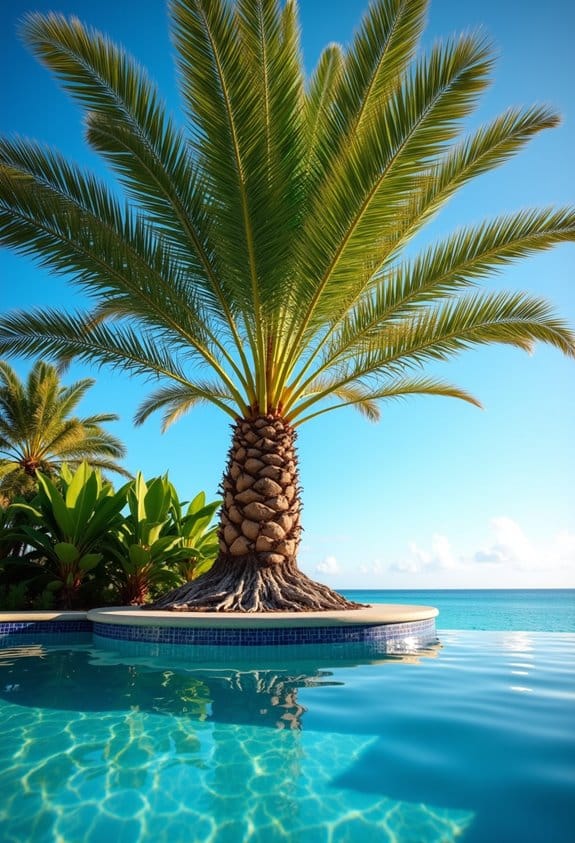
Because palm root systems often extend as far as their canopy spread, maintaining proper distances between palms and pools is crucial to avoid damage. Royal palms, with their robust root networks and large fronds, should be planted at least 10 to 12 feet away from the pool edge to prevent root intrusion and debris accumulation. In general, a minimum distance of 8 feet is recommended for most palm trees to protect pool structures from potential root encroachment. Shallow-rooted varieties like pygmy date palms may be positioned closer, though careful monitoring is necessary to avoid root hazards. Additionally, consideration of mature crown spread guarantees roots do not extend beneath pool decking. Placing palm trees well away from the pool promotes long-term structural integrity and minimizes maintenance challenges related to both roots and falling debris. Using artificial palm trees with adjustable branches can be a great alternative to avoid such root-related pool damage while still achieving a tropical aesthetic.
Recommended Products
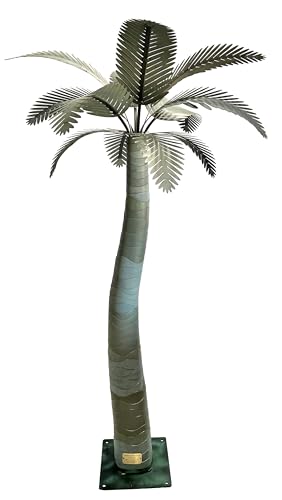
TRUE HANDCRAFTED METAL ART Every Designer Palm is individually shaped by hand—no mass production. Each tree is one-of-a-kind, making it a true statement piece, not just décor.

Solid Brass Construction: The strong and sturdy brass landscape lighting is well constructed and built to last. They hold up well, won’t rust easily, and save on repair. The brass landscape lights provides high end landscaping that complements your home's style

𝐇𝐞𝐚𝐯𝐲-𝐃𝐮𝐭𝐲 𝐒𝐨𝐥𝐢𝐝 𝐁𝐫𝐚𝐬𝐬: Gardenreet wired landscape lighting won’t rust—even in salty, humid air like CA or FL. Lasts over 10 times longer than aluminum. A top pick among outdoor décor influencers. Give your yard a designer’s touch. Fixture and bulb covered for life
Using Planter Boxes to Protect Pool Structures
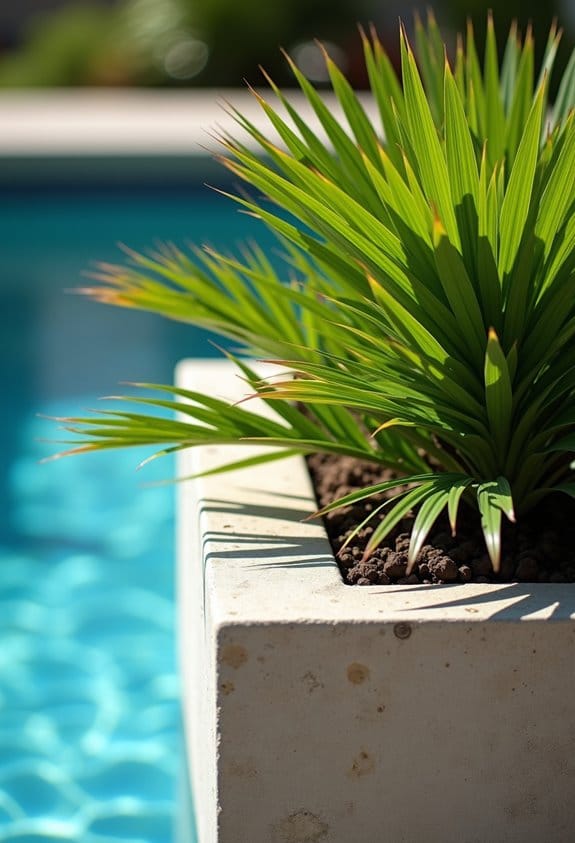
Proper planter boxes offer an effective method to prevent palm tree roots from damaging pool structures while accommodating ideal growth conditions. Planter boxes should measure at least 3 x 3 feet for smaller palms like Wodyetia and 5 x 5 feet for larger species such as Royal palms to give roots grow space without intrusion. The planter walls adjacent to pools require thorough waterproofing to avoid water damage and maintain palm health. Installing efficient drainage within planter boxes prevents water accumulation, particularly in elevated pool areas, ensuring roots remain healthy. Shaved root balls allow for fitting palms into tighter poolside sites while supporting stable growth. Maintaining planter box integrity is essential; any structural failure allows roots grow beyond the intended boundary, risking damage to pool structures despite prior precautions. Using planter materials that offer weather-resistant durability can further enhance the longevity and effectiveness of these protective structures.
Installing Root Barriers Near Swimming Pools
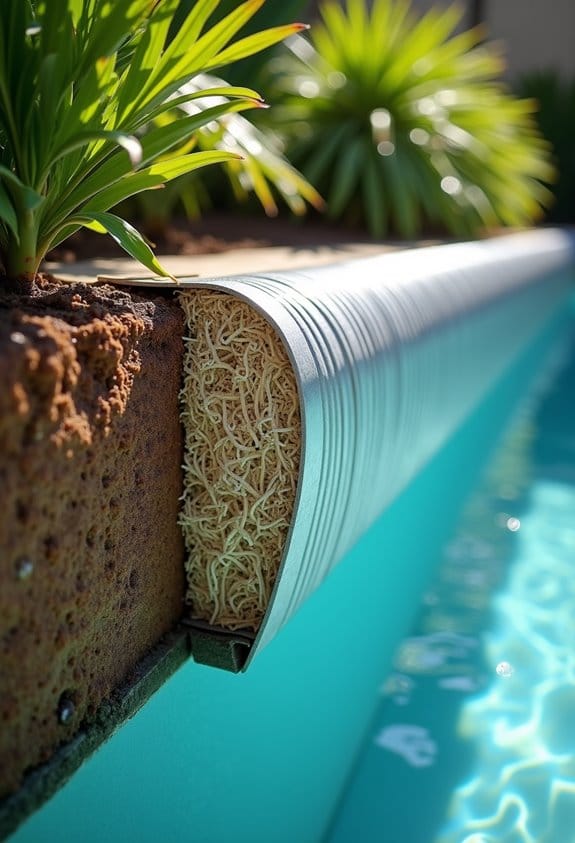
Installing root barriers around swimming pools effectively contains palm tree roots, preventing them from spreading beneath pool decks and damaging concrete or plumbing. These barriers should be installed vertically, buried 24 to 36 inches deep, to block aggressive root systems like those of Royal palms. Common materials include durable high-density polyethylene and a corrugated steel wall, both offering long-lasting resistance against root penetration. Properly placed root barriers redirect roots downward, considerably reducing lateral growth that threatens pool walls and underground plumbing. Regular inspections help maintain barrier integrity, ensuring continuous protection. Using a steel wall root barrier provides an especially robust solution, combining strength with corrosion resistance. Careful planning and installation of these barriers protect pool structures efficiently, extending their lifespan amid surrounding palm landscapes. The use of UV-resistant materials in barriers enhances their durability when exposed to outdoor elements over time.
Recommended Products

DURABLE - Made from 100% post-consumer high-density polyethylene (HDPE), our water barrier is designed to withstand the test of time. It's strong enough to resist root penetration, yet flexible enough to be cut to your required size and used effectively.
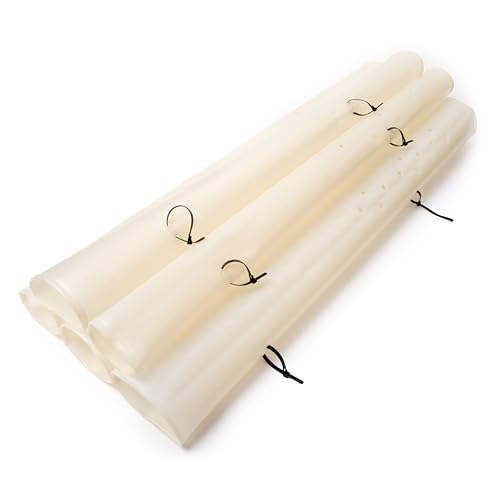
100% recycled polyethylene (milk jug plastic) seamless tube

⚠ Barrier that is under 60 mil thick has been shown to fail when containing bamboo.
Landscaping Strategies to Minimize Root Damage
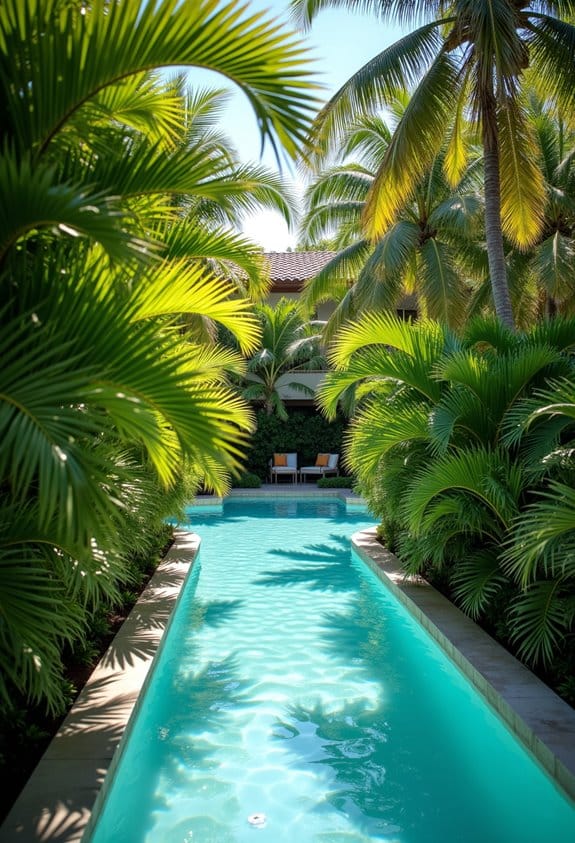
When landscaping near swimming pools, selecting plants with shallow, minimally invasive root systems reduces risks to pool integrity. Choosing palms with less aggressive palm roots, such as certain tropical species, limits root encroachment around your pool. Maintaining a planting distance of 10 to 12 feet from the pool edge helps prevent structural compromise caused by expanding roots. Incorporating planter boxes measuring at least 3 x 3 feet for smaller palms and 5 x 5 feet for larger varieties effectively contains root growth. Additionally, installing proper drainage systems around your pool manages water flow, reducing root pressure on pool surfaces. These combined strategies offer a practical approach to minimizing root damage, safeguarding pools from potential harm while maintaining attractive, sustainable landscaping near water features. Opting for palms made of UV-resistant polyester ensures long-lasting outdoor use even when planted near pools.
Monitoring and Maintaining Palm Trees Next to Pools
Regular monitoring of palm trees located near swimming pools offers proactive protection against root-related damage, especially since palm roots typically extend only 12 to 36 inches beneath the soil surface. Scheduled weekly monitoring helps detect early signs of root intrusion or soil instability before problems affect pool integrity. Maintaining palms roots involves pruning fronds and clearing debris to prevent accumulation that can clog drains or damage pool surfaces. Selecting non-invasive palm species like Queen or Pygmy Date palms reduces risks due to their fibrous root systems. Additionally, ensuring adequate drainage and accessing underground utilities around pools supports healthy palm growth, minimizing root spread. Consistent, detailed observation combined with routine maintenance creates an effective strategy for preserving both pool structure and landscape aesthetics over time. Choosing palm trees with non-toxic and durable materials for landscaping near pools can further enhance safety and longevity.
Professional Inspection and Repair Options for Root Damage
Although minor root encroachment may go unnoticed initially, professional inspection remains essential for identifying underlying pool damage caused by palm tree roots. Specialists, like those at A-Quality Pools, use detailed assessments to detect cracks or structural weaknesses within the pool’s 12- to 18-inch thick walls that may be compromised by roots extending up to 10 feet. Upon identifying issues, repair options vary: filling cracks with hydraulic cement, reinforcing walls with fiberglass mesh, or relocating palm trees planted less than 15 feet from the pool edge. Regular pool service also aids in early detection by monitoring chemical balances and visual signs of root interference. Timely professional inspection and intervention reduce costly long-term restoration and help preserve the pool’s integrity within specific soil zones prone to root expansion. Incorporating strategic outdoor lighting such as waterproof LED string lights can also help monitor pool perimeter conditions and improve visibility during inspections.
Frequently Asked Questions
Can Palm Tree Roots Damage a Pool?
Palm tree root systems are typically shallow and fibrous, posing minimal risk to pools. However, certain species can affect structures if close. Regular pool maintenance tips include inspections to detect early root-related damage and timely professional intervention.
How to Protect a Pool From Tree Roots?
Protect pools proactively by placing pool root barriers and performing periodic root pruning. These precautions prevent penetrating roots from posing potential problems, preserving pool structures and promoting peaceful poolside enjoyment without costly repairs or continuous concerns.
Can You Plant Palm Trees Next to a Pool?
Palm trees can be planted next to pools, provided proper palm tree maintenance is followed. Selecting species with non-invasive roots and incorporating appropriate pool landscaping practices guarantees a harmonious environment without compromising pool structure integrity.
How Far Should a Pool Be From a Tree?
A delicate dance unfolds between pools and trees, where distance considerations are key. Typically, a pool should stand 10-12 feet away, respecting root systems’ reach to safeguard structural harmony and prevent hidden disturbances beneath the surface.