As an Amazon Associate, we earn from qualifying purchases. Some links on this site are affiliate links at no extra cost to you. Our recommendations are based on thorough research and editorial judgment.

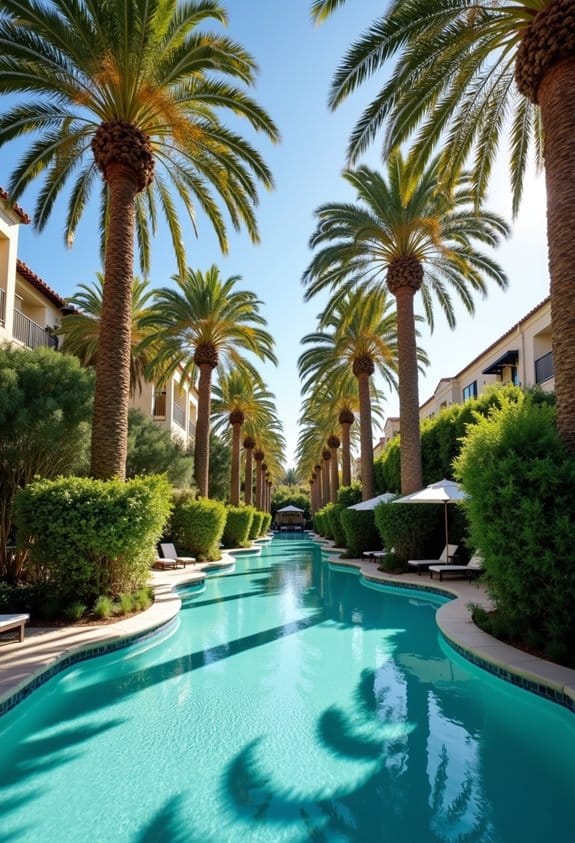
Creating Shade Zones Around Pools With Strategic Palm Placement

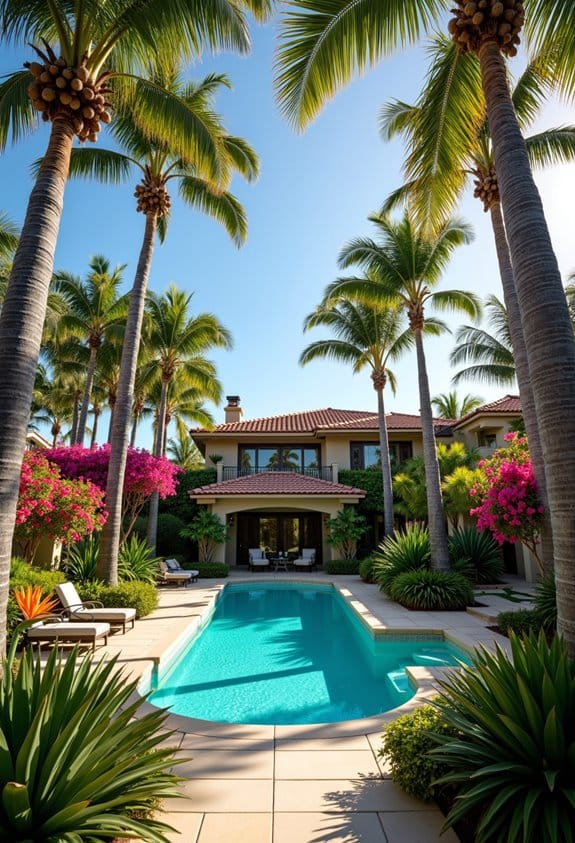
Creating shade zones around pools with palms reduces surface temperatures by up to 15°F during peak sun hours (10 a.m. to 3 p.m.) and improves comfort. Position tall palms, such as Piru Queen and Mediterranean Fan Palms, along the western side to block strong afternoon rays, while grouping medium palms near lounge areas creates canopy effects. Strategic layering and selecting broad-fronded, weather-resistant species optimize shade and privacy. Maintenance includes deep watering and seasonal pruning to maintain health. Further insight reveals techniques combining palms and shade structures for maximum effect.
Key Takeaways
- Position tall palms on the western side of the pool to block intense afternoon sunlight effectively.
- Use cluster palm species with broad, overlapping fronds to maximize natural shade coverage and privacy.
- Analyze sun paths first to align palm placement with peak sun exposure hours for optimal shading.
- Combine palms with large-leaf tropical plants for extended shade and enhanced tropical aesthetics around the pool.
- Maintain palms regularly by pruning and fertilizing to ensure healthy, dense canopies for lasting shade benefits.
Benefits of Shade Zones Around Pools
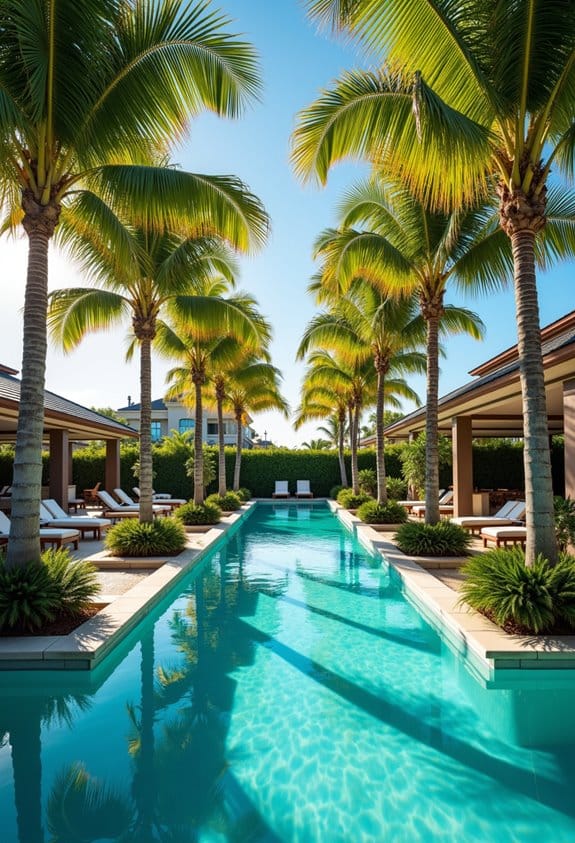
Although pool areas often receive full sun exposure, incorporating shade zones greatly reduces surface temperatures by up to 15 degrees Fahrenheit during peak hours between 10 a.m. and 3 p.m., enhancing swimmer comfort. Strategically placed palm trees create natural shade with broad fronds that effectively diminish UV radiation, safeguarding skin health while lowering ambient heat. These shade zones improve poolside comfort by providing cool lounging spaces, allowing extended relaxation without overheating. Additionally, alleviating direct sunlight enhances the aesthetic appeal, offering an inviting environment that encourages airflow and reduces glare. Temperature maintenance benefits also include limiting water evaporation, which conserves pool water and lowers maintenance costs. Overall, integrating shade, especially via palm trees, fosters a balanced environment of comfort and visual appeal, optimizing both recreational use and long-term pool management. Using complementary decorative elements such as palm tree string lights can further enhance the ambiance and functionality of outdoor shade zones.
Recommended Products

Pacifica 100% solution dyed polyester fabric

Elegant Tinted Glass Tabletop: A refined tempered glass tabletop in a sophisticated tint provides both clear visibility for your barware and a cohesive, upscale aesthetic that complements the entire tiki bar ensemble, making your outdoor bar set both functional and designer-curated

【𝗛𝗘𝗔𝗩𝗬 𝗗𝗨𝗧𝗬】: our super ring shade sail exact 260 GSM permeable extra fabric, stainless mounting super rings, edges with cable wires built-in, integrate into the mounting rings, all pulling strength goes to the cable wires, making the edges more durable
Understanding Sun Path and Pool Orientation
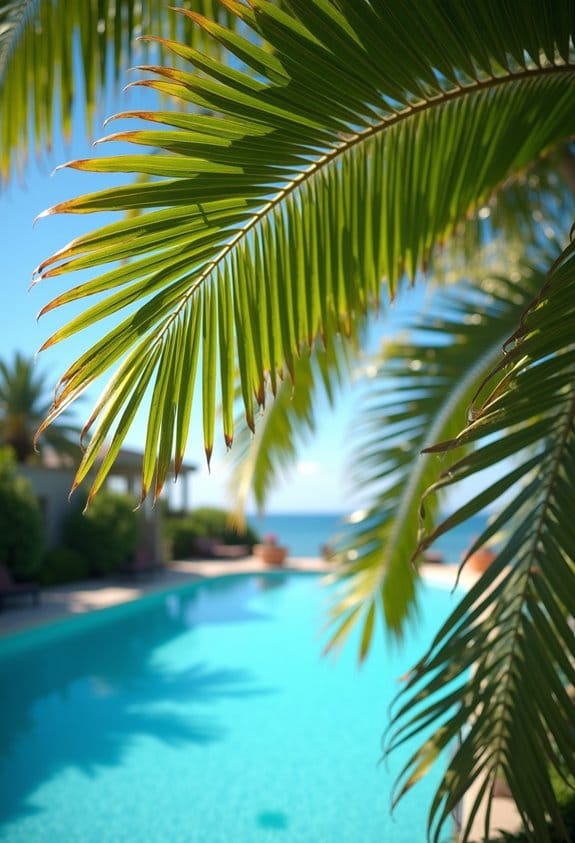
Understanding how the sun moves through the sky is fundamental when planning pool orientation and shade placement, especially since summer days feature a sun arc that often exceeds 70 degrees above the horizon. Sun exposure varies with pool orientation, greatly affecting afternoon sunlight intensity. In the Southern Hemisphere, placing palm trees on the western side maximizes shade coverage during peak heat hours, reducing direct sunlight and lowering water temperature by several degrees. Precise plant placement aligned with sun angles guarantees ideal shade strategies, enhancing comfortable lounging zones. Effective shade coverage around pools not only improves the swimming experience by preventing overheating but also preserves pool water temperature within a comfortable 24-28°C range. Understanding these dynamics helps create a balanced environment where palm trees strategically mitigate harsh sun for longer, more enjoyable poolside use. Choosing palms with UV-resistant materials ensures that the shade remains effective and aesthetically pleasing despite prolonged sun exposure.
Selecting Palm Species for Optimal Shade
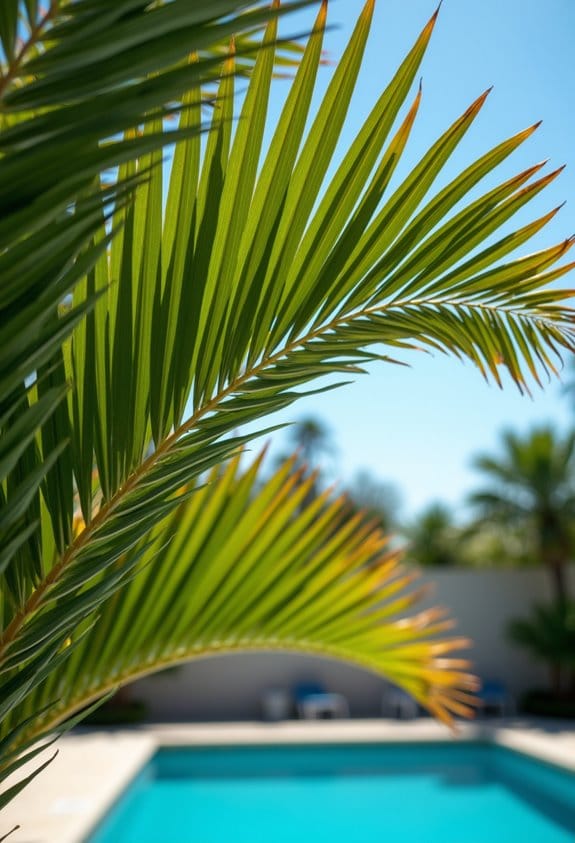
Choosing the right palm species is essential for creating effective shade zones that complement pool environments, especially within USDA zones 9 through 11. The Piru Queen Palm, noted for its broad fronds and non-invasive roots, offers substantial shade and thrives in heat-tolerant conditions. The Mexican Blue Fan Palm, with slow growth and striking silver-blue leaves, enhances the tropical aesthetic while providing moderate shade. Mediterranean Fan Palms create visually appealing shaded areas around pools due to their unique multi-trunk growth and non-invasive root systems. Incorporating cluster palm species like these can maximize shade, adding depth and interest to the pool area. Their combined foliage density and contrasting forms produce a layered canopy, optimizing comfort and maintaining a vibrant, tropical ambiance with minimal maintenance. Additionally, selecting palms with weather resistance ratings appropriate for coastal climates ensures durability and longevity in outdoor environments.
Recommended Products

High-Quality Material:Made from 185 GSM high-density polyethylene (HDPE) fabric, this sunshade sail is built for durability with reinforced seams and stainless steel D-rings at each corner for secure installation.

Solid Brass Construction: The strong and sturdy brass landscape lighting is well constructed and built to last. They hold up well, won’t rust easily, and save on repair. The brass landscape lights provides high end landscaping that complements your home's style

𝐇𝐞𝐚𝐯𝐲-𝐃𝐮𝐭𝐲 𝐒𝐨𝐥𝐢𝐝 𝐁𝐫𝐚𝐬𝐬: Gardenreet wired landscape lighting won’t rust—even in salty, humid air like CA or FL. Lasts over 10 times longer than aluminum. A top pick among outdoor décor influencers. Give your yard a designer’s touch. Fixture and bulb covered for life
Placement Strategies for Maximum Sun Protection
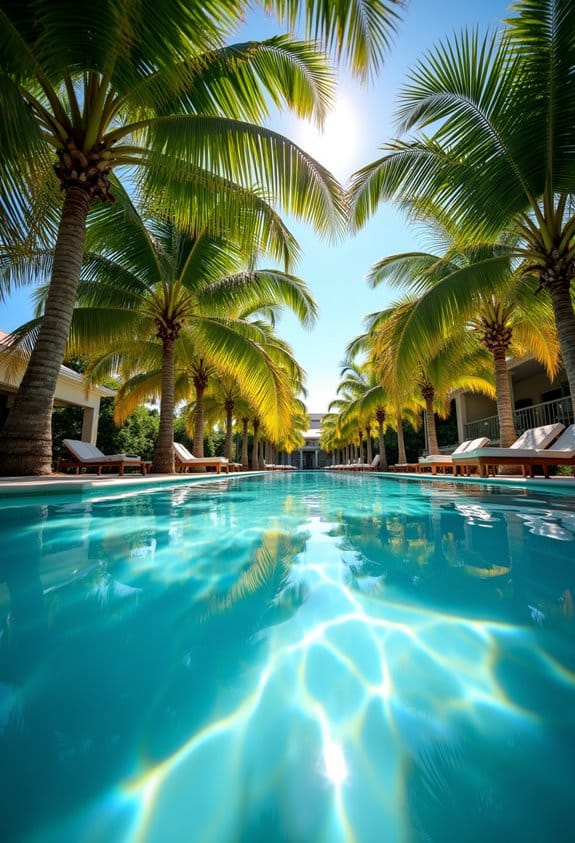
When planning poolside vegetation, positioning tall palms, such as those reaching 40 to 60 feet, along the western perimeter blocks harsh afternoon rays exceeding 90°F, while preserving morning sun exposure. Effective placement strategies begin with a detailed sun path analysis to track seasonal sun angles and predict shadow patterns. Grouping medium-sized palm trees with broad fronds near lounging areas creates a strong canopy effect, enhancing shade coverage without sacrificing airflow. Layered canopies formed by palms of varying heights optimize sun protection, producing a cooler environment throughout poolside settings. Selecting palms with expansive fronds, like the Piru Queen Palm, further increases shade coverage by intercepting more sunlight. These strategic arrangements balance aesthetic appeal with functional sun protection, ensuring comfortable, shaded zones ideal for relaxation and sun safety around pools. Utilizing adjustable branches on artificial palms can also customize shade density and enhance visual appeal in designed spaces.
Recommended Products

Thrilling Water Adventure: Get ready for non-stop fun with our double-slide inflatable water park! It presents kids with multiple fun features for various enjoyments - 2 water slides, a large splash pool, a small deeper pool, a basketball hoop, a soccer goal, a water cannon, a tunnel, an awning, a cute palm tree ring toss target, and a climbing wall

𝐇𝐞𝐚𝐯𝐲-𝐃𝐮𝐭𝐲 𝐒𝐨𝐥𝐢𝐝 𝐁𝐫𝐚𝐬𝐬: Gardenreet wired landscape lighting won’t rust—even in salty, humid air like CA or FL. Lasts over 10 times longer than aluminum. A top pick among outdoor décor influencers. Give your yard a designer’s touch. Fixture and bulb covered for life

Philips Hue outdoor dusk to dawn light bulb works with Alexa for voice control (hub required, Hue Hub & Alexa device sold separately). Includes Lily Power Supply. For the full Hue experience and to take advantage of voice activation purchase the Philips Hue Hub (Model: 458471). Search "Philips Hue Hub" or "B016H0QZ7I" to find this product on Amazon.
Combining Palms With Other Shade-Producing Plants
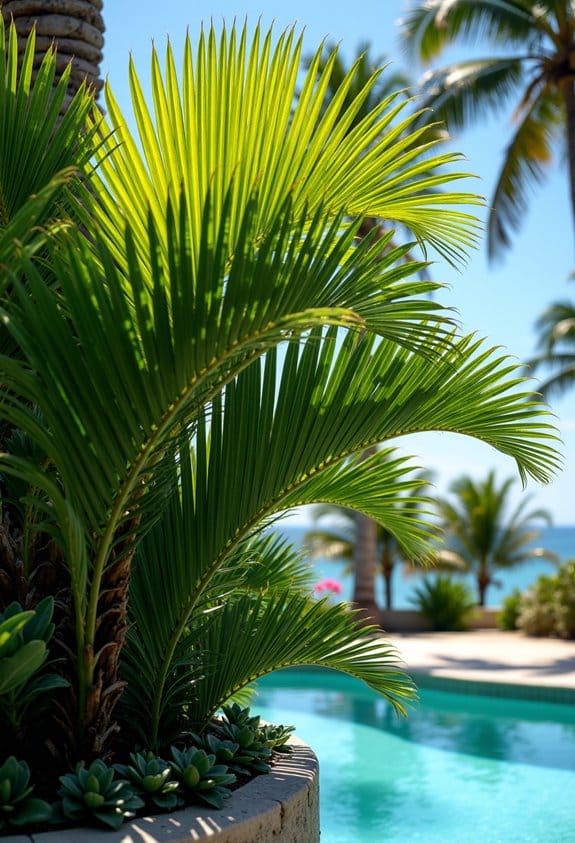
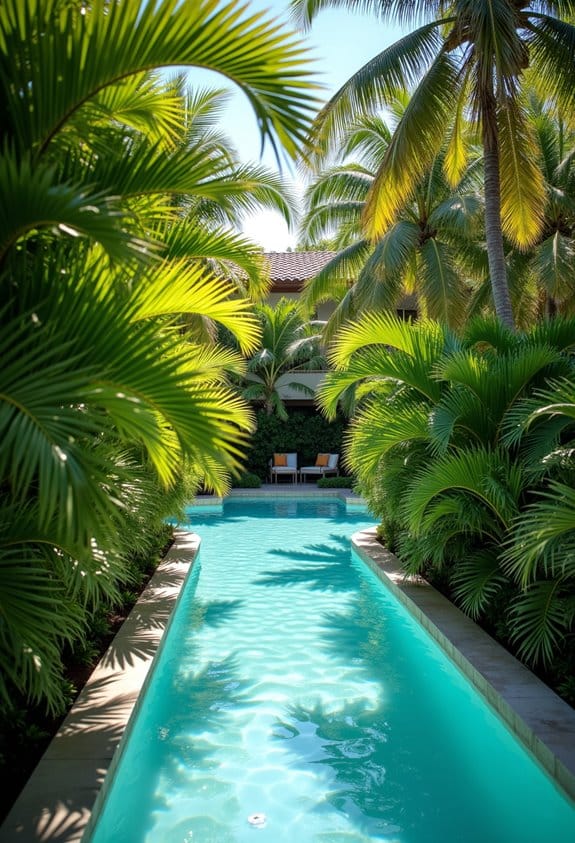
By integrating palms with complementary shade-producing plants, poolside areas achieve layered canopies that extend coverage vertically and horizontally throughout zones spanning five to twenty feet from the water’s edge. Large-leaf tropical plants like elephant ears and canna lilies enhance shade and contribute vivid colors to the landscape. Privacy and wind protection benefit from golden bamboo planted near palms, creating dense foliage. Flowering species such as hibiscus and bird of paradise add a tropical aesthetic while expanding the shade footprint with broad leaves. Slow-growing plants like Blueberry Ash establish a steady shade framework that supports native wildlife and reduces upkeep. Groundcovers like Mondo Grass thrive in dappled light under palms, minimize lawn maintenance, and refine the pool’s visual coherence. Using patio cushions and pillows made with fade-resistant fabrics can help extend the outdoor seating comfort and maintain vibrant décor around shaded pool areas.
Avoiding Poolside Planting Risks With Palm Roots
Although palms generally have non-invasive root systems, careful selection and placement around pools guarantee structural safety and preserve waterline integrity. Palm trees like the Piru Queen Palm develop deep roots rather than spreading horizontally, minimizing risk to poolside infrastructure within a 10-foot radius. The Mediterranean Fan Palm also exhibits such root traits, preventing damage to plumbing or filtration systems. Strategic placement guarantees ample shade without branches shedding excessive debris into the pool, reducing clogging and maintenance. Positioning palms at least 8 feet from pool edges maintains pool decking stability and waterline cleanliness. Adopting palms with non-invasive root systems promotes a lower maintenance environment, supporting long-term poolside functionality and enhancing shade zones with minimal risk. This approach balances lush landscape appeal with essential pool safety and operational efficiency. Choosing artificial palms made of UV-resistant PEVA or durable materials can provide shade benefits without risk to pool infrastructure and with minimal maintenance.
Enhancing Privacy With Palm Clusters
Numerous palm trees clustered strategically around pool perimeters can form effective privacy screens reaching heights of 30 to 50 feet, depending on species. Tall species like the Queen Palm, growing up to 50 feet, serve as natural privacy barriers by blocking sightlines and reducing noise. Strategically placed palm clusters create a lush tropical feel while defining exclusive relaxation areas without compromising airflow or sunlight. The large fronds provide ample shade and contribute to a serene poolside experience by softening environmental sounds. These palms, when grouped densely, not only enhance privacy but also elevate the pool area’s visual appeal. Implementing such arrangements requires attention to species height and spacing to maximize shade and privacy effectiveness, making palm trees a versatile option for secluded, tranquil poolside environments. Selecting UV-resistant materials for palm trees ensures they maintain vibrancy and durability in intense sunlight, prolonging their effectiveness as privacy screens.
Recommended Products

❀ Realistic Appearance : This lifelike bamboo silk tree is made of plastic leaves, real bamboo pole with laminated surface, and solid wood base. This artificial simulation bamboo adds highlights and oriental beauty to a room. They can keep people in a comfortable mood for the day.

PLEASE NOTE THIS PLANT DOES NOT SHIP TO CALIFORNIA - Farm-Grown Quality: Nurtured with care on our farm, ensuring healthy and vibrant growth.

High quality wood and fabric covered room divider
Seasonal Care and Maintenance of Poolside Palms
When maintaining poolside palms throughout the year, seasonal adjustments in care routines help sustain their health and impressive appearance. Water palm trees deeply but infrequently during dry months, guaranteeing soil drainage remains ideal to prevent root rot. In late winter or early spring, prune dead fronds carefully to stimulate new growth while preserving the palms’ natural shade. Regularly inspect for signs of pests like discolored or spotted fronds, addressing issues promptly to avoid infestations. Fertilize palm trees twice annually with a balanced, micronutrient-rich fertilizer to support robust growth and environmental resistance. This seasonal care regimen not only guarantees palm trees thrive but also helps create shade effectively, enhancing the backyard oasis atmosphere around the pool. Consistent attention maintains both the health and aesthetic appeal of these key landscaping elements. For ease of maintenance, consider using self-watering hanging planters that help regulate moisture levels around your palms.
Creating Aesthetic Appeal Through Palm Placement
Effective palm placement plays an essential role in shaping the visual and functional character of poolside landscapes. Strategically positioning various palm species such as the Piru Queen Palm and Pindo Palm creates layered landscape effects, enhancing both shade zones and visual diversity in the pool area. Tall palms serve as focal points, establishing an inviting atmosphere through natural canopies that provide textured movement and shade within lounging spaces. Smaller palms, like Pygmy Date Palms, complement taller varieties to build depth and variation, increasing overall aesthetic appeal. Integrating vibrant tropical plants such as hibiscus and bird of paradise further reinforces the tropical vibe, making the area cohesive and visually engaging. Thoughtful palm placement balances form and function, maximizing shading benefits while enriching the pool area’s dynamic character. Choosing palms with textured trunks and natural leaf patterns enhances the realistic coastal charm and aesthetic impact around pool zones.
Integrating Palms With Built Shade Structures
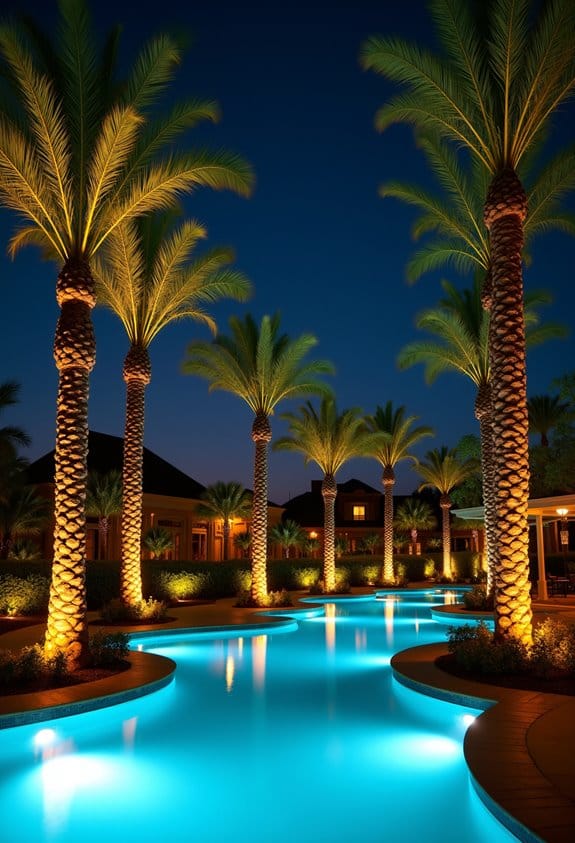
A variety of built shade structures, such as pergolas measuring 10 by 12 feet, can be integrated with palms to enhance both aesthetics and comfort in poolside environments. Strategically placing taller palm trees near these shade structures extends shaded zones, providing cooling relief and comfortable lounging spaces throughout the day. Materials like bamboo or thatch on shade structures complement palm trees, reinforcing a tropical vibe that enhances aesthetic appeal. Palm trees also serve as natural windbreaks, reducing wind exposure around seating areas. Incorporating strategic lighting within shade structures can illuminate palms at night, highlighting their form while maintaining relaxing shaded zones. This combination of palms and shade structures creates a balanced environment optimized for both daytime comfort and evening ambiance in poolside settings. Using weatherproof and UV-resistant synthetic thatch materials can further enhance the longevity and appeal of these shade structures.
Recommended Products

Multifunctional LED Strip: This louvered pergola features an integrated LED strip light with controller, allowing you to adjust brightness (Low, Medium, High) and color temperature (Cool, Warm, Neutral) to create the perfect ambiance for any setting.

Independent Adjustable Roofs: Two independently controlled louvered zones provide up to 140 sq. ft. of customizable shade and light.

Aluminum Louvered Roof: Engineered with thick, reinforced aluminum louvers, this louvered pergola is built to handle winters and protect your outdoor space. It supports snow loads up to 8.2 psf, helping prevent sagging and costly seasonal damage. The louvers rotate from 0° to 85° to adjust shade and airflow.
Frequently Asked Questions
Can You Plant Palm Trees Next to a Pool?
Palm tree placement next to pools is feasible with careful variety selection and understanding growth habits. Non-invasive root systems prevent plumbing damage, while considering soil requirements, sunlight exposure, and maintenance tips enhances pool safety, water splashes management, and aesthetic appeal.
How to Create Shade Around a Pool?
To create shade around a pool, integrating sun protection strategies like natural cooling solutions and types of shade structures complements poolside landscaping. Considering height and spacing, seasonal shade patterns, climate adaptations, maintenance, and poolside furniture placement guarantees functional and aesthetic design tips.
What Palms Are Best Around Pools?
The ultimate palm tree selection for pools combines Mediterranean Fan, Piru Queen, and Mexican Blue Fan Palms, balancing landscape aesthetics, pest resistance, wind tolerance, moderate growth rates, sun exposure adaptability, non-invasive root structure, soil needs, water requirements, and minimal maintenance tips.
Which Palm Tree Gives the Most Shade?
The Resort-Style Date Palm offers the most shade due to its extensive leaf density and height. Its moderate growth rate, climate adaptability, low maintenance, pest resistance, and strategic planting maximize shade, complementing various soil types and aesthetics.