As an Amazon Associate, we earn from qualifying purchases. Some links on this site are affiliate links at no extra cost to you. Our recommendations are based on thorough research and editorial judgment.

Building a DIY Drip Irrigation System for Palm Trees

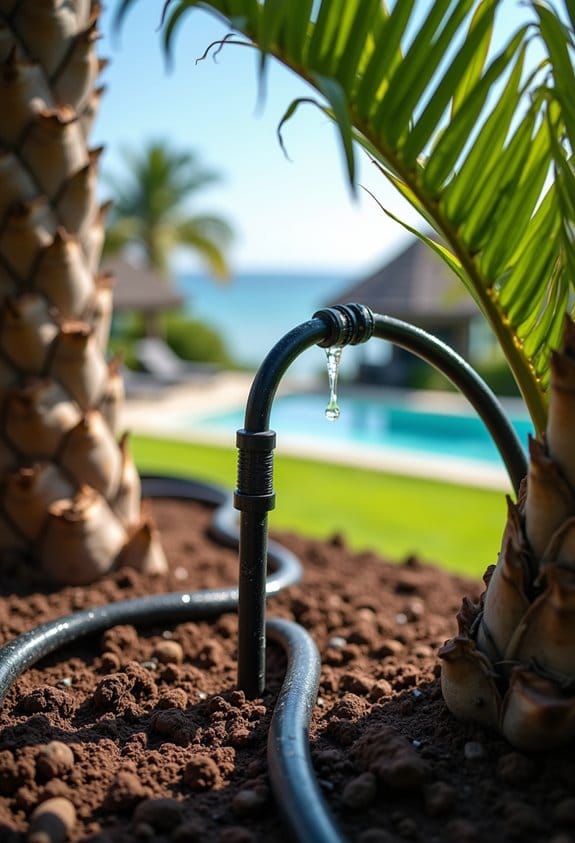
A DIY drip irrigation system for palm trees uses ½ to ¾ inch PVC pipes connected underground to deliver water precisely. Pressure regulators maintain 30 psi for consistent flow. Emitters, positioned near the trunk within the rootball, release ½ to 2 gallons per hour slowly and deeply to promote healthy growth. Flexible tubing and barbed connectors navigate intricate layouts, ensuring uniform coverage. Regular monitoring and flushing prevent clogs and water waste. Further details explain optimizing system performance over time.
Key Takeaways
- Use PVC pipes underground with pressure regulators to maintain 30 psi for steady water flow to palm root zones.
- Install 1/2 inch drip tubing with emitters near the palm rootball for deep, slow, and uniform water distribution.
- Position multiple emitters within rootball areas and adjust as roots grow to ensure even irrigation.
- Regularly monitor emitter flow rates (½ to 2 gallons/hour) and soil moisture to optimize watering efficiency.
- Flush tubing periodically and inspect emitters for clogs or damage to maintain system performance.
Materials Needed for the Drip Irrigation System
Building a DIY drip irrigation system for palm trees begins with gathering essential materials that guarantee efficient water distribution and durability. Key components include 3/4 or 1/2 inch PVC pipes for main lines, paired with pressure regulators to maintain a steady 30 psi. For delivering water precisely to the palm trees’ root systems, 1/2 inch drip tubing is indispensable. An emitter punch tool creates exact holes for customized emitter placement, while 1/4 inch barbed connectors and spaghetti tubing extend water reach to individual palms efficiently. Drip stakes secure emitters near root zones, ensuring focused hydration. Integration of a reliable water source, such as a tank or well, supports consistent flow, and optional flush valves help prevent clogging. Adjustable spray heads may be added for larger palms requiring tailored irrigation coverage. When used with live palms, consider the temperature ranges the plants can withstand to optimize irrigation scheduling and protect health.
Recommended Products


LDPE - Low Density Polyethylene

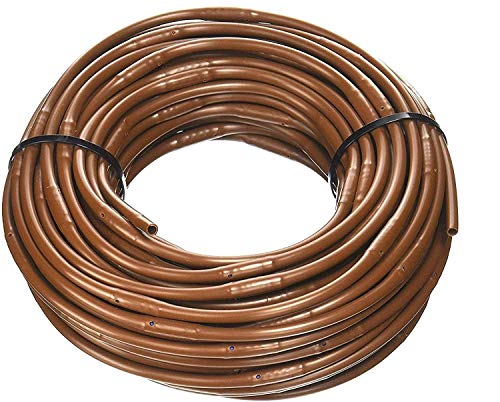
0.9 gph 12" spacing, 250'
Step-by-Step Assembly Instructions
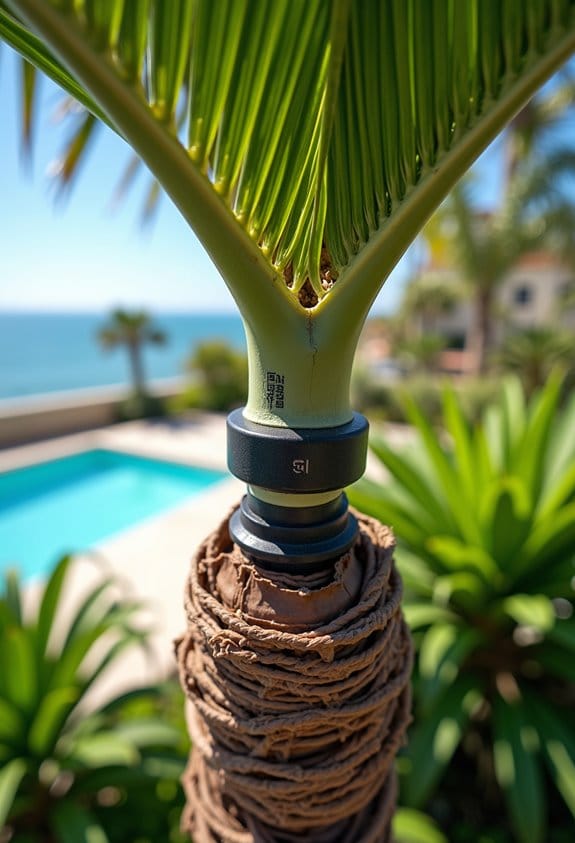
Connecting the main line to a reliable water source marks the initial step of assembly, integrating a pressure regulator calibrated to 30 psi for efficient flow control. Use 3/4 or 1/2-inch PVC pipes underground, directing water to zones hosting palm trees. Install 3/4 x 1/2 x 3/4-inch T-fittings and 1/2-inch risers to shift from main lines to drip tubing. Attach 1/2-inch threaded elbows on risers, connecting flexible tubing that navigates palm root zones effectively. Employ plain drip emitters positioned close to each palm’s rootball, commonly installing three emitters per 24-inch rootball to guarantee uniform water distribution. Utilize an emitter punch tool to create emitter holes as needed. Before final emitter placement, flush the lines through designated points to remove debris and prevent clogging in the drip irrigation system, optimizing performance for healthy palm trees. Incorporating drip emitters near the rootball supports stable palm root systems, which helps in soil stabilization and plant health outdoors.
Recommended Products
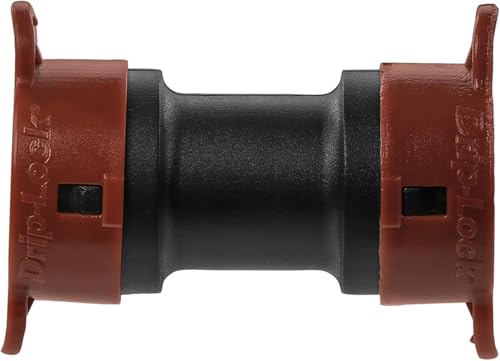
Works with 1/2" Orbit, 5/8" Raindrip, Toro Blue Stripe, 1/2" DIG and 1/2" Mister Landscaper Drip Tubing

Drip irrigation adapter - Allows both types of irrigation methods to be used simultaneously, covering all plants effectively

Unique release feature simplifies installation and maintenance
Placement and Installation Tips for Palm Trees
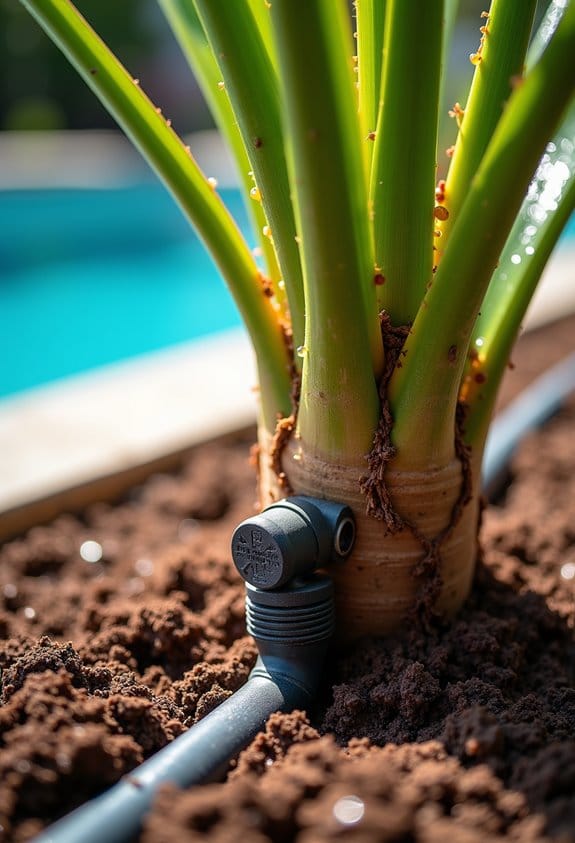
When positioning drip emitters for palm trees, placing them close to the trunk within the 24-inch rootball area maximizes water absorption by the shallow root system. Multiple drip emitters, typically three for a 24-inch rootball, guarantee even water distribution and minimize dry soil patches. Positioning emitters within this zone allows water to soak slowly and deeply, ideal for tropical plants that rely on consistent moisture. The drip lines should end inside the rootball to reduce water waste and prevent competition from nearby vegetation. Installing emitters with flow rates between ½ and 2 gallons per hour accommodates variations in palm size and climate. As palm roots expand, repositioning emitters maintains effective irrigation coverage, ensuring the system adapts as the tree matures while promoting healthy growth in dry or sandy soils. Using UV-resistant materials in irrigation equipment ensures durability and consistent performance when exposed to sunlight over time.
Recommended Products
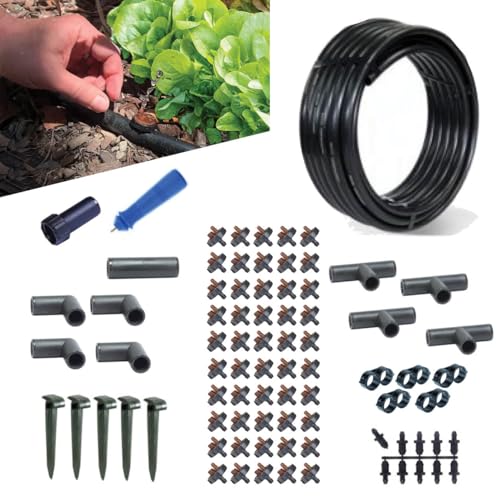

【Quick Push-to-Connect Installation – No Tools Required】This MIXC drip irrigation system features an easy push-to-connect design for fast setup. Simply insert the tubing and pull back to confirm a secure fit—no heating, glue, or special tools needed. Leak-resistant connections help ensure smooth and reliable watering from the start.
Monitoring and Adjusting Water Flow
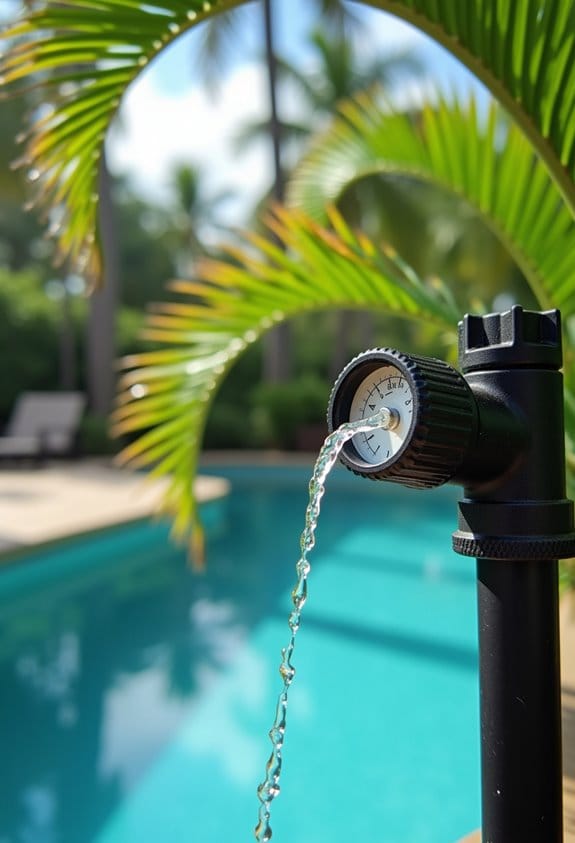
Regular assessment of each emitter’s flow rate, targeting between ½ and 2 gallons per hour, remains crucial for maintaining balanced irrigation tailored to palm tree needs. Monitoring and adjusting water flow involves checking output at multiple points, including two drips per emitter for redundancy, which works great to prevent drought stress. A soaker hose integrated into the system distributes water evenly, enhancing root zone coverage. Utilizing a pressure gauge helps maintain ideal flow rates, typically around 20-30 PSI for most setups. Observing soil moisture and palm health guides adjustments in emitter placement and flow volume. Regular flushing of tubing prevents clogging from sediment or hard water buildup. These precise steps guarantee effective irrigation management, enabling a tailored approach that supports healthy palm growth without over or underwatering. Additionally, considering the integration of waterproof materials in the irrigation components can enhance system durability in outdoor environments.
Recommended Products
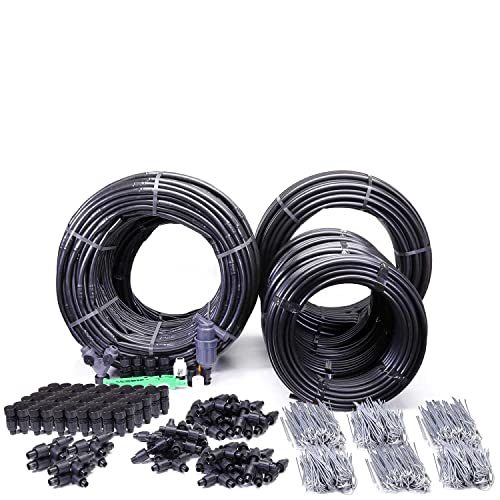

Standard 3/4" Garden Hose Thread Connections

ROOT WATERING TOOL: The Underhill A-DD24-25 Deep Drip Spikes encourage deeper tree root growth by delivering water, oxygen, nutrients, and fertilizer directly into the soil. Save water and reduce surface evaporation.
Troubleshooting Common Issues
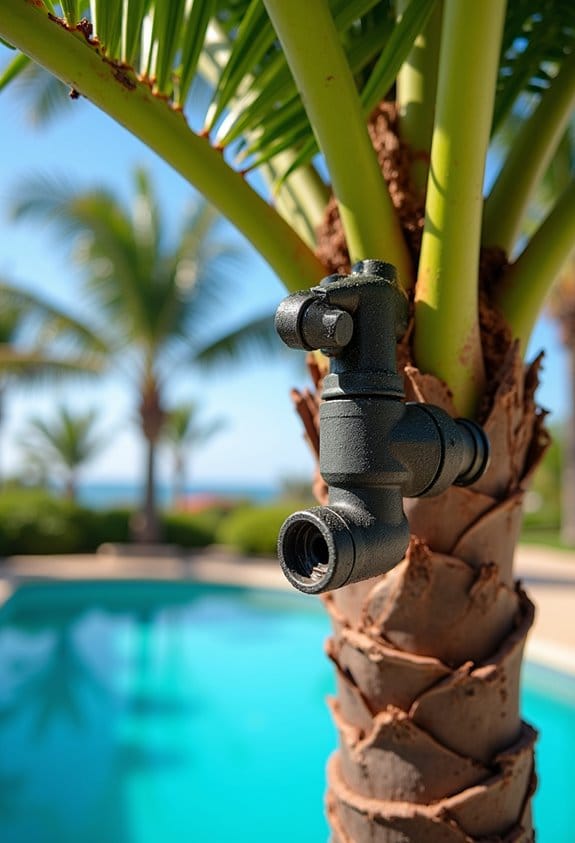
Addressing common issues in a drip irrigation system for palm trees begins with thorough inspection of emitters and tubing for clogging or damage. Clogs often occur due to mineral deposits in hard water, requiring periodic flushing or ultrasonic cleaning of emitters. Leaks in drip lines, especially near joints, cause water loss, reducing irrigation efficiency and potentially harming palm health. Checking the pressure regulator is vital, as malfunction can create inconsistent flow, mimicking sprinkler system malfunctions but with subtler signs. Adjust emitter placement gradually, increasing counts per palm by 10-15% as the trees mature or during hotter months to guarantee uniform moisture. Regular system evaluations, particularly after seasonal shifts, help maintain ideal soil moisture levels between 15 to 25 centimeters depth, promoting healthy root development without overwatering or runoff. Incorporating energy-efficient solar-powered solutions can help ensure consistent operation of irrigation controllers without reliance on traditional electricity sources.
Recommended Products
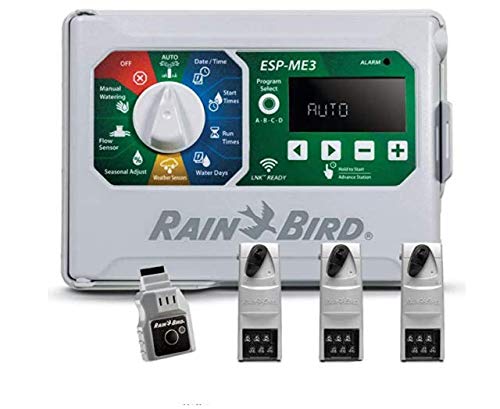
With 4 to 22 stations, the ESP-ME3 provides the station count options customers need. Install the same controller on residential and light commercial sites. Add station modules when expanding irrigation without removing or even powering down the controller.

[Upgraded 200W Solar Well Pump Kit]: The solar well pump kit includes 200W solar panel and 1.6 GPM deep well pump (96W) and 30Ah lithium battery with controller. Don’t need to purchase accessories, this is perfect solar water pump system, upgraded, simplifies the tedious steps for users.

3" Screw well Pump, 0.2HP, 24V, 5.3 GPM, 184 feet head, with 0.75 inch Outlet
Frequently Asked Questions
What Is the Best Irrigation System for Palm Trees?
The best irrigation system for palm trees prioritizes irrigation efficiency and water conservation by delivering water directly to root zones. Essential system components enable precise palm tree care, ensuring ideal hydration while minimizing waste and promoting healthy growth.
What Is the 30 30 Rule for Drip Irrigation?
The 30 30 rule for drip irrigation involves watering for 30 minutes to achieve 30% moisture infiltration, promoting drip irrigation benefits and water conservation techniques essential for effective palm tree care and efficient irrigation system maintenance.
Can You Make Your Own Drip Irrigation?
Yes, creating a drip irrigation system is possible using DIY materials selection like PVC pipes and emitters. Incorporating system maintenance tips and water conservation techniques guarantees an efficient watering schedule, delivering moisture precisely while minimizing waste.
What Is the 200 Rule for Drip Irrigation?
The 200 rule for drip irrigation guides flow rate calculations by recommending one gallon per hour for every 200 square feet. Effective water pressure management and maintenance tips optimize drip irrigation components to guarantee consistent hydration.