As an Amazon Associate, we earn from qualifying purchases. Some links on this site are affiliate links at no extra cost to you. Our recommendations are based on thorough research and editorial judgment.

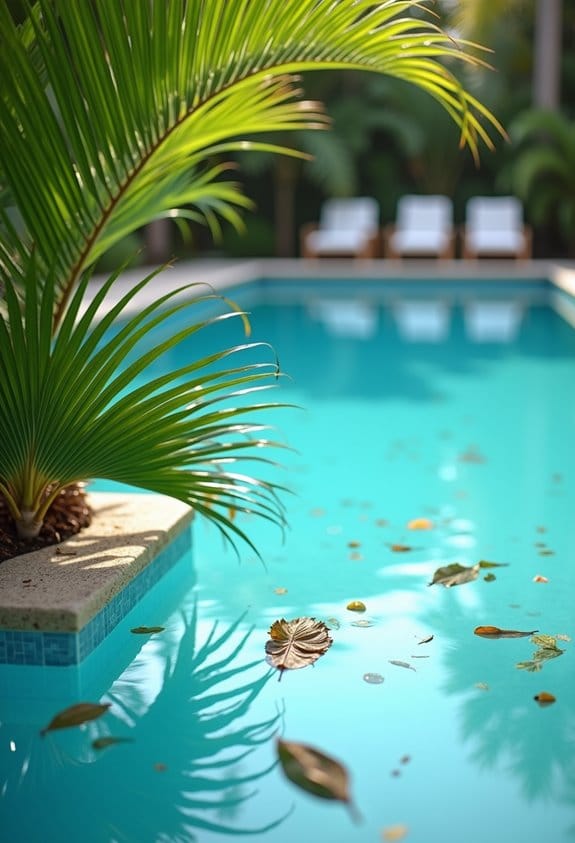
Dealing With Palm Debris in Swimming Pools: Prevention Tips

Palm debris, including fronds and seeds, raises phosphate levels near 100ppm, promoting algae and degrading pool equipment faster. Prune palms between February and April, targeting crisp fronds and flowering stalks before blooms, using loppers or cherry pickers for safety. Maintain pool pH at 7.4–7.6 and frequently shock water to preserve clarity. Employ UV-resistant covers and daily skimming to minimize organic matter. Effective debris control preserves filtration flow and extends equipment life, with further strategies enhancing pool care ahead.
Key Takeaways
- Regularly prune palm fronds and flowering stalks in late winter to early spring to reduce falling debris around pools.
- Use physical barriers like windsail shades or Florida Enclosures to minimize palm debris accumulation in pool areas.
- Clean pool surfaces frequently by skimming debris every other day and emptying skimmer baskets daily.
- Maintain phosphate levels below 100ppm with water testing and phosphate removers to prevent algae growth caused by palm debris.
- Select durable, UV-resistant outdoor materials and palm species to reduce maintenance and improve debris prevention near pools.
Understanding the Impact of Palm Debris on Pool Maintenance
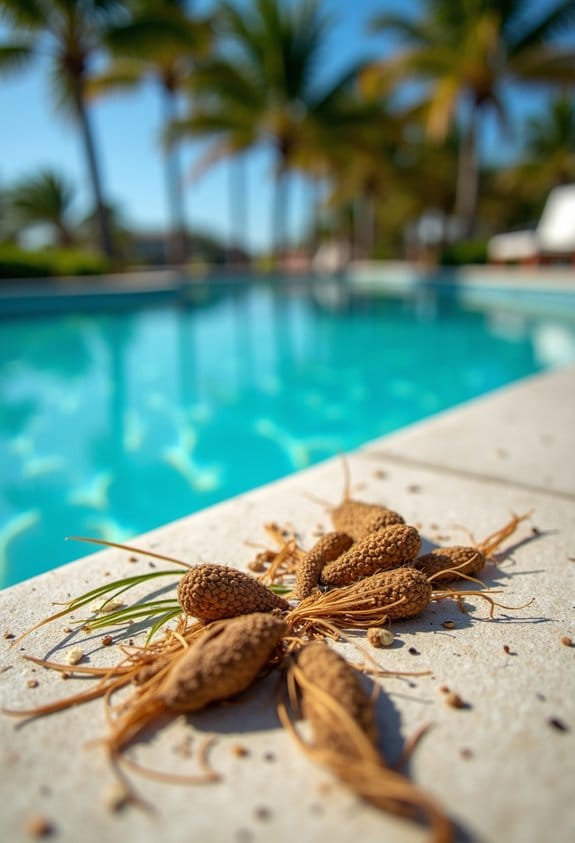
Although palm trees provide shade and aesthetic appeal around pools, their debris greatly complicates pool maintenance. Palm leaves and debris, including seeds and fronds, elevate phosphate levels in pool water to approximately 100ppm, requiring frequent shocking to prevent algae growth and maintain clarity. The constant presence of over a hundred seeds daily greatly increases pool cleaning time and operational costs. High phosphate concentrations can disrupt copper ion sanitation systems, demanding more precise chemical adjustments. Accumulated palm debris accelerates wear on pool covers and filtration units, shortening equipment lifespan. Effective strategies to prevent debris from entering the pool include regular removal of palm material and timely maintenance, which are essential to sustain cleanliness and reduce costly repairs. These practices help manage ongoing challenges posed by palm debris in residential pools. Using artificial windmill palms as a low-maintenance alternative around pools can significantly reduce debris accumulation and simplify upkeep.
Identifying Sources of Palm Debris Around Your Pool
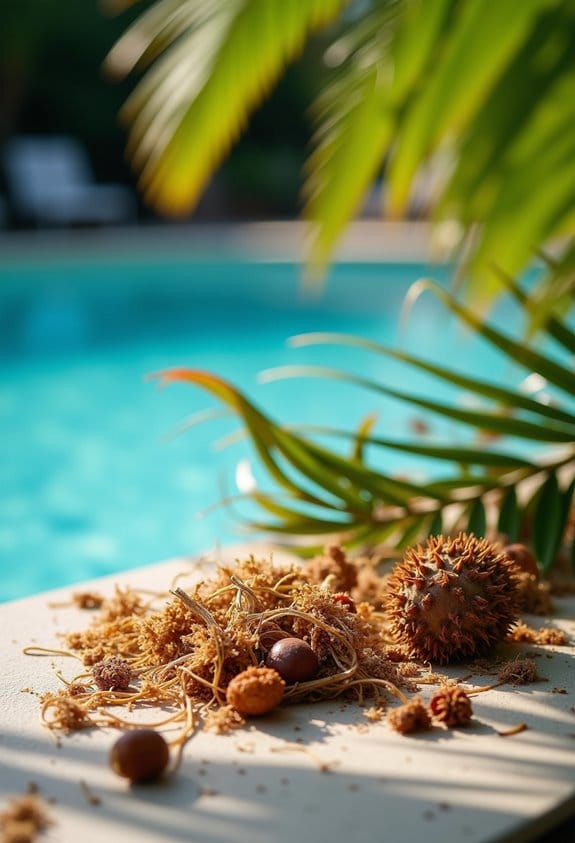
Palm debris originates mainly from fronds, seeds, and flowering stalks that frequently accumulate near pool areas, especially under tall species like the date palm. Date palms, reaching heights up to 50 feet, cast a wide frond span of 25 to 30 feet, causing significant debris fall within a large radius. Seeds and flowering stalks generate ongoing litter, increasing phosphate levels in pool water. Trees nearby, especially if densely clustered, contribute to the constant introduction of palm debris. Monitoring these sources enables timely maintenance. Regular pruning plays a pivotal role in managing debris but must be executed skillfully to minimize fruit and seed production. Identifying all palm debris sources around a pool allows homeowners to adopt targeted prevention strategies, ensuring cleaner water and fewer maintenance demands throughout the swimming season. Using artificial palm trees as a low-maintenance alternative can significantly reduce debris buildup around pools.
Effective Palm Tree Pruning Techniques to Minimize Debris
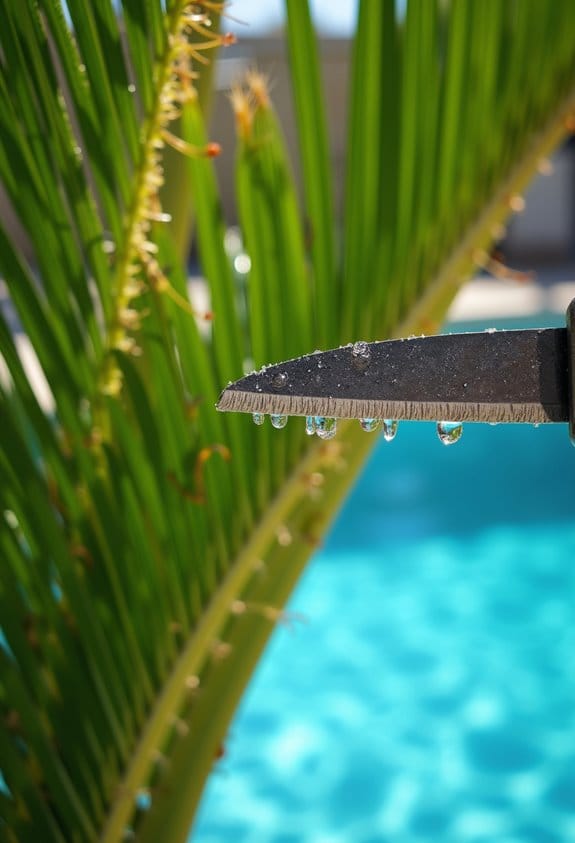
Effective pruning techniques considerably reduce palm debris accumulation by controlling frond and seed growth before litter reaches the pool area. Palm trimming should target fully crisp fronds, avoiding yellow or half-brown leaves that increase debris and drain nutrients. Use a SawsAll or reciprocating saw to cut flowering stalks prior to blooming, preventing messy fruit that later falls near the pool. Regularly trim palms when fronds reach about 50 feet tall to ease maintenance and minimize wind-blown litter. Safety measures, including a securely held ladder and dry tools, guarantee safe pruning sessions. Conduct palm trimming at least twice yearly, coordinating with regular pool maintenance schedules to reduce debris buildup. Utilize a pool cover during pruning to shield the water from falling fronds, preserving cleanliness and minimizing cleanup efforts. Choosing a durable planter around your palms can also help stabilize them and reduce debris caused by wind movement.
Seasonal Timing for Trimming Palm Fronds and Flowering Stalks
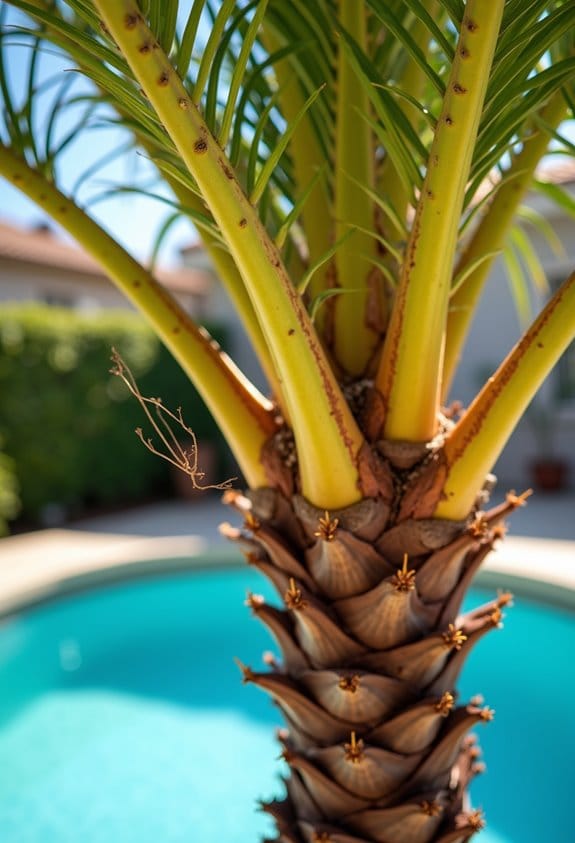
Timing pruning tasks during late winter to early spring, typically between February and April in USDA Hardiness Zones 9 through 11, aligns with palm trees’ dormant phases. During this period, trimming palm fronds when leaves are fully crisp prevents unnecessary nutrient depletion, as cutting yellow or half-brown fronds forces the tree to sacrifice old leaves for new growth. Pruning flowering stalks before bloom effectively reduces accumulation of messy fruit and debris around pools. Regular seasonal pruning helps manage seed production and minimizes seed pod buildup, improving maintenance efficiency. Adhering to this timing guarantees palms remain healthy and pool debris is consistently reduced. This strategic schedule is essential for controlling palm debris without disrupting the tree’s growth cycle or nutrient balance. Additionally, using UV-resistant materials for affected palm trees can ensure longer-lasting foliage and reduce frequent replacement due to environmental damage.
Utilizing Tools and Equipment for Safe Palm Maintenance
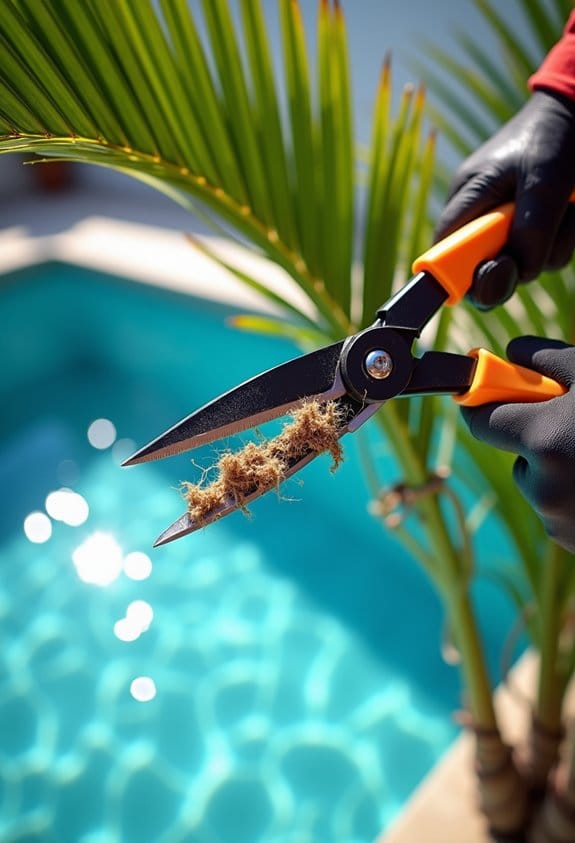
Several specialized tools and equipment are indispensable for safely maintaining palm trees near swimming pools, especially when fronds reach heights of 10 to 30 feet. Extending loppers and pole-mounted trimmers allow pool owners to prune high, minimizing debris without using unstable ladders. A cherry picker offers additional height and stability, reducing fall risk when trimming thick fronds with a SawsAll or reciprocating saw. After pruning, a leaf blower efficiently directs loose debris away from the pool perimeter, while the pool owner should regularly empty the skimmer basket to prevent clogging from palm detritus. Safety precautions are critical; having an assistant enhances stability and vigilance, especially on slippery poolside surfaces. Pruning flowering stalks before blooming further reduces messy fruit, limiting debris accumulation and easing maintenance for any pool owner. Choosing palm varieties with durable, weather-resistant designs can also reduce frequent maintenance needs around pools.
Installing Physical Barriers to Reduce Debris Entry
When installed strategically around pools, physical barriers such as triangular windsail shades and Florida Enclosures can greatly reduce the accumulation of palm debris. Installing triangular windsail shades around a 36×36-foot pool can redirect falling debris, allowing leaves and palm fronds to run off instead of landing in the water. Florida Enclosures offer extensive protection, serving as a physical barrier that blocks significant debris, though they typically cost around $9,500 for a 36×36-foot size. Additional physical barriers include thick hedges or low fences, which act as natural blockades preventing palm seeds and fronds from drifting into the pool area. Wind barriers can also reduce airborne debris by blocking contaminants from nearby trees. These strategies collectively minimize debris entry, easing maintenance demands and enhancing pool cleanliness. Using durable materials like rust-resistant metal for outdoor structures can improve the longevity and effectiveness of these physical barriers.
Recommended Products

【𝗦𝗨𝗣𝗘𝗥 𝗛𝗘𝗔𝗩𝗬 𝗗𝗨𝗧𝗬 𝗡𝗘𝗪 𝗣𝗔𝗧𝗘𝗡𝗧 𝗗𝗘𝗦𝗜𝗚𝗡】: Made of 260 GSM permeable extra heavy duty fabric, heavy duty stainless mounting rings, cable wires built-in edges, integrate into the mounting rings, all pulling strength goes to the cable wires, not only making the edges more durable, it also enhence the appearance of shade sail.

【𝗦𝗨𝗣𝗘𝗥 𝗛𝗘𝗔𝗩𝗬 𝗗𝗨𝗧𝗬 𝗡𝗘𝗪 𝗣𝗔𝗧𝗘𝗡𝗧 𝗗𝗘𝗦𝗜𝗚𝗡】: Made of 260 GSM permeable extra heavy duty fabric, heavy duty stainless mounting rings, cable wires built-in edges, integrate into the mounting rings, all pulling strength goes to the cable wires, not only making the edges more durable, it also enhence the appearance of shade sail.

【𝗛𝗘𝗔𝗩𝗬 𝗗𝗨𝗧𝗬】: our super ring shade sail exact 260 GSM permeable extra fabric, stainless mounting super rings, edges with cable wires built-in, integrate into the mounting rings, all pulling strength goes to the cable wires, making the edges more durable
Choosing the Right Pool Cover to Catch Palm Debris
Although physical barriers reduce debris, selecting the right pool cover is essential for preventing palm fronds and seeds from contaminating the water. A mesh pool cover, with small openings under 1 millimeter, effectively blocks palm debris while allowing rainwater drainage, reducing cleanup frequency. Leaf nets, designed specifically to catch leaves and palm parts, trap debris on the water’s surface, facilitating swift removal before organic matter sinks. Solid pool covers prevent all debris but can accumulate up to several gallons of water per 100 square feet, requiring pumps for water removal. Solar covers provide moderate debris protection and heat retention but need weekly cleaning during heavy palm shedding. Choosing a pool cover tailored to the pool’s size, local palm species density, and maintenance capacity ultimately optimizes palm debris prevention with efficient debris management. Additionally, selecting materials with UV resistance can help maintain the cover’s effectiveness and durability when exposed to intense sunlight over time.
Regular Cleaning Practices to Manage Fallen Palm Seeds and Leaves
Maintaining a clean pool surface requires regularly skimming fallen palm seeds and leaves at least every other day to prevent water cloudiness and chemical imbalance. Using a pool cleaner and emptying skimmer baskets daily guarantees debris does not accumulate, which disrupts filtration efficiency. Portable leaf blowers or soft-bristle brooms effectively clear larger leaves from pool covers and surrounding hardscape, reducing debris introduction. Investing in specialized tools like the PoolSkim improves surface cleaning precision, helping Keep Your Pool Clean with less effort. Routine vacuuming, with devices such as the Barracuda MX8, targets settled seeds on floors, maintaining clarity across the 400-square-foot pool area. Consistent attention to these practices minimizes maintenance time and chemical disturbances, promoting a healthier swimming environment free of palm debris intrusion. Additionally, using UV-resistant artificial Cycas palms nearby can reduce natural palm debris in the pool area.
Managing Water Chemistry in Pools Affected by Palm Debris
How does palm debris directly impact a pool’s water chemistry? Decomposing palm leaves release phosphates, sometimes reaching 100 ppm, which promote rapid algae growth and disrupt chlorine level balance. Regularly removing leaves and debris guarantees improved water flow through filters, preventing organic buildup that strains sanitation systems. Maintaining pH between 7.4 and 7.6 and alkalinity from 100 to 150 ppm stabilizes water conditions amidst palm debris challenges. Frequent water testing combined with phosphate removers like Natural Chemistry PHOSfree effectively reduce phosphate concentrations and enhance water clarity. Consistent shocking is necessary to restore proper sanitizer strength after debris accumulation. Efficient filtration and vigilant skimming reduce organic matter, supporting ideal pool chemistry. Using materials with high durability and maintenance standards can help prevent debris accumulation and damage. Together, these steps create a proactive approach to managing water chemistry in pools affected by palm debris.
Community and Online Resources for Ongoing Palm and Pool Care
Community and online resources play an essential role in supporting pool owners who contend with palm debris affecting water quality and maintenance. Community resources such as Dave’s Garden and university websites provide detailed pruning guidelines, helping pool owners reduce falling debris near pools. Online forums and social media groups connect individuals facing similar palm care challenges, fostering shared solutions and practical advice to help keep pools clean. Local extension services offer expert recommendations on proper trimming techniques and landscape management within specific USDA hardiness zones. Additionally, video tutorials on platforms like YouTube demonstrate precise palm pruning methods, while specialized Pool Care websites, including Pool School, provide insights into chemical balance adjustments necessary for debris-related issues. Utilizing these resources strengthens ongoing palm and pool care, enhancing overall maintenance efficiency. Prioritizing durability and weather resistance in palm selection also helps minimize excessive debris and maintenance around pools.
Frequently Asked Questions
How to Keep Tree Debris Out of a Pool?
To keep tree debris out of a pool, one should follow tree maintenance tips including regular trimming, utilize pool cover benefits during high-debris seasons, and implement seasonal cleaning strategies to guarantee minimal accumulation and easier upkeep.
Why Do People Put Baking Soda in Their Swimming Pools?
People add baking soda to swimming pools for its baking soda benefits, primarily to maintain alkaline balance. This stabilizes pH levels, enhances water clarity, and supports efficient pool maintenance by improving filtration and preventing corrosion.
How to Get Rid of Fine Debris in a Pool?
Effective pool vacuuming techniques combined with debris removal tools like automatic cleaners and skimmer maintenance provide fine particles solutions. Regular use of soft-bristle brooms and mesh covers also prevents accumulation, ensuring cleaner pool water and easier debris management.
How to Treat Pool Palms?
Treating pool palms requires diligent palm tree maintenance, like pruning crisp fronds, akin to trimming the sails of a ship. Effective pool cleaning techniques and swimming pool chemicals keep water clear, balancing nature’s cycle with human care.