As an Amazon Associate, we earn from qualifying purchases. Some links on this site are affiliate links at no extra cost to you. Our recommendations are based on thorough research and editorial judgment.

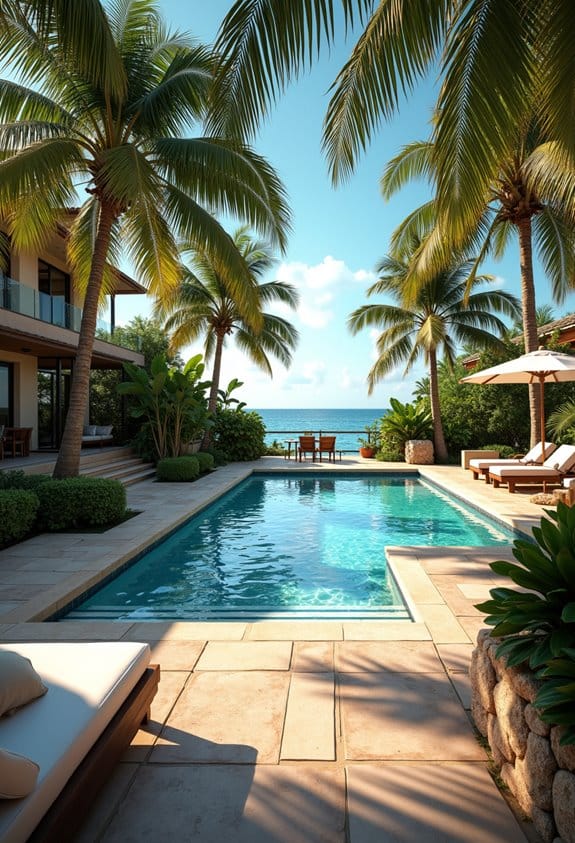
Pool Deck Material Options That Complement Palm Landscaping

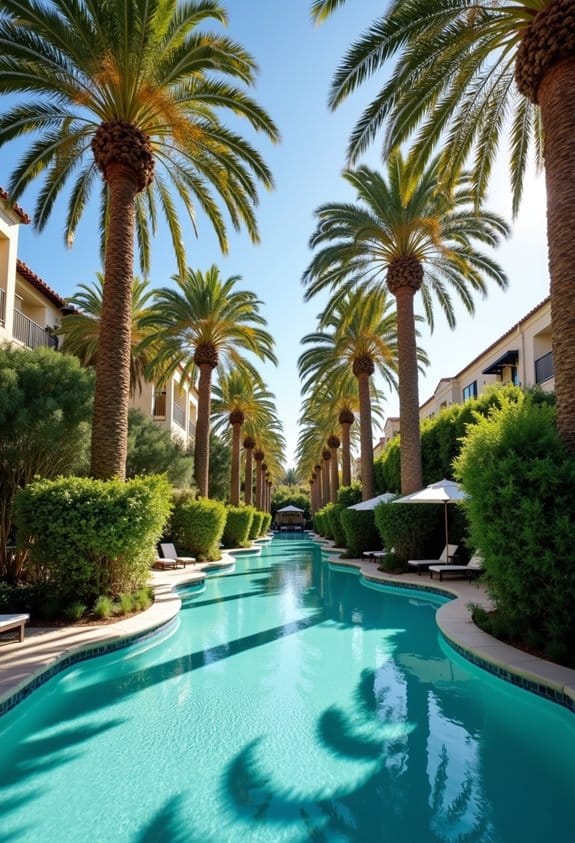
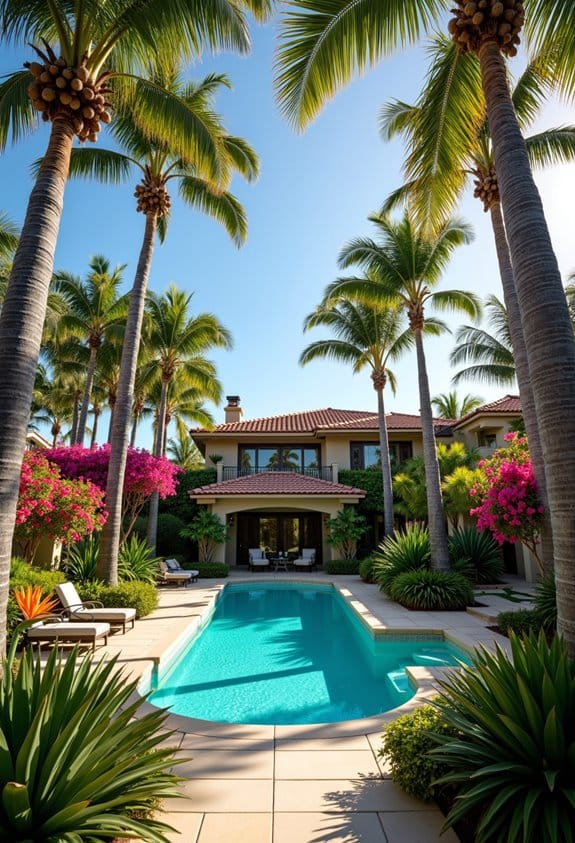
Pool decks near palms should use durable, heat-resistant materials like natural stone, textured concrete, wood decking, or pavers, which tolerate temperatures surpassing 100°F. Maintaining palm health requires planting palms at least 10 to 12 feet from pool edges and selecting pavers that accommodate root growth. Earth tone palettes in browns, reds, and muted greens unify the deck with desert landscapes. Non-slip surfaces enhance safety around wet areas. Explore complementary designs and maintenance tips that guarantee functionality and style in extreme climates.
Key Takeaways
- Natural stone and pavers offer durability and earth tones that harmonize beautifully with palm landscaping and desert environments.
- Textured concrete provides slip resistance and customizable finishes that complement tropical palm hues and natural surroundings.
- Wood decking adds a cooler, tropical vibe and can be custom-cut to accommodate palm root systems seamlessly.
- Brick decking ensures heat resistance and slip safety while matching earthy color palettes typical in palm-themed outdoor spaces.
- Combining hardscape materials like natural stone or pavers with planter boxes allows root growth while creating cohesive, functional poolside areas.
Benefits of Using Natural Stone for Pool Decks
Natural stone, including varieties like flagstone and quartzite, offers several practical benefits for pool decks, particularly in hot desert climates such as Palm Springs, where daytime temperatures often exceed 100°F. Natural stone provides a durable, non-slip surface, essential for safety around wet pool areas in outdoor spaces. Its rich earth tones enhance aesthetic appeal and complement palm landscaping seamlessly, creating visually appealing designs that elevate any poolside environment. The material’s durability withstands harsh desert conditions, resisting significant wear while maintaining consistent size and depth when paired with proper coping solutions. Additionally, natural stone enhances value by offering easy replacement options that integrate smoothly with existing decks. For homeowners seeking a design that balances function and style, natural stone stands out as a premium and lasting choice for pool decks in extreme climates. Many natural materials, like palm fibers, demonstrate similar weather resistance essential for outdoor durability and longevity.
Choosing Textured Concrete for Safety and Style
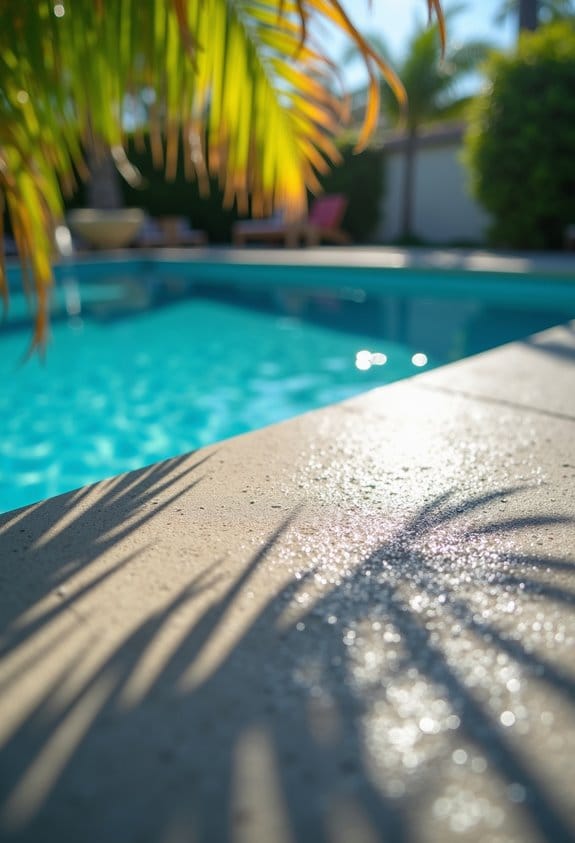
While natural stone is favored for its durability and aesthetics, textured concrete presents a compelling alternative for pool decks in desert regions where temperatures often surpass 100°F. Textured concrete offers a slip-resistant surface that enhances safety, especially important for areas prone to water exposure near pools. Its durability withstands extreme heat without cracking, maintaining structural integrity and aesthetic appeal over time. This material is low-maintenance, requiring only periodic cleaning to preserve its functionality and look. Customizable finishes and colors allow textured concrete to blend seamlessly with the earthy tones of palm landscaping. Additionally, patterns or stamped designs add a stylish element that complements the natural environment, making textured concrete a practical and visually appealing option for pool decks in high-temperature zones. Incorporating UV-resistant elements can further protect the surface from intense sunlight, extending its lifespan and preserving its appearance.
Advantages of Wood Decking Around Palm Trees
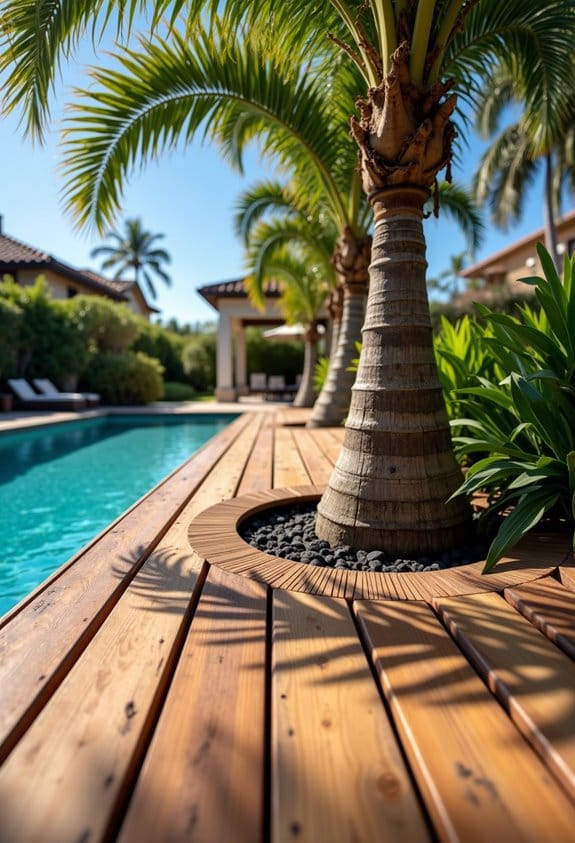
Several types of wood decking prove advantageous around palm trees, especially in desert climates where daytime temperatures regularly exceed 100°F. Treated wood decking, designed for durability in zones like Palm Springs, withstands intense heat and retains a natural aesthetic that harmonizes with lush palm trees and a poolside setting. Its natural texture creates a comfortable surface, cooler to the touch than concrete, enhancing outdoor lounging. Wood decking can be custom-cut to fit around palm roots, supporting healthy growth without compromising structural integrity. When damage occurs, sections can be easily replaced or repaired, enabling seamless fixes that preserve the overall landscaping design. This practicality, combined with the tropical vibe wood decking imparts, makes it a prime pool deck material option adjacent to palm trees. Additionally, choosing decking that complements UV-resistant materials used in palm landscaping helps maintain vibrant decor and longevity.
Creative Patterns With Pavers for Tropical Settings
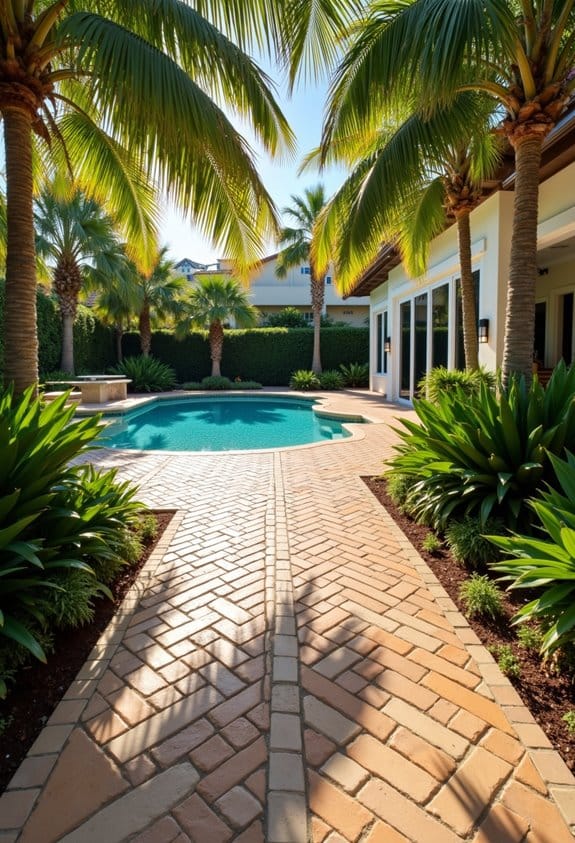
Countless design possibilities emerge when using pavers to construct pool decks in tropical settings, especially in environments with frequent temperatures surpassing 100°F like Palm Springs. Pavers, available in consistent sizes and shapes, enable the creation of intricate patterns such as herringbone, basketweave, or circular designs, which bring dynamic visual interest to the pool area. Mixing colors and textures within these patterns imitates the vibrant hues found in tropical landscaping, fostering a cohesive outdoor space. Durable and resistant to harsh desert conditions, pavers maintain their appearance over time without compromising complex layouts. Additionally, combining pavers with natural stone creates smooth connections between paved surfaces and palm-lined landscapes, reinforcing unity in design. Thoughtful use of these durable materials enhances both function and style in tropical pool environments. Selecting pool deck materials that support UV-resistant features ensures lasting vibrancy despite intense sun exposure.
Flagstone Varieties That Blend With Palm Landscaping
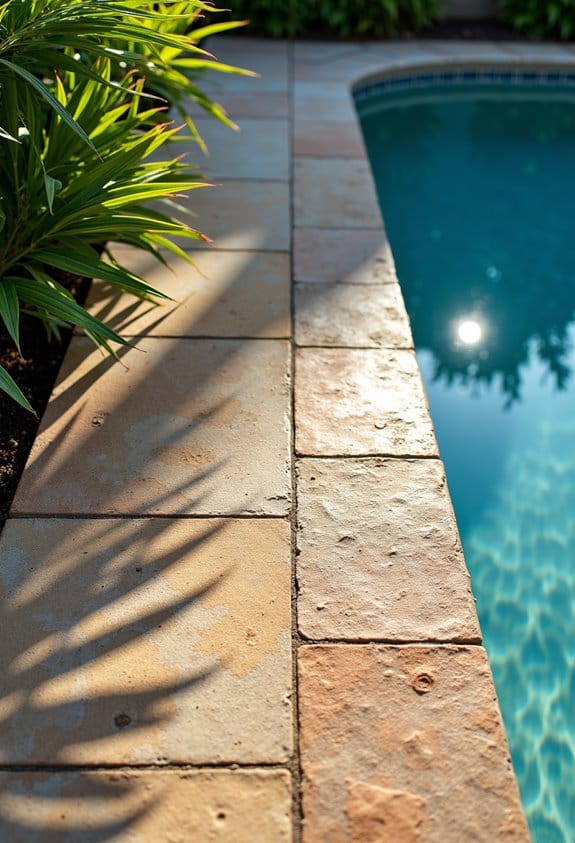
Pavers offer versatile options for patterned pool decks, but flagstone introduces a natural element that complements Palm Springs’ iconic palm landscaping. Flagstone’s earth tone colors blend seamlessly with the desert flora, creating a natural aesthetic around the pool area. Varieties like slate, bluestone, quartzite, and Arizona sandstone provide diverse shapes and textures, enhancing visual interest in outdoor spaces. Its non-slip surface guarantees safety, especially in wet conditions common near pools. The flagstone’s durability withstands intense summer temperatures exceeding 110°F typical in the Coachella Valley, making it suitable for year-round use. Installing flagstone in organic or geometric patterns further harmonizes with palm landscaping’s flowing forms. With maintenance involving occasional sealing, flagstone remains a practical, beautiful choice that balances rugged endurance and elegant design for any pool deck. Additionally, pairing flagstone with UV-resistant palm trees ensures the landscaping maintains its vibrancy and durability even under strong sunlight.
Heat Resistance and Durability of Brick Decking
Although brick decking features smaller units than flagstone, its construction offers remarkable heat resistance ideal for Palm Springs’ summer temperatures often surpassing 110°F. This material remains comfortably cool underfoot, contributing to a safer outdoor living space. Known for its durability, brick decking withstands harsh weather conditions, including intense sun exposure and temperature fluctuations common in desert climates. Its slip-resistant properties enhance safety around pool areas where moisture is frequent, making it a practical choice for families and pool users. The uniform size and color of brick provide aesthetic consistency across the deck, complementing surrounding palm landscaping. Overall, brick decking combines functional heat resistance with robust durability, ensuring long-lasting performance and reliable safety in poolside environments exposed to extreme desert elements. For enhanced aesthetic appeal and adaptability, brick decking pairs well with adjustable leaves of artificial palm trees, allowing customization to match different landscaping styles.
Coordinating Pool Coping With Deck Materials
When selecting pool coping, ensuring uniform size and depth is essential to create a smooth, consistent changeover between the pool wall and surrounding deck materials. Coordinating pool coping with deck materials such as natural stone or pavers establishes a seamless design that enhances both functionality and visual appeal. Natural stone options like flagstone mirror earthy textures found in palm landscaping, promoting a cohesive look. Pavers provide consistent sizing to complement symmetrical coping, allowing intricate pattern integration. Upgrading from basic concrete to brick or natural stone coping improves repair ease and adds style to the landscape. Careful attention to coordinating colors between coping and deck materials reinforces the overall aesthetic, ensuring the pool area maintains balance and harmony while blending naturally with the surrounding environment. Selecting materials with durability and weather resistance is vital to withstand coastal conditions and maintain long-term beauty.
Enhancing Aesthetics With Earth Tone Color Palettes
Selecting an earth tone color palette for pool decks greatly enhances visual cohesion by echoing the warm browns, deep reds, and muted greens common in palm landscaping zones, typically between USDA Hardiness Zones 9 and 11. Earth tone color palettes create a cohesive outdoor space by integrating natural stones and pavers that add texture and depth. Materials like flagstone provide a non-slip surface ideal for pool safety, while their color complements palm trees’ hues. Consistent use of these tones across decking and landscaping supports visual harmony, making pool areas inviting and tranquil. Incorporating natural stones enriches the aesthetic with varied surfaces that reflect the serene atmosphere palms foster. Such careful selection fosters an outdoor environment that balances functionality with enduring, natural beauty. Additionally, pairing these materials with UV-resistant artificial palm trees ensures long-lasting color and durability in outdoor settings.
Integrating Deck Materials With Palm Root Zones
Because palm root systems can expand extensively, integrating deck materials requires thoughtful planning to prevent structural damage near pool areas. Selecting pool deck materials like natural stones or durable pavers that tolerate palm root growth helps maintain structural integrity. Palms should be planted at least 10 to 12 feet from pool edges, especially larger species such as Royal palms. Planter boxes measuring 3 by 3 feet for smaller palms and 5 by 5 feet for Royals offer sufficient root space while integrating aesthetics. Waterproofing planter boxes adjacent to deck surfaces prevents moisture damage and supports healthy roots. Incorporating hardscaping elements, including stone pathways and retaining walls, provides functional appeal and defines the pool area. These strategies create visually stunning decks that harmonize with palm landscaping without sacrificing durability or design cohesion. Additionally, choosing materials with weather resistance ratings ensures longevity and durability in the coastal environment around pool decks.
Maintenance Tips for Pool Deck Materials in Desert Climates
Numerous maintenance practices enhance the durability of pool decks in desert climates, where daytime temperatures frequently exceed 100°F and intense sunlight accelerates wear. Selecting natural stone or heat-resistant pavers offers a foundation designed to withstand such conditions. Regular cleaning removes accumulating dust and debris, essential to avoid staining and surface degradation over time. Applying sealants protects materials from moisture absorption and helps shield against UV rays, preserving color vibrancy and structural integrity. Choosing non-slip surfaces like textured quartzite improves safety by preventing slips when heat makes decks slick. Integrating smart landscaping strategies, including strategically placed shade plants, reduces thermal stress on the pool deck, extending material lifespan. Additionally, selecting planters made from weather-resistant materials can complement pool landscaping while ensuring long-lasting outdoor decor. These maintenance tips create a resilient, attractive pool environment that harmonizes with desert pool landscaping for lasting enjoyment.
Combining Hardscapes and Plantings for a Cohesive Look
When integrating hardscapes and plantings around a pool area, using natural stone or pavers that echo the colors and textures of palm landscaping establishes a visually seamless changeover. Selecting earthy-toned flagstone for the pool deck, matching the vibrant greens of palms, creates a cohesive aesthetic that enhances design unity. Consistent materials for the deck and surrounding paths unify the space, making palms and hardscapes feel integrated. Built-in seating areas within the hardscape define social zones near palm plantings while blending with natural elements. Additionally, strategically placed lighting features in both palm landscaping and hardscapes improve nighttime visibility, adding depth to the overall design. This careful combination balances durability, aesthetics, and functional use, elevating the pool deck into a harmonious outdoor environment.
Frequently Asked Questions
What Is the Coolest Material for a Pool Deck?
The coolest material for a pool deck combines cooling pavers and heat resistant materials with natural stones offering temperature responsiveness. Reflective surfaces, light color choices, textured finishes, and minimalist designs enhance style while maintenance considerations guarantee durability and comfort.
Can You Plant Palm Trees Next to a Pool?
Like a tropical oasis beckoning, palm trees can thrive poolside, enhancing outdoor ambiance. Key palm tree considerations include root systems, plant compatibility, water drainage, and maintenance tips, ensuring shade benefits and aesthetic balance in landscaping choices for perfect poolside aesthetics.
What Is the Best Deck Material to Use Around a Pool?
The best pool deck material balances slip resistance, low heat absorption, durability, and maintenance ease. Options include natural stone and pavers for aesthetic appeal, safety features, cost efficiency, and a straightforward installation process, with varied durability comparisons.
What Is the Best Landscape to Put Around a Pool?
Contrary to popular belief, poolside landscaping thrives best with tropical plants, privacy screens, and shade structures. Integrating water features, outdoor furniture, deck lighting, non-slip surfaces, and cohesive color schemes enhances patio design and safety simultaneously.