As an Amazon Associate, we earn from qualifying purchases. Some links on this site are affiliate links at no extra cost to you. Our recommendations are based on thorough research and editorial judgment.

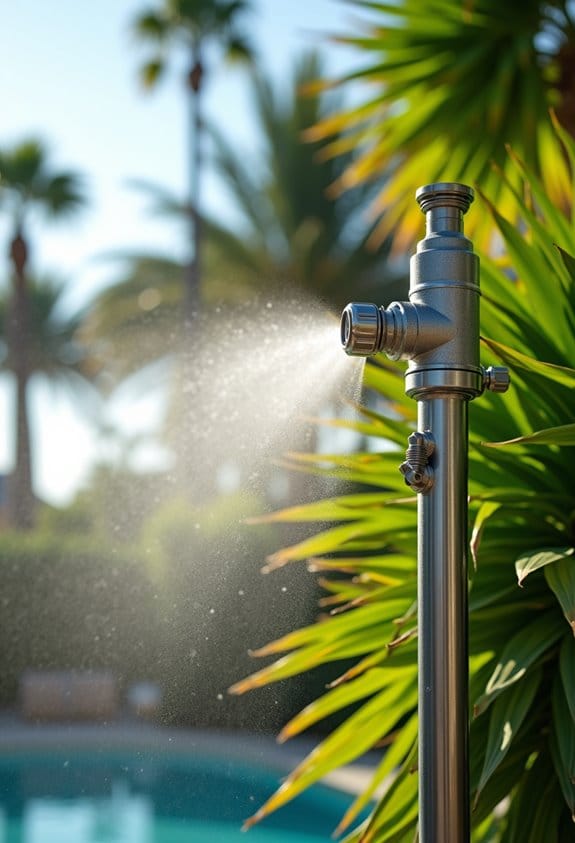
Installing a Misting System for Humid-Loving Palms

Installing a misting system for humid-loving palms involves spacing mist nozzles every 2 to 3 feet on ½-inch flexible tubing connected to a filtered water source, guaranteeing a fine mist maintains 70-80% relative humidity and cools air between 70 and 85°F. Choose high-pressure systems with anti-drip nozzles and UV-resistant tubing for durability. Proper misting prevents heat stress and leaf damage, while regular maintenance guarantees consistent performance. Further details explain optimizing misting frequency and coverage for robust palm health.
Key Takeaways
- Connect ½-inch flexible tubing to a water source using a 200 mesh filter to prevent clogging when installing the misting system.
- Secure tubing with stakes every few feet, and install misting nozzles spaced every 2 to 3 feet for even humidity distribution.
- Use low-pressure nozzles that produce a fine mist, ensuring ideal moisture levels without wetting leaves or saturating roots.
- Test the system post-installation to adjust nozzle placement and achieve consistent mist covering a 10 to 15-foot radius around palms.
- Choose UV-resistant tubing and materials for durability in outdoor environments, ensuring long-lasting misting system performance.
Benefits of Misting Systems for Palms
Although palms naturally flourish in tropical zones with high humidity, misting systems offer a controlled way to replicate those conditions in diverse environments. These systems release a fine spray of water to raise humidity levels around tropical plants, essential for palms adapted to 60-80% relative humidity. By emitting tiny droplets, misting systems guarantee rapid evaporation, cooling the air to 70-85°F, which prevents heat stress and leaf desiccation. Consistent misting maintains ideal moisture, supporting vigorous growth and reducing damage during hot spells above 85°F. Additionally, clean foliage resulting from regular misting discourages pests and fungal diseases, enhancing palm health. This combination of humidity control and microclimate cooling demonstrates how misting systems effectively promote the thriving of tropical palms beyond their native habitats. For enhanced nighttime ambiance around palms, integrating weatherproof fairy lights can complement misting systems by providing durable and flexible illumination.
Recommended Products

The Pynamite Cube Pro misting system works on bothersome insects: mosquitoes, flies, spiders, & no-see-ums. Say no to an ugly tank and yes to a Cube Pro. Only 26 inches cubed with a Bluetooth controller! Perfect for residential, barn or commercial setting. No assembly required, just set up the nozzle circuit and start misting.

Remote app control from your phone for all functions

PATIO MISTING SYSTEM PRO: Cool your outdoor spaces with Patio Misters! This complete misting system for midsized to large patios provides a cooling, ultra fine mist so you can beat the heat and be where you want to be, outside. This ready-to-install professional patio mister kit is perfect for most homes, connecting to your existing hose and outlet, and includes everything you need to cool your patio space without the time, hassle, or cost of other systems.
Understanding Humidity Needs of Palms
Maintaining humidity levels between 70% and 80% is critical for palm species originating from tropical regions, where air moisture supports cellular function and metabolic processes. These palms thrive in environments with consistent humidity, as air moisture directly enhances growth and resistance to pests and diseases. Insufficient humidity often causes leaf tip burn and stunted development, highlighting the importance of adequate moisture. Misting helps replicate natural humidity conditions, especially in drier indoor or arid areas, by delivering fine water droplets without saturating roots or foliage. Adjusting misting frequency and timing according to seasonal dryness optimizes water supply, ensuring palms receive sufficient moisture during dry spells. Monitoring ambient humidity and water supply conditions supports healthy palm maintenance, resulting in lush, resilient tropical plants. For artificial palms used outdoors, choosing models with UV-resistant features ensures their leaves maintain vibrant color despite exposure to sunlight.
Choosing the Right Misting System for Tropical Plants
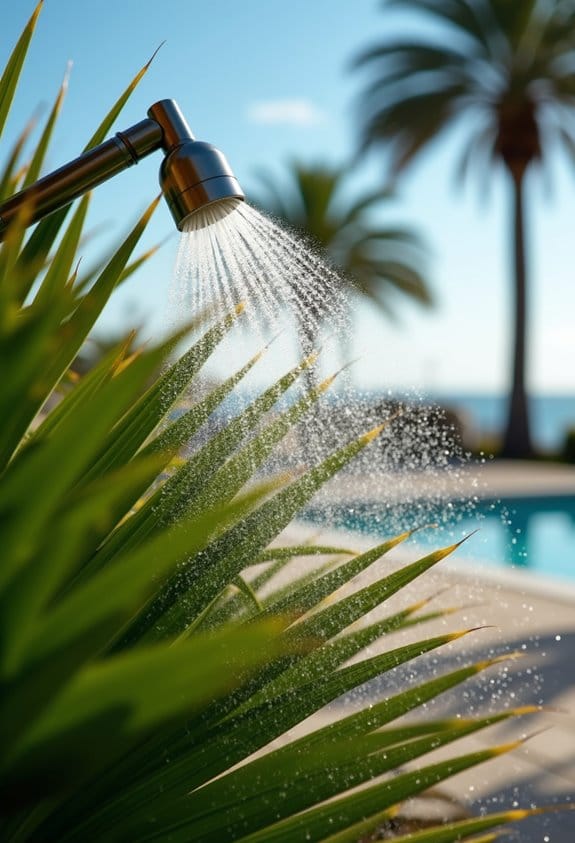
Selecting an appropriate misting system for tropical palms hinges on balancing fine water dispersion with controlled humidity levels to replicate a natural environment. High-pressure systems with smaller misting nozzles create a fine mist that evaporates quickly, maintaining humidity near 60-80% without soaking foliage or soil. Install a misting system equipped with anti-drip nozzles to reduce water waste and prevent fungal problems from excess moisture. The amount of water released should cover approximately a 10 to 15-foot radius, ensuring even, consistent humidity across the plant zone. Systems with built-in filters avoid mineral buildup, sustaining nozzle performance and mist quality over time. Choosing a reliable, well-designed misting system helps tropical plants thrive by simulating their native, humid rainforest conditions efficiently and effectively. To complement humidity control, consider integrating weather-resistant materials in your misting system for year-round durability and outdoor use.
Recommended Products


𝐂𝐎𝐎𝐋 𝐃𝐎𝐖𝐍 - Bring a refreshing mist wherever you go and cool the air by up to 30℉ (16.7°C) with the Pro Kit misting system! An upgraded pump with higher PSI and liquid cooling designed with a wireless remote, 24 ft. (7.3 m) of mist line with 18 clip attachments and 8 rubberized twist ties for mounting, the Pro Kit is simple to install where you need it most!
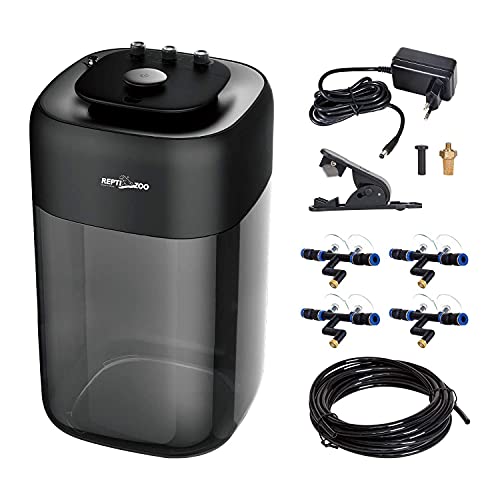
Integrated Design Reptile Humidifier and 10L Water Tank: You can add water directly to the water inlet of the main engine without removing the water bucket;It is up to 2.6 Gallon (10L) of water can be accommodated,visual water level design are used.
Step-by-Step Installation Process
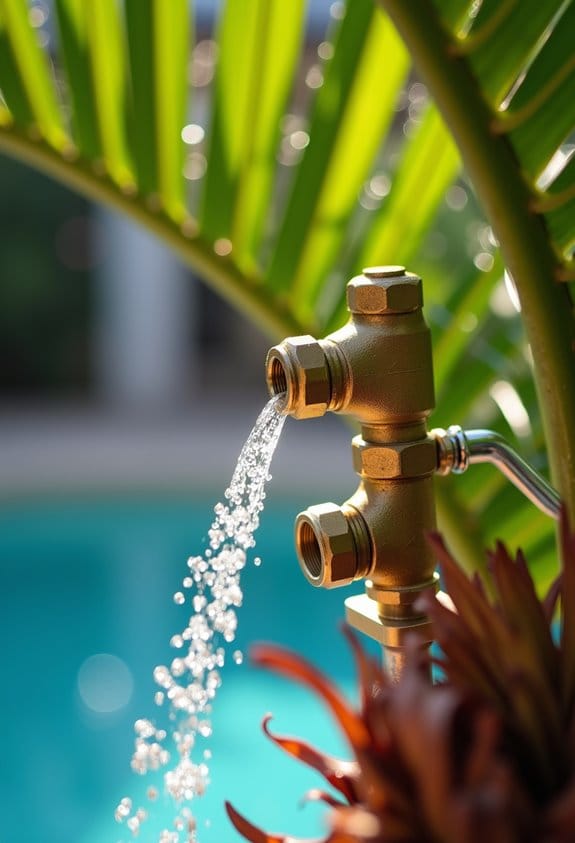
A detailed installation process begins with securing a high-quality misting system designed specifically for humid environments to provide efficient cooling without waterlogging. First, connect ½-inch flexible plastic tubing to a water source, including a 200 mesh drip irrigation filter to prevent nozzle clogging. Next, route the tubing toward your palm trees, securing it with stakes every few feet to maintain position. Install misting nozzles meant for low-pressure operation roughly every 2 to 3 feet, producing small water droplets that offer gentle, even coverage. Though this is a low-pressure system, selecting nozzles engineered for high pressure guarantees superior mist quality. After setup, test the system to confirm ideal moisture levels, adjusting nozzle placement or flow to avoid overly damp conditions, promoting your palms’ humid-loving needs with precision. Using UV-resistant materials in your setup will help ensure long-lasting performance and durability in outdoor coastal environments.
Maintenance Tips to Ensure Optimal Performance
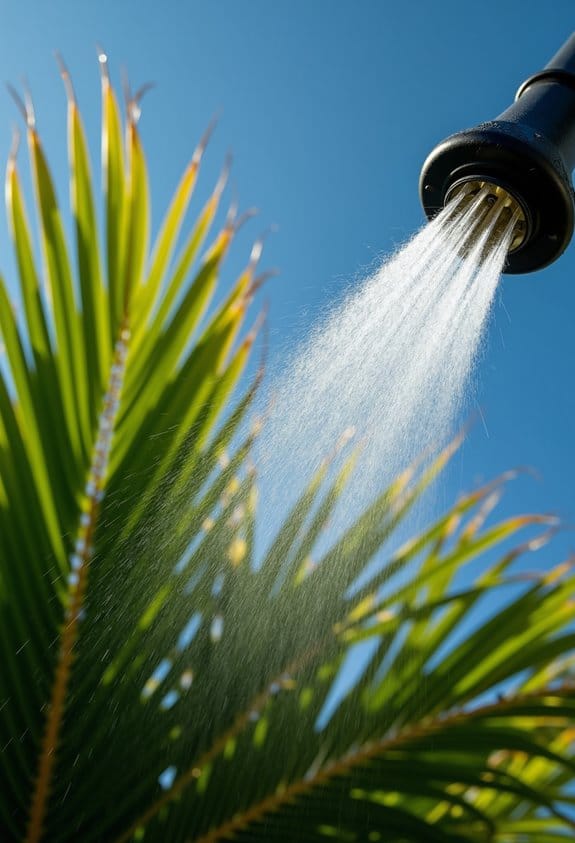
Although the misting system is designed for durability, monthly inspections of the nozzles are essential to assure they emit a fine, consistent mist that supports evaporation and perfect cooling near palm fronds. Cleaning the 200-mesh drip irrigation filter every three months maintains peak water flow, preventing pressure loss that degrades mist quality. Soaking nozzles biannually in a vinegar-water solution removes mineral buildup that can block spray patterns. At each season’s start, testing the misting system confirms all components function properly and allows nozzle repositioning to enhance coverage for humid-loving palms. Monitoring ambient humidity helps avoid over-misting, which risks fungal diseases due to excessive moisture. These maintenance routines assure the system efficiently supports the palms’ preferred microclimate year-round. Selecting palm varieties that are hardy to winter conditions can further improve their resilience when using misting systems outdoors.
Recommended Products

Forged brass and anodized aluminum construction with cooling fins; More durable 18 mm ceramic-coated solid stainless steel plungers; German-made packing seals
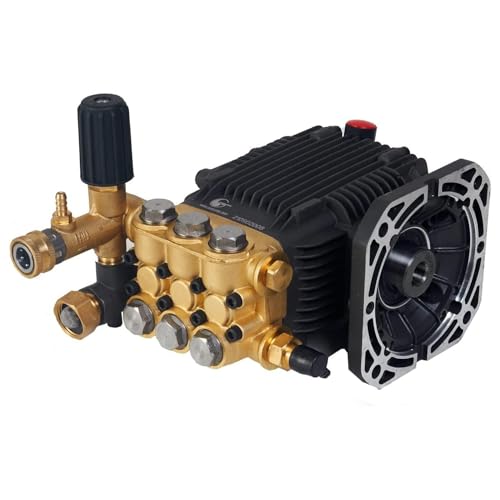
COMMERCIAL-GRADE PERFORMANCE: Durable triplex plunger pump delivers 1500 psi at 2.2 US gpm, offering higher efficiency, smoother operation and significantly longer service life than axial pumps for daily residential or light commercial use
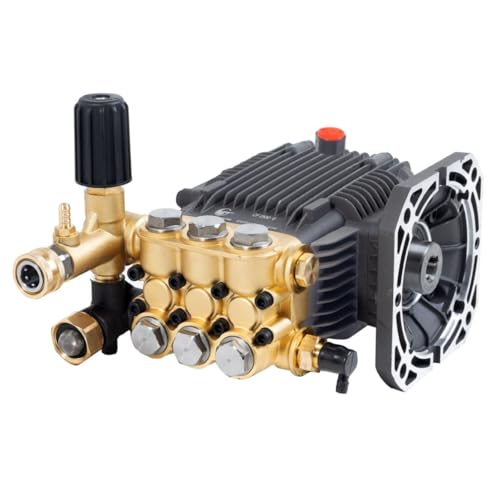
COMMERCIAL-GRADE PERFORMANCE: This durable triplex plunger pump delivers 2500 psi at 3.0 US gpm, offering higher efficiency, smoother operation, and a significantly longer service life than axial pumps for daily residential or light commercial power washer use
Adjusting Misting Frequency for Healthy Growth
Careful adjustment of misting frequency plays an essential role in maintaining healthy growth of humid-loving palms within warm, temperate zones (20–30°C). During peak heat and dry periods, especially in the afternoon, daily misting supports ideal hydration. A well-calibrated misting system, often paired with drip irrigation, guarantees consistent water delivery without over-saturation. Monitoring humidity levels regularly helps avoid fungal growth, which thrives in excessive moisture. In tropical climates, misting intervals of 1–3 days during hotter months prove effective, adapting to local conditions. Signs like leaf spotting or rot indicate excess water and a need to reduce misting frequency. Employing a timer with the misting system assures controlled water application, balancing moisture for healthy palm development while preventing the risks that come with both drought and over-watering. Using planters with drainage holes can further help prevent root rot by allowing excess water to escape efficiently.
Frequently Asked Questions
Do Misting Systems Work in High Humidity?
Despite high humidity levels limiting rapid cooling, misting effectiveness persists through fine droplets that encourage evaporation. This balance supports plant health by preventing excessive moisture buildup while offering modest relief in moist environments, contrasting discomfort and subtle comfort.
Does Misting Plants Help With Humidity?
Misting plants effectively increases humidity around them, benefiting humidity plants by simulating a tropical climate. Proper misting frequency is essential to maintain moisture without causing over-saturation, ensuring ideal growth conditions and preventing fungal issues.
Does Misting Help Palms?
Misting benefits palms care by increasing humidity levels, which supports tropical palms’ health and reduces stress. Proper misting frequency enhances nutrient uptake while preventing fungal issues, making it a valuable practice for maintaining ideal palm vitality.
What Is the Common Problem of a Mist System?
The common problem of a misting system is uneven moisture distribution, causing fungal growth. Effective humidity control techniques and regular misting system maintenance are vital palm care essentials to prevent disease and guarantee healthy growth in palms.