As an Amazon Associate, we earn from qualifying purchases. Some links on this site are affiliate links at no extra cost to you. Our recommendations are based on thorough research and editorial judgment.

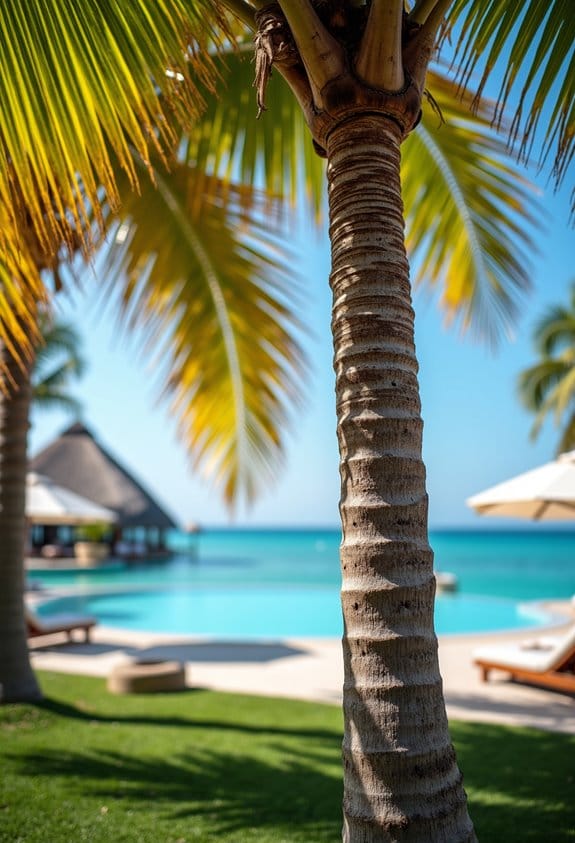
Understanding Sun Scald on Palm Trunks

Sun scald on palm trunks occurs when exposed bark surfaces endure temperatures above 40°C (104°F), leading to cellular damage and browning or bleaching. Young, thin-barked species like Sabal and Washingtonia are especially susceptible, particularly during sudden temperature swings between hot days and cool nights. Damage appears as sunken, discolored patches, often on the lower trunk, worsened by drought or recent pruning. Protective measures such as tree wraps and mulch maintain moisture and reduce heat stress. Exploring prevention and treatment options reveals strategies to protect palm health long-term.
Key Takeaways
- Sun scald damages palm trunks due to extreme temperature fluctuations and intense direct sunlight exposure, especially above 40°C (104°F).
- Young, thin-barked palms and species like Sabal, Washingtonia, and young coconut palms are most vulnerable to sunscald injury.
- Symptoms include browning, bleaching, peeling bark, sunken patches, and potential tissue necrosis beneath affected layers.
- Prevention includes using light-colored tree wraps or latex paint, shade cloth, maintaining soil moisture, and minimizing pruning during hot months.
- Long-term palm health benefits from fertilization to thicken bark and improve resilience against temperature extremes causing sunscald.
Causes of Sun Scald on Palm Trunks
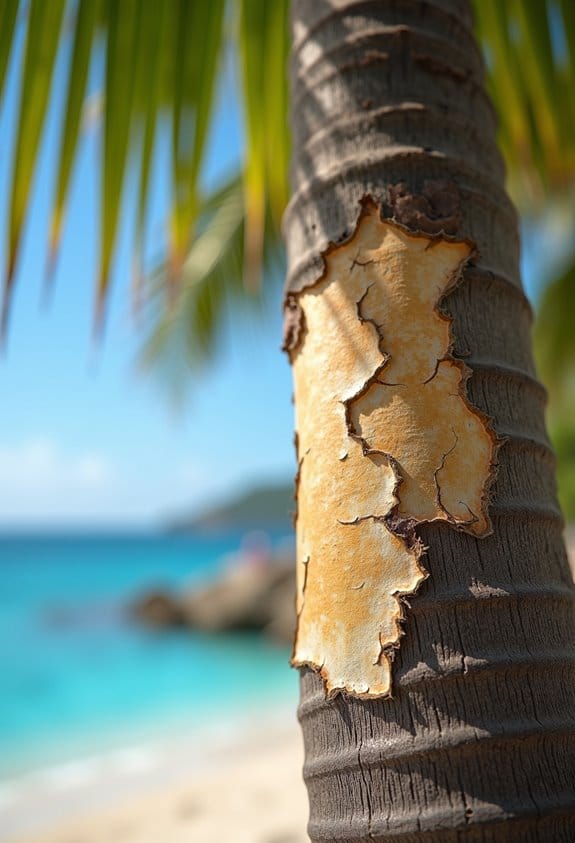
Although palms are hardy in many climates, sun scald on their trunks occurs primarily because intense, direct sunlight raises tissue temperatures above 40°C (104°F), causing cellular damage. Palms with thin bark or young trees are especially vulnerable since they lack protective layers to buffer extreme heat. Exposure to direct sunlight accelerates this damage, often resulting in discolored bark that appears sunken or peeling. Rapid temperature fluctuations between hot days and cooler nights worsen the impact, stressing the palm’s tissue and increasing injury risk. Newly exposed lower trunks or recently pruned areas face the highest threat due to sudden sunlight exposure. Understanding these causes highlights the importance of preventive measures for palms, particularly in planting locations with dappled sunlight or by using reflective wraps to reduce direct heat exposure and temperature swings. Choosing palms with UV-resistant materials can also help prevent damage caused by intense sunlight.
Recommended Products

Complete 14-Person Luxury Patio Dining Set for High-End Backyard Entertaining Designed for 14–16 guests, this extra-long aluminum dining set creates a true estate-style outdoor entertaining space for large households and social hosts in villa-style homes. Perfect for family gatherings, holiday dinners, and backyard parties, it transforms your patio into the center of high-end celebrations.

Giclee artwork, printed on high quality archival grade canvas

The entire single-panel print measures 51" x 34"
Palm Species Most Vulnerable to Sun Scald
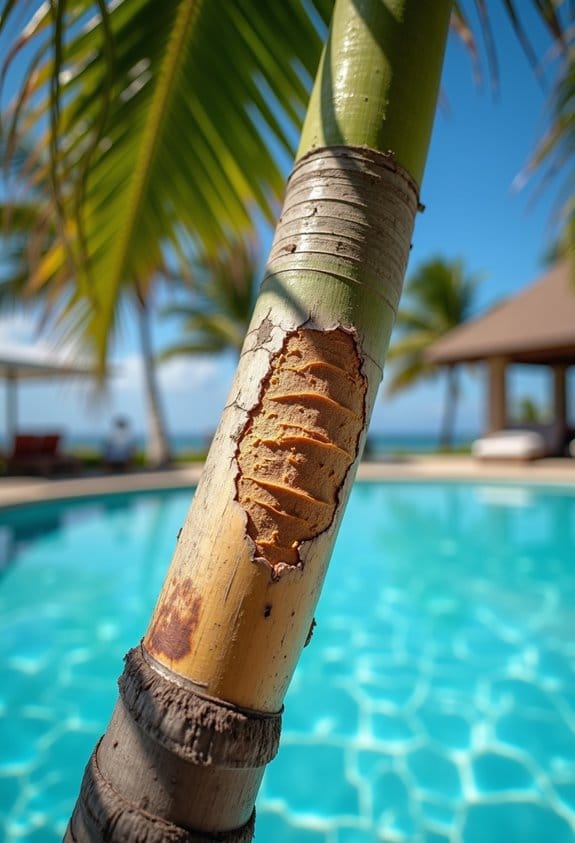
When palm species possess thin, delicate bark or softer trunks, such as the Sabal and Washingtonia palms, they become particularly prone to sun scald damage, especially in environments with direct sunlight exceeding temperatures of 40°C (104°F). Young, thinner-barked palms like these are especially susceptible to sun scald due to insufficient protective tissue against heat fluctuations. Coconut palms also face risks during early growth without adequate shade, increasing vulnerability. Additionally, Chamaedorea and Rhapis species, with softer trunks, are at risk if planted directly in full sun. To protect these susceptible palms, cultivating them in semi-shaded areas or using shade cloth during establishment is advisable. This approach reduces their exposure to excessive heat and helps prevent the onset of damaging sun scald injuries on vulnerable trunks. When using outdoor decor like battery lighted palm trees, choosing models with weather resistance ratings of IP65 or higher helps ensure protection against harsh environmental conditions.
Recommended Products

This necklace is made with real 14k yellow gold and is stamped with the appropriate 14k metal stamp

Pacifica 100% solution dyed polyester fabric

Costa's most high tech lens - 580 Glass provides superior clarity, ultra scratch-resistant, 100% UV protection and the best polarizing efficiency available.
Identifying Symptoms of Sun Scald in Palms
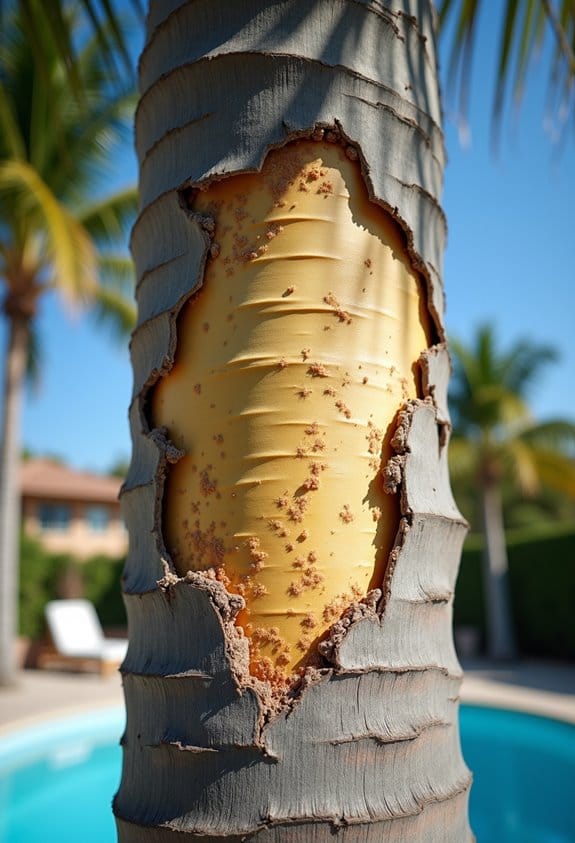
Visible signs of sun scald on palm trunks typically include browning or bleaching of the bark surface, especially on sides exposed to intense sunlight exceeding 40°C (104°F). These symptoms manifest as sunken patches or elongated streaks of discoloration along the tree bark. Such visible damage signals harm to underlying tissues, which may begin decaying beneath compromised bark. Over time, browning hardens into dried-out areas, often leading to tissue necrosis and weakening the palm’s support structure. This progression can result in significant structural issues if left unaddressed. Particularly, sunscald damage often becomes apparent in warmer months after cooler periods, when the stress of increased sunlight exposure intensifies. Careful monitoring of discoloration patterns on palm trunks can help detect sunscald early, enabling timely interventions to preserve tree health and stability. In contrast, UV resistant artificial palm trees offer a solution that avoids sun scald damage while providing realistic greenery.
Environmental Factors Influencing Sun Scald Damage
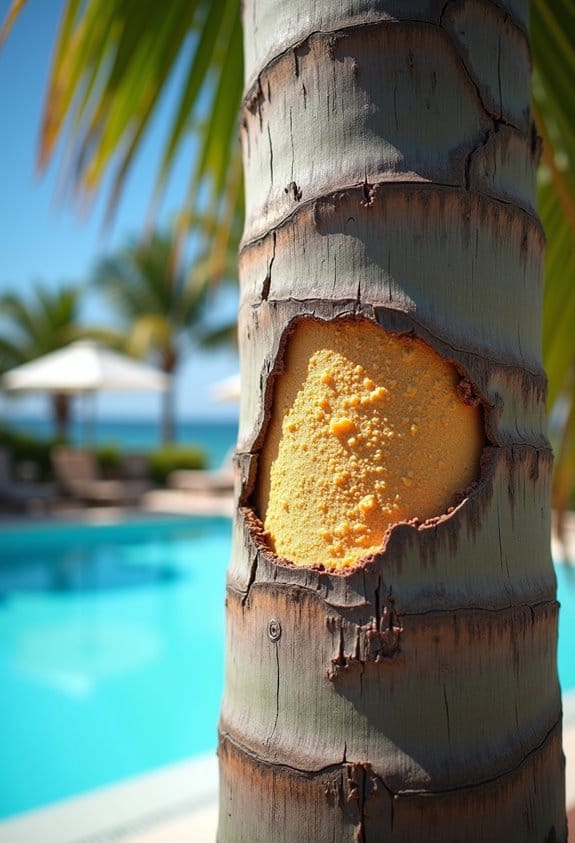
Sun scald damage on palm trunks often correlates with environmental conditions such as intense sunlight and rapid temperature changes, especially on the south and southwest sides of trees. Thin-barked trees, particularly young palms, are highly susceptible to sunscald caused by temperature fluctuations between daytime highs exceeding 30°C and nighttime drops below 10°C. Reflected sunlight from nearby concrete or light-colored surfaces can increase trunk temperatures by up to 15%, aggravating thermal stress. Prolonged drought conditions further weaken palms, making them vulnerable to sunscald injury. Seasonal shifts, particularly sudden winter warm spells above 20°C followed by frost below 0°C, can mislead trunk tissues into activating prematurely, increasing damage risk. These environmental factors collectively shape the severity and frequency of sunscald on palms, requiring careful attention in affected zones. Proper care and the use of UV-resistant materials are essential when considering artificial replacements to prevent damage from similar environmental stresses.
Recommended Products

ALL-WEATHER PATIO FURNITURE: Ready to face the elements, this modern outdoor dining set features a weather-resistant, powder-coated steel frame wrapped in handwoven UV-resistant brown resin flat wicker.
Fine Art giclee canvas print professionally hand-stretched

Fine Art giclee canvas print professionally hand-stretched
Effective Prevention Strategies for Palms
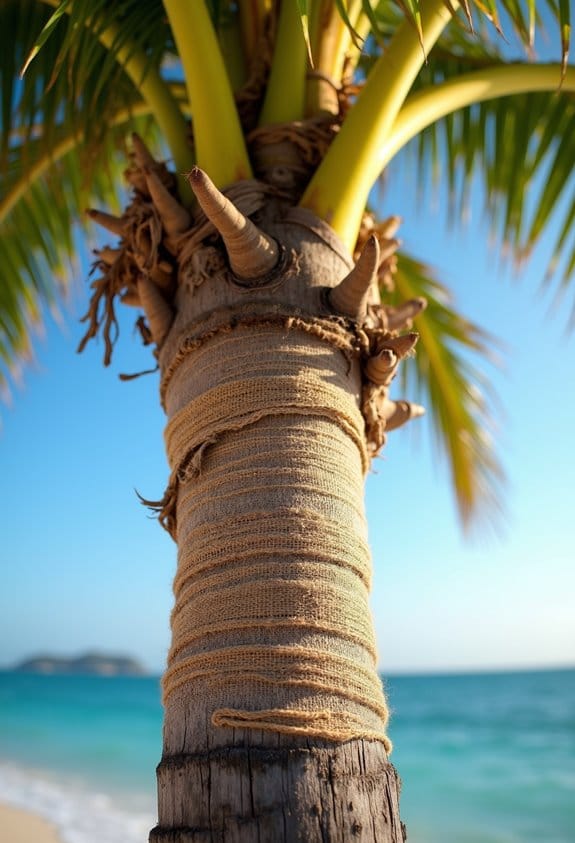
Numerous effective prevention strategies exist to protect palm trunks from sun scald damage, especially in regions with daytime temperatures exceeding 30°C and strong southwestern sunlight. Applying a light-colored, non-toxic tree wrap or latex paint on the bark can reflect sunlight, markedly reducing trunk temperature fluctuations and preventing damage. Wrapping the lower 60 cm of the trunk with burlap or tree wrap creates an effective shield. Planting palms in shaded zones or using companion plants offers natural protection from intense rays. Maintaining consistent soil moisture through regular watering and applying mulch around a 30 cm radius helps sustain palm health, reducing vulnerability. Additionally, minimizing pruning during hotter months preserves leaf coverage that shades the bark. These combined methods form a robust strategy to safeguard palm trunks from sun scald’s harmful effects. For long-lasting protection in coastal gardens, selecting hardy palm species that tolerate harsh sunlight and climate conditions further enhances sun scald prevention.
Recommended Products

Organic Mattress: Our 100% GOTS certified mattresses pass all government flammability requirements while maintaining UL/GREENGUARD certifications for low chemical emissions
Medium Firmness - Great for Side Sleepers, Back Sleepers and Couples

TOXIN-FREE – this mattress contains no petrochemical polyfoams, no fiberglass, no toxic flame retardants, and as of January 2025 our updated design no longer contains a rayon-poly blend. Just cotton, wool, natural latex and springs - those are the only ingredients in this mattress.
Treatment and Care After Sun Scald Injury
Once sun scald damage appears on palm trunks, evaluating the affected area becomes a top priority by inspecting bark discoloration, cracking, or peeling for signs of internal tissue harm. Dead or damaged fronds should be pruned to reduce pest infestations and encourage healthy growth. Adequate watering, approximately 1 inch weekly, supports recovery from sunscald stress. Applying a protective wrap or coating the injured area with white latex paint provides a temporary shield against further sun exposure while promoting healing. Tree trunks exposed to open wounds require monitoring for insect activity and infection to prevent complications. These combined treatments mitigate sunscald impacts effectively, preserving palm health during vulnerable stages and reducing the risk of long-term damage from environmental stress and pests. Installing weather-resistant lighting nearby can also help monitor plant health during nighttime and deter potential pest activity.
Recommended Products

Use for a variety of indoor and outdoor project surfaces including wood, metal, plaster, masonry or unglazed ceramic

Proudly made in Columbus, Ohio in an ISO 9001 manufacturing facility.
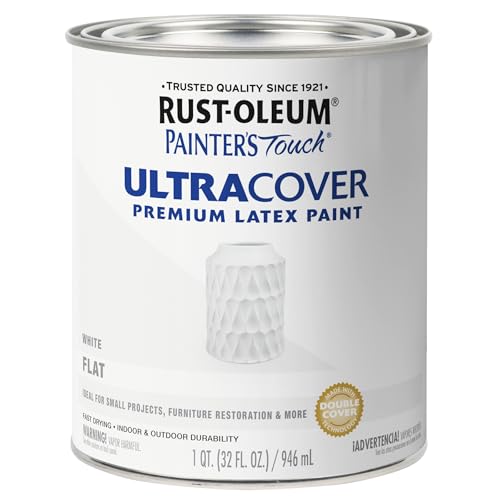
Use for a variety of indoor and outdoor project surfaces including wood, metal, plaster, masonry or unglazed ceramic
Long-Term Maintenance to Support Palm Health
Although palm trunks may appear sturdy, their long-term health depends on proactive maintenance to prevent sun scald damage. Regular monitoring for early signs of sunscald, such as peeling bark, is essential to protect trunks from further injury. For younger palms, applying a white, non-toxic latex paint or light-colored tree wrap reflects intense sunlight, reducing heat absorption during summer months that often exceed 90°F in USDA zones 9-11. Older trees benefit from careful pruning that avoids exposing large trunk areas, as excessive removal of fronds decreases natural shade and increases susceptibility. Consistent soil moisture maintained between 15-20% volumetric water content reduces drought stress, while balanced fertilization promotes bark thickening and resilience. Providing shade during the hottest hours, either naturally or with structures, also minimizes sunscald risk and supports palm longevity. For additional protection, consider integrating UV-resistant materials as used in artificial palm trees to shield vulnerable trunk areas.
Frequently Asked Questions
Can a Tree Recover From Sunscald?
A tree can recover from sunscald through natural tree healing processes, provided bark damage is not severe. Minimizing environmental stress and employing prevention methods can reduce long term effects and support successful recovery.
Can Plants Survive Sun Scald?
Like a phoenix rising from ashes, plants can survive sun scald with proper recovery strategies. By mitigating heat stress and solar exposure through protective measures, plant health can be preserved, enabling resilience and gradual healing after damage.
What Does Sunscald Look Like?
Sunscald symptoms identification includes browning or lightening bark, flaking, and cracks on affected palm species. Environmental factors like intense sunlight contribute. Prevention methods involve shading; treatment options focus on protecting damaged areas and preventing infection.
How to Treat Sun Scald?
Treating sun scald is like shielding delicate skin from harsh sunlight; effective sun protection tips include trunk shading methods and monitoring water stress signs. Implement seasonal care strategies and preventative measures to guarantee palm health and minimize damage risks.