As an Amazon Associate, we earn from qualifying purchases. Some links on this site are affiliate links at no extra cost to you. Our recommendations are based on thorough research and editorial judgment.

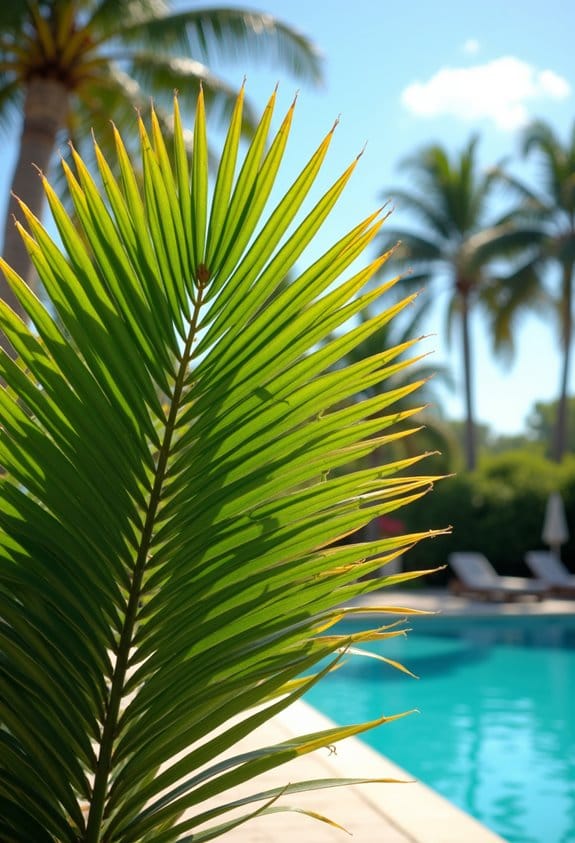
Watering Schedule Guide for Outdoor Palms in Different Climates

Outdoor palm watering varies by climate: subtropical zones 8-9 need thrice-weekly waterings in spring and summer; tropical zones 10+ require 4-5 times weekly due to heat and humidity; cooler zones 6-7 benefit from weekly watering during growth, less in winter. Newly planted palms need daily soaking initially, established palms 2-3 times per week, allowing 2-3 inches of soil to dry between. Deep watering, mulch, and soil type adjustments optimize hydration—explore detailed schedules and techniques next.
Key Takeaways
- Water palms 3 times weekly in subtropical zones and 4-5 times weekly in tropical zones during spring and summer.
- Newly planted palms need daily watering for the first week, then reduce to every other day in week two.
- Established palms require 2-3 weekly waterings in warm seasons and every 3-4 weeks during cooler months or dormancy.
- In hot, dry climates, water deeply 4-5 times weekly and use drip irrigation with mulch to conserve moisture.
- Monitor soil moisture regularly, allowing the top 2-3 inches to dry between waterings to prevent root rot and dehydration.
Understanding Palm Water Needs by Climate Zone
Climate-specific watering schedules are vital for maintaining healthy outdoor palms, as water requirements vary considerably across USDA Zones. In subtropical Zones 8 and 9, palms thrive with watering three times a week during spring and summer, aligning well with typical palm tree care practices. Tropical Zones 10 and warmer demand more frequent watering—around 4-5 times weekly—due to elevated temperatures and humidity that increase water loss. Conversely, cooler Zones 6 and 7 require far less, roughly once a week during active growth and every 2-4 weeks in winter dormancy. Scheduling water sessions in summer accounts for palms’ peak water use, balancing hydration without overwatering. Understanding these variations guarantees precise irrigation, vital for preventing stress or root rot in diverse climates, while optimizing palm tree health through tailored, climate-aware watering routines. Additionally, choosing palms with well-drained sandy soil and providing wind protection can greatly improve their water retention and overall health in coastal climates.
Daily Watering Routine for Newly Planted Palms
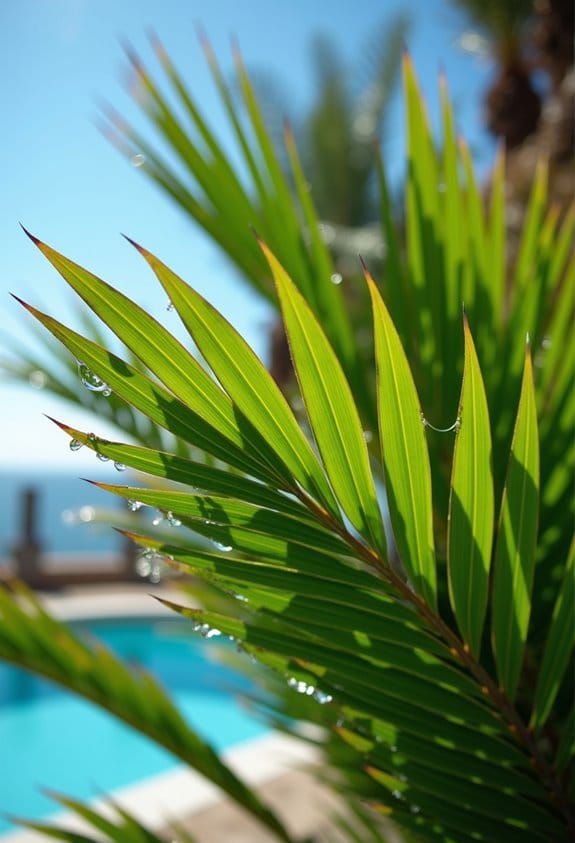
Newly planted palms require a daily watering routine during their first week to establish roots and guarantee deep moisture absorption. This involves thoroughly soaking the root ball rather than lightly watering the surface, ensuring consistent soil moisture about 6 to 8 inches deep. After this initial period, watering should shift to every other day during the second week, maintaining moisture without causing waterlogging. Checking soil moisture regularly helps prevent overwatering, which can damage developing roots. Proper daily watering supports the palm’s adaptation, especially in warmer climates where evaporation rates are high. Using a slow-release watering technique around the base encourages roots to grow downward. This methodical approach during the first two weeks lays the foundation for a healthy, resilient palm able to thrive outdoors with ideal hydration. Choosing palms with UV-resistant materials can enhance their durability in outdoor climates.
Recommended Products

Custom Layout with Adapters: Shorten lines for a neater, more compact setup or extend them longer as you like, the flexibility to modify or repair lines in seconds.

Engineered for Approx. 12-Hour Slow Release – Ideal for overnight watering and much longer-lasting than common short-duration options.

Custom Layout with Adapters: Shorten lines for a neater, more compact setup or extend them longer as you like, the flexibility to modify or repair lines in seconds.
Adjusting Water Frequency for Established Palms
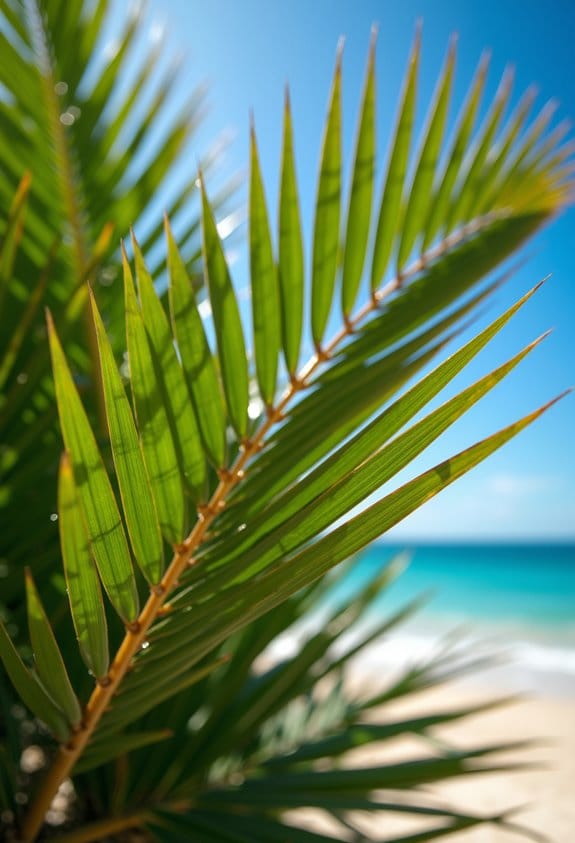
When established palms are growing outdoors, adjusting the watering frequency is essential to maintain ideal soil moisture and root health throughout varying seasonal conditions. Typically, watering palms 2-3 times per week supports a robust root system, ensuring adequate hydration without promoting overwatering. In cooler months or during dormancy, this frequency decreases to every 3-4 weeks because palms require less moisture. Allowing the top 2-3 inches of soil to dry between waterings prevents root rot by avoiding excess moisture. During hotter periods, a deep water session helps penetrate the soil thoroughly, nurturing deeper roots and sustaining liveliness. Although established palms tolerate brief droughts, consistent irrigation tailored to climate and soil moisture conditions optimizes growth and reduces stress on the plant’s root system. In addition, outdoor palms benefit from weather-resistant materials that help protect them in variable environments.
Watering Techniques for Hot and Dry Environments
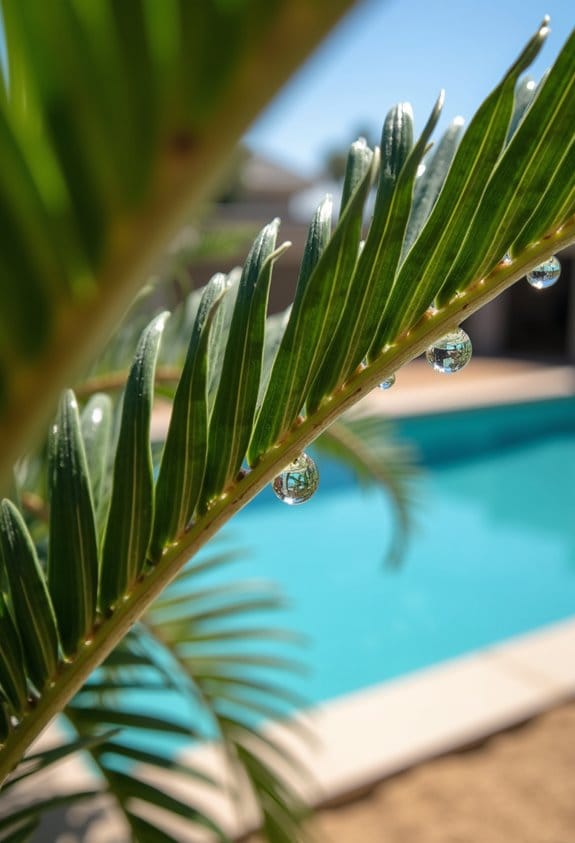
Outdoors palms exposed to hot and dry environments require increased watering frequency, typically 4-5 times per week when temperatures reach 90°F or higher. Each session should deliver about 1-2 gallons of water per palm to guarantee deep root penetration. Employing drip irrigation systems enhances efficiency by targeting water directly to the root zone, reducing evaporation in a hot summer. Before peak heat, pre-hydrating the soil and applying mulch helps conserve moisture across four weeks of intense dryness. It is essential to monitor soil moisture regularly, allowing the top few inches to dry between waterings to prevent root rot. These watering techniques support healthy palm growth by balancing adequate hydration with soil aeration in challenging hot and dry conditions. Additionally, selecting palms made from durable, weather-resistant materials can complement your garden maintenance by providing year-round visual appeal with minimal upkeep.
Recommended Products

ROOT WATERING TOOL: The Underhill A-DD36-25 Deep Drip Spikes encourage deeper tree root growth by delivering water, oxygen, nutrients, and fertilizer directly into the soil. Save water and reduce surface evaporation.

Standard 3/4" Garden Hose Thread Connections
Managing Irrigation in Moderate and Temperate Climates
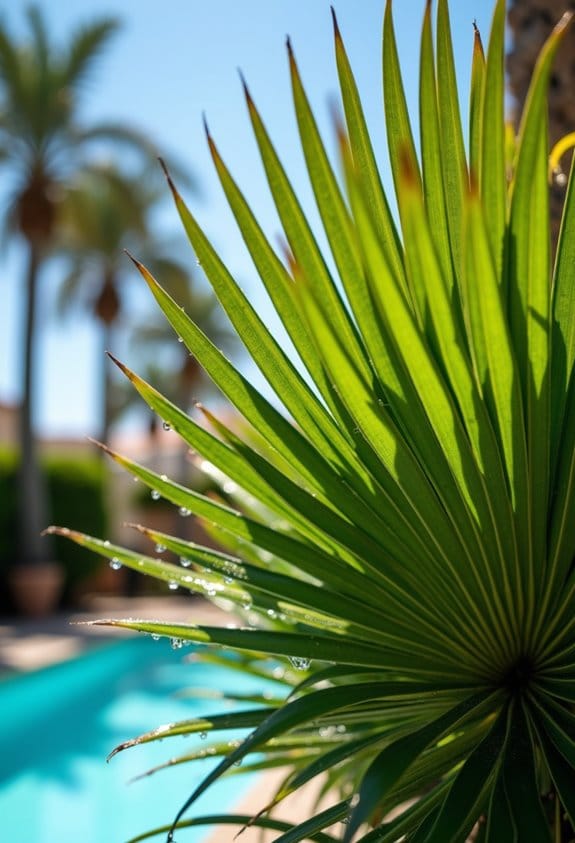
Although moderate and temperate climates offer less extreme conditions, palms still demand careful irrigation management to maintain ideal health. In moderate climates, palm trees require once-a-week watering during spring and fall, increasing to two or three times weekly in summer’s heat. Newly planted palms need daily watering for the first week, then three to four times weekly for the next month, promoting strong root establishment. Watering should deeply saturate soil at least 5cm down, preventing ineffective surface wetting. During winter, established palms need watering only every two to four weeks when temperatures drop below 60°F, after soil moisture checks. Mulching around palms enhances moisture retention and temperature control, lowering the frequency of frequent watering necessary during hot spells in temperate zones. Additionally, maintaining the appropriate soil pH level between 6.0 and 7.5 ensures optimal nutrient absorption and healthy palm growth.
Recommended Products

BULK MULCH FOR LARGE PROJECTS: Pallet contains 80 bags of Scotts Nature Scapes Color Enhanced Mulch Deep Forest Brown; each 1.5 cu. ft. bag covers 6 sq. ft. when applied in a 3-inch layer

【Grated Solid Brass Top & 360° Anti-Glare Illumination】Crafted with heavy-duty solid brass top and reinforced nylon bottom, this fixture outperforms aluminum/plastic alternatives with military-grade corrosion resistance. The precision cut brass grille prevents glare and eliminates harsh light while maintaining 360° illumination, eliminating eyestrain on walkways/driveways. Reinforced 3mm thick grille withstands 200 lbs. of mower impact

ORGANIC MULCH: With this Miracle-Gro Organic All Natural Mulch bulk pallet, you can cover your biggest landscaping and gardening projects
Reducing Watering in Humid and Rainy Conditions
Since palms efficiently absorb environmental moisture in humid and rainy regions, supplemental watering requirements diminish, reducing the risk of overwatering. In consistently humid zones, palms typically need water only every two to three weeks during prolonged rainy periods, depending on the soil’s moisture retention capacity. Monitoring soil moisture is vital, as saturated soil elevates the risk of root rot, harmful to palm health. Applying a mulch layer of 3-5 inches around the base helps maintain consistent moisture levels while suppressing weed growth. For newly planted palms, regular moisture checks are key to avoid excess watering until the root ball stabilizes. Adjustments based on soil type and local rainfall guarantee ideal hydration without jeopardizing root integrity in humid and rainy climates. Additionally, selecting cold-hardy palm species can support healthier growth in varying climate conditions.
Seasonal Watering Schedules for Optimal Growth
Throughout the year, palm watering schedules should adjust seasonally to support ideal growth and prevent stress caused by insufficient or excessive moisture. New planted palms require daily watering during the first week, decreasing to three times weekly over the next month to establish roots effectively. In spring, water once a week if temperatures stay below 75°F, then increase to 2–3 times weekly during early summer. During the peak summer months, palms need watering 3–4 times weekly, with daily irrigation recommended during heat waves to combat high temperature evaporation. Mature palms generally require watering once a week when rain is insufficient. Winter watering should be minimal, only applied once every three to four weeks after checking soil moisture 5cm deep to avoid cooling the soil excessively while maintaining appropriate hydration. For outdoor spaces, choosing artificial palms made from UV-resistant materials ensures vibrant appearance year-round without worrying about watering needs.
Using Drip Irrigation Systems for Effective Hydration
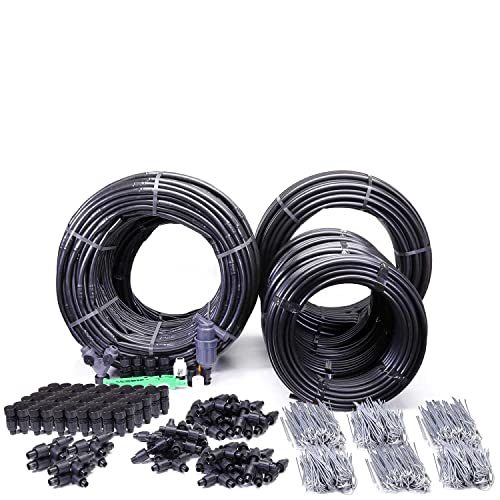
Drip irrigation systems deliver water with remarkable precision, supplying approximately 1 inch weekly directly to the root zone of outdoor palms. The system’s emitter tubing, placed around palm bases with holes spaced about 8 inches apart, guarantees even water distribution tailored to each palm’s needs. Adjusting emitter number according to palm size and moisture demands promotes consistent hydration and ideal growth. This method provides deep soil saturation, critical for healthy roots, while minimizing water waste. Regular maintenance, such as purging lines to prevent emitter clogging, sustains system efficiency. By targeting specific root zones, drip irrigation maximizes water absorption and reduces evaporation, making it an effective hydration strategy for palms in various climates. This irrigation approach balances precision and economy, essential in promoting palm vitality year-round. Additionally, using well-draining soil ensures that irrigation efforts do not lead to waterlogging, maintaining root health and preventing palm stress.
Recommended Products

16 mm dripline with 0.92 GPH pressure-compensating emitters – Delivers consistent, low-volume water directly to plant root zones for efficient subsurface and surface drip irrigation.

LDPE - Low Density Polyethylene

0.9 gph 12" spacing, 250'
Signs of Overwatering and Underwatering in Palms
Proper palm care hinges on recognizing clear signs of overwatering and underwatering to maintain ideal hydration. Overwatering often causes yellowing leaves, root rot, and a foul odor from soil saturated beyond 5 cm depth, indicating poor drainage and excessive water retention. Conversely, underwatering reveals itself through browning leaf tips, wilting fronds, and stunted growth, particularly during heatwaves or arid spells when palms demand more water. Soil that feels dry and hard just a few inches beneath the surface signals immediate irrigation needs to prevent stress. Regular monitoring of soil moisture and palm health is essential for maintaining balance, as established palms generally prefer to dry out moderately between watering sessions, avoiding problems associated with inconsistent soil moisture levels or improper water management. Selecting palms with durable materials also helps ensure their resilience in outdoor conditions and can influence their watering needs.
Enhancing Soil and Mulch for Water Retention
When soil is amended with organic compost, water retention improves considerably, facilitating sustained hydration for outdoor palms in USDA zones 9 to 11. Organic compost enriches the soil by increasing nutrient availability and enhancing soil moisture capacity, supporting palm root development. Applying a 2-3 inch layer of mulch such as wood chips or straw around the palm base reduces evaporation and maintains stable soil temperature between 60°F and 75°F. Mulch also slows moisture loss, lessening watering frequency by up to 30%. For peak water retention, sandy soil mixtures should include 20-30% organic compost to balance drainage and moisture. Incorporating mycorrhizal fungi during planting further boosts the soil’s water-holding efficiency and nutrient uptake. Consistent use of these practices guarantees palms receive deep, consistent hydration without risk of waterlogging or drought stress. Selecting palm species with UV resistance and durability ensures they withstand various weather conditions and maintain their health even in harsh climates.
Recommended Products
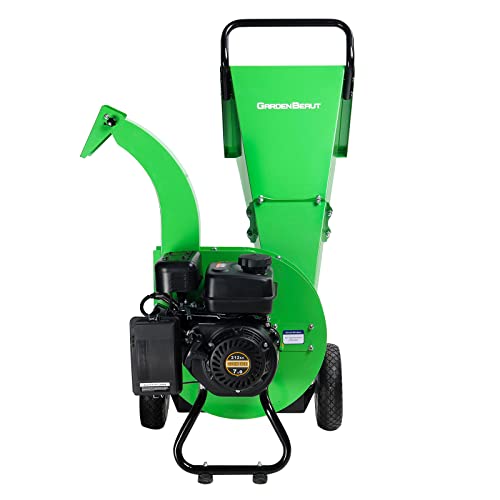
S1 Wood chipper shredder comes with a larger 15.6-inch large cutting rotor, which is more efficent and faster speed than those mini wood chipper. It is equipped with 2 blades and 6 hammers for more consistent speeds and efficient shredding. The efficient feeding speed and the grilling device on the discharge outlet effortlessly transform debris and branch leaves into mulch, enriching your garden with rich organic nutrients.

Pre-Rinsed & Pre-Screened Coco Coir - Every block of our coconut fiber substrate has been screened multiple times through an extremely small filter to get rid of any traces of fiber, sand, and rocks. This is what sets our coco coir apart, giving you pure and clean coco coir for plants, unlike others who don’t filter their coco coir for impurities.

Designed for use in waterless Sun-Mar composting toilet systems and Sun-Mar home composters
Frequently Asked Questions
How Often Should I Water Outdoor Palms?
Outdoor palms require watering frequency based on palm tree care principles, adjusting watering techniques to maintain ideal soil moisture. Climate impact dictates schedules, with more frequent watering during extreme heat and less during dormancy to promote healthy growth.
How Long Can a Palm Tree Go Without Watering?
A palm tree’s drought tolerance varies; established palms with deep roots and good moisture retention can survive weeks without water. However, environmental factors like heat and soil type heavily influence this duration, challenging assumptions of uniform resilience.
How Much Water a Day Does a Palm Tree Need?
Palm tree hydration varies by size and climate effects; small palms need about 0.25 gallons, medium 1.0 gallon, and large 1.0–2.0 gallons daily. Watering frequency adjusts to maintain adequate soil moisture, especially during heat or drought conditions.
Do I Water Palm Trees in Winter?
Watering palm trees in winter is a delicate dance; during palm dormancy, minimal irrigation is needed. Winter care prioritizes monitoring soil moisture, reducing frequency to protect roots from frost, ensuring palms endure cold with balanced hydration and frost protection.