As an Amazon Associate, we earn from qualifying purchases. Some links on this site are affiliate links at no extra cost to you. Our recommendations are based on thorough research and editorial judgment.

Pruning Palm Trees: When and How to Do It Correctly

Pruning palm trees should occur in late spring to early summer, during warm weather for best healing and growth. Remove only fully brown fronds cutting flush with the trunk, leaving at least six green fronds to sustain the tree’s energy. Trim flower and fruit stalks anytime to maintain neatness and reduce pest risk. Use clean pole saws or pruning saws, wear gloves, and follow safe ladder practices. Proper timing and technique prevent damage, ensuring healthy palms. Further guidance reveals essential tools and disease prevention methods.
Key Takeaways
- Prune palm trees during late spring to early summer for faster healing and reduced stress.
- Remove only fully brown or yellowing fronds while leaving at least 6 to 8 green fronds intact.
- Cut brown fronds flush with the trunk using a pole saw or curved pruning saw.
- Regularly remove flower and fruit stalks to maintain appearance and prevent pest issues.
- Always disinfect tools before pruning and use gloves and ladders safely for protection.
Understanding When Palm Trees Need Pruning
Although palm trees naturally shed older fronds, pruning becomes essential when these fronds bend below an imaginary horizontal line perpendicular to the trunk, signaling they no longer contribute to the tree’s health. Palm fronds showing yellowing or brown discoloration should be removed promptly to reduce stress and improve the tree’s energy efficiency. However, green fronds remain crucial and must be left untouched to support growth. The best time for palm tree trimming aligns with warmer months, typically between late spring and summer, when temperatures are consistently above 70°F (21°C), ensuring active growth. Regular inspections allow early identification of dead or unhealthy fronds, allowing precise pruning to preserve the palm’s structure. Pruning focuses solely on dead growth; removing healthy fronds risks long-term damage and compromises the palm’s overall vitality. For outdoor palms, maintaining UV resistance helps ensure the fronds retain their vibrant color post-pruning.
Choosing the Best Time of Year for Palm Pruning
Pruning palm trees during the warmer months, specifically from late spring through early summer when temperatures consistently exceed 70°F (21°C), promotes faster healing and reduces stress on the plant. This period aligns with the growing season, allowing palms to recover efficiently after pruning. It is crucial to focus on removing dead or damaged green fronds during this time, as they no longer contribute to photosynthesis. Avoid pruning in fall or winter because colder temperatures hinder recovery and increase vulnerability to cold damage. Completing pruning before late summer storms also helps reduce the weight of fronds, improving storm resistance. Regularly monitoring palm trees for fronds bending below the crown guarantees timely pruning and supports healthy growth throughout the growing season. Removing unwanted fruit stalks in summer also optimizes energy use. Selecting palm species with strong wind resistance features can further enhance the tree’s ability to withstand seasonal storms after pruning.
Proper Techniques for Trimming Palm Trees
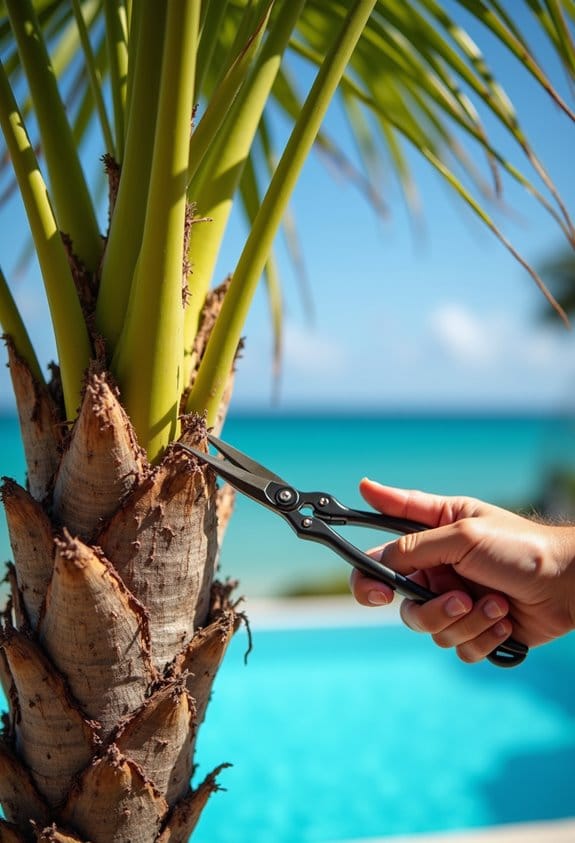
Using the right tools and precise cuts is essential when trimming palm trees, as improper techniques can harm the tree and slow recovery. A pole saw or a curved pruning saw should be used to cut brown fronds flush with the trunk, avoiding ragged edges that invite disease. Only fully brown fronds must be removed, preserving green fronds to maintain the palm’s energy through photosynthesis. It is vital not to over-prune; leaving at least 6 to 8 green fronds guarantees protection of the bud and supports healthy new growth. Tools must be clean and disinfected before pruning to prevent bacterial or fungal infections. Summer, especially late spring to early summer, is the ideal pruning period, promoting robust recovery and encouraging vigorous new growth cycles. For those seeking alternatives, artificial palm trees provide a maintenance-free option without the need for pruning or watering.
Managing Palm Tree Flowers and Fruit During Pruning
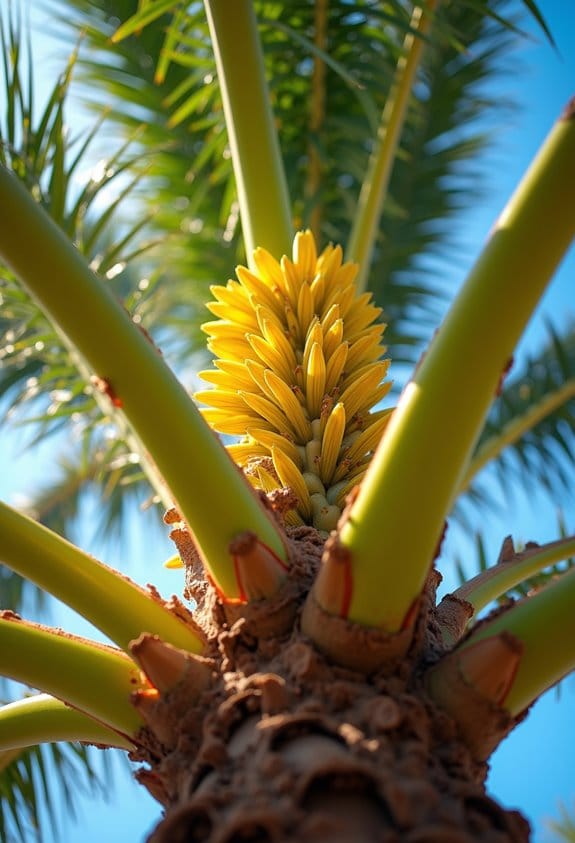
Regularly removing flower stalks and fruit clusters from palm trees helps maintain neatness and prevents unwanted seed dispersal, especially in species like queen palms. Flower stalks can be pruned at any time without harming the tree, allowing for tidy growth areas. Early cutting of fruit stalks, such as those on Mexican Fan palms, stops ripe berries and falling fruits from cluttering the ground. It is crucial to remove entire fruit clusters rather than cutting healthy fronds, preserving overall tree vitality. Using clean tools reduces infection risks during this process. Routine management of flower and fruit stalks enhances both appearance and health, promoting controlled growth and preventing pest attraction. This practice is particularly important in warmer climates, USDA zones 9 through 11, where these palms thrive and produce abundant seedheads. For garden parties and outdoor events in these areas, incorporating tropical-themed decorations like palm leaf buntings can complement the natural beauty of well-maintained palms.
Essential Tools and Safety Measures for Palm Tree Care
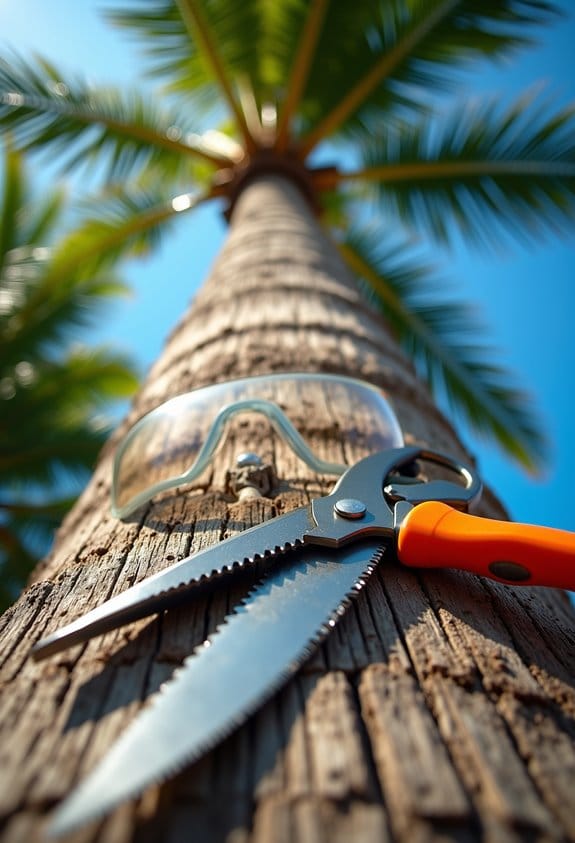
A variety of specialized tools are essential for effective palm tree care, guaranteeing precise cuts and minimizing damage to the tree’s tissues. Pole saws or curved pruning saws allow safe trimming of higher fronds, with cuts made flush to the trunk. Loppers and hand pruners handle smaller fronds efficiently, while handsaws are necessary for thick stems on mature palms. Wearing gloves protects hands from cuts and slips during pruning. Use a stable ladder with a spotter for safety when working at heights, especially important during periods of high winds to prevent accidents. Clean and disinfect tools between trees to reduce disease transmission. When heavy lifting or hazardous trimming is needed, hiring a professional tree service is advisable to guarantee safety and preserve the palm’s health. Choosing palms with adjustable iron wire stems can also facilitate easier shaping and maintenance after pruning.
Preventing Disease and Damage While Pruning Palms
Begin pruning palm trees by ensuring all cutting tools are meticulously cleaned and sharpened to minimize disease transmission between species. Tools should be disinfected with a 70% isopropyl alcohol solution between cuts, especially when moving from one palm variety to another. Pruning must focus exclusively on removing dead or damaged fronds; it is crucial to remove any green fronds, as they supply essential energy via photosynthesis and support tree health. Experienced arborists with years of experience emphasize monitoring palms for signs of disease or stress before pruning, since working on weakened trees can worsen their condition. Following these guidelines reduces infection risk and mechanical damage, ensuring palms thrive in USDA zones 9 to 11 with minimal health complications throughout their lifecycle. For those seeking a low-maintenance alternative, artificial Cycas palm trees offer vibrant, pest-free greenery that requires no pruning or watering.
Frequently Asked Questions
How to Prune a Palm Tree Correctly?
Correctly pruning a palm tree involves using clean pruning tools to remove only dead, brown fronds near the trunk, ensuring healthy growth. Proper palm tree maintenance occurs during warmer months, avoiding cutting green fronds to preserve energy production.
What Is the Best Month to Trim Palm Trees?
The best time to trim palm trees is late spring to early summer, when seasonal considerations favor growth. Regional differences may shift timing slightly, but pruning during warmer months guarantees health, liveliness, and minimizes cold damage risks.
What Are the 5 Rules of Pruning Trees?
The five rules of pruning trees emphasize tree health by removing dead branches, using proper pruning techniques, cutting close to the trunk, managing branch structure to avoid overcrowding, and utilizing clean tools to prevent disease transmission.
What Are the Mistakes for Palm Tree Pruning?
Common errors in palm tree pruning include pruning misconceptions like removing too many green fronds, cutting healthy yellowing ones, using climbing spikes, neglecting written instructions, and excessive “hurricane pruning,” all contributing to avoiding damage and promoting tree health.