As an Amazon Associate, we earn from qualifying purchases. Some links on this site are affiliate links at no extra cost to you. Our recommendations are based on thorough research and editorial judgment.

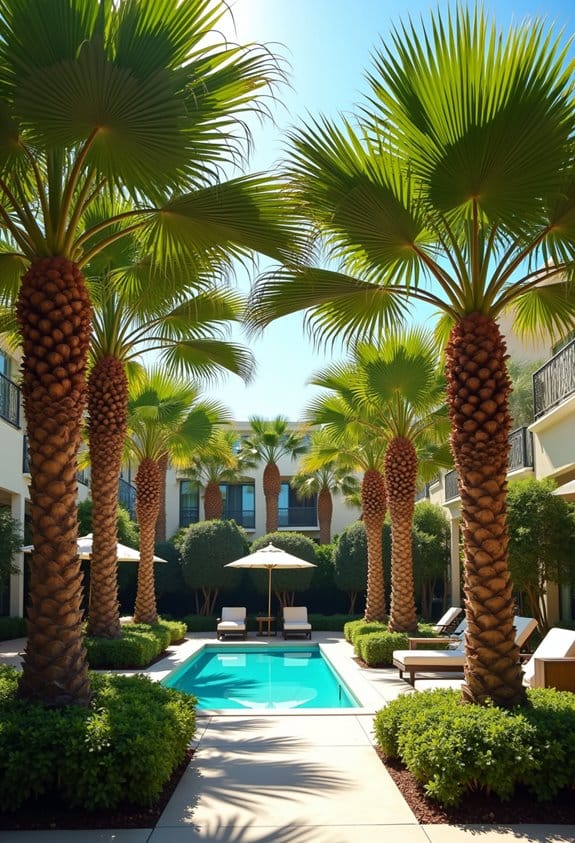
Drought-Resistant Palm Trees for Water-Wise Landscaping

Drought-resistant palm trees like California Fan (Washingtonia filifera) and Mexican Blue Palm (Brahea armata) excel in USDA zones 8–11, tolerating temperatures over 110°F and less than 5 inches of rainfall annually. These palms require minimal irrigation once established, thriving in full sun with well-draining soil. Spaced 10 to 15 feet apart, their deep roots conserve moisture effectively. Incorporating mulch and spot watering further optimizes water use. Explore how to maximize their landscape benefits sustainably.
Key Takeaways
- California Fan Palm and Mexican Fan Palm are ideal drought-resistant species for water-wise landscaping in arid and Mediterranean climates.
- Deep root systems in drought-resistant palms access underground moisture, reducing irrigation needs and enhancing resilience in dry conditions.
- Position palms 10-15 feet apart in well-draining soil with full sun to optimize water conservation and healthy growth.
- Apply organic mulch and strategic spot watering to conserve moisture and support sustainable palm landscaping.
- Selecting palms suited to USDA Hardiness Zones ensures survival and drought tolerance while minimizing maintenance and water use.
Importance of Drought-Resistant Palm Trees in Arid Landscapes
Although arid landscapes present extreme challenges with temperatures often exceeding 110°F (43°C) and annual rainfall below 5 inches (127 mm), drought-resistant palm trees prove essential for sustainable landscaping. These drought tolerant palm species thrive in drought conditions typical of regions like the Coachella Valley, where water restriction mandates reduce irrigation availability. Their deep root systems enable access to moisture well below surface soil, increasing resilience during extended dry spells while conserving water. Palms such as the California Fan Palm and Medjool Date Palm require considerably less irrigation than traditional non-native plants, lowering maintenance costs. Incorporating these palms into sustainable landscaping plans allows homeowners to beautify landscapes while meeting strict water use regulations. Their ability to provide shade and aesthetic value without heavy water demands makes them essential components in arid environment gardening. Additionally, these palms contribute to soil stabilization, helping reduce erosion in dry, sandy environments.
Selecting Palm Trees Adapted to Low Water Conditions
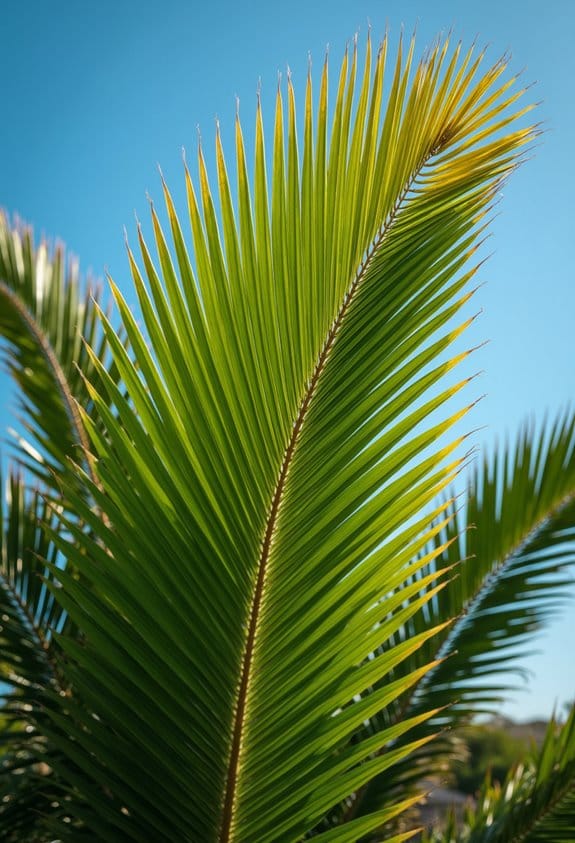
When selecting palm trees suited for low water environments, it is crucial to take into account species naturally adapted to arid conditions, such as the California Fan Palm and Mexican Fan Palm, which require minimal irrigation once established. These drought-tolerant plants thrive in landscape design with well-draining soil and full sun exposure, reducing water needs considerably. Additionally, species like Windmill Palm and Brahea edulis access deep moisture reserves, maintaining health during prolonged drought. To optimize growth with minimal water, palms should be spaced properly—typically 10 to 15 feet apart—to minimize root competition. Incorporating mulching and efficient irrigation strategies aids water conservation. Selecting drought-adapted palm trees guarantees a resilient, attractive landscape that endures dry climates, supporting sustainable, water-wise gardening practices without sacrificing visual appeal or plant vigor. For outdoor landscaping, choosing palms made from UV-resistant materials can provide low-maintenance greenery that withstands harsh sunlight and environmental stress.
Recommended Products

Farm-Grown Quality: Expertly nurtured to ensure robust growth and a well-formed trunk with striking diamond-shaped leaf scars. PLEASE NOTE THIS PLANT DOES NOT SHIP TO CALIFORNIA

Farm-Grown Quality: Carefully nurtured on our farm, ensuring healthy, strong growth and a well-shaped trunk.

PLEASE NOTE THIS PLANT DOES NOT SHIP TO CALIFORNIA - Striking Appearance: Features unique silvery-blue fronds that can reach up to 5 feet long, adding a stunning focal point to your landscape.
USDA Hardiness Zones and Palm Tree Suitability
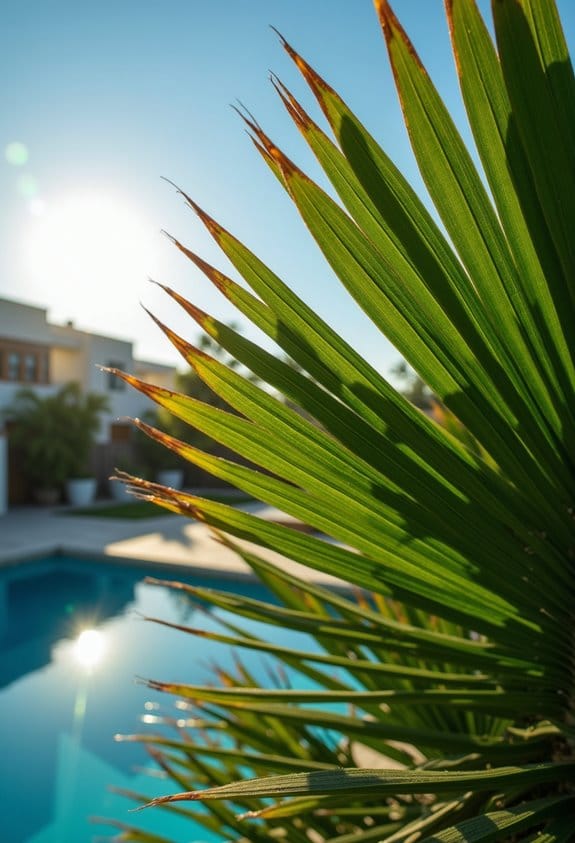
USDA Hardiness Zones serve as an important framework for determining palm tree suitability by specifying the temperature ranges each species can tolerate, ranging from zone 1 with extreme cold to zone 13’s tropical warmth. Cold-hardy palms, such as Windmill Palms, withstand temperatures as low as 5°F (-15°C), thriving in USDA zone 7 climates. The Chinese Fan Palm, adaptable and drought-resistant, grows well in zones 8 through 11, balancing cold resistance with heat tolerance. Warmer zones, like 10 and 11, support species like King and Foxtail Palms, which require full sun and high temperatures to thrive. Selecting palm tree species according to local USDA Hardiness Zones guarantees their survival, drought resistance, and healthy growth, making it a crucial consideration for successful water-wise landscaping. Additionally, choosing palms with UV-resistant materials can enhance their durability in outdoor settings.
Top Drought-Tolerant Palm Species for Mediterranean Climates
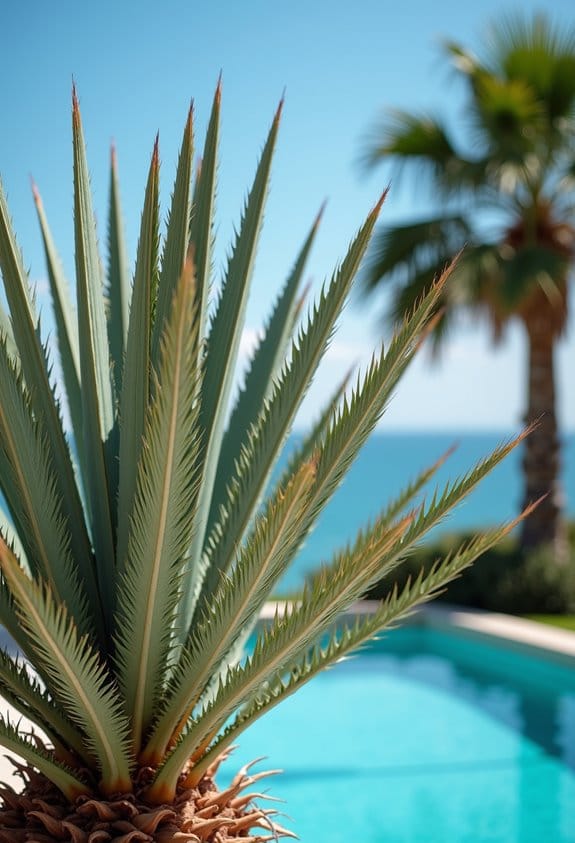
Mediterranean climates, characterized by hot, dry summers and mild, wet winters, challenge landscape selections to meet strict water conservation goals. Several drought-tolerant palms thrive in these conditions, offering reliable options for water-wise landscaping. The Washingtonia filifera, or California Fan Palm, native to California’s low deserts, endures extreme drought and grows up to 20 meters tall. Brahea edulis, the Guadalupe palm, adapts well to coastal winds and summer dryness, making it resilient for seaside Mediterranean gardens. The Mexican Blue Palm (Brahea armata) grows slowly, tolerating zones 9-11 with minimal water needs once mature. Butia odorata, the Jelly Palm, adds both beauty and edible fruit, while Chamaerops humilis, a Mediterranean fan palm, withstands dry soils and grows in compact clumps, ideal for sustainable landscaping across Mediterranean zones. When incorporating palms into outdoor patios, choosing trees with UV-resistant materials can enhance durability and maintain appearance in harsh sun exposure.
Recommended Products


【ABUNDANT LEDS】: Up to 220 warm white micro LED bulbs nestled on the palm tree cast a subtle glow that adds warmth to your home pool, living room or any setting

The Palm Tree decorated with 96 LED light, more for trunk. Material Type: Plastic
Water-Saving Landscaping Techniques With Palm Trees
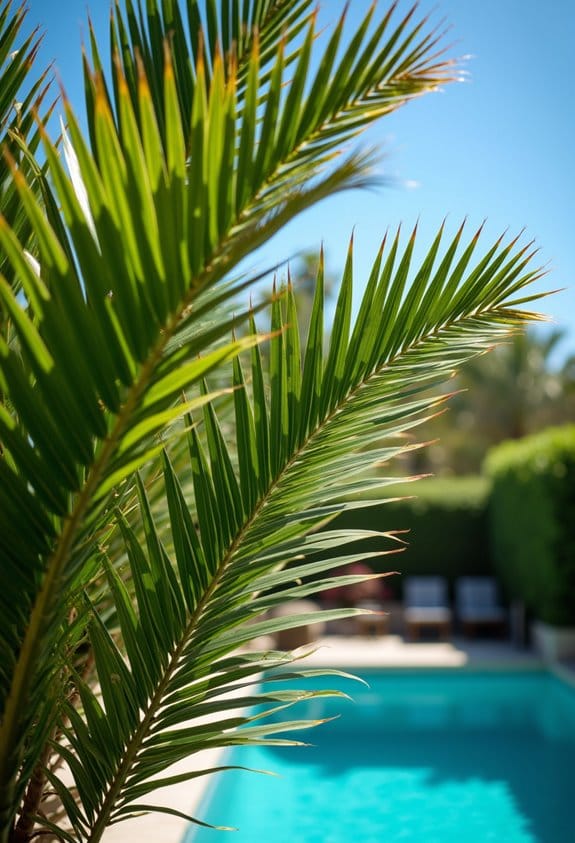
Several effective water-saving landscaping techniques optimize irrigation for drought-resistant palm trees, promoting health while minimizing water use. Selecting palms like the California Fan Palm or Windmill Palm guarantees species that thrive with minimal water, particularly in USDA zones 8 to 11, where temperatures reach 90°F or higher. Strategic spot watering delivers water directly to root zones, reducing runoff by up to 40 percent. Creating shallow watering wells around palms enhances moisture absorption during dry spells lasting 30 days or more. Designing landscapes with drought-resistant palms combined with low-water plants supports sustainable ecosystems, requiring less than 15 gallons of water per week. By implementing these water-wise landscaping methods, palms capitalize on deep soil moisture, enabling efficient growth with reduced irrigation while maintaining aesthetic and ecological benefits in arid climates. Additionally, choosing palms with proven weather resistance ratings ensures their survival and durability in challenging outdoor environments.
Recommended Products

This 10 feet majestic triple tropical palm faux tree has 31 large vivid palm fronds filled with countless arching feather-like leaves with realistic palm texture, three thick dragon-scaled trunks are awe-inspiring, it looks so lush and great, it will create a tropical paradise atmosphere for you and those around you, now this extra tall triple palm tree is waiting to dance in the warm tropical breezes

Instantly Lush & Lifelike Paradise: Enjoy the vibrant, full look of mature tropics year-round! Features a single realistic coconut trunks and abundant fronds with countless detailed leaves boasting authentic palm texture. Arrives ready to shape for a perfectly natural silhouette.

Majestic Size & Design: Standing at 8 feet tall with triple trunks, this large artificial palm tree features 30 long, lifelike palm fronds. Its sturdy trunks are perfect for hanging LED lights or decorative pendants (not included), adding a warm, inviting glow to any space.
Soil and Mulching Practices for Drought-Prone Gardens
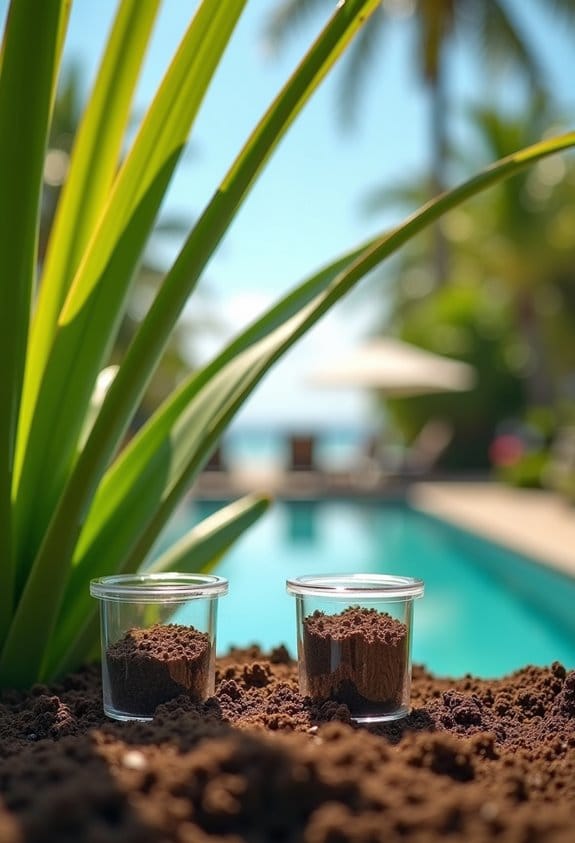
Optimizing soil composition and mulching practices plays a significant role in maintaining drought-resistant palm trees in zones 8 to 11, where summer temperatures often exceed 90°F. Well-draining soil, combining organic material with sand, guarantees moisture retention without causing waterlogging. In drought-prone gardens, applying a 2-3 inch layer of organic mulch, especially around native plants, reduces evaporation and suppresses weeds effectively. This mulch, preferably homemade from garden waste, not only conserves moisture but enriches the soil as it breaks down. Regular mulching during hot months lowers irrigation needs, encouraging deeper roots and overall plant health. Employing these soil and mulching strategies creates a sustainable environment for drought-resistant palms, enhancing growth while minimizing water dependency and supporting resilient landscaping in challenging climates. Additionally, selecting UV-resistant materials for artificial palm trees can further ensure garden longevity and vibrancy in harsh sunlight conditions.
Designing Functional and Aesthetic Palm Landscapes
When designing palm landscapes for zones 8 to 11, integrating drought-resistant species enhances both functionality and visual interest in climates where daytime temperatures reach above 90°F. The Canary Island Date Palm offers dense cover, making it a practical choice for shade and privacy in water-wise landscapes. Incorporating varied species allows for striking focal points and supports a sustainable tropical look. Attention to palm selection based on growth rates and maintenance reduces resource input. Effective landscape planning accounts for soil composition, sun exposure, and minimal irrigation. Complementary companion plants like flowering shrubs and ornamental grasses augment visual cohesion while conserving water. This approach balances durability and aesthetics, optimizing space with palms adapted to harsh, dry conditions, consequently creating vibrant, functional outdoor environments that thrive under limited moisture. Considering UV-resistant materials can further improve the longevity and appearance of palm landscapes exposed to harsh sunlight.
Recommended Products

THIS PLANT DOES NOT SHIP TO CALIFORNIA - Farm-Grown Quality: Nurtured with care on our farm, ensuring robust health and fast-growing results.

Meticulous Design & Good Quality: Unlike other general fake plants, It upgrades the nice and stable pot, even without replacing another pot. They are of the good quality in terms of color, texture and material. It has a more realistic look and touch.

Don't limit the Palm's allure to tropical spots alone. Our Windmill Palm Tree defies the cold, making island elegance possible even in chillier climates. Thriving in Zone 7 and beyond, this variety offers a touch of paradise to northern gardens. With impressive cold tolerance, it's a dream for low-maintenance landscaping.
Incorporating Palms With Other Drought-Resistant Plants
How can palms be effectively integrated with other drought-resistant plants to maximize landscape resilience and appeal? Incorporating palms like Mexican Fan Palm (up to 50 ft tall) with drought-tolerant plants such as Hibiscus and Ornamental Grasses creates layered texture and visual interest in water-wise landscapes. Pairing palms with minimal-maintenance ground covers, such as Liriope or Blue Fescue, helps conserve soil moisture and restricts weed growth across zones 8-11. Selecting self-cleaning palm species reduces upkeep, allowing easier coexistence with companion plants. Careful design should match palms’ sun exposure needs—partial to full sun—and soil preferences for ideal growth. Applying organic mulch up to 3 inches thick around palms and drought-resistant plants fosters moisture retention and supplies nutrients, further enhancing the landscape’s sustainable, low-water efficiency while supporting plant health in arid conditions. For enhanced durability and year-round appeal, consider integrating UV-resistant fronds from artificial palm trees in mixed-use landscape designs.
Recommended Products
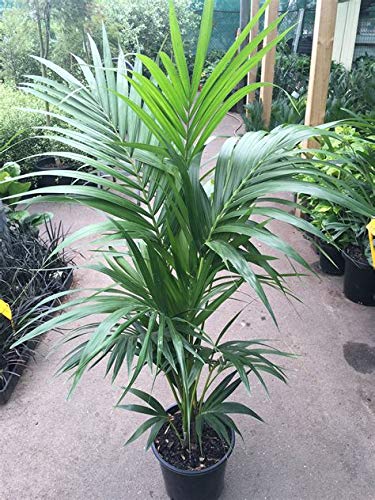
9Ezytropical - Kentia Palm


GIANT TROPICAL HOME DECOR: Transform blank corners instantly with a massive, 5-6 foot tall real palm tree that adds an upscale luxury aesthetic and vibrant natural greenery to your living room, patio, or office spaceenvironment
Expert Tips for Maintaining Healthy Palm Trees During Drought
Several proven strategies exist for maintaining healthy palm trees during drought, emphasizing careful water management and pest control. Selecting drought-tolerant palm species such as the Mexican Fan Palm or California Fan Palm guarantees resilience in dry environments. Established palms require adequate water applied deeply but infrequently, only watering when the top inch of soil is dry to avoid root rot. Mulching around tree bases conserves moisture and suppresses weeds. Regular inspections for pest infestations, including spider mites and mealybugs, are crucial; apply appropriate insecticidal treatments promptly to control these threats. Applying a balanced fertilizer once or twice annually, preferably slow-release and before the growing season, supplies necessary nutrients and helps maintain health and vigor during water restrictions. Additionally, choosing palm varieties with UV resistance can enhance durability in outdoor conditions exposed to intense sunlight. These combined practices support palms’ survival and strength even in prolonged drought conditions.
Frequently Asked Questions
What Palms Can Handle Wet Feet?
Species such as Sabal Palm and Royal Palm excel as tolerant palm varieties, thriving in waterlogged conditions and swampy areas. Moisture loving palms like Chinese Fan Palm aid landscaping with effective drainage solutions for excessive moisture challenges.
What Is the Best Palm Tree for Landscaping?
Among diverse palm tree varieties, the California Fan Palm often emerges as a favored landscaping tip due to its aesthetic appeal and resilience under drought conditions. Regional selections like the Mexican Blue Palm further enhance design versatility.
What Is the Most Low Maintenance Palm Tree?
The Mexican Fan Palm stands out as the most low maintenance palm tree, offering low water needs, drought tolerance, and easy care. Although it lacks fast growth, it excels in landscape design with minimal upkeep requirements.
What Are the Most Resilient Palm Trees?
Surviving temperatures as low as 5°F highlights the Windmill Palm’s resilience. Its drought tolerance varieties suit diverse growing conditions, requiring minimal nutrients and pests management, while enhancing landscape aesthetics with robust, low-maintenance appeal across challenging environments.