As an Amazon Associate, we earn from qualifying purchases. Some links on this site are affiliate links at no extra cost to you. Our recommendations are based on thorough research and editorial judgment.

Building Raised Planters for Container Palm Gardens

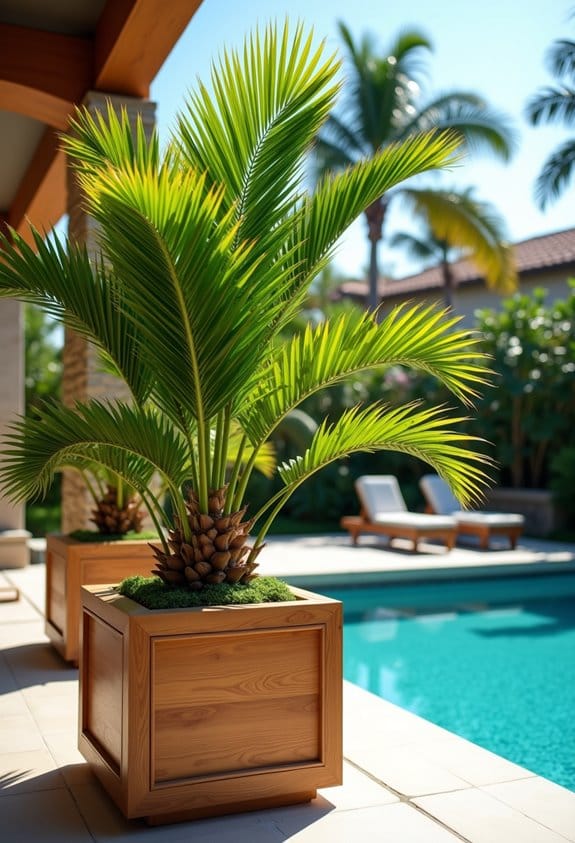
Building raised planters for container palm gardens in USDA zones 6-9 requires 1-inch thick cedar wood for rot resistance and durability. Planters should be at least three feet deep to accommodate root systems, assembled with galvanized screws for weather resilience. Incorporate a 2-inch gravel drainage layer and well-draining soil mixed with sand to prevent waterlogging. Position planters to receive 6-8 hours of bright, indirect sunlight. Proper construction and drainage guarantee healthy palms and long-lasting planters. Further details improve garden success.
Key Takeaways
- Use rot-resistant wood like cedar, 1-inch thick boards, and galvanized screws for durable raised planter construction.
- Build planters at least three feet deep to accommodate palm roots and ensure proper growth.
- Include a 2-inch gravel layer and landscape fabric at the bottom for efficient drainage.
- Incorporate UV-resistant materials and outdoor stains to protect planter wood from weather damage.
- Employ drip irrigation and monitor soil moisture to maintain optimal hydration for container palms.
Selecting Materials for Raised Planter Boxes
When selecting materials for raised planter boxes, durability and safety are paramount considerations. Cedar wood is often chosen for raised bed garden construction due to its natural rot resistance and ability to withstand outdoor moisture without treatment. Wooden boards measuring 1-inch thick and 6-8 inches wide are commonly used for structural integrity. Untreated lumber can work but typically requires biannual sealing to prevent decay, especially in USDA zones 6-9 where humidity varies from 40-70%. Fasteners like galvanized screws sized 1.5 to 2.5 inches resist rust and maintain strength over multiple seasons. Additionally, lining the planter interior with 4-6 mm plastic sheeting protects wooden boards from prolonged contact with wet soil, greatly extending lifespan. Selecting non-toxic finishes and materials is critical for edible plant safety, ensuring contaminants do not leach into the soil or crops. For enhanced longevity, consider using rust-proof hardware designed for outdoor conditions similar to those used in durable patio installations.
Recommended Products
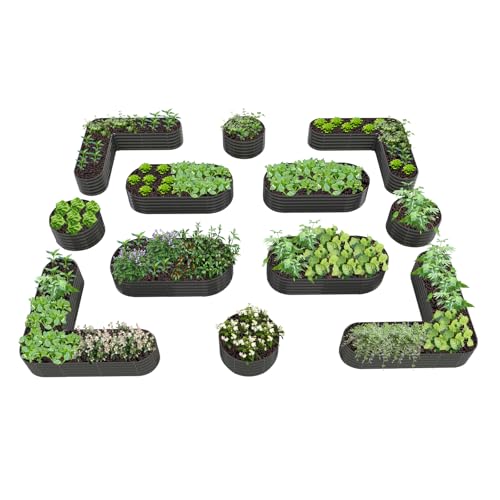
12-PIECE BACKYARD GARDEN SYSTEM – 4 oval, 4 heart, 4 round beds; all 18" deep in matching quartz grey; modular setup for fence lines, patio borders and focal points; one coordinated kit organizes your whole backyard farm garden; galvanized raised garden beds outdoor system for vegetables and flowers

Durable & Strong: Built with extra internal support rods to stay straight and stable, no bulging or warping. A magnesium-infused coating protects scratched areas from rust over time, paired with 0.85mm corrugated Zn-Al-Mg steel for long-term strength

Designed for Garden Framing: This layout defines clean borders around a 289 sq ft garden space using 4 * L-shaped raised beds, creating a structured outer frame while leaving the center open for flexible use. Includes 4 L-shaped 18" tall metal raised garden beds, ideal for vegetables, herbs, flowers, or custom DIY garden setups
Designing Planter Boxes for Optimal Palm Growth
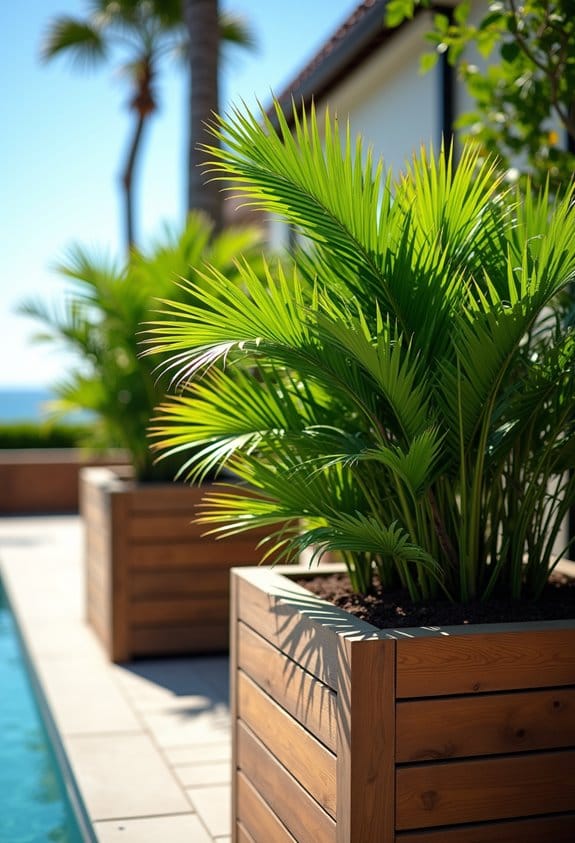
Three feet of planter depth is generally recommended to accommodate palm root systems, guaranteeing adequate space for healthy growth and development. When designing planter boxes, this depth supports root expansion while allowing proper aeration. Constructing a raised garden bed with a gravel layer at the bottom enhances drainage, preventing waterlogged soil that can harm palms. Using a well-draining mix of potting soil and sand creates the ideal moisture balance, as palms prefer moist but not soggy conditions. Planter boxes should be built from rot-resistant materials, such as cedar or untreated lumber, to guarantee longevity and a suitable environment for roots. Additionally, placing raised garden beds in areas receiving 6-8 hours of bright, indirect sunlight maximizes photosynthesis and health for most palm species. Incorporating UV-resistant materials in the planter design ensures durability and maintains aesthetic appeal under outdoor sunlight exposure.
Recommended Products

100% Natural Western Red Cedar from North America: Our raised garden beds are made from 100% natural western red cedar from North America, a naturally weather-resistant and durable wood.

Elevate Your Outdoor Oasis: Introducing All Things Cedar's Premium Cedar Box Planter, the epitome of natural beauty and craftsmanship. Transform your outdoor space into a luxurious sanctuary with our handcrafted, cedar planter.

Versatile Gardening Solution: Maximize your outdoor space with this 3-tier cedar garden box, featuring tiers measuring 6ft x 2ft, 4ft x 2ft, and 2ft x 2ft
Construction Steps for Raised Planters
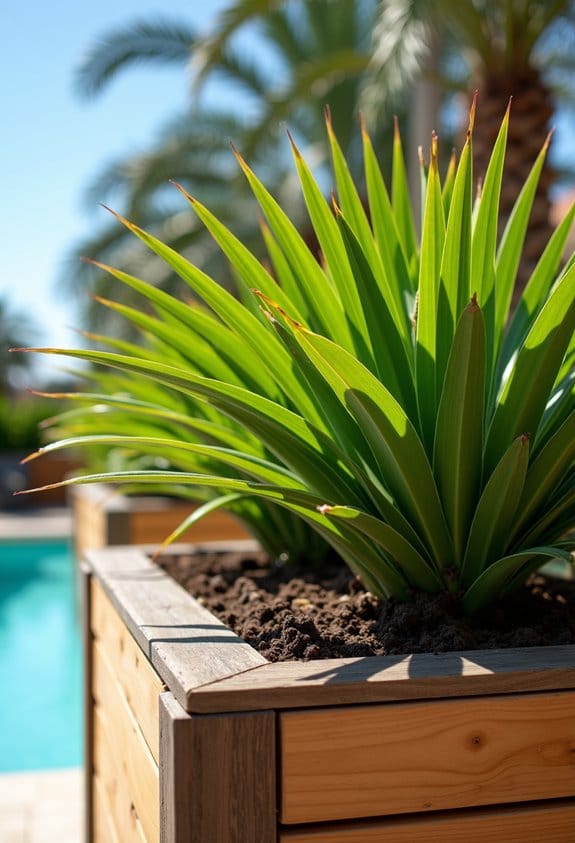
Planning the construction of a raised planter begins with selecting sturdy, rot-resistant lumber like cedar or untreated pine, which can withstand moisture and outdoor conditions. For a DIY raised planter, cut boards to exact lengths—commonly 4×4 ft or 4×8 ft—to provide adequate space for palm root development. During assembly, guarantee all corners are square and the structure remains level; this preserves stability over time. Fasten boards securely with galvanized screws to prevent rusting. After building the frame, apply a protective outdoor stain or paint to enhance aesthetics and extend wood longevity. These construction steps establish a durable foundation for container palm gardens, accommodating growth needs while resisting environmental stress, setting the stage for healthy, attractive palms in a well-crafted DIY raised planter system. Choosing planter dimensions that allow for the use of UV-resistant materials can further enhance the durability of your palm garden containers.
Recommended Products

Galvanized Raised Garden Bed Set: This large metal planter box adds a new level of convenience to your backyard gardening. Built with dual steel support bars, the metal panels stay firmly in shape, effectively preventing warping and soil leakage over years of use. Size: 144"(L) × 24"(W) × 12"(H). All parts are coated with an environmentally safe finish that protects your soil and plants.

Ample Holding Capacity: This metal planter box, measuring 8x4x2ft, accommodates 479 gallons of soil; The 2-foot height design minimizes the necessity for stooping, enhancing the comfort and pleasure of your gardening activities

24-INCH DEEP ROOT DESIGN: Each 8x4x2ft raised bed holds up to 479 gallons of soil, providing a true 24-inch growing depth for deep-rooted vegetables like tomatoes, carrots, peppers, and potatoes. The open-bottom design allows direct ground contact for natural drainage and aeration, promoting healthier root systems and preventing waterlogged soil
Integrating Drainage and Irrigation Systems
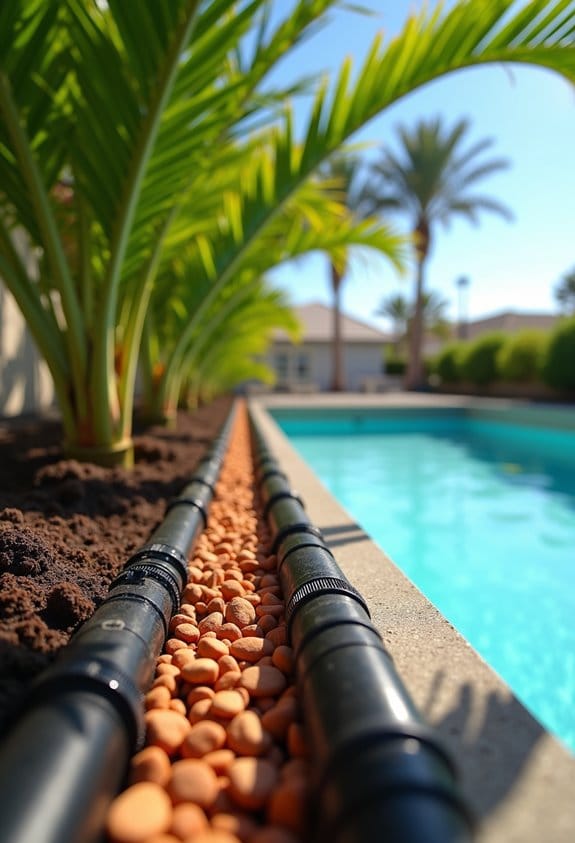
Successful integration of drainage and irrigation in raised planters involves multiple key components designed to maintain ideal moisture and root health. Effective drainage requires lining the planter bottom with at least a 2-inch gravel layer or installing drainage holes to prevent waterlogging, which can damage palm roots. A landscape fabric layer between soil and gravel prevents clogging, preserving flow. Incorporating a self-watering reservoir reduces watering frequency by sustaining consistent moisture. Installing a drip irrigation system, delivering water slowly directly to root zones, minimizes waste and guarantees precise hydration. Regular maintenance, such as clearing debris from drainage openings, sustains peak conditions. Collectively, these drainage and irrigation strategies support healthy palm root environments, facilitating vigorous growth and minimizing water-related stress in container gardens. Additionally, selecting planters with UV resistant materials can enhance durability and reduce maintenance in outdoor palm gardens.
Recommended Products

Transform Slopes into Gardens - Create stunning, terraced landscapes on inclines from 10-24 degrees. The Dirt Locker system offers a safe, stylish solution to erosion control and plant stability.

AUTOMATIC DRIP IRRIGATION: Automate your watering without power, batteries, pumps, or timers; Save time, water, and nutrients; Provide healthier, more potent, and faster-growing plants
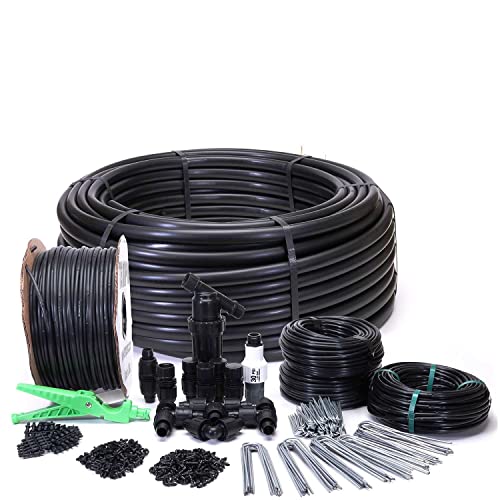
High-Quality Material: Professional quality drip hose made by high quality, UV resistant materials, unmatched resistance to chemicals. Be a Gardening Master with the help of our superior and complete Drip Irrigation Kit: 1 x 250' Roll 3/4" Mainline Tubing + 2 x 100' Rolls 1/4" Micro Tubing + 1 x 100' Roll Soaker Dripline 12" Spacing + 80 x 1/4" Transfer Barbs - (8 x 10 packs) + 80 x 1/4" Elbow Fittings - (8 x 10 packs) + 80 - 1/4" Goof Plugs - (8 x 10 packs).
Positioning and Placement for Sunlight Exposure
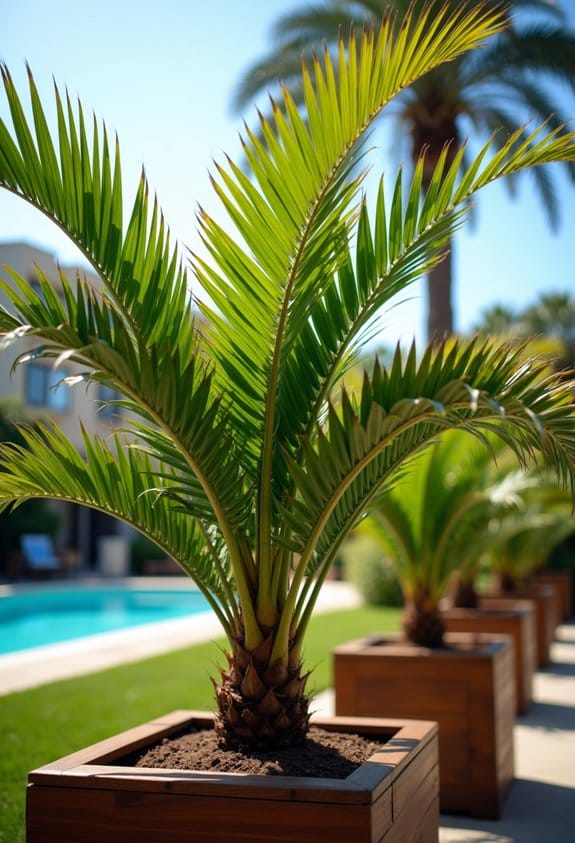
Where should raised planters be placed to guarantee ideal palm growth and health? Position raised beds in a south-facing area to secure 6 to 8 hours of direct sunlight daily, which is crucial for vigorous palm development. Ascertain the raised planters stand at least 3 feet away from shady obstacles like fences, trees, or buildings, preventing any light reduction throughout the day. Light-colored or reflective mulch around the beds can amplify warmth and sunlight absorption, supporting palm robustness. As landscapes evolve, regularly evaluate sunlight patterns; if necessary, move the planter box to maintain prime exposure. This proactive repositioning counters shade changes caused by growing plants or new structures, sustaining excellent light levels for container palm gardens. Proper placement is a cornerstone for lush, healthy palms in raised planters. Additionally, choosing planters made from UV-resistant materials can help ensure longevity when exposed to outdoor elements like sunlight.
Recommended Products
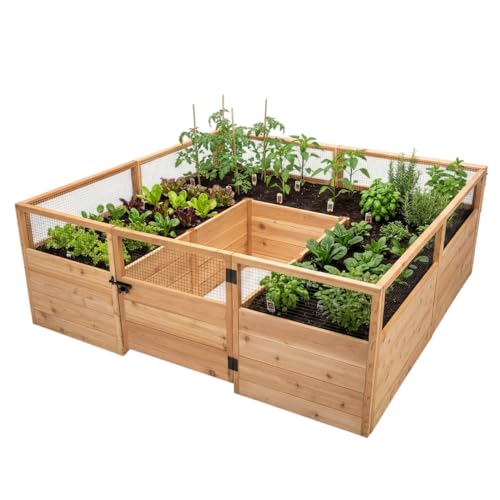
Exterior dimensions: 92W x 95D x 33.5H in.


【VERSATILE 18-INCH DESIGN FOR HEALTHY GROWTH】 Tramull raised garden beds outdoor 18-inch depth provides the perfect environment for a wide range of vegetables, from tomatoes to kale, promoting strong root development. The comfortable height helps reduce bending during planting and harvesting, easing strain on your back - Galvanized Garden Bed Size: 8x3x1.5ft (96"x36"x18")
Enhancing Accessibility and Ergonomics
Although raised planter boxes primarily enhance plant growth, they also greatly improve accessibility by elevating garden beds to an ideal height of approximately 32 inches, reducing the need for bending or kneeling. This elevation benefits seniors and individuals with mobility challenges, facilitating gardening comfort and ease. Incorporating ergonomic features, such as wider tops or integrated potting benches, further enhances usability by providing dedicated spaces for sowing seeds and organizing tools. Constructing planters with lightweight, durable materials supports relocation according to sunlight needs, maintaining functional ergonomics. A stable frame and proper drainage not only promote healthy plants but sustain ergonomic efficiency by preventing strain during routine gardening tasks. Overall, prioritizing accessibility and ergonomics in planter design guarantees a practical, enjoyable gardening experience that encourages long-term engagement. Additionally, using materials like rustproof metal and natural bamboo can ensure the planter’s durability and weather resistance, contributing to longevity and reduced maintenance.
Maintenance Practices for Long-Lasting Planters
Maintaining raised planters involves routine monitoring of soil moisture, guaranteeing it remains consistently between 40% and 60% for ideal palm growth. Effective maintenance practices include applying a 2-3 inch layer of organic mulch to the soil surface, which conserves moisture, regulates temperature, and suppresses weed growth across the entire planter. Annual rotation of palm varieties also helps sustain soil health and minimizes pest risks, preserving planter longevity. Structural inspections should target warping, loose fasteners, and material wear, with repairs conducted promptly to maintain stability. Additionally, treating wooden planters with a UV-resistant outdoor varnish every two years greatly extends lifespan by preventing weather damage. Employing these targeted maintenance practices guarantees raised planters remain functional and visually appealing for many growing seasons. Incorporating weather-resistant materials in planter construction further enhances durability and reduces maintenance needs.
Frequently Asked Questions
What Is the Cheapest Way to Build a Raised Planter?
The cheapest way involves using reclaimed wood materials, such as pallets or untreated lumber, to minimize costs. Budget considerations also include opting for smaller planters and utilizing affordable materials like furring strips or cinder blocks to reduce expenses effectively.
Can Palm Trees Grow in Containers?
Yes, palm trees can thrive in containers. Proper palm tree care in container gardening involves selecting appropriate pot sizes, ensuring well-draining soil, maintaining moderate moisture, and providing balanced fertilization to support healthy growth.
How to Add Height to a Container Garden?
Like a mountain rising from the valley, container height can be increased by planter elevation through stacking planters or cinder blocks. This lifts plants towards the sun, elevating the entire garden’s presence and accessibility.
What Do You Put in the Bottom of a Raised Planter?
The bottom of a raised planter typically contains drainage materials like stones or gravel to prevent waterlogging. A layer of landscape fabric may be used to maintain soil composition, while organic matter and sand enhance nutrient content and aeration.