As an Amazon Associate, we earn from qualifying purchases. Some links on this site are affiliate links at no extra cost to you. Our recommendations are based on thorough research and editorial judgment.


Chemical-Free Pest Control for Outdoor Palms

Chemical-free pest control for outdoor palms in USDA zones 9 to 11 involves maintaining robust soil with organic compost and regular liquid seaweed sprays every 4 to 6 weeks. Target pests like spider mites and palm aphids using diluted neem oil or mild soap sprays applied meticulously throughout the season. Introducing beneficial insects such as ladybugs and lacewings enhances natural pest suppression. Mulching conserves moisture, supporting healthy root systems critical during dry spells. Explore further tactics to sustain vibrant, pest-resilient palms.
Key Takeaways
- Use neem oil or essential oils like citronella as effective, low-toxicity pest deterrents for outdoor palms.
- Introduce beneficial insects such as ladybugs and lacewings to naturally control aphids and spider mites.
- Apply a water and mild dish soap spray regularly to eliminate aphids and whiteflies without chemicals.
- Maintain soil health using organic fertilizers, compost, and mulching to strengthen palms against pest infestations.
- Regularly inspect palms early for wood-boring weevils and employ beneficial nematodes to control soil pests.
Understanding Pest Challenges for Outdoor Palms
Although outdoor palms bring a tropical elegance to USDA zones 9 through 11, they face persistent threats from pests like spider mites, mealybugs, and palm aphids, which cause distinctive yellowing of fronds and hinder growth. These pests often target stressed palms suffering from inadequate water, poor soil structure, or nutrient imbalances, necessitating vigilant care. Organic pest control emphasizes maintaining soil health and plant vigor, reducing pest attractiveness while promoting environmental benefits such as soil biodiversity and minimized chemical runoff. Rapid infestation by wood-boring palm weevils poses structural dangers, underscoring the need for early detection. Encouraging natural predators like ladybugs and predatory wasps helps suppress pest populations effectively. Hence, understanding the pest lifecycle and integrating organic management fosters healthier palms and sustains ecological balance in zone-appropriate outdoor landscapes. Additionally, selecting palms with durability and UV resistance enhances their overall resilience and reduces stress factors that attract pests.
Natural Methods to Enhance Palm Health
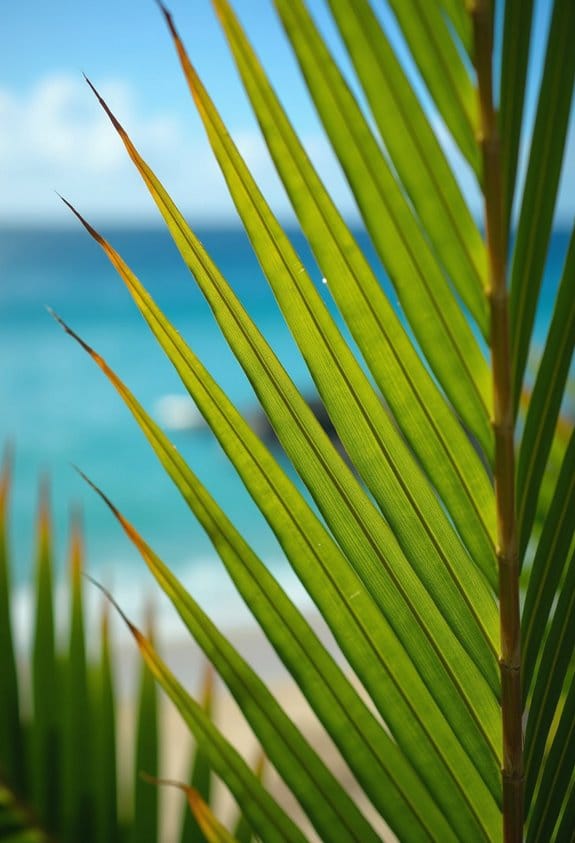
Ideal palm health in USDA zones 9 through 11 depends largely on maintaining nutrient-rich soil through organic fertilizers like compost applied at a rate of 2 to 3 inches around the root zone and liquid seaweed sprays every 4 to 6 weeks. Regular soil testing identifies nutrient deficiencies, enabling precise amendments that help keep palms robust and less vulnerable to pests. Adequate watering during dry spells supports strong root systems critical for healthy palms. Applying mulch around the palm base conserves moisture, moderates soil temperature, and suppresses weeds, all fundamental for palm liveliness. While chemical pest control products are common, these natural methods promote resilience and reduce dependency on such products. Incorporating companion plants like marigolds fosters a balanced ecosystem that naturally protects palms and enhances overall health. For optimal year-round appearance and to reduce maintenance, consider integrating UV-resistant artificial palm trees into your landscape.
Recommended Products
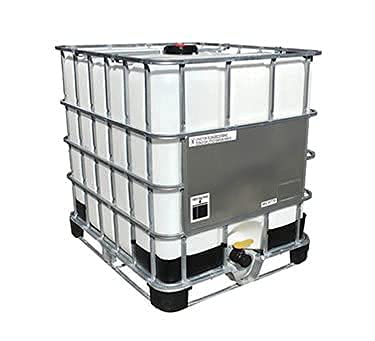
TURBO-CHARGED LIQUID COMPOST - Specifically designed to promote soil health, this all-purpose compost fertilizer organic is good for nearly anything you grow. Root Ruckus works to promote plant and root growth, as well as increase fruiting, blooms, and harvest. It protects against plant shock and increases water retention. Root Ruckus humic acid for lawn increases the natural energy processes of your plants, leading to a stronger root system and improves the plants immune system.

COMPLETE PALM TREE FOOD: Lutz Palm Tree Manganese Spikes offer a balanced tree fertilizer spike formula tailored for palms and ferns. With essential nutrients like manganese (20%), magnesium (6%), sulfur (16%), and nitrogen (4%), these plant food spikes combat common deficiencies and promote lush growth in your garden, making them an ideal choice for enriching your tree spikes fertilizer routine.

Finally Available On Amazon! You Asked And We Listened, So The Most Popular Fertilizer For Palms Is Now On Amazon.
Eco-Friendly Pest Deterrents for Palms
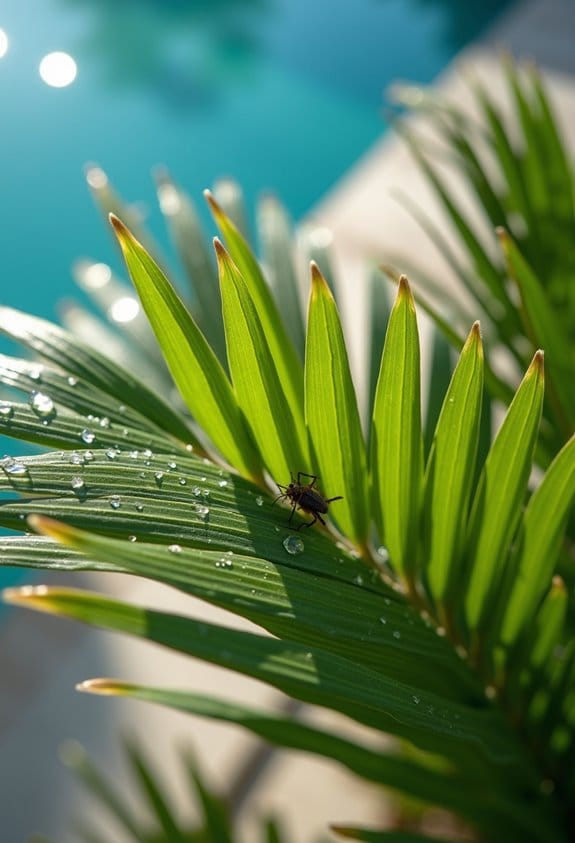
When managing outdoor palms in USDA zones 9 through 11, combining multiple eco-friendly pest deterrents offers effective protection without harming beneficial insects. Applying neem oil or essential oils like citronella, diluted at 1–2% concentration, deters pests such as spider mites and weevils by disrupting their feeding patterns. A water mixture with 2–3 drops of mild dish soap per quart helps rid of pests like aphids and whiteflies on palm fronds when sprayed every 7–10 days. Diatomaceous earth spread as a 1-inch barrier around the palm base physically damages crawling pests without introducing toxins. These methods, used together, reduce reliance on chemicals and maintain ecological balance while ensuring palms remain vigorous and pest-resistant. Meticulous application and timing maximize results throughout the growing season. Additionally, selecting palms with UV-resistant leaves enhances their resilience to environmental stress, indirectly supporting pest resistance.
Recommended Products

MAXIMIZE YIELDS – Grow healthier plants with Grower’s Ally Spider Mite Control. This natural miticide for spider mites kills and repels common soft-bodied insects, including adult and nymph spider mites.

DEFENDS YOUR PLANTS - Monterey 70% Neem Oil controls black spot, powdery mildew, rust, needle rust, downy mildew, twig & twip blight, anthracnose, scab and flower, botrytis, alternaria, and other fungal diseases.
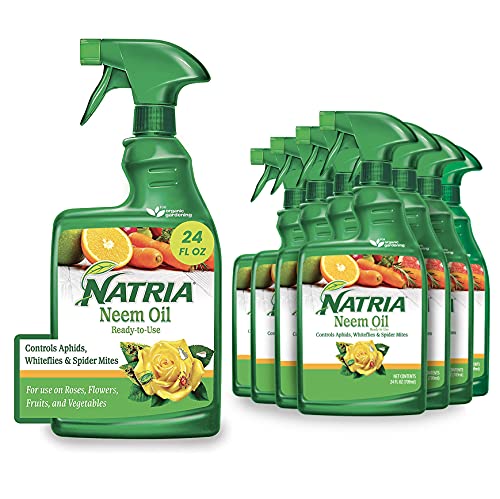
Natria 706250A Neem Oil Spray for Plants Pest Organic Disease Control, 24 Ounce 8 Pack, Ready-to-Use
INSECT KILLER: Controls Aphids, Whiteflies, Spider Mites, Fruit Flies and other listed pests
Using Beneficial Insects to Control Palm Pests
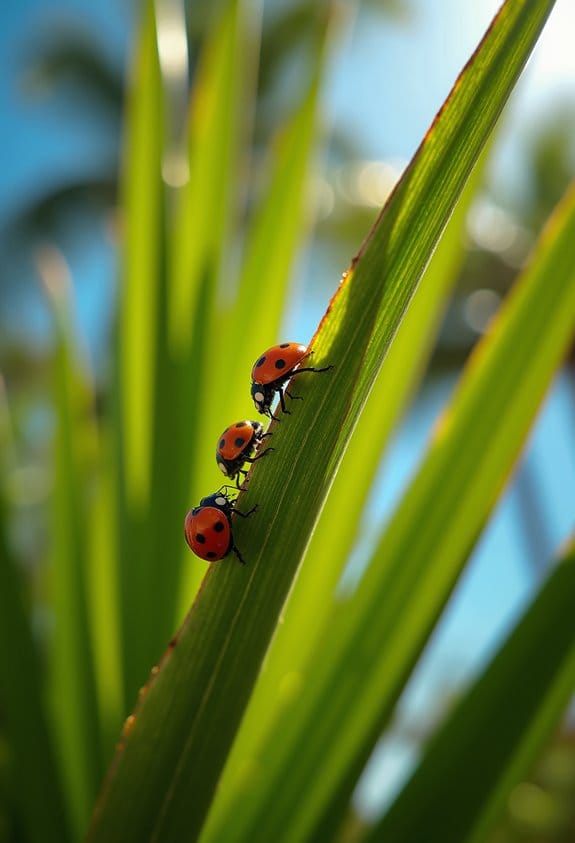
Beneficial insects play a vital role in managing common pests that affect outdoor palms in USDA zones 9 through 11 by naturally reducing insect populations. Ladybugs and lacewings prey on aphids and spider mites, helping suppress infestations without harming palm foliage. Parasitic wasps, such as Encarsia formosa, target whiteflies by laying eggs inside their bodies, disrupting pest life cycles and lowering their numbers effectively. Beneficial nematodes combat soil pests like root weevil larvae underground, invading and killing them. To encourage these helpful insects, gardeners should plant diverse flowering species nearby, offering nectar and pollen essential to their survival and reproduction. Establishing a balanced garden ecosystem supports the continuous presence of beneficial insects, enhancing palms’ natural defenses against pest invasions while reducing reliance on chemical interventions. Additionally, selecting palms with UV-resistant materials can ensure the plants maintain vibrant, healthy foliage that is less attractive to pests.
Recommended Products

Made Up of Essential Oils That Repell Rodents

CROP, GARDEN & HOUSEPLANT INSECT CONTROL. Trifecta Crop Control all-natural, plant-based formula effectively combats destructive spider mites, aphids, whiteflies, fungus gnats, and other soft-bodied pests on indoor and outdoor plants. Our biodegradable, eco-friendly solution is safe for use on edible crops, without chemical residues. Our gentle yet potent plant spray suffocates and dehydrates pests without harming beneficial insects or the environment, making it ideal for organic gardening.

The information below is per-pack only
Organic Fertilizers and Soil Management for Palms
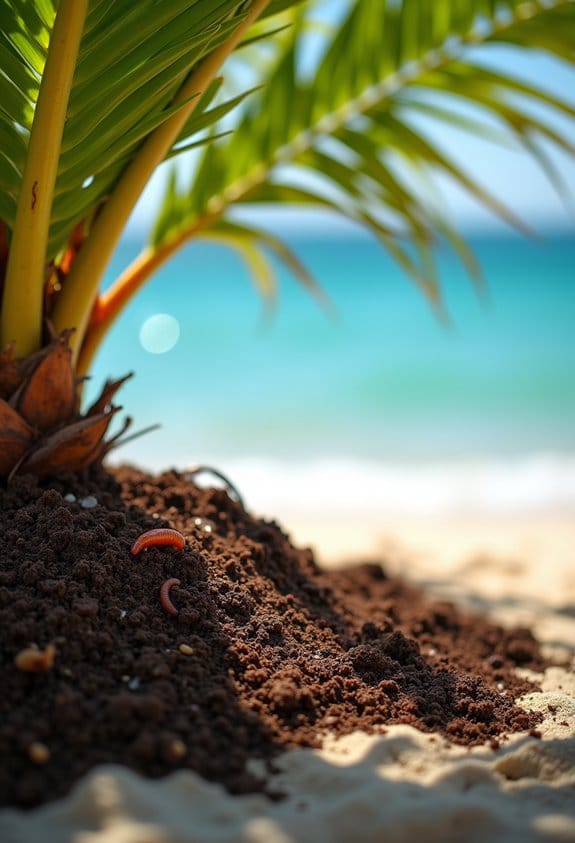
Optimizing soil conditions using organic fertilizers greatly improves growth and pest resistance in outdoor palms across USDA zones 9 through 11. Applying organic fertilizers such as liquid seaweed or compost boosts nutrient availability, enhancing palm vigor and natural defenses. Effective soil management involves regular soil testing to tailor nutrient amendments precisely, ensuring balanced fertility. Incorporating organic matter maintains well-aerated soil structure, which prevents root diseases and supports moisture retention essential for palm health. Additionally, organic mulching conserves soil moisture, suppresses weeds, and nurtures beneficial soil organisms. Crop rotation and companion planting are valuable soil management practices that improve soil robustness while attracting beneficial insects, naturally reducing pest populations. These combined organic techniques promote healthy palms by fostering robust soil ecosystems, which strengthen plants’ resilience against pests and environmental stresses. Selecting palms with tolerance to salt spray further enhances pest management success in coastal climates.
Recommended Products

Non-GMO Bulk Mammoth Grey Stripe Sunflowers Seeds


100% WATER SOLUBLE: This manganese sulfate monohydrate fertilizer dissolves easily in water, making it an ideal choice for hydroponic and aeroponic agriculture. Great for Palm and Citrus Trees to prevent "frizzle top"
Tips for Monitoring and Maintaining Pest-Free Palms
Because outdoor palms in USDA zones 9 through 11 are prone to pests such as scale, spider mites, and weevils, regular inspection of leaves—especially the undersides—is crucial for early detection. Starting in early spring, when pest activity increases, a wide range of monitoring techniques guarantees palms remain healthy. Maintaining a consistent watering schedule helps optimize soil moisture levels, improving palm resilience against infestations. Encouraging natural predators like ladybugs by planting companion flowers nearby supports organic pest control. Applying neem oil every two weeks during the growing season deters pests without harming beneficial insects. Removing dead fronds and debris from the palm’s base eliminates hiding spots, reducing pest harboring risk. Additionally, selecting pest-resistant species enhances long-term palm health by minimizing vulnerability to common infestations. These detailed, chemical-free strategies enable sustained palm health while respecting environmental balance within suitable USDA zones.
Recommended Products

🌿 100% NATURAL NEEM OIL - Premium Nature cold pressed neem oil is the highest quality pure neem oil for hair as well and provides numerous beauty and health benefits. Neem oil unrefined cold pressed helps to restore moisture and promote soft, supple skin and plant spray aceite de neem oil organic

100% Pure Neem Oil – Cold Pressed & Unrefined: Verdana Organic Neem Oil is extracted from the neem seed using traditional cold press methods, ensuring maximum potency without additives, solvents, or heat treatment.

100% PURE COLD-PRESSED VIRGIN NEEM OIL IN BULK JUG: GreenIVe Neem Oil is cold-pressed from Azadirachta Indica seeds, virgin and unrefined, packaged in a 128 fl oz (1 gallon) Bulk jug with screw cap for easy pouring and dispensing; natural plant-based formula in bulk size.
Frequently Asked Questions
What Pest Control Is Not Chemical-Based?
Biological control methods reduce pest populations by up to 60% in organic farming systems. Non-chemical pest control relies on natural predators, organic treatments like neem oil, and companion planting, fostering sustainable, eco-friendly management without synthetic chemicals.
How to Get Rid of Bugs on Palm Plants?
To get rid of bugs on palm plants, one can apply organic remedies such as insecticidal soaps, neem oil, and diatomaceous earth, while also introducing beneficial insects like ladybugs to naturally reduce pest populations without chemicals.
What Is a Natural Pesticide for Outdoor Plants?
Contrasting synthetic toxicity, neem oil offers organic pest control by disrupting pests’ life cycles without harming plants or animals. It exemplifies effective plant protection, balancing natural ingredients with eco-friendly pest elimination for healthier, chemical-free outdoor gardens.
What Kills Palmetto Bugs Instantly?
Instant insecticide alternatives that effectively kill palmetto bugs include boric acid and strong vinegar solutions, both causing rapid death. Additionally, palmetto bug traps assist in capturing them quickly without chemical use, ensuring immediate control measures.