As an Amazon Associate, we earn from qualifying purchases. Some links on this site are affiliate links at no extra cost to you. Our recommendations are based on thorough research and editorial judgment.


Dealing With Sandy Soil: Amending for Better Palm Growth

Sandy soil challenges palm growth due to rapid drainage and poor nutrient retention, so amending with 3-5% well-decomposed organic matter boosts moisture and root expansion. Adding biochar and seaweed improves nutrient holding capacity and microbial activity, while blending in 10% clay and 20% silt balances texture for better water retention. Deep, infrequent watering using drip irrigation supports hydration. For robust palms, ongoing monitoring and precise amendments are key; a closer look reveals advanced strategies to optimize soil health.
Key Takeaways
- Incorporate 3-5% well-decomposed organic matter to improve moisture retention and nutrient availability for palm roots in sandy soil.
- Use seaweed and biochar amendments to enhance nutrient retention, microbial activity, and reduce nutrient leaching in sandy soils.
- Add clay and silt to sandy soil to slow drainage, increase fertility, and create a loamy soil texture ideal for palm growth.
- Water deeply but infrequently with drip irrigation, focusing on early morning or late evening to minimize evaporation in sandy soil.
- Apply 2-3 inches of compost annually and use cover crops to continuously improve soil structure and support healthy palm growth.
Understanding the Challenges of Sandy Soil
Although sandy soil offers excellent drainage due to its large particle sizes, it presents significant challenges for palm growth because of poor moisture and nutrient retention. Sandy soil, often containing only 5-10% organic matter, dries quickly, limiting water retention vital for palm trees. Nutrients leach rapidly through this soil type, making soil testing essential to monitor pH and nutrient availability accurately. Regularly amending sandy soil with organic materials such as compost and mulch improves water retention and nutrient supply to palm roots. Despite its inherent drainage advantages, sandy soil requires careful management to prevent stress from drought or nutrient deficiencies. Tailored strategies, including proper soil testing and amendments, enable enhanced palm growth by balancing excellent drainage with improved moisture and nutrient retention capabilities. Additionally, incorporating maintenance-free features like artificial palms can complement landscaping efforts by reducing the workload associated with natural palm care.
Importance of Organic Matter in Sandy Soil
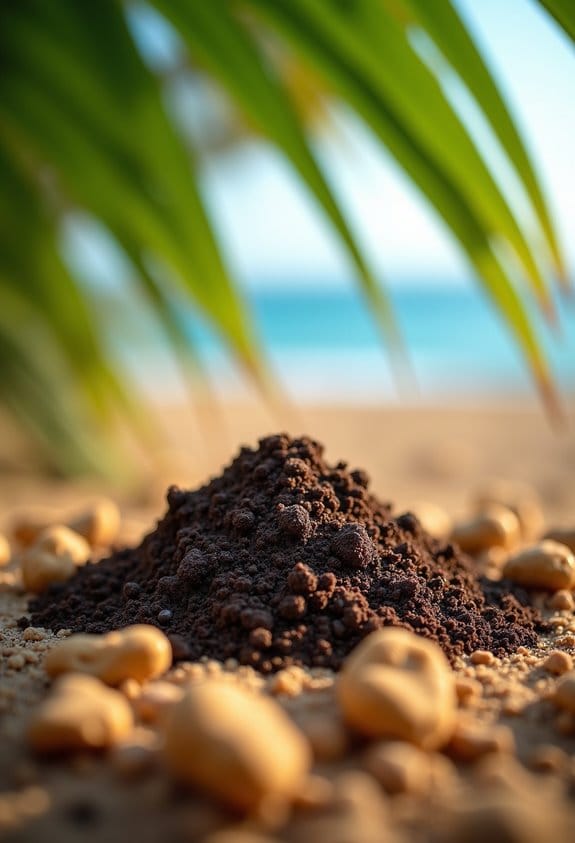
Enhancing sandy soil with 3-5% organic matter greatly improves its ability to retain moisture and nutrients essential for palm growth. Organic matter, introduced via organic amendments like compost or aged manure, binds soil particles, refining soil structure and encouraging root expansion. This modification enhances moisture retention by reducing water drainage rates, essential in sandy soil zones where evaporation is rapid. Nutrient retention also benefits markedly from consistent organic matter incorporation, as humus formation accompanies decomposition, stabilizing critical nutrients within the root zone. Observations confirm palms exhibit healthier growth in sandy soil enriched with active organic content due to improved soil physical properties and nutrient availability. Consequently, maintaining adequate levels of organic matter guarantees sustainable palm growth by optimizing water and nutrient uptake through enhanced soil structure and prolonged nutrient retention benefits. Additionally, hardy palm species such as the Windmill Palm support healthy growth in varied soil conditions, including sandy soils, due to their extreme winter tolerance.
Selecting Appropriate Soil Amendments
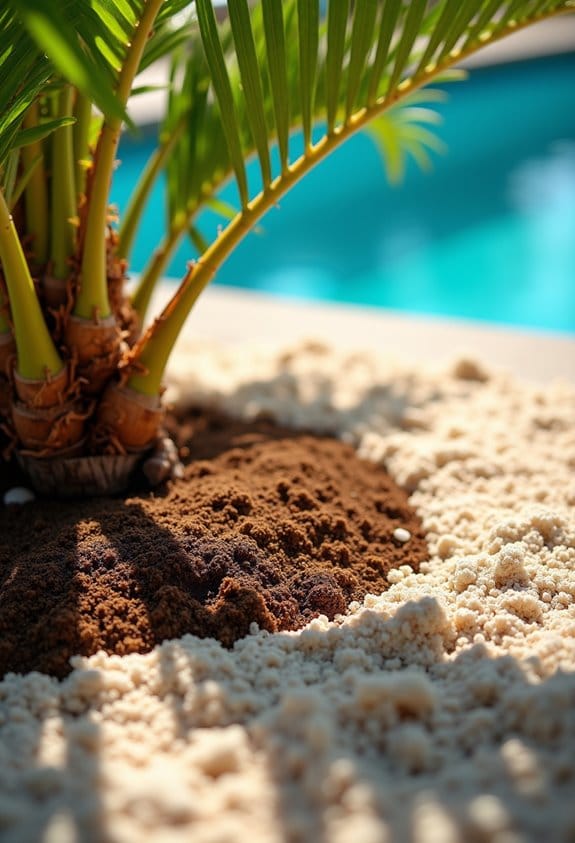
Several types of organic amendments serve essential roles in improving sandy soils for palm cultivation, each contributing uniquely to soil structure and nutrient retention. Adding 3 to 4 inches of well-decomposed organic matter, such as materials from a compost pile or leaf mold, considerably improves soil texture and moisture retention. Regular monthly applications of diverse soil amendments sustain the availability of nutrients that plants need, fostering steady palm growth. Avoid potting mixes, which may retain excessive moisture and cause root issues. Beneficial organisms like earthworms naturally enhance sandy soils by breaking down organic amendments and boosting microbial activity, which further improves soil structure. Selecting appropriate organic matter and maintaining consistent additions help transform sandy soils into a more fertile, moisture-retentive environment ideal for healthy palms. This precise approach guarantees sustainable improvement in soil quality over time. Incorporating organic amendments also supports the natural ecosystem benefits of real sago palm trees by fostering healthy soil organisms and balanced nutrient cycles.
Recommended Products

NATURAL, ORGANIC INGREDIENTS: Made of 100% organic ingredients, this organic potting soil is free from synthetic fertilizers and chemicals. This planting soil gives your plants everything they need. Perfect for soil for indoor plants and outdoor potting soil.
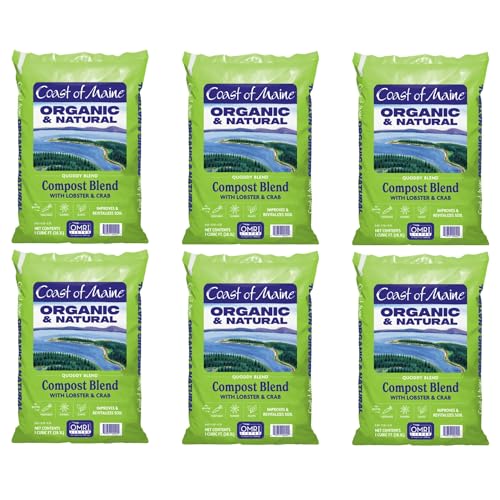
You will receive 6 (1cf) bags per order

Gardening Mix: Get more out of your flowers, shrubs, and more by mixing the soil with this succulent soil mix to provide natural nutrients for all of your plants free of odor and chemicals
Benefits of Seaweed and Biochar Additions

When integrated thoughtfully, seaweed and biochar additions provide significant benefits that address the inherent challenges of sandy soils for palm cultivation. Seaweed supplies over sixty trace elements crucial for palm tree growth, enriching the soil with diverse micronutrients. Both seaweed and biochar increase organic matter, which improves nutrient retention and minimizes leaching in coarse sandy textures. Biochar’s porous structure enhances moisture retention, critical in sandy soils prone to rapid dryness, while also improving soil structure and fertility. Additionally, seaweed stimulates microbial activity, fostering a robust soil ecosystem that supports root development and overall palm health. Together, these amendments create a more balanced soil environment, promoting efficient water usage and nutrient availability essential for establishing palms in typically nutrient-poor, fast-draining sandy substrates. Artificial palms made from UV-resistant materials demonstrate enduring stability and durability under varying outdoor conditions, paralleling the importance of soil amendments for living palms’ health.
Enhancing Soil Stability With Clay and Silt

Building on the benefits of organic amendments like seaweed and biochar, the integration of clay and silt offers a complementary approach to stabilizing sandy soil for palm cultivation. Adding clay soil slows drainage, improving soil stability by enhancing moisture retention and nutrient availability fundamental for palm growth. Silt contributes fine particles that increase fertility and help retain water around roots. Combining sand, clay, and silt in a balanced mix creates a loamy texture, allowing better root penetration and supporting healthier palms. Clay’s small particles bind organic matter, improving soil structure and ecosystem health. However, careful application is vital; excessive clay content risks compaction, which may hinder palm growth. A recommended ratio is 70% sand, 20% silt, and 10% clay for ideal soil texture and long-term stability. Additionally, selecting palm varieties suited to such soil compositions ensures better adaptation and growth, much like choosing the appropriate palm tree size when decorating outdoor spaces for optimal stability and appearance.
Recommended Products


Soil Sunrise Monstera Houseplant Potting Soil Mix (30 Quarts) Custom Blend for Growing and Repotting
Crafted for Monstera Lovers: Specifically formulated for Monstera varieties, including the iconic Swiss Cheese Plant (Monstera deliciosa), Thai Constellation and Ceriman.

A LITTLE DOES A LOT - Easy to use compressed soil granules quickly expand up to 4X and make up to 3 gallons of soil. Light, compact, easy to carry, resealable bag saves space.
Mulching Practices to Improve Soil Health
Effective mulching practices play a critical role in maintaining soil health, especially within sandy environments where moisture quickly evaporates. Applying a 2-4 inch layer of organic mulch such as wood chips or straw improves moisture retention, keeping palm roots hydrated during hot, dry periods. As mulch decomposes, it enhances soil structure by gradually adding organic matter, which increases nutrient retention in inherently low-fertility sandy soils. This process supports beneficial soil organisms like earthworms, which aerate the soil and promote healthy root expansion. Additionally, organic mulch acts as a natural barrier against weeds, reducing competition for water and nutrients essential to palm growth. By regulating soil temperature and fostering humus formation, regular mulching creates a resilient environment ideal for sustaining long-term soil health in sandy conditions. To complement these natural soil improvements, consider integrating outdoor elements like weather-resistant materials in garden décor to maintain a harmonious and enduring palm environment.
Recommended Products

S1 Wood chipper shredder comes with a larger 15.6-inch large cutting rotor, which is more efficent and faster speed than those mini wood chipper. It is equipped with 2 blades and 6 hammers for more consistent speeds and efficient shredding. The efficient feeding speed and the grilling device on the discharge outlet effortlessly transform debris and branch leaves into mulch, enriching your garden with rich organic nutrients.

BULK MULCH FOR LARGE PROJECTS: Pallet contains 80 bags of Scotts Nature Scapes Color Enhanced Mulch Classic Black; each 1.5 cu. ft. bag covers 6 sq. ft. when applied in a 3-inch layer

FRESH WHOLE DATES - Our whole dates are always freshly picked and are the true bounty of Bard Valley. They are packed full of nutrients and deliver a sweet caramel flavor
Choosing Palm Species for Sandy Conditions
Several palm species demonstrate strong adaptability to sandy soils, particularly those with good drainage and low nutrient content. Salt-tolerant palms like Sabal and Washingtonia robusta thrive in well-drained sandy soil, benefiting from amending the soil with organic matter to improve water retention and nutrient availability. Native species such as the California fan palm (Washingtonia filifera) show superior drought resistance and better root growth in sandy conditions. Palms like the pygmy date palm (Phoenix roebelenii) prefer sandy soil but require regular organic amendments to enhance nutrients and sustain healthy development. The needle palm (Rhapidophyllum hystrix) tolerates low water retention well, making it suitable for dry regions. Proper spacing supports root growth by minimizing competition for scarce nutrients, ensuring ideal palm species establishment in sandy environments. For gardens near coastlines, selecting palms with UV-resistant features can enhance their longevity and appearance under strong sunlight.
Effective Watering Techniques for Sandy Soil
Watering palms in sandy soil requires attention to timing and technique to maximize moisture absorption while preventing nutrient loss. Effective watering involves infrequent deep watering, allowing water to move thoroughly through the root zone without rapid drainage. Newly planted palms benefit from watering two to three times per week, while mature palms typically need one deep watering weekly. Using drip irrigation provides a slow, steady supply that penetrates the sandy soil without overwhelming it. Watering during early morning or late evening minimizes evaporation, ensuring moisture effectively reaches the roots. Employing a soil moisture meter helps track moisture levels to avoid overwatering or dryness. Proper hydration maintains soil nutrients and supports palm health, even in fast-draining sandy conditions where water retention is challenging. Additionally, using waterproof materials like those found in outdoor palm tree products can help ensure effective moisture management and soil stability around the roots.
Encouraging Root Growth in Amended Soil
Improving root growth in sandy soil begins by thoroughly incorporating 2 to 4 inches of organic matter, such as compost or aged manure, throughout the palm’s entire planting area. This amended soil enhances soil structure, increasing moisture retention and providing essential nutrients to the soil, which supports palm roots. Organic matter also attracts earthworms, promoting a healthy soil ecosystem crucial for robust root growth. Initial root expansion may remain limited if amendments are patchy, so consistent blending guarantees palm roots extend outward efficiently. Over time, continuous organic additions enrich sandy soils, facilitating deeper root penetration. By creating an environment with improved moisture retention and nutrient availability, palms develop a stronger foundation in sandy terrain, encouraging sustained growth through healthier, more resilient soil conditions. Using palms crafted with UV-resistant materials can further ensure outdoor palm trees withstand exposure while promoting aesthetic growth.
Monitoring Soil Moisture and Nutrient Levels
Consistent monitoring of soil moisture using a reliable moisture meter guarantees palm roots in sandy soil receive adequate hydration without becoming waterlogged. Sandy soil drains rapidly, making it essential to water young palms two to three times weekly, reducing to deep watering once per week for maturity. Regular soil tests determine nutrient levels and pH, which should stay between 6.0 and 7.0 for ideal palm growth. Incorporating organic amendments like compost or aged manure improves moisture retention and nutrient availability in sandy soil that naturally lacks these components. Mulching further aids moisture conservation and organically enriches soil structure. Maintaining balanced moisture and nutrient levels through these practices supports healthy root development and robust palm growth in challenging sandy environments. Additionally, using water-resistant materials for outdoor cushions near planting areas can protect your garden spaces from moisture damage while enhancing your outdoor aesthetic.
Long-Term Strategies for Sustainable Soil Improvement
Though sandy soils pose challenges with rapid drainage and low nutrient retention, long-term strategies can substantially improve their fertility and structure for palm growth. To sustain improvement, gardeners should add organic matter annually, applying 2-3 inches of compost or mulch to enhance moisture retention and nutrient content. Cover crops like Hairy Vetch enrich soil organisms, boosting soil type quality during off-seasons. Professional soil testing every two years is essential to monitor pH and nutrient content, ensuring amendments align with palm needs. Proper irrigation methods, such as drip systems, help water deeply without causing moisture to drain away too quickly. Avoiding potting mixes and focusing on native soil amendments supports healthy root systems. These practices collectively create a good garden environment for palms in sandy soil conditions.
Frequently Asked Questions
What Is the Best Amendment for Sandy Soil?
The soil is a thirsty traveler; organic compost guides its journey, enhancing soil retention and moisture control. Through mulch application, nutrient balance thrives, microbial activity awakens, and thoughtful crop rotation maintains ideal pH level, nurturing growth harmoniously.
Do Palm Trees Like Sandy Soil?
Palm tree preferences often favor sandy soil benefits like excellent drainage. However, sandy soil challenges include low nutrient availability and poor soil moisture retention. Selecting suitable palm tree varieties and applying proper landscape design tips optimize palm growth factors effectively.
How Could You Fix a Soil That Is Too Sandy?
A Florida nursery improved overly sandy soil by adding organic matter and mulch, boosting moisture retention and nutrient enhancement. This balanced pH, reduced weed growth, improved drainage, prevented soil compaction, and involved selecting plants tolerant to sandy conditions.
What Is the Best Soil Improver for Sandy Soil?
Compost benefits sandy soil by increasing organic matter, enhancing soil retention, nutrient absorption, and moisture retention. It balances pH, stimulates microbial activity, and supports plant health, making it the best soil improver for sandy conditions.