As an Amazon Associate, we earn from qualifying purchases. Some links on this site are affiliate links at no extra cost to you. Our recommendations are based on thorough research and editorial judgment.

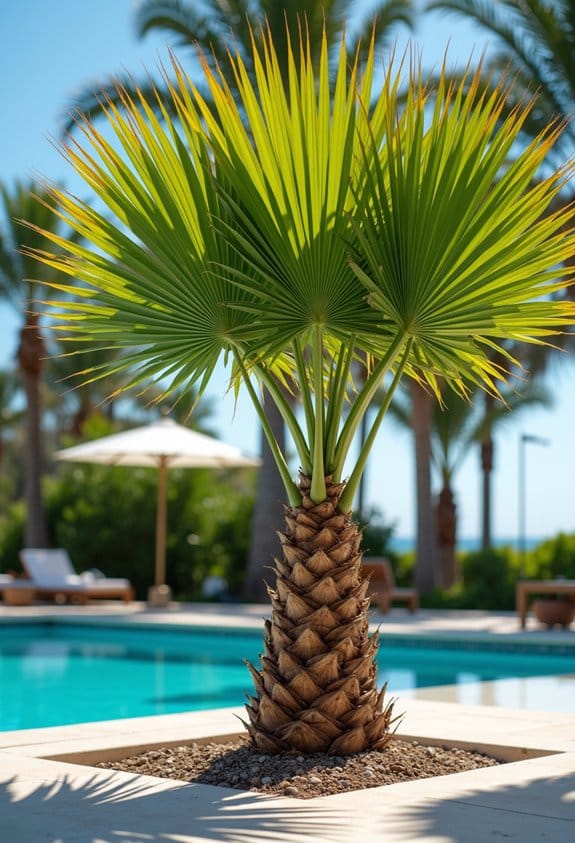
DIY Wind Protection Structures for Young Palm Trees

DIY wind protection for young palms involves building sturdy frames from 1½-inch PVC pipes, anchored securely with stakes driven 12 inches deep. Cover the structure with breathable burlap or frost cloth, allowing airflow while deflecting winds. Position stakes 1–2 feet from fronds to prevent damage and guarantee 3–4 inches clearance above foliage for ventilation. Use heavy-duty mesh for added strength in windy areas, and tie back fronds before wrapping. Proper setup minimizes freeze risk and supports healthy growth. Further guidance improves protection techniques for palms of all sizes.
Key Takeaways
- Use sturdy PVC pipes and breathable materials like burlap or frost cloth to create flexible, wind-resistant frames around young palms.
- Position stakes 1-2 feet from the palm and securely anchor with twine and soil or rocks for stability against wind.
- Construct adjustable circular frames from PVC to protect growing palms, allowing height modification as they mature.
- Ensure 3-4 inch clearance above fronds for airflow and maintain vent openings facing prevailing winds to prevent overheating.
- Regularly inspect and reinforce wind barriers after storms, anchoring structures with deep stakes or sandbags for secure wind resistance.
Selecting Suitable Materials for Wind Protection
A key factor in selecting suitable materials for wind protection in palm trees is balancing durability and breathability. Sturdy frame options, such as PVC pipes measuring 1½ inches in diameter, provide necessary flexibility and strength to withstand winds exceeding 30 mph. For covering young palm trees, frost cloth or burlap offer protection while allowing essential air circulation, preventing moisture buildup that could harm growth. Heavy-duty landscape fabric or mesh, woven tightly yet permeable, effectively deflect harsh gusts without suffocating the palm tree’s foliage. Adding straw bales or hay around the base adds insulation and weight to stabilize structures during storms common in USDA zones 9-11. It is critical that all wind protection builds are anchored securely, using stakes driven at least 12 inches deep, ensuring resilience against prolonged high winds. Additionally, using sturdy pots with drainage can enhance overall stability and health for palm trees when integrated into wind protection strategies.
Assessing Your Palm’s Exposure to Wind
Where do the prevailing winds originate in a given landscape greatly influences the necessary wind protection for palm trees, particularly young specimens in USDA zones 9-11. To assess a palm’s exposure to wind, identify the dominant wind direction and observe which side of the palm experiences the strongest gusts. Evaluate natural windbreaks—neighboring buildings, fences, or larger trees—that may buffer the palm, especially when positioned within 10 to 20 feet. Monitor the young palm’s height and stability, noting that palms under six feet are especially vulnerable to leaning or damage. Consider the distance between the palm and nearby structures, optimizing protection placement. Regular inspections after storms maintain the integrity of any DIY wind barriers, ensuring the palm’s ongoing health and resilience against the harsh winds common in subtropical and tropical landscapes. Additionally, incorporating wind protection structures with heavy-duty bases or secure anchoring methods can significantly improve stability during gusts exceeding 30 mph.
Preparing the Palm Tree for Wrapping
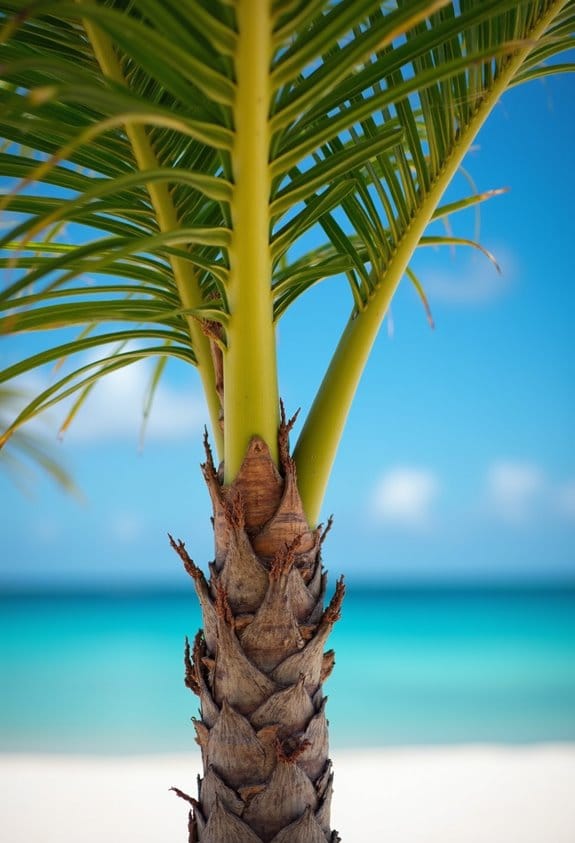
Preparing the palm tree for wrapping begins by securely gathering and tying back fronds with sturdy rope or strong string to prevent breakage during the process. This step guarantees that the fronds remain intact and provides better insulation against temperatures below 32°F, especially in USDA zones 8 and 9. Before applying the wrap, the trunk must be cleaned of debris to promote thorough adhesion and protection. Wrapping starts at the base of the trunk and proceeds upward to achieve full coverage against prevailing winds, which can reach speeds of 20 mph or more in exposed areas. For taller palms exceeding six feet, consider integrating additional support like a wire frame to maintain wrap integrity during harsh winter gusts. Properly secured fronds and a methodical wrap layer are key to defending young palms from freeze damage. Using palm trees made from UV-resistant polyester can also help ensure durability when exposed to harsh outdoor conditions during winter.
Building a Burlap Wind Barrier Around the Palm
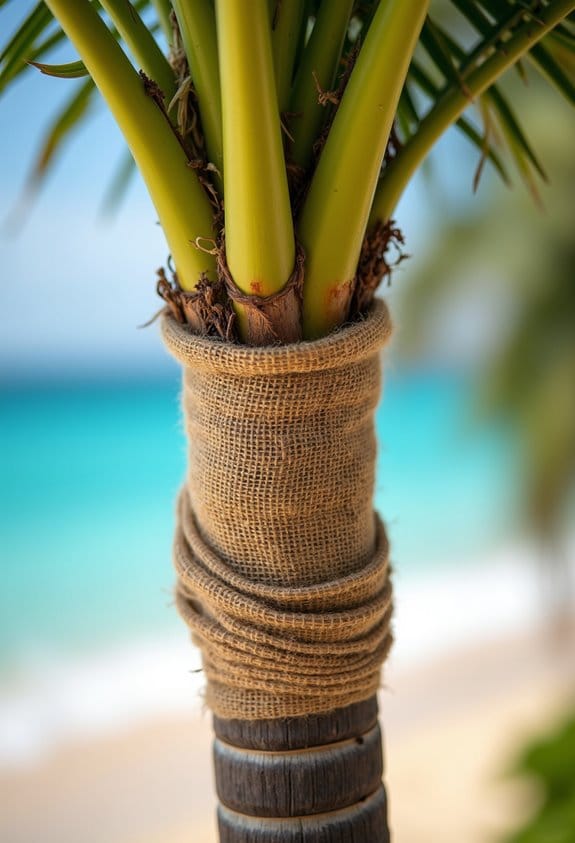
When constructing a burlap wind barrier around young palm trees, stakes should be positioned at least 1 to 2 feet away to prevent fronds from touching the fabric and causing damage. Start by selecting sturdy stakes tall enough to support burlap sheets that cover the palm’s height and taper securely to the ground. Cut burlap into large panels and fasten them firmly to the stakes using twine or rope, forming a circular enclosure. Anchor the bottom edges with rocks or soil to prevent movement during strong gusts. For added stability, reinforcing the frame with wooden slats or chicken wire is advisable in windy regions. This setup balances effective wind protection with sufficient airflow, helping young palms withstand harsh conditions while avoiding fabric abrasion or stress to the fronds. Using materials with UV resistance will also help maintain the barrier’s durability in sunny outdoor environments.
Recommended Products

(6ft wide x 50ft long) 95% UV Block, 180 GSM, High Resistant to Sunlight
(8ft wide x 25ft long) 95% UV Block, 180 GSM, High Resistant to Sunlight
![WindscreenSupplyCo] 60% 5'10'' x 100 FT Eyelets Shade Cloth Roll Sunblock Shade UV Resistant Net for Garden Greenhouse Flower Plant Patio Kennel, Brown - PS6160BRN](https://m.media-amazon.com/images/I/51EBf8iE2AL._SL500_.jpg)
PREMIUM MATERIAL: Crafted from high-density polyethylene (HDPE), this tarp offers exceptional durability, ensuring it withstands harsh conditions and long-term use
Using Shade Cloth for Flexible Wind Diffusion
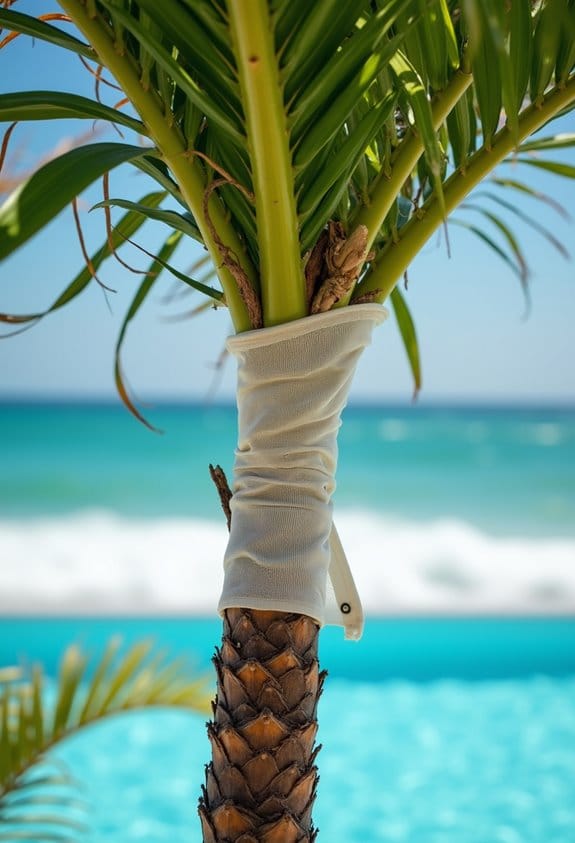
Although shade cloth is primarily known for sun protection, it also serves as an excellent wind diffuser for young palm trees, especially in USDA zones 9 through 11 where occasional gusts can stress developing fronds. Using a 50% shade cloth, installers should tension it vertically around the palm at frond height, allowing air circulation without blocking sunlight. Proper anchoring with posts or stakes prevents sagging, which can trap moisture and cause fungal issues in temperatures above 60°F. Regular monitoring guarantees the shade cloth remains taut and effective throughout the growing season. This flexible barrier diffuses wind energy, reducing direct pressure on delicate palms while maintaining airflow essential for healthy growth, demonstrating shade cloth’s dual role in protecting against sun and wind damage simultaneously. Choosing wind protection that allows for good air movement is key to avoiding fungal issues and promoting palm health.
Installing Support Structures With Stakes or Poles
Sturdy stakes or poles at least 6 feet tall form the backbone of effective wind protection for young palm trees in zones 9 through 11. These stakes should be equally spaced around the palm, anchored deeply into the soil, providing a stable frame against strong gusts. Connecting the tops of the stakes with a horizontal beam or sturdy wire creates a robust support system that shields the tree without hindering growth. Wrapping burlap or frost cloth around this frame, while keeping it off the fronds, helps reduce wind exposure and allows adequate airflow and light penetration. Regular inspections and adjustments maintain peak protection as the palm grows, preventing structural damage and ensuring the support remains both functional and safe throughout changing weather conditions. Utilizing UV-resistant materials for these structures enhances their durability under prolonged sun exposure, contributing to long-lasting protection.
Recommended Products

Crafted for the Outdoors: Solid aluminum casing, corrosion resistance and heat dissipation. IP65 rating ensures superior waterproofing, deliver a durable, weather-resistant outdoor lighting solution.

Crafted for the Outdoors: Solid aluminum casing, corrosion resistance and heat dissipation. IP65 rating ensures superior waterproofing, deliver a durable, weather-resistant outdoor lighting solution.

🌳 HEAVY DUTY TREE STAKES – Ideal for supporting young trees, saplings, plants, tomatoes, and garden projects
Creating Adjustable Protective Circles
Constructing adjustable protective circles using PVC pipes provides a versatile method to shield young palm trees from wind damage in growing zones 9 through 11. Begin by assembling a circular frame from durable PVC pipes, designed to expand as the palm matures. Secure this frame firmly into the soil using stakes or heavy weights to prevent displacement during high winds. Wrap the frame tightly with burlap or frost cloth, which effectively blocks strong gusts while allowing essential airflow. The height of these adjustable protective circles can be modified by adding or removing PVC sections, ensuring consistent coverage without restricting growth. It is essential to regularly inspect the structure for damage, particularly following storms or temperature drops below 25°F, to maintain reliable wind protection for palms in warmer climates. Using weighted pots or cement bases can also enhance stability by anchoring protective structures firmly in place.
Ensuring Proper Airflow to Avoid Overheating
How can effective airflow be maintained while protecting palm trees from wind damage? Ensuring at least three to four inches of clearance above fronds allows essential air circulation, reducing the risk of overheating. Incorporate vent openings, ideally facing prevailing winds, to enhance fresh airflow within the structure. Lightweight, breathable materials like shade cloth or mesh outperform solid barriers by preventing heat buildup more effectively than bubble wrap, which can insulates excessively if wrapped tightly. Position the structure to minimize direct midday sun exposure, particularly in zones 9 to 11, where winter heat stress can occur. Regularly monitor internal temperatures, aiming to keep levels below 85°F, adjusting ventilation or coverings as needed to maintain ideal conditions for young palms’ growth without compromising wind protection. Additionally, selecting durable PVC materials can provide effective protection while ensuring longevity in outdoor settings.
Securing the Structure Against Strong Winds
Although wind protection structures shield palm trees from damaging gusts, securing their base against strong winds is crucial to prevent collapse or displacement. The structure’s foundation should be anchored firmly using galvanized steel stakes driven at least 30 centimeters deep or weighted with sandbags when soil conditions are poor. Framework materials like treated wood or 2.5-centimeter diameter PVC pipes provide necessary rigidity against wind loads common in USDA zones 8–10 where fan palms grow. Cross-bracing, placed diagonally between vertical supports, adds stability for taller specimens or sites exposed to gusts exceeding 48 kilometers per hour. Position the shelter facing into prevailing winds—usually from the northwest in coastal regions—to reduce lateral pressure. Regular inspections after storms guarantee fasteners, joints, and anchoring remain intact, maintaining effective protection throughout the fan palm’s vulnerable early growth stages. Using weather-resistant materials is also advisable to ensure the structure withstands prolonged outdoor exposure without deteriorating.
Monitoring and Maintaining Protection Throughout Winter
A successful winter strategy for fan palms in USDA zones 8–10 emphasizes careful monitoring and consistent maintenance of wind protection structures. Regular inspections guarantee enclosures remain stable during storms, preventing collapse onto young palms. Monitoring internal temperatures is vital; maintaining above 32°F helps avoid freeze damage to fronds and trunks. Moisture buildup and signs of mold should be checked frequently, with ventilation adjusted to promote airflow and inhibit rot. After heavy snow or ice, removing and reapplying protective materials reduces weight stress on the palm’s structure. Staying informed about local weather forecasts allows timely reinforcement before cold snaps or strong winds. This proactive approach to monitoring and upkeep enhances the effectiveness and longevity of DIY wind barriers throughout the winter season. Using weather-resistant materials in building these structures can further improve durability and protection against harsh conditions.
Tips for Protecting Larger or More Mature Palms
Three essential approaches enhance wind and cold protection for larger palms, particularly in USDA zones 8–10, where winter temperatures can dip below 32°F. For mature Trachycarpus fortunei, constructing expandable wire or PVC cages around the trunk adds crucial shielding from gusty winds and snow. Wrapping these structures with burlap or frost cloth further protects fronds and maintains microclimate warmth. Adding insulation materials such as bubble wrap or aluminum-backed sheets around the trunk dramatically improves cold resistance. Securely anchoring cages prevents displacement during storms, a critical step in regions prone to heavy snow or strong wind. Regular monitoring of the palm’s condition throughout winter is necessary to adjust protective layers, ensuring ideal health and growth despite fluctuating weather. These detailed methods effectively safeguard larger palms from harsh seasonal elements.
Frequently Asked Questions
How to Protect Palms From Wind?
When sudden gusts threaten palms, wind barriers effectively shield them by reducing direct impact. Sturdy structures combined with breathable fabrics and strategic placement guarantee protection while allowing growth. Regular adjustments maintain ideal defense against damaging winds.
How Can Palm Trees Withstand High Winds?
Palm trees exhibit wind resilience through their flexible fronds, which bend instead of breaking, and their sturdy root systems. Their ability to sway with gusts minimizes damage, enhancing stability during high wind conditions naturally.
How Strong Do Winds Have to Be to Knock Down a Palm Tree?
When winds roar beyond 60 mph, young palms often succumb, their wind resilience tested and broken. Mature palms endure stronger gusts, but fragile root systems mean even moderate storms can bring down these green sentinels.
What Not to Do With a Palm Tree?
Palm tree mistakes include wrapping fronds too tightly, using plastic wraps that trap moisture, placing protection too close causing frond burn, neglecting trunk cleaning, and employing unsafe heating methods, all of which can harm the tree’s health and growth.