As an Amazon Associate, we earn from qualifying purchases. Some links on this site are affiliate links at no extra cost to you. Our recommendations are based on thorough research and editorial judgment.

Fast-Growing Palm Trees for Quick Tropical Landscaping

Fast-growing palm trees like Queen Palm can reach 50 feet tall within a few years, thriving in USDA Zones 9B–11 with strong salt tolerance. Windmill Palm grows 10 to 30 feet, tolerates full sun to partial shade, and endures down to 5°F, suitable for Zones 7–11. Majesty Palm, reaching up to 80 feet, prefers bright indirect light and must be frost-protected below 30°F. These palms quickly establish lush tropical landscapes with proper watering and nutrient management. Explore specific care and design tips next.
Key Takeaways
- Queen Palm grows up to 50 feet quickly, providing immediate tropical height and shade for fast landscaping.
- Windmill Palm tolerates cold temperatures down to 5°F and requires minimal maintenance, ideal for diverse climates.
- Fast-growing palms thrive in full sun with well-draining soil and consistent watering to maximize growth rates.
- Proper pruning and slow-release fertilization support healthy, rapid palm development for vibrant tropical aesthetics.
- Combining tall, fast-growing palms with colorful accents creates lush, resort-like landscapes efficiently.
Benefits of Fast-Growing Palm Trees
You may be interested
Although many palm species grow slowly, certain fast-growing varieties like the Queen Palm can reach heights of up to 50 feet within a few years, offering rapid vertical structure. Fast growing palms such as the King Alexander Palm often exceed three feet of annual height increase, delivering quick tropical vibe and lush foliage. These palms contribute greatly to aesthetic enhancement by providing immediate visual impact and enhancing curb appeal in residential and commercial properties. Additionally, fast-growing palms establish themselves faster, yielding benefits like increased shade and privacy within five years instead of decades. Species like the Foxtail Palm adapt well to diverse conditions, enabling a durable tropical appearance. Utilizing fast-growing palms offers practical landscaping solutions for achieving resort-like environments efficiently, supporting design goals without lengthy waiting periods. For outdoor landscaping, selecting UV-resistant materials in artificial palm trees ensures long-lasting color vibrancy and durability in various climates.
Characteristics of Quick-Growing Palm Varieties
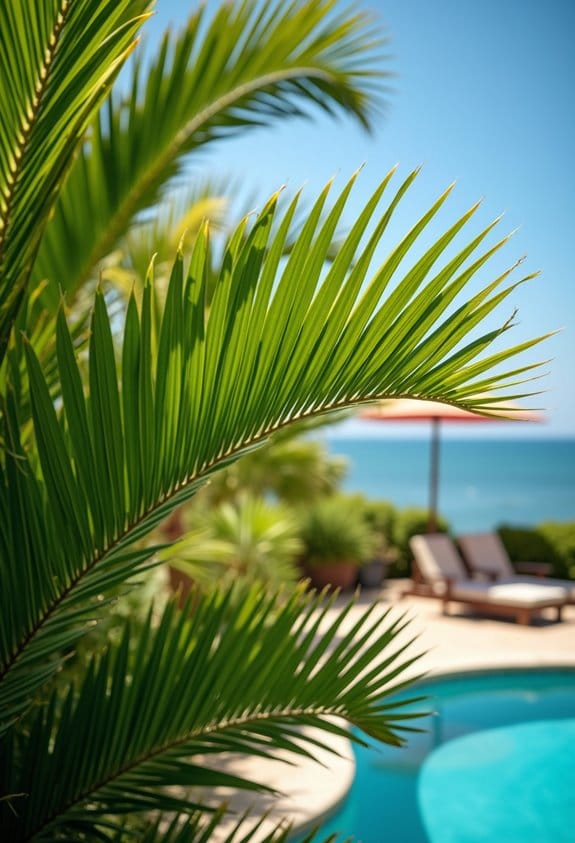
When provided with ideal conditions such as full sun exposure, well-draining soil, and consistent watering, fast-growing palm varieties like the Queen Palm (Syagrus romanzoffiana) can rapidly attain heights up to 50 feet within several years. These palms display a lush tropical aesthetic, characterized by long, arching fronds that enhance visual appeal. The King Alexander Palm (Archontophoenix alexandrae) grows between 40 to 80 feet annually, offering striking vertical presence. Similarly, the Foxtail Palm (Wodyetia bifurcata) reaches 30 feet, noted for its bushy fronds. Best conditions, including nutrient-rich soil and regular maintenance, are essential for healthy development and sustained growth rates. Selecting these species helps establish a quickly maturing landscape, blending size and texture to achieve an inviting tropical environment efficiently and effectively. For ensuring longevity in outdoor landscaping, incorporating palms with UV resistance can significantly extend the lifespan and maintain their vibrant appearance under intense sunlight.
Majesty Palm: Features and Growing Tips
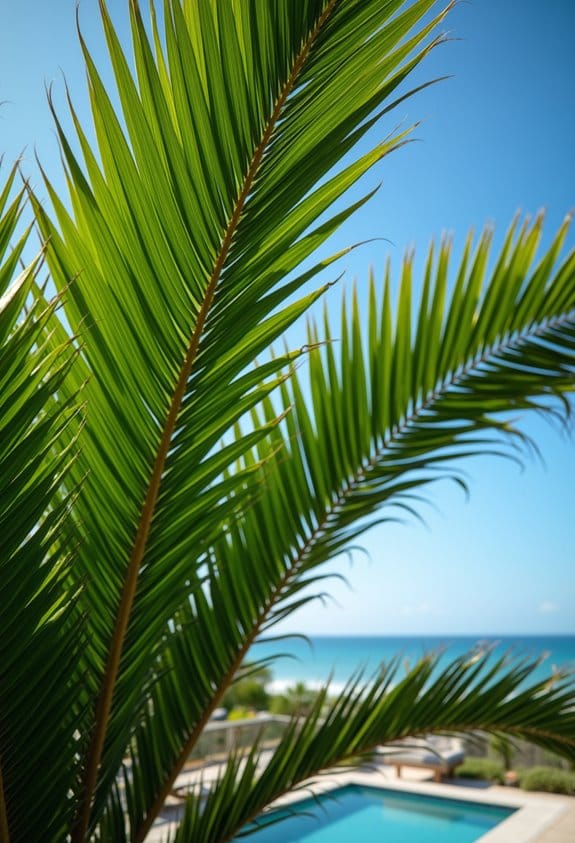
Several species within the Majesty Palm (Ravenea rivularis) category grow between 20 and 80 feet tall, making them suitable for both indoor and outdoor landscapes. This palm boasts feathery fronds, often reaching 4 feet long, that create a lush tropical aesthetic ideal for quick landscaping. The majesty palm thrives in average to well-drained soil under bright, indirect light. While considered low-maintenance, it demands consistent moisture and humidity to prevent leaf browning and stress. Outdoor plantings require frost protection, as this species tolerates temperatures only down to approximately 30°F (-1°C). To guarantee healthy growth, watering should maintain even soil dampness without waterlogging. This balanced care routine supports the majesty palm’s striking form, contributing robust greenery to tropical designs efficiently and reliably. For indoor settings, considering UV-resistant materials can help simulate this tropical look without the maintenance challenges.
Recommended Products

LIVE INDOOR PALM TREE STATEMENT PIECE: Elevate your home decor instantly with striking exotic upright fronds that add a luxurious resort-style aesthetic to any sunroom living room or office patio corner

LUSH TROPICAL DECOR: Elevate your space instantly with a real 3-4 feet tall Majesty Palm Tree, featuring elegant arching green fronds that bring an exotic, luxurious vacation vibe to your living room, bedroom, or office environment

LUSH TROPICAL STATEMENT PLANT: Bring home the beauty of a Majesty Palm (Ravenea rivularis), a tall, elegant indoor plant with feathery green fronds that instantly elevate any living room, office, or entryway.
Windmill Palm: Growth and Care
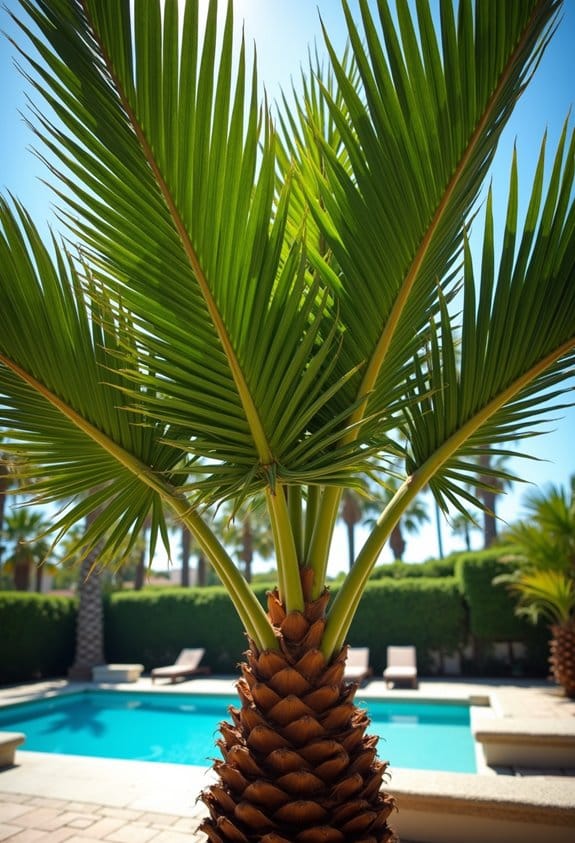
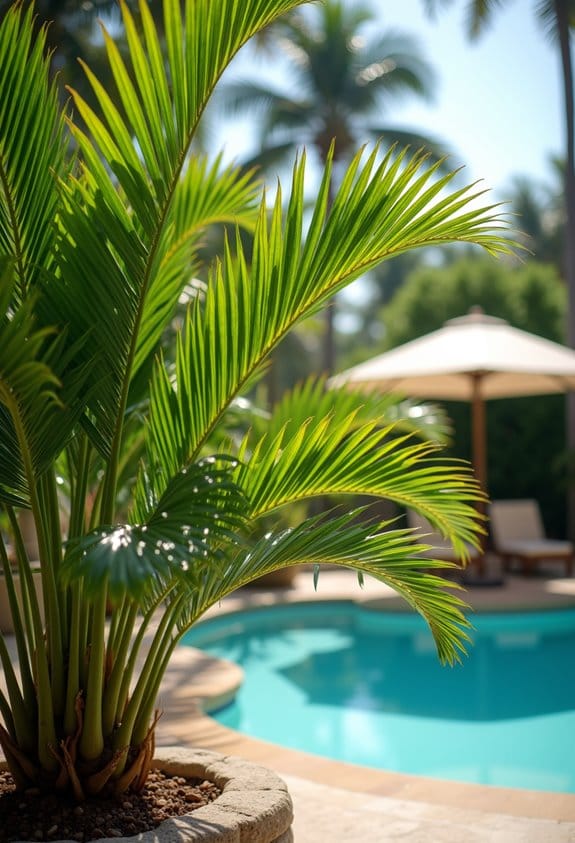
The Windmill Palm (Trachycarpus fortunei) stands out for its durability and rapid growth, reaching heights of 10 to 30 feet with fan-shaped leaves spanning up to 2 feet wide. This palm offers a striking tropical aesthetic, enhancing gardens with its broad, segmented leaves and slender trunk. Its growth habit favors full sun but tolerates partial shade, thriving best in well-drained soil. The Windmill Palm requires minimal maintenance; occasional pruning removes dead fronds to preserve health and a tidy appearance. Remarkably drought-tolerant and cold-hardy down to 5°F (-15°C), it suits various climates and landscape uses. Its adaptability and manageable care make it ideal for quick tropical landscaping, providing visual interest while needing little effort, which benefits gardeners seeking both speed and resilience in palm selection. Additionally, selecting palms with weather resistance ratings ensures they can withstand coastal environments, enhancing their longevity and performance in outdoor settings.
Recommended Products

Windmill Palm in 3 Gal. Grower's Pot | Cold Hardy Tropical Tree | Low Maintenance | Drought Tolerant
🌴This Live Windmill palm tree brings the feel and vibes of a summer beach paradise to any landscape they are planted in.
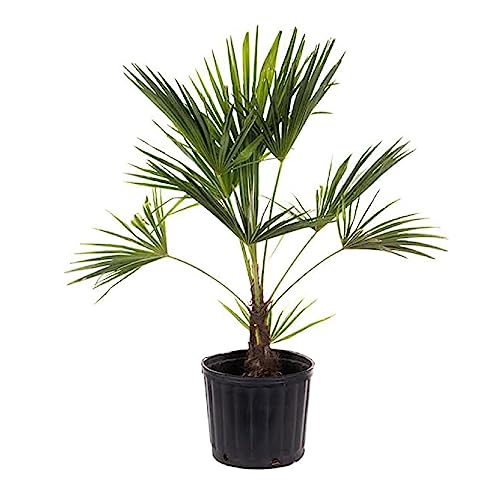
Premium Quality Windmill Palm (Trachycarpus fortunei): Grown by experienced nursery professionals, ensuring you receive a healthy and robust plant.
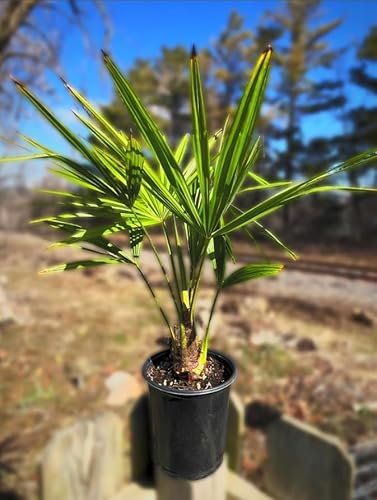
🌴 Tropical Beach Ambiance for Any Landscape 🌴 Transform your yard into a serene coastal retreat with this Live Windmill Palm Tree. Its signature fan-shaped fronds create movement and texture, bringing the relaxing feel of a summer beach paradise to patios, entryways, and garden beds. A timeless statement piece for any outdoor landscape.
Queen Palm: Rapid Growth and Landscape Uses
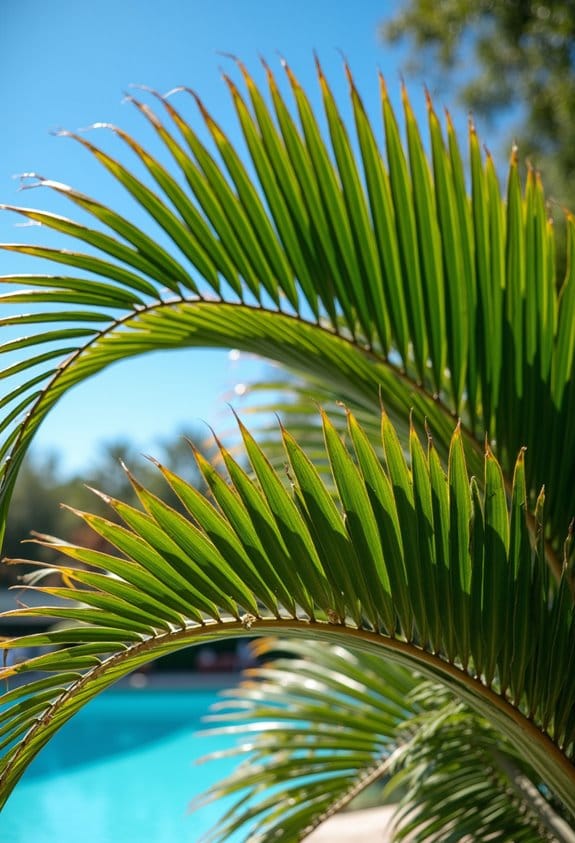
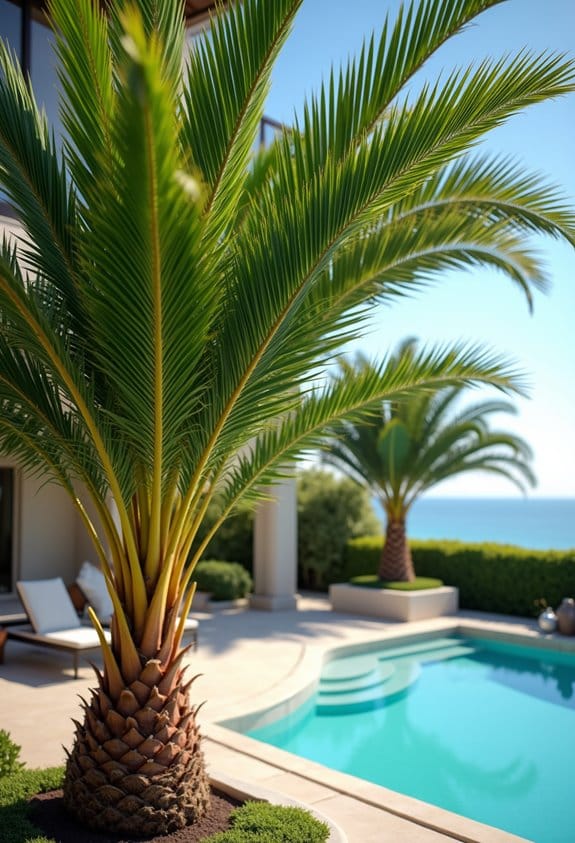
Many garden designers select the Queen Palm (Syagrus romanzoffiana) for landscapes due to its impressive height, which can reach up to 50 feet. This palm’s fast growth rate allows it to achieve dramatic landscaping effects quickly, making it ideal for creating a bold vertical emphasis. The Queen Palm’s smooth trunk and feathery fronds contribute a refined tropical appearance, enhancing ornamental gardens and resort-style settings. It demonstrates moderate drought tolerance but benefits from consistent watering during establishment to guarantee healthy development. Adaptable to coastal environments, this species tolerates moderate salt levels, expanding its usability in seaside landscapes. Overall, the Queen Palm provides a reliable, rapid-growing option for designers seeking a prominent, elegant palm that balances ornamental value with practical growth advantages. Its appeal is heightened by the fact that artificial palm trees offer low maintenance and year-round tropical ambiance as an alternative or complement to live palms in settings where quick solutions or additional greenery are desired low maintenance designs.
Recommended Products

🥭Bring the beauty of the tropics to your home or garden with Canary Island Date Palm Tree Seeds — a truly stunning, exotic, and enduring addition to your landscape.

FRESH SEEDS: 5 fresh seeds of Sago Money Palm to grow as bonsai.

Choosing the Right Palm for Your Climate
When selecting a palm species, matching its growth characteristics and climate tolerance to local conditions guarantees successful landscape integration and longevity. Choosing the right fast-growing palm trees involves understanding tropical climates and the specific USDA zones that accommodate each species. The Queen Palm, ideal for Zones 9B–11, can reach 50 feet and shows strong salt tolerance, making it excellent for coastal areas. For colder regions, the Windmill Palm endures temperatures as low as 5°F (-15°C), thriving in Zones 7–11. Compact sites benefit from the Dwarf Sugar Palm, which remains under 12 feet and suits Zones 9A–11. Slower-growing palms like the Sylvester reach 40 feet and fit Zones 8B–11. Considering growth rate, height, salt tolerance, and zone compatibility guarantees a palm tree for every space and climate. Artificial palm trees made from UV-resistant materials offer an alternative with durability and realistic appearance suitable for various environments.
Recommended Products

Live Majesty Palm Tree: Includes majesty palm in a 3 gallon growers pot; features upright growth with arching fronds suitable for indoor or outdoor placement
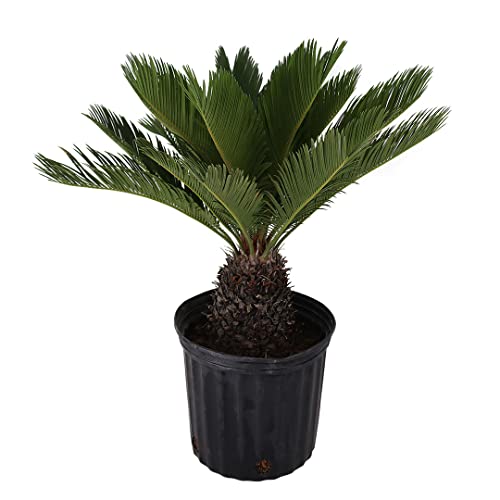
Live Sago Palm Plant – A slow-growing, ornamental palm with lush, feathery fronds and a striking trunk, perfect for indoor and outdoor décor

Soil and Water Requirements for Fast-Growing Palms
Although fast-growing palm trees like the Queen Palm favor average to sandy, well-draining soils, ensuring consistent moisture during the first six months is crucial for robust root development. The soil should never remain waterlogged, as prolonged saturation often leads to root rot in these palms. Regular deep watering, approximately twice weekly depending on climate, encourages healthy growth by promoting strong root systems. Incorporating organic matter or mulch around the base helps retain necessary soil moisture while supplying nutrients essential for vitality. Once established, many fast-growing palm trees demonstrate moderate drought tolerance but benefit from supplemental watering during dry spells exceeding 14 days. Maintaining balanced moisture levels supports resilience and ideal health, especially in USDA zones 9 through 11, where temperatures commonly range from 75 to 95°F. Proper soil and water management enable vibrant, speedy tropical landscaping success. Using well-draining sandy or loamy soils with a pH between 6.0 and 7.5 is ideal for healthy palm growth.
Maintenance and Pruning Guidelines
Effective maintenance and pruning of fast-growing palm trees require precise timing and careful technique to promote vigor while preventing stress. Routine trimming focuses on removing only fully brown fronds, preserving green ones that sustain the palm’s health through photosynthesis. Pruning should avoid cutting the central crown, where new growth emerges, to prevent growth disruption. For coastal species like Sylvester and Queen Palms, maintenance enhances both appearance and structural stability, supporting longevity. A seasonal routine including careful trimming helps maintain ideal health, avoiding over-pruning that stresses the palm. Properly timed pruning also reduces pest habitats and improves air circulation around the fronds. Establishing this disciplined approach guarantees fast-growing palms remain vibrant and structurally sound, rapidly contributing to tropical landscapes’ lush and appealing character. Additionally, choosing palms with UV-resistant materials can significantly reduce damage and maintenance needs over time.
Fertilizers and Nutrient Management
Three essential nutrients—nitrogen, phosphorus, and potassium—form the foundation of fertilizers designed specifically for fast-growing palm trees. These nutrients support healthy growth and vibrant foliage while preventing common nutrient deficiencies like magnesium and potassium, vital for palm health. Slow-release fertilizers are recommended, supplying nutrients steadily over several months to avoid nutrient burn. Incorporating organic matter into sandy soil greatly improves moisture retention and nutrient availability, fostering stronger root development. Seasonal fertilization during spring and summer aligns with the palm’s active growth phase, maximizing nutrient uptake. Regular applications, typically every 6 to 8 weeks, guarantee palms maintain ideal nutrient levels. Careful nutrient management paired with suitable fertilizers enhances palm vigor, creating a lush, tropical appearance suited to quick landscaping projects in USDA zones 9 through 11. Additionally, selecting fertilizers with UV-resistant materials can help prolong the health and appearance of palms in outdoor environments.
Using Palms to Create Tropical Outdoor Spaces
When designing tropical outdoor spaces, fast-growing palms like the Queen Palm (Syagrus romanzoffiana) can reach heights of up to 50 feet within a few years, establishing immediate vertical interest. Incorporating varieties such as the cold-hardy Windmill Palm (Trachycarpus fortunei), thriving in USDA Zones 7-11, expands tropical aesthetics across diverse climates. Clumping palms like the Areca Palm (Dypsis lutescens) provide dense privacy hedges that enhance layered tropical landscaping. Strategically placing tall specimens, such as the Royal Palm (Roystonea regia), creates dramatic focal points that elevate outdoor space ambiance toward a resort-like feel. Combining these palms with colorful accents like bromeliads enriches texture and vibrancy, producing a cohesive tropical environment. By utilizing fast-growing palms thoughtfully, landscape designers achieve lush, dynamic outdoor spaces quickly, with sustained visual impact and architectural interest. Enhancing your landscape with palm tree house number signs can also complement the tropical theme and boost your home’s curb appeal.
Planting Palm Trees in Containers
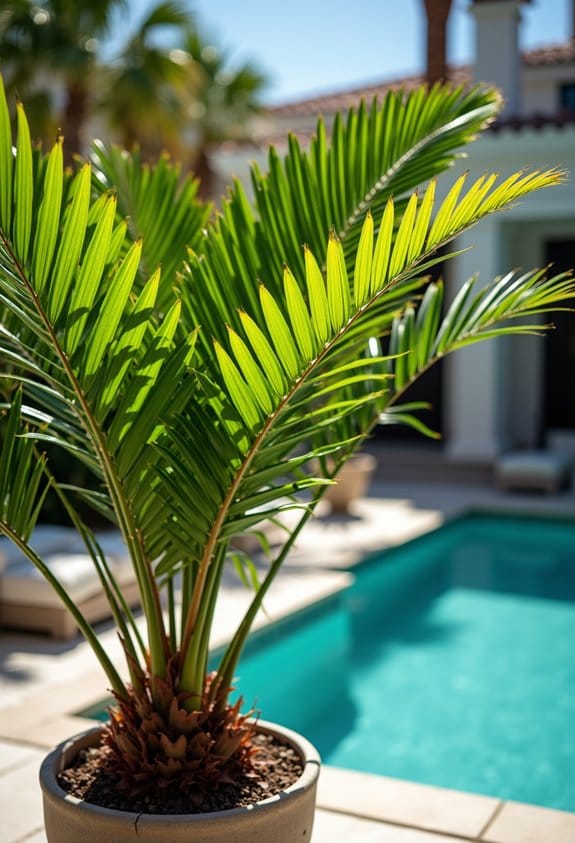
How can palm trees thrive and enhance spaces when confined to containers? Selecting smaller varieties like Majesty or Ponytail Palm suits container planting perfectly, as they adapt to limited root space and indoor environments. The container must be appropriately sized—ideally 12-16 inches in diameter—to allow root growth and guarantee sufficient drainage holes prevent waterlogging. Using a lightweight, well-draining potting soil enriched with organic matter helps maintain ideal soil moisture while supporting growth. Regular watering is critical, especially in warm zones above USDA Hardiness Zone 9, since containers dry out faster than garden soil. Monitoring soil moisture daily allows timely irrigation without overwatering, reducing root rot risks. Incorporating slow-release fertilizer every 3-4 months further promotes robust palm health, making container planting a practical solution for quick tropical landscaping.
Buying and Delivering Palm Trees Online
Purchasing palm trees online offers a streamlined option for landscapers and gardeners seeking fast-growing species suitable for USDA Hardiness Zones 9 and above. Buying palm trees online through specialized nurseries provides access to detailed variety descriptions and care instructions, promoting informed landscaping choices. Fast Growing Trees, for example, guarantees free shipping within the continental U.S. on minimum orders, with delivery typically occurring in just a few days. This rapid delivering process supports timely installation in landscaping projects requiring a quick tropical aesthetic. Online platforms allow flexible shopping anytime, enabling buyers to compare species and assess size ranges—often from small 1-3 gallon containers to larger 15-gallon palms—without visiting physical locations. This convenient method combines efficiency and variety, streamlining palm tree acquisition and enhancing landscaping success.
Recommended Products

Sprouted Coconut Palm Tree - Large size - 12 to 36 inches tall

About the Plant: Neanthe Bella Palm, also known as Parlor Palm, is an indoor plant grown for its playful, feathery fronds and easy-care nature. This compact palm thrives in low to moderate light and requires minimal maintenance. Its air-purifying qualities make it a healthy choice for any space. It is also pet friendly, ensuring your furry friends are safe. Neanthe Bella Palm is a timeless, versatile houseplant that brings natural beauty to any home!

Lush, Tropical Foliage – Features graceful, feathery fronds that add a vibrant, tropical touch to any indoor or outdoor space
Frequently Asked Questions
Which Palm Tree Grows the Fastest?
Fastest flourishing finds favor in King Alexander Palm, famed for fast growth rates under ideal climate conditions and fertile soil. Maintenance tips guarantee longevity. Popular varieties align with specific soil requirements, enhancing rapid rise and robust resilience among palms.
What Is the Best Palm Tree for Landscaping?
The best palm tree for landscape design depends on desired palm varieties and tropical themes, balancing aesthetics with maintenance tips. Selecting appropriate planting techniques guarantees healthy growth, whether choosing tall Royal Palms for focal points or compact Pygmy Date Palms.
How Long Does It Take for a Palm Tree to Grow 10 Feet?
The growth rate varies, but under ideal conditions, some palms reach 10 feet in 3-5 years. Proper soil requirements, pruning tips, and consistent maintenance needs considerably impact this timeline, accelerating healthy development despite slower species.
How Much Is a 20 Ft Palm Tree Worth?
A 20 ft palm tree’s pricing ranges from $200 to over $2,000, reflecting mature palm valuation. Transplanting costs and landscaping expenses influence overall palm tree investment, necessitating careful budgeting for successful installation and maintenance.