As an Amazon Associate, we earn from qualifying purchases. Some links on this site are affiliate links at no extra cost to you. Our recommendations are based on thorough research and editorial judgment.

Native vs. Non-Native Palms: What’s Best for Your Region

Native palms like Sabal palmetto and Saw Palmetto thrive in USDA Zones 8-11, growing up to 100 feet with minimal irrigation and fertilizer. They support local wildlife by providing habitat and fruits, while resisting pests and diseases common in non-native palms. Non-native species require more maintenance, are less stable during storms, and can reduce biodiversity. Choosing native palms promotes ecological health, enhances soil quality, and improves climate resilience. Further insights clarify ideal palm selection and environmental benefits.
Key Takeaways
- Native palms like Sabal and Saw Palmetto thrive in local climates with minimal irrigation and fertilizer.
- Non-native palms often require higher maintenance and are prone to diseases like lethal yellowing.
- Native palms support local wildlife and biodiversity by providing essential habitat and food.
- Non-native palms can disrupt ecosystems by reducing biodiversity and increasing invasive species risks.
- Choosing native palms enhances soil health, stabilizes ecosystems, and helps mitigate climate change impacts.
Benefits of Native Palms
Although native palms such as Sabal Palmetto and Saw Palmetto are often overlooked, they offer distinct advantages in Florida’s climate zones 8 through 11. Native palms thrive in Florida’s climate with minimal irrigation and fertilizer, considerably lowering maintenance costs compared to non-native counterparts. Species like Sabal Palmetto support local wildlife by providing fruits and habitats essential for bird species, enhancing biodiversity. Their fallen fronds decompose naturally, promoting nutrient cycling and improving soil health, unlike non-native palms that may deplete soil resources. Additionally, native palms contribute to ecological stability by resisting local pests and diseases, increasing landscape resilience against drought and sea-level rise. Incorporating native palms supports Florida’s natural heritage and guarantees sustainable, cost-effective landscaping suited to environmental challenges typical of southeastern U.S. coastal and inland zones. Moreover, selecting palms with UV resistance ensures they maintain their vibrant appearance despite strong Florida sunlight conditions.
Challenges Posed by Non-Native Palms
Many non-native palm species, such as Queen and Foxtail palms, present considerable challenges in Florida’s climate zones 8 through 11 due to their susceptibility to diseases like lethal yellowing and nutrient deficiencies. These diseases demand frequent maintenance, increasing costs and labor compared to native palms, which are better adapted to local conditions. Urban planting of non-native palms often reduces biodiversity, as these species can dominate landscapes and displace native palms critical to regional ecosystems. Moreover, non-native palms typically support less local wildlife, disrupting natural food webs. Their weaker root stability poses risk during storms, threatening public safety. Additionally, palms like Coconut and Bismarck exhibit poor carbon sequestration, limiting their effectiveness in combatting climate change. Selecting palm trees with weather resistance ratings suited for coastal climates can greatly improve their longevity and performance in urban environments.
Key Native Palm Species in Florida
Florida’s native palms, such as the Sabal Palm (Sabal palmetto), stand out for their adaptability and ecological value across climate zones 8 through 11. The Sabal Palm, Florida’s state tree, thrives with low maintenance requirements and supports local biodiversity with its broad fronds. Saw Palmetto (Serenoa repens) is notable for its hardiness and minimal care needs. The compact Florida Thatch Palm (Thrinax radiata) excels in salt resistance, ideal for coastal areas with limited space. Royal Palm (Roystonea regia) can reach heights up to 100 feet, providing dramatic visual appeal and wildlife habitat. These native palms generally demand less water and fertilizer than non-native species, aligning better with Florida’s local climate. Choosing Florida’s native palm species promotes sustainability while enhancing regional biodiversity. Additionally, native palms offer durability and stability that make them well-suited for the varied weather conditions found throughout the region.
Recommended Products

🌴This 10 feet majestic artificial phoenix palm tree features large, vivid palm fronds filled with countless arching feather-like leaves with realistic palm texture. It looks so natural and great! If you're aiming for a tropical paradise atmosphere, this is definitely the best choice. Your friends, partners, and relatives will be in awe as this extra tall palm tree awaits to dance in the warm tropical breezes

Instantly Lush & Lifelike Paradise: Enjoy the vibrant, full look of mature tropics year-round! Features a single realistic coconut trunks and abundant fronds with countless detailed leaves boasting authentic palm texture. Arrives ready to shape for a perfectly natural silhouette.

Brighten Up Your Decor:This 7 feet majestic triple tropical golden cane palm artificial tree has 27 large vivid fronds filled with countless arching feather-like leaves with realistic palm texture, three lifelike bamboo trunks are very strong, it looks so lush and great, it will create a tropical paradise atmosphere for you and those around you, now this extra tall triple cane palm tree is waiting to dance in the warm tropical breezes
Environmental Impact and Climate Change Considerations
The ecological roles of native palms extend well beyond their aesthetic appeal, directly influencing ecosystem health and resilience amid changing climate conditions. Native palms, such as Sabal Palm and Saw Palmetto, support biodiversity by providing habitat and food resources, enhancing soil health through nutrient cycling, and stabilizing coastal ecosystems against saltwater intrusion and sea-level rise. In contrast, non-native palms—like Queen and Coconut Palms—often act as invasive species, disrupting ecological health by outcompeting native flora and failing to support local wildlife. Their presence can degrade soil quality and nutrient availability. With climate change intensifying, native palms’ ability to endure drought and protect wetlands makes them indispensable for long-term environmental impact strategies focused on preserving Florida’s delicate ecosystems and mitigating ecological vulnerabilities. Additionally, the growing availability of solar-powered options among artificial palm trees highlights a sustainable approach to landscaping that minimizes energy consumption while maintaining aesthetic appeal.
Choosing and Planting the Right Palms for Your Landscape
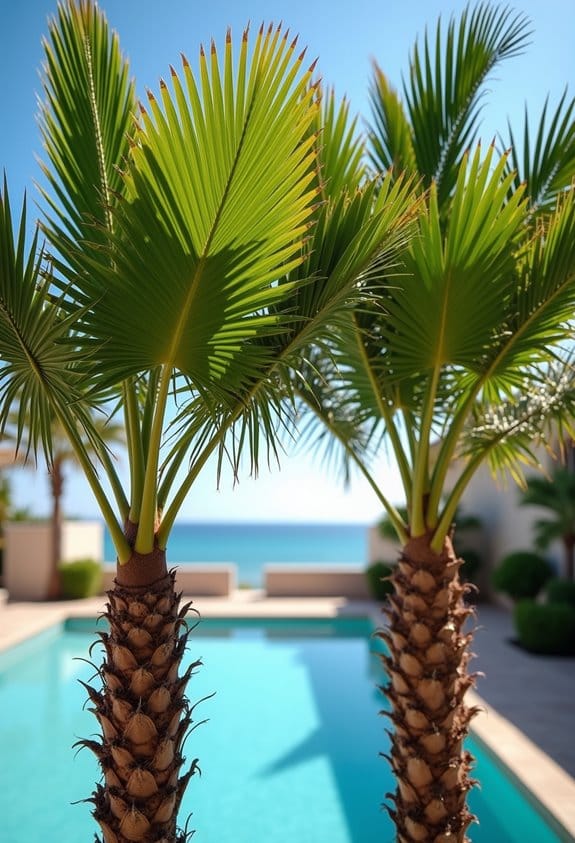
Although a variety of palm species can be planted, selecting native palms such as Sabal Palm (Sabal palmetto) or Saw Palmetto (Serenoa repens) often leads to more sustainable landscapes due to their adaptability to USDA Hardiness Zones 8-11 and tolerance for temperatures ranging from 10°F to 100°F. Native species require less maintenance in Florida’s climate, thriving under local climate conditions while supporting native biodiversity by providing habitat for wildlife. Non-native palms like Queen and Foxtail palms frequently face diseases and nutrient deficiencies, increasing upkeep demands. When choosing palms for your landscape, evaluating soil type and microclimate guarantees successful growth. Incorporating diverse native palms enhances aesthetic appeal and resilience, promoting a sustainable landscape. This approach supports ecological balance and long-term health for palm trees in Florida. For outdoor settings, considering UV-resistant materials similar to those used in artificial palms can help ensure durability and longevity of your landscape features.
Frequently Asked Questions
Why Are Native Plants Better Than Non-Native Plants?
Native plants act as nature’s steadfast guardians, promoting biodiversity benefits and ecosystem stability. They support local wildlife, enhance soil health, bolster climate resilience, conserve water, resist pests, reduce maintenance costs, and uphold historical significance and cultural identity.
What Is the Best Non Invasive Palm Tree?
The Pindo Palm is the best ornamental non-invasive palm, ideal for diverse climates. It features moderate growth rates, excellent drought tolerance, pest resistance, and low maintenance, with broad soil preferences, strong habitat compatibility, and versatile aesthetic appeal for landscape design.
Why Is Florida Removing Palm Trees?
As the saying goes, “An ounce of prevention is worth a pound of cure.” Florida removes palms to address palm disease management, invasive species impact, and climate change effects, promoting urban landscaping strategies, biodiversity preservation efforts, and ecological balance restoration.
Should I Plant Non-Native Trees?
Planting considerations favor native trees due to better climate adaptability, pest resistance, and soil compatibility. Despite non-native palms’ aesthetic value, their higher water requirements, maintenance needs, and negative ecological impact outweigh environmental benefits and slower growth rate.