As an Amazon Associate, we earn from qualifying purchases. Some links on this site are affiliate links at no extra cost to you. Our recommendations are based on thorough research and editorial judgment.

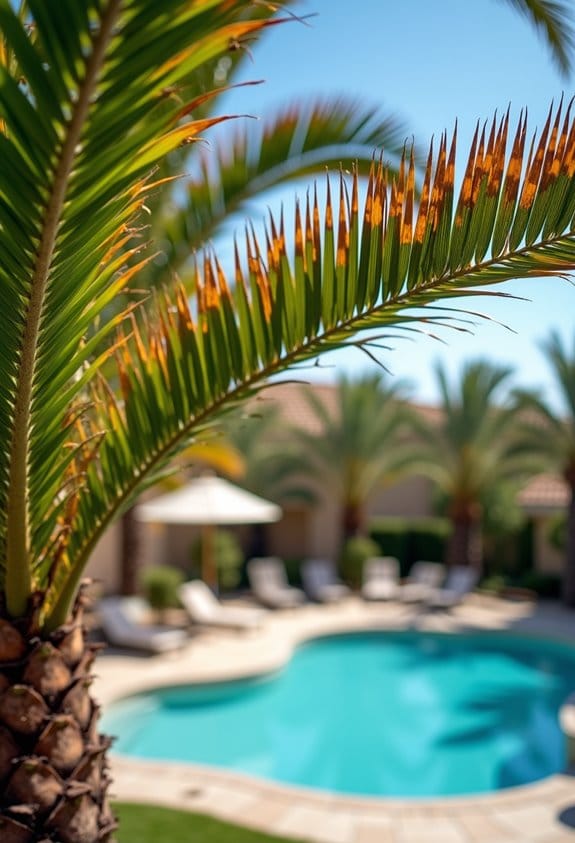
How to Protect Palm Trees From Sun Damage in Extreme Heat

Palm trees exposed to temperatures above 85°F (29°C) require deep watering of 10 gallons per inch of trunk diameter weekly to prevent heat stress. Applying 2–3 inches of light-colored organic mulch conserves soil moisture and stabilizes root temperature. Providing temporary shade during peak sun hours minimizes leaf scorch and drooping fronds. Newly planted palms benefit from 15–20 gallons of water every 2-3 days under extreme heat. Managing these factors enhances palm resilience, with additional strategies available for ideal care.
Key Takeaways
- Provide temporary shade during peak sunlight hours to prevent leaf scorch and heat damage.
- Increase deep watering frequency and volume, especially for young and transplanted palms.
- Apply 2–6 inches of light-colored organic mulch around the base to retain soil moisture and stabilize temperature.
- Use UV-resistant materials or products to shield foliage from intense solar radiation.
- Position palms to receive filtered sunlight for 4-6 hours daily, avoiding prolonged exposure in extreme heat.
Understanding Heat Stress in Palm Trees
Heat stress in palm trees typically begins when ambient temperatures surpass 85°F (29°C), causing physiological strain that manifests as wilting and slowed growth. Excessive heat reduces a palm’s ability to retain moisture, especially when soil conditions are poor or watering is insufficient. Signs of heat stress include drooping fronds, leaf scorch marked by brown, crispy edges, and early leaf drop to conserve resources. Newly transplanted palms need extra care, such as shading and more frequent watering, to combat the added vulnerability during peak heat. Effective management involves regular monitoring for early symptoms and timely interventions like deep watering and applying mulch to enhance soil moisture retention. These steps help the palm maintain hydration and recover, minimizing lasting damage from intense sun exposure and elevated temperatures. Selecting palm species with strong weather resistance ratings can further improve their ability to withstand extreme heat and harsh conditions.
Causes of Heat Stress in Palm Trees
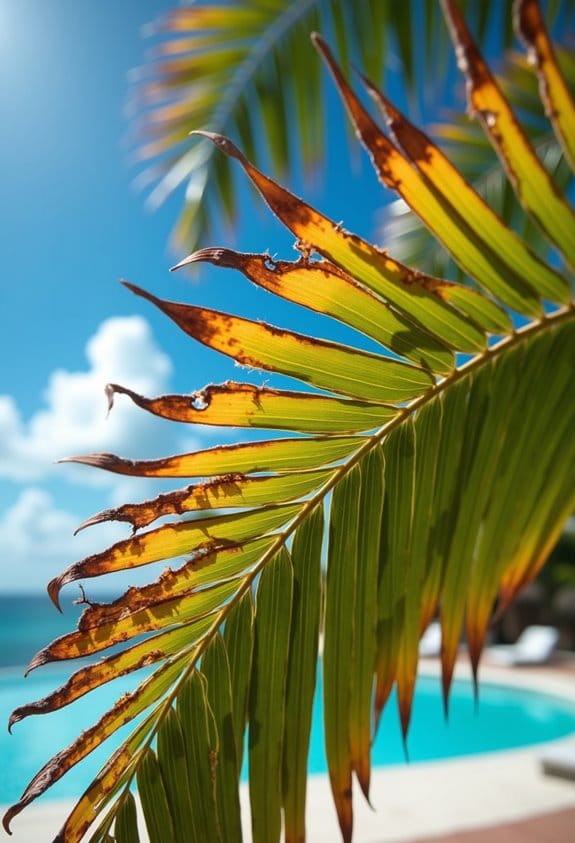
Environmental factors such as prolonged exposure to temperatures above 85°F (29°C) greatly contribute to the development of heat stress in palm trees. This condition reduces photosynthesis rates and increases dehydration risk, especially under inadequate soil moisture. Proper watering techniques are vital to counteract heat stress, ensuring soil remains moist but not waterlogged. Poor soil drainage or low moisture retention impairs the palm’s ability to cool itself and absorb nutrients effectively. Young palm trees, lacking sufficient shading, are particularly vulnerable to intense sun exposure and higher heat stress. Newly transplanted palms face greater challenges adapting to heat without established root systems. Monitoring soil moisture and applying correct irrigation schedules tailored to local climate zones considerably lowers heat stress risks, preserving the health and resilience of palm trees during extreme heat periods. Additionally, selecting UV-resistant materials for artificial palm trees ensures durability and vibrant appearance even under intense sunlight exposure.
Early Signs of Heat Stress to Watch For
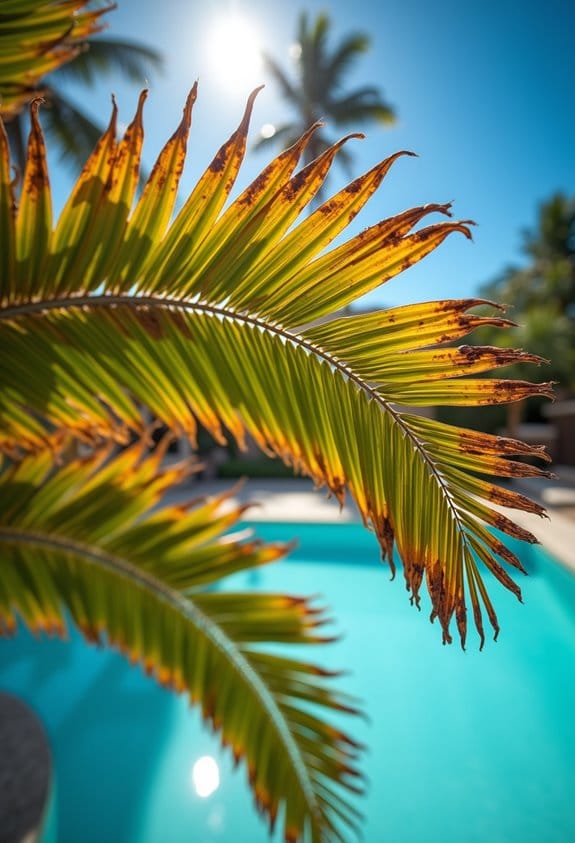
How can one recognize the early signs indicating that a palm tree is under heat stress during temperatures consistently above 85°F (29°C)? The early signs of heat stress include wilting or drooping fronds, usually caused by insufficient water supply in extreme heat. Yellowing or browning often appears at leaf tips and edges, signaling the tree’s struggle to manage excessive solar exposure. Leaf scorch may develop as crispy brown edges, showing cellular damage from intense sunlight combined with moisture loss. Stunted or slow frond growth also indicates heat-related stress. Additionally, premature leaf drop can occur as a survival response, shedding dead fronds to conserve water and energy. Monitoring these symptoms closely provides essential cues to adjust watering and care routines effectively in high-temperature zones. Choosing palm trees with UV-resistant materials can help enhance their ability to withstand extreme heat and prolong their health.
Differences Between Heat Stress and Other Palm Issues
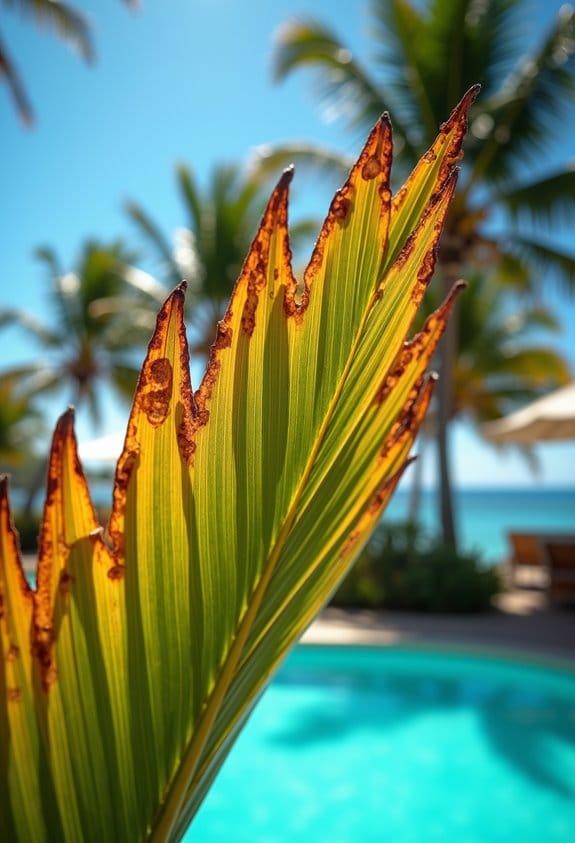
Distinguishing between heat stress and other palm tree issues requires careful observation of specific symptoms and environmental factors. Heat stress typically appears as wilting, yellowing, and leaf scorch—brown, crispy edges caused by prolonged exposure to temperatures above 85°F. In contrast, nutrient deficiencies produce yellowing but often with darker veins or stunted growth patterns, lacking the burnt edges of sun damage. Diseases and pests show distinct signs like leaf spots, insect webs, or holes, unrelated directly to heat stress conditions. Premature leaf drop commonly indicates heat stress, while root rot from overwatering results in persistent yellowing without early leaf loss. Monitoring environmental conditions alongside symptom patterns helps accurately differentiate heat stress from other nutrient or pest-related problems in palm trees. Using weatherproof materials in outdoor care products helps ensure durability and protection in extreme heat conditions.
Selecting Heat-Tolerant Palm Species
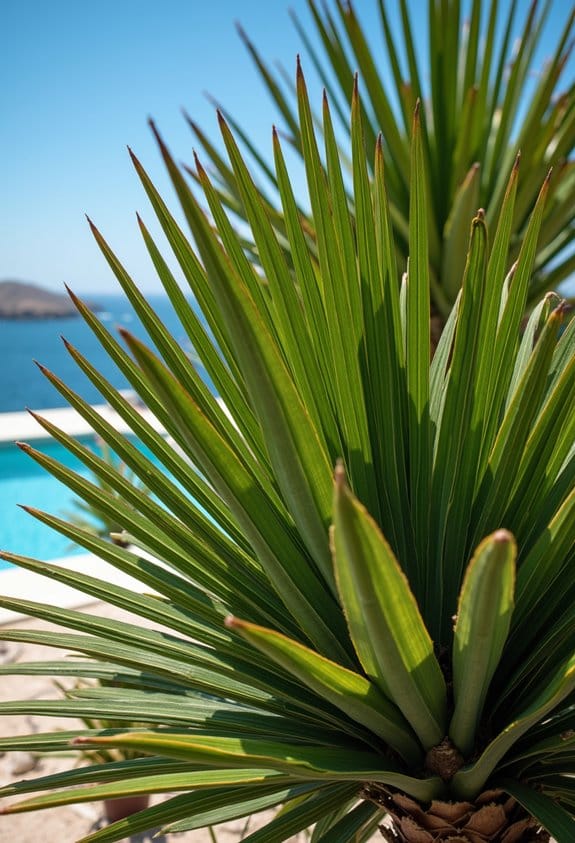
Because extreme heat above 85°F (29°C) can severely damage many palm species, selecting varieties with proven heat tolerance is essential for ensuring plant survival and vigor. Selecting heat-tolerant palm species like Date Palm (Phoenix dactylifera) and Canary Island Date Palm (Phoenix canariensis) improves resilience to such extreme temperatures. The Robusta variety, especially, thrives in hot, dry climates due to its notable drought resistance. Palms like the Sabel Palm (Sabal palmetto) show robust palm growth in sandy, well-drained soils typical of warmer southern regions. Additionally, Mexican Fan Palm (Washingtonia robusta) withstands prolonged sun exposure and harsh conditions. Choosing these species allows effective adaptation to high heat zones, promoting healthy growth without stress-related damage, which is critical for landscaping success in extreme temperature environments. For outdoor settings, selecting palms made from UV-resistant materials can also help maintain vibrant foliage and prevent sun damage.
Effective Watering Techniques for Heat Protection
Selecting heat-tolerant palm species lays a strong foundation, but maintaining adequate moisture remains a vital factor in preventing sun damage. Effective watering techniques rely on deep watering to encourage robust root development and improve tolerance to extreme heat. Newly planted palms require 15-20 gallons of water, applied 2-3 times weekly, while established palms need approximately 10 gallons per inch of trunk diameter each week. Watering early morning or late evening reduces evaporation, allowing moisture to penetrate 12-18 inches deep into the soil, where roots absorb it best. Using drip irrigation supports slow, consistent moisture delivery, helping palms retain soil moisture efficiently. In temperatures above 115°F, irrigate young palms every 3 to 5 days to sustain hydration and promote acclimation in harsh conditions. Additionally, planting palms in well-draining sandy or loamy soils enhances moisture retention and prevents waterlogging, critical for healthy root systems.
Using Mulch and Shade to Mitigate Sun Damage
Mulch plays a critical role in mitigating sun damage by stabilizing soil temperature and conserving moisture around palm trees. Applying 4-6 inches of light-colored organic mulch around the base reflects heat and protects roots from sun damage. Mulch also prevents soil erosion and weed competition, ensuring essential water and nutrients remain available during extreme heat. Temporary shade structures, such as 30-50% shade cloth, are recommended for newly planted palms during their first two summers, reducing direct sunlight exposure and heat stress. Additionally, providing afternoon shade from taller trees lowers temperature levels around young palms, aiding acclimatization. Regularly renewing mulch and extending it to the full drip line enhances ongoing protection against sun damage and heat stress throughout the hottest months, securing palm health in extreme heat zones. Using UV-resistant materials in palm care also helps protect the plant’s foliage from deterioration caused by intense sunlight exposure.
Treating and Reviving Heat-Stressed Palms
Address heat-stressed palms by increasing deep watering to the root zone at least once weekly when temperatures rise above 85°F (29°C), promoting recovery and hydration. Maintaining a consistent watering schedule guarantees adequate moisture supply, essential for stressed palms. Mulching around the base, using 2–3 inches of organic material, helps retain soil moisture and moderates temperature, reducing heat stress. Temporary shade during peak sun hours further supports healing by limiting additional leaf burn. Regularly monitor palms for signs of new growth or improved leaf color to evaluate recovery and adjust watering schedules accordingly. Prompt and consistent watering paired with strategic mulching optimizes root health and accelerates revival in palms suffering from significant heat damage, increasing their resilience during extreme heat events. Additionally, choosing UV-resistant palm trees can help reduce further sun damage and simplify long-term maintenance.
Recommended Products
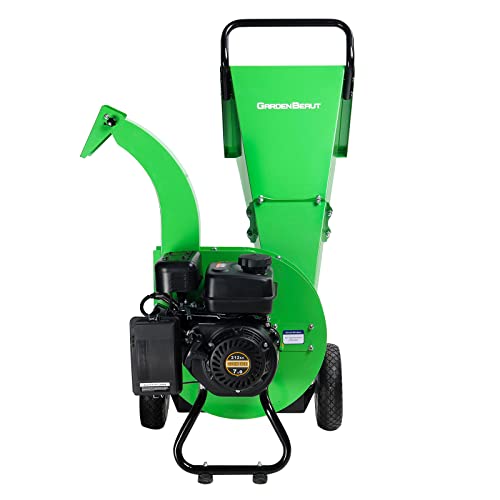
S1 Wood chipper shredder comes with a larger 15.6-inch large cutting rotor, which is more efficent and faster speed than those mini wood chipper. It is equipped with 2 blades and 6 hammers for more consistent speeds and efficient shredding. The efficient feeding speed and the grilling device on the discharge outlet effortlessly transform debris and branch leaves into mulch, enriching your garden with rich organic nutrients.

BULK MULCH FOR LARGE PROJECTS: Pallet contains 80 bags of Scotts Nature Scapes Color Enhanced Mulch Classic Black; each 1.5 cu. ft. bag covers 6 sq. ft. when applied in a 3-inch layer

FRESH WHOLE DATES - Our whole dates are always freshly picked and are the true bounty of Bard Valley. They are packed full of nutrients and deliver a sweet caramel flavor
Long-Term Care Strategies for Palm Tree Resilience
Sustainability in palm tree care depends largely on choosing species with proven heat tolerance, such as the Date Palm or Canary Island Date Palm, which better withstand temperatures above 85°F (29°C). Meeting palm care needs involves encouraging deep root growth through consistent deep watering, applying 20–30 gallons weekly during hot periods. Maintaining mulch around the base with 4–6 inches of light-colored organic material stabilizes soil temperature and conserves moisture, protecting roots from thermal stress. Long-term resilience also requires routine inspections for heat damage signs, like yellowing or wilting fronds, with prompt interventions to mitigate harm. Establishing temporary shade structures during early growth stages further strengthens palm survival. These combined strategies create a robust care routine that supports palm health and vigor amid ongoing extreme heat conditions. Additionally, ensuring palms receive filtered sunlight for 4-6 hours daily helps maintain their optimal growth and reduces heat stress.
Frequently Asked Questions
Can Palm Trees Survive Extreme Heat?
Palm trees exhibit notable palm tree resilience, surviving extreme heat through survival adaptations like deep root systems and leaf structures. Heat tolerance factors such as species type and adequate hydration markedly influence their capacity to endure prolonged high temperatures.
How to Protect Palms From Sun Damage?
Palm care techniques include using shade solutions such as shade cloths to reduce sun exposure and applying light-colored organic mulch for root insulation. Mulch benefits also include moisture retention, aiding in protection from sun damage during extreme heat.
How Often Should You Water Trees in 100 Degree Weather?
Water frequency for palm trees in 100-degree weather is typically once weekly for mature trees, increased for heat stress. Proper water frequency supports tree health by ensuring deep root hydration, preventing drought damage and sustaining resilience amidst extreme heat.
What Does Epsom Salt Do for a Palm Tree?
Epsom salt benefits palm trees by supplying essential magnesium, which plays an essential role in photosynthesis and nutrient absorption. This enhances palm tree nutrients uptake, promoting greener fronds, stronger growth, and alleviating magnesium deficiency symptoms.