As an Amazon Associate, we earn from qualifying purchases. Some links on this site are affiliate links at no extra cost to you. Our recommendations are based on thorough research and editorial judgment.


How to Winterize Palm Trees in Temperate Zones

Winterizing palm trees in temperate zones requires selecting cold-hardy species like Trachycarpus fortunei tolerating 5°F lows, then soaking soil deeply 24–48 hours before frost, ensuring at least 2 inches of water penetrates 12 inches deep. Cover palms with frost cloth when temperatures near 32°F, building enclosures 3 feet taller and 2 feet wider than the canopy for wind protection. Supplemental heat from incandescent lights or heating wires maintains microclimate warmth. Container palms need wrapped insulation plus heating elements at 40–50°F. More detailed care methods follow.
Key Takeaways
- Select cold-hardy palm species like Trachycarpus fortunei or Rhapidophyllum hystrix suited to your USDA Hardiness Zone.
- Begin winter protection in late fall, covering palms near freezing temperatures and monitoring forecasts for cold snaps.
- Deeply water palms 24–48 hours before frost to retain soil warmth and protect roots from freeze damage.
- Build insulated enclosures with ventilation and use incandescent lights or heating wires to maintain a warm microclimate.
- For container palms, insulate pots and use heating coils; consult professional arborists for expert winterizing advice and care.
Understanding Cold Effects on Palm Trees
Although palm trees generally evoke images of warm, sunny climates, their ability to withstand cold varies widely among species. Tropical palms, with injury risks below 50°F, suffer from cold damage including slowed root activity and reduced growth rates. In contrast, temperate palms tolerate subfreezing temperatures with minimal harm, demonstrating greater resilience. Cold-stressed palms often face rot and nutrient deficiencies, particularly after hard freezes. Recognizing these risks is essential for effective winter protection. Gardeners must identify their palm type to tailor care accordingly, protecting vulnerable tropical species more rigorously. Understanding how cold impacts palms at cellular and root levels guides the selection of materials and techniques used in winter protection efforts, reducing injury and preserving tree health through prolonged cold periods. Additionally, selecting palms made from weather-resistant materials can enhance durability and reduce maintenance during colder months.
Timing Your Winter Protection Measures
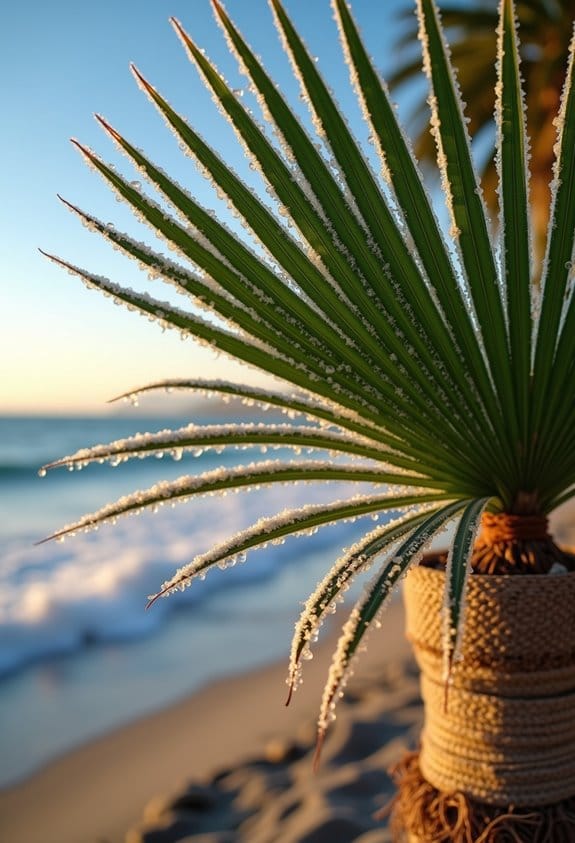
In late fall, gardeners should begin preparations to winterize palm trees, guaranteeing protection before temperatures fall below 50°F, which commonly triggers cold injury in tropical species. Timing is essential to protect palm trees effectively; monitoring local forecasts helps anticipate cold snaps, allowing prompt deployment of covers or insulation. Prioritize covering marginal palms only when temperatures threaten to drop near freezing, typically around 32°F, to avoid unnecessary intervention during mild spells. Reflecting on past winter survival rates in the specific temperate zone aids in fine-tuning protection schedules for each species. Gathering materials like burlap and frost cloth in advance guarantees readiness for sudden cold fronts. These strategic steps maximize the chances of a winter palm tree’s survival through temperature drops common in temperate climates.
Selecting Cold-Hardy Palm Varieties
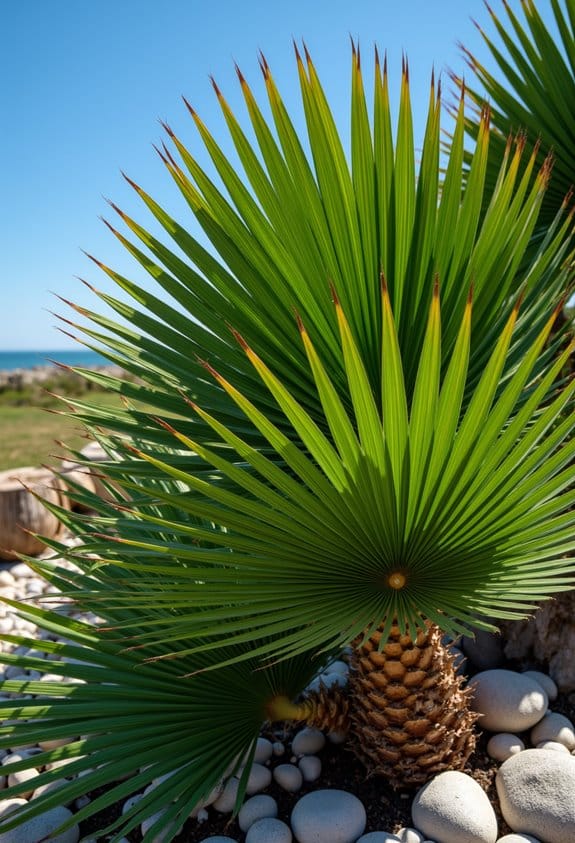
Choosing palm varieties that naturally endure lower temperatures is a fundamental strategy for successful winter care in temperate regions. Cold-hardy palms like Trachycarpus fortunei tolerate temperatures as low as 5°F, making them ideal for harsh winter months. Rhapidophyllum hystrix is also highly resilient, often thriving in cold microclimates. Chamaerops humilis, the Mediterranean Fan Palm, withstands lows near 15°F, suitable for milder winters. Sabal uresana, or Blue Fan Palm, offers moderate cold resistance but may need extra protection during frost. Gardeners should consult hardiness zone ratings closely to select palms matching regional climate specifics. Understanding local temperature fluctuations, especially during winter months, enables informed choices, ensuring palm survival and growth with minimal intervention throughout temperate season changes. Additionally, selecting palms with weather resistance ratings such as IP65 can enhance durability against harsh winter moisture and winds in coastal temperate zones.
Recommended Products
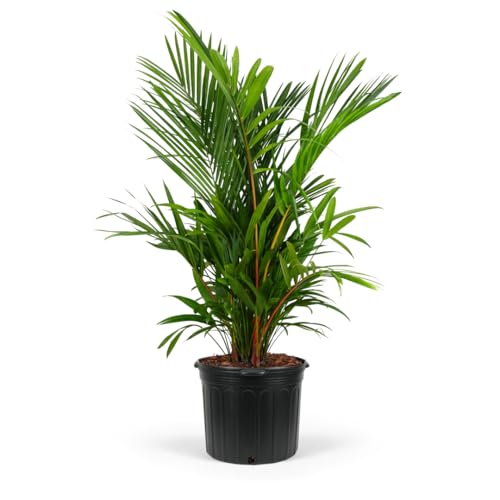
Exotic Beauty: Unique Lipstick Palm with striking red stems and glossy green foliage for a bold, tropical look.

Farm-Grown Quality: Expertly nurtured to ensure robust growth and a well-formed trunk with striking diamond-shaped leaf scars. PLEASE NOTE THIS PLANT DOES NOT SHIP TO CALIFORNIA

PLEASE NOTE THIS PLANT DOES NOT SHIP TO CALIFORNIA - Farm-Grown Quality: Nurtured with care on our farm, ensuring healthy and vibrant growth.
Saturate Your Palms Before Frost
Deep watering palm trees before frost secures the soil surrounding their root systems retains warmth, creating a protective microclimate that reduces cold stress. To saturate the soil effectively, apply at least 2 inches of deep irrigation 24 to 48 hours before predicted temperatures drop below 32°F (0°C). Moist soil holds heat longer than dry soil, insulating roots against freeze damage in temperate zones ranging from USDA Hardiness Zones 8 to 10. Shallow watering is insufficient; make certain water penetrates at least 12 inches to cover the entire root zone. Avoid watering during or immediately before freezing conditions, as saturated soil must warm the roots before cold weather arrives. Maintaining steady moisture supports palm health and enhances resistance to cold stress throughout winter’s harshest periods. Using an 8.5ft Tall Artificial Palm Tree model illustrates the importance of selecting palms that can withstand temperature swings and freezing conditions.
Applying Anti-Freeze Sprays to Fronds
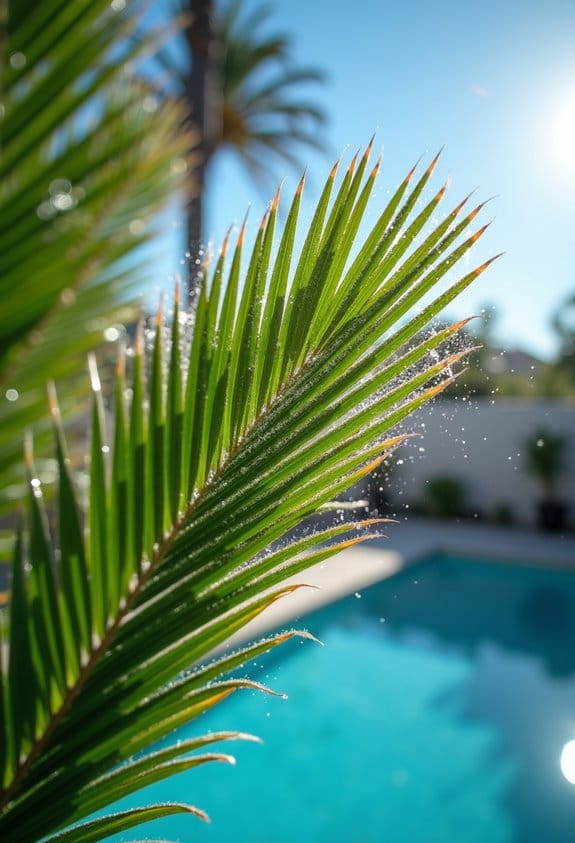
When applied before temperatures fall below 32°F (0°C), anti-freeze sprays create a thin, protective coating on palm fronds that greatly reduces moisture loss during cold spells. These sprays, also known as anti-transpirants, form a barrier that minimizes water evaporation, maintaining essential hydration through cold snaps. Application should occur prior to any frost or severe temperature drops to guarantee peak effectiveness. Coverage must be thorough, especially on sensitive species, to shield all fronds from potential damage. Anti-freeze sprays typically offer protection lasting up to two months, adequately covering the winter period in temperate zones. Users should carefully follow product instructions to confirm suitability for palms and correct usage, optimizing protection and improving durability against harsh winter conditions without harming foliage. Additionally, selecting palms with UV resistance can enhance overall winter protection by preserving leaf vitality even during low-light and cold conditions.
Mulching Techniques to Protect Palm Roots
A layer of 3 to 4 inches of organic mulch around palm tree bases effectively insulates roots, maintaining soil warmth above freezing during hard freezes below 32°F (0°C). Proper mulching techniques involve spreading materials like shredded leaves or pine straw evenly, ensuring full coverage without piling against the trunk. This organic layer acts as an insulator, preventing soil from deep freezing and helping to protect palm roots from extreme temperature fluctuations common in temperate zones. Applying mulch early in the winter season is vital to maximize root protection before temperatures drop. Regularly monitoring local weather helps determine if additional mulch adjustments are needed during unexpected cold spells. These mulching practices offer a reliable, natural barrier that supports palm health through challenging winter conditions. For enhanced durability, combining natural mulch with UV resistant materials can provide longer-lasting protection against environmental stressors.
Recommended Products

Superior Quality: Experience premium, long needle pine mulch for unmatched landscaping results.

ORGANIC MULCH: With this Miracle-Gro Organic All Natural Mulch bulk pallet, you can cover your biggest landscaping and gardening projects

100% Organic Material Our pine straw mulch is sourced from sustainable pine forests in the USA, providing an eco-friendly and natural landscaping solution. This premium pine needles mulch is ideal for gardens, trees, and flower beds.
Wrapping Your Palms for Winter Protection
Although mulching provides necessary root insulation, wrapping palm trunks and fronds adds a crucial layer of protection against freezing temperatures, especially below 32°F (0°C) common in USDA zones 8 and colder. Wrapping the trunk tightly from its base upward using burlap or specialized anti-frost wraps creates an effective barrier, while allowing moisture to escape and preventing rot buildup. For hardy palm varieties, adding bubble wrap beneath the outer layer greatly enhances insulation against severe cold snaps. Securing the wrapping firmly with duct tape guarantees stability throughout winter weather, avoiding damage caused by wind or shifting covers. Timely removal of wrapping materials in early spring is crucial to prevent overheating and support the palm’s recovery as temperatures rise above freezing in temperate climates. Using materials with multi-layered insulation provides superior frost protection and helps maintain consistent trunk temperatures throughout winter.
Recommended Products

Top quality 7 ounce burlap is tough enough to resist rips, tears and rotting

Wear-resistant and breathable material: Our tree wraps are made of 100% natural jute fiber,which has good wear resistance and breathability. Protect the air circulation on the surface of the tree trunk, in addition they can reduce excess moisture around the plant roots, preventing Root rot.

Protect Plants: Natural burlap tree wrap will effectively prevent harmful organisms from invading plants, protect your plants from winter wind, snow, freezing rain and ice damage.
Using Supplemental Heat and Lighting
Since palm trees in USDA zones 8 and colder often face damaging freezes below 32°F (0°C), supplemental heat and lighting provide essential protection during winter nights. Non-LED Christmas lights, such as incandescent rope lights, emit enough warmth to prevent damage by maintaining a stable microclimate around trees. Wrapping trunks loosely with heating wires avoids overheating while supplying steady heat. Combining mulch around the base with these heating elements further insulates roots and mimics warmth from a buried water pipe. A thermocube can regulate electricity flow to rope lights, activating heat only when temperatures approach freezing. This method reduces energy waste and safeguards palms without moisture buildup. Strategically applied supplemental heat and lighting create a shield against cold snaps, ensuring palms endure subfreezing conditions safely through winter. Using durable and fade-resistant canvas wall art with tropical themes can also visually complement your indoor winter decor while protecting palms outdoors.
Recommended Products

【SET UP IN ONE STEP】:The large inflatable tent for 4-6 people is equipped with an inflatable self - supporting structure, enabling one person to assemble it easily. There is an inflating hand pump included.provided. You merely need to use the pump to inflate the blow up tent for around 5 minutes, and then fasten the windropes and pegs. Now, you can start camping with ease.


Sleek, Modern, and Maritime: a crisp, elegant touch to any Nautical, Beach, or Tropical motif, this propeller fan's outer motor housing is wrapped in a thematic hawser (nautical rope) for a delicate seaside hint
Constructing Protective Enclosures
Constructing a protective enclosure around palm trees offers a reliable defense against cold temperatures, wind, and moisture during winters in USDA zones 8 and colder. Using sturdy materials such as plywood or PVC pipes, the enclosure should extend at least 3 feet high and 2 feet wider than the palm’s canopy to prevent damage around the trunk while allowing ample airflow. Ventilation openings are essential to avoid moisture buildup, which causes rot and fungal issues. Incorporating supplemental heat sources like heat cables helps maintain a safe microclimate above 32°F. The structure must be completed well before the first forecasted frost, giving the palm time to acclimate. This method enhances palm tree care, ensuring winter survival for cold-sensitive species typically struggling in temperate zones. Additionally, choosing the right durable materials for planters can provide extra stability and protection during harsh weather conditions.
Care for Containerized Palm Trees in Winter
How can containerized palm trees be effectively protected during winter in USDA zones 8 and colder? First, insulate containerized palm pots with foam or bubble wrap to prevent root freezing when temperatures drop below 30°F. Next, wrap the trunk carefully with burlap or frost cloth to shield sensitive tissues while leaving the upper foliage exposed for sunlight and moisture. Heating coils, designed for horticultural use, can be wrapped around the pot base to maintain soil warmth between 40°F and 50°F, essential for root health. Guarantee the soil surface remains covered to avoid chilling from above, yet allow rain or gentle watering. These combined steps create a controlled microclimate, sustaining containerized palm trees through frosts common in temperate winters without risking waterlogging or mold growth, which could harm growth in early spring. For longer-term outdoor resilience, consider palm tree varieties with UV-resistant PVC leaves and an IP44 waterproof rating to withstand cold and moisture effectively.
Seeking Professional Help From Local Arborists
Professional arborists serve as invaluable resources for winterizing palm trees, particularly within USDA zones 8 and colder regions where precise care is essential. Consulting a local arborist from a reputable tree service company provides tailored guidance on species-specific protection methods based on regional climate variations. These experts assess your palms’ health, recommend pre-winter preparations, and guarantee proper application of wrapping and insulation techniques suited for temperatures dropping below 25°F (-4°C). Additionally, arborists offer ongoing maintenance throughout winter, adjusting care strategies during unexpected cold snaps or thaw cycles. Engaging local professionals, such as those at Tims Tree Service, enhances palm survival rates by applying specialized knowledge in temperate zones. Overall, seeking expert arborist assistance combines experience and precision to safeguard palms effectively against seasonal cold damage. For live palms, it is crucial to maintain proper soil moisture and humidity levels during winter to support their resilience against cold stress.
Frequently Asked Questions
How Do I Winterize My Palm Tree?
Winter protection for palm trees involves deep watering, applying 3-4 inches of mulch at the base, covering fronds with breathable material, and using heat tape if necessary. Proper palm tree care enhances survival in cold conditions effectively.
What Temperature Is Too Cold for Palm Trees?
The temperature too cold for palm trees varies by palm varieties; tropical palms have low cold tolerance and suffer damage below 50°F, while temperate palms tolerate brief subfreezing temperatures with minimal harm.
What Is the Best Freeze Protection for Palm Trees?
The best freeze protection for palm trees wraps them in a cozy quilt of palm insulation and sturdy freeze barriers. Blankets, burlap, mulch layers, and heat sources act as guardians against frost’s icy breath, preserving life’s warmth.
Can I Leave My Palm Plant Outside in Winter?
A palm plant can be left outside in winter only if it is a temperate species tolerant of mild cold. Proper palm plant care requires protection during harsh winter conditions to prevent damage from freezing temperatures.