As an Amazon Associate, we earn from qualifying purchases. Some links on this site are affiliate links at no extra cost to you. Our recommendations are based on thorough research and editorial judgment.


Seasonal Care Calendar for Tropical Palm Trees

Tropical palm care follows a seasonal calendar emphasizing pruning dead fronds and fertilizing with an 8-2-12-4 Mg formula once soil temperatures exceed 65°F (18°C) in spring. Summer demands deep watering four to five times weekly and vigilant pest control using soaps or oils. In fall, protect palms below 45°F (7°C) with wraps or covers. Winter watering reduces to once every six weeks to prevent root stress. Early spring inspection and maintenance guarantee healthy growth, preparing palms for year-round robustness. Detailed seasonal steps can further optimize palm health.
Key Takeaways
- Prune dead or damaged fronds in early spring to encourage new growth and reduce pest risks.
- Fertilize palms with an 8-2-12-4 Mg slow-release fertilizer after frost risk ends in spring.
- Water deeply 4-5 times weekly during summer heat, allowing soil to dry between watering.
- Protect palms in fall by wrapping trunks and covering with blankets before temperatures drop below 45°F.
- Reduce winter watering to once every six weeks and monitor soil moisture to prevent root stress.
Preparing Palms for Spring Growth
Although tropical palms tolerate various climates, preparing them for spring growth demands focused care, especially in USDA zones 9 through 11 where frost risk typically ends between mid-March and early April. Begin by pruning dead or damaged fronds to promote healthy new shoots and reduce pest attraction. Fertilize with an 8-2-12-4 Mg slow-release granular fertilizer, applied around the trunk once frost risk subsides. Water deeply yet infrequently, ensuring soil moisture encourages deep root expansion as temperatures rise. Monitor for pests regularly, watching for yellowing leaves or stress indicators that may require insecticide injections. For indoor palms, increase sunlight exposure gradually by repositioning them nearer to bright windows, supporting active spring growth. This targeted regimen balances nutrient supply, hydration, and environmental conditions to optimize palm development during the vital spring period. Consider using UV-resistant palms outdoors to ensure longevity and maintain vibrant foliage throughout the season.
Essential Spring Planting Tips for Palms
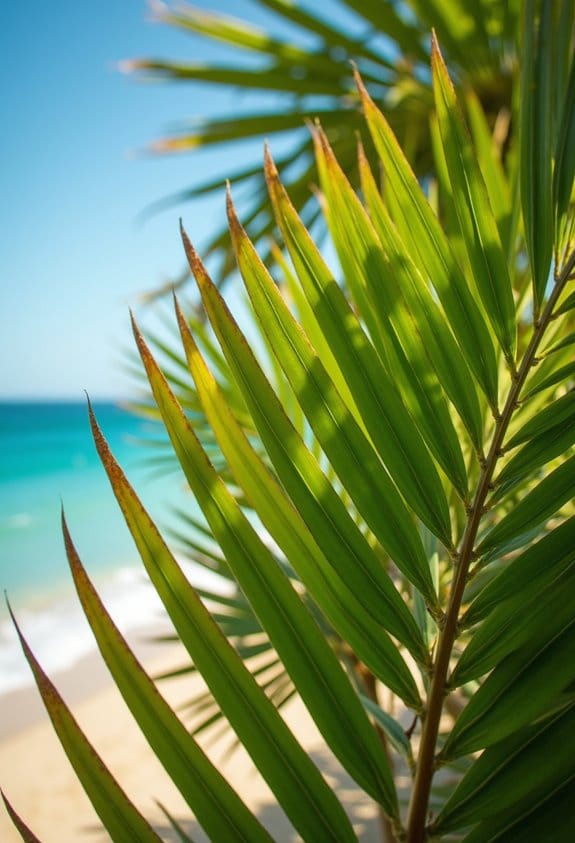
Spring marks a prime planting period for tropical palms, especially in USDA zones 9 through 11 where soil temperatures reach at least 65°F (18°C), promoting root growth and establishment. When planting, dig a hole three times the width of the palm’s root ball to facilitate ample soil space for roots to expand. Ascertain the palm receives a minimum of 4 to 5 hours of direct sunlight daily, providing full to partial sunlight for best growth. Immediately after planting, water thoroughly to eliminate air pockets and settle the soil around the roots. These essential spring palm tree care steps support healthy adaptation and growth, laying the groundwork for a vibrant tropical palm that thrives with consistent sunlight, moisture, and properly prepared soil in warmer climates. For added longevity, consider using UV-resistant materials to help your palm withstand harsh sunlight and maintain vibrant foliage year-round.
Recommended Products

FEEDS UP TO 6 MONTHS: Miracle-Gro Potting Mix is a gardening soil for outdoor containers that feeds all types of potted plants, including flowers, vegetables, shrubs, annuals, and perennials for up to 6 months
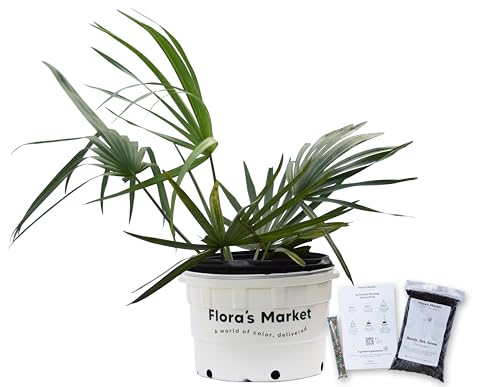
COMPACT PALMETTO PALM - Sabal Minor, or Dwarf Palmetto, features fan-shaped, blue-green leaves that add a tropical touch to gardens and landscapes

Finally Available On Amazon! You Asked And We Listened, So The Most Popular Fertilizer For Palms Is Now On Amazon.
Fertilization Strategies in Spring

A crucial step in palm tree care involves beginning fertilization as temperatures stabilize above 65°F (18°C) in USDA zones 9 through 11, providing essential nutrients for vigorous spring growth. Fertilizer application should employ a granular, slow-release formula with an N-P-K ratio of 8-2-12 plus 4% magnesium to support healthy growth and root development. Organic fertilizers, such as Super Palm Juice, are recommended quarterly to enhance leaf color and correct iron deficiency. Spread fertilizer evenly around the trunk’s root zone, avoiding direct contact to prevent burn. Maintaining a consistent nutrient supply through four annual feedings prevents deficiencies, especially for fast-growing species like the Areca Palm. These fertilization strategies optimize palm vigor and establish a strong nutrient foundation for the growing season ahead. Additionally, protecting the soil with mulch can help insulate roots during colder months, supporting winter dormancy care and overall palm health.
Recommended Products

COMPLETE PALM TREE FOOD: Lutz Palm Tree Manganese Spikes offer a balanced tree fertilizer spike formula tailored for palms and ferns. With essential nutrients like manganese (20%), magnesium (6%), sulfur (16%), and nitrogen (4%), these plant food spikes combat common deficiencies and promote lush growth in your garden, making them an ideal choice for enriching your tree spikes fertilizer routine.

Finally Available On Amazon! You Asked And We Listened, So The Most Popular Fertilizer For Palms Is Now On Amazon.

Feeds Up To 18 Palms For A Full Year From One Application: Controlled release granules provide steady nutrition for up to 12 months — no monthly reapplication, one application per season.
Summer Watering Guidelines for Tropical Palms
Maintaining ideal soil moisture is critical for tropical palms during summer months, especially when daytime temperatures exceed 100°F (38°C). Palm trees should be watered deeply four to five times weekly under these conditions to sustain hydration. It is essential to check the soil by scraping down about six inches; if dry, watering is necessary. Proper care requires adjusting frequency according to soil type—clay retains moisture longer, while sandy soil demands more frequent watering. Employing drip systems or soaker hoses guarantees gradual absorption, minimizing runoff and over-saturation risks. Allowing soil to dry thoroughly between watering promotes healthy root growth and prevents root rot. This balanced moisture management strategy optimizes palm health during extreme heat while safeguarding the root zone for sustained summer well-being. Additionally, integrating waterproof rating considerations can ensure that the palm trees remain resilient in varying outdoor conditions.
Recommended Products
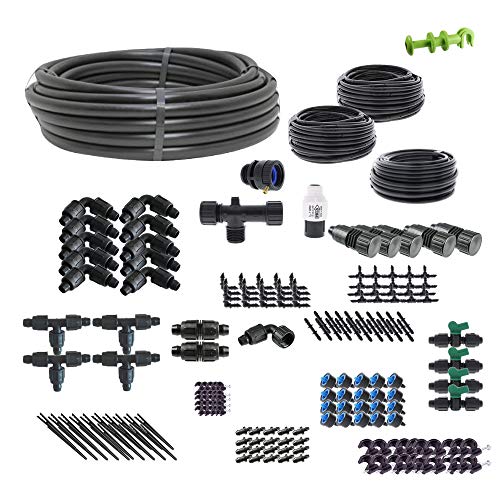
Standard 3/4" Garden Hose Thread Connections

All inclusive drip starter kit with everything needed to attach to an outside faucet and water up to 100-ft of vegetable rows
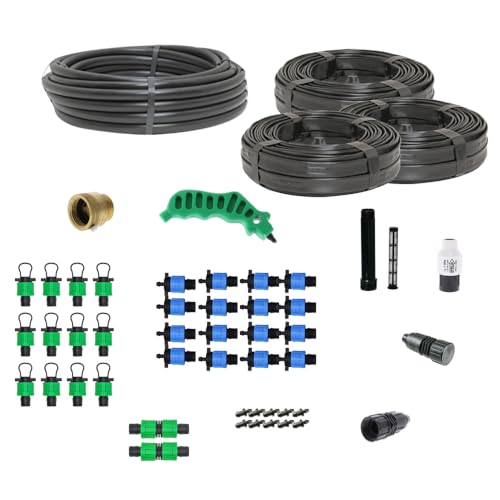
Utilizes 5/8" Drip Tape for Straight Row Gardens
Pest Monitoring and Control During Summer
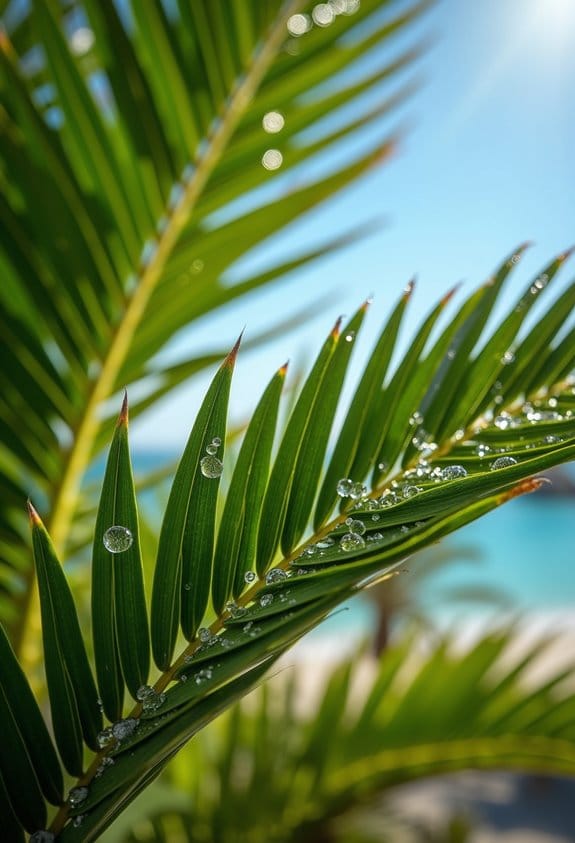
Regularly examining palm trees for pest activity is crucial throughout summer, especially when temperatures rise above 90°F (32°C) in USDA zones 9 to 11. Pest monitoring should focus on signs like sticky residue, webbing, and visible insects including spider mites, scale, and palm weevils, as these often signal early infestations. Integrated pest management strategies encourage combining visual inspections with treatments tailored to infestation severity. Mild infestations can be managed effectively using insecticidal soaps or horticultural oils, applied carefully to avoid harming the palm. Severe infestations may require direct trunk injections for fast, targeted control. Maintaining ideal palm health through consistent watering and fertilization reduces vulnerability to pest pressures, creating stronger defenses. This approach guarantees tropical palms remain vibrant and resilient, even amid challenging summer pest challenges. Additionally, choosing palms made from UV-resistant materials can enhance the longevity and appearance of your outdoor space.
Recommended Products

DEFENDS YOUR PLANTS - Monterey 70% Neem Oil controls black spot, powdery mildew, rust, needle rust, downy mildew, twig & twip blight, anthracnose, scab and flower, botrytis, alternaria, and other fungal diseases.
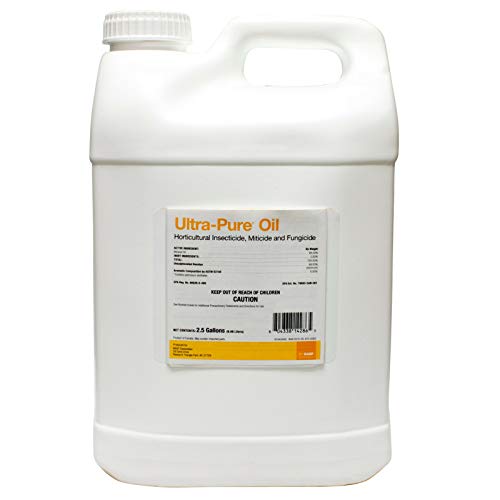
Horticultural Oil: 98% mineral oil insecticide, miticide, and fungicide for comprehensive plant protection; Effective horticultural spray oil
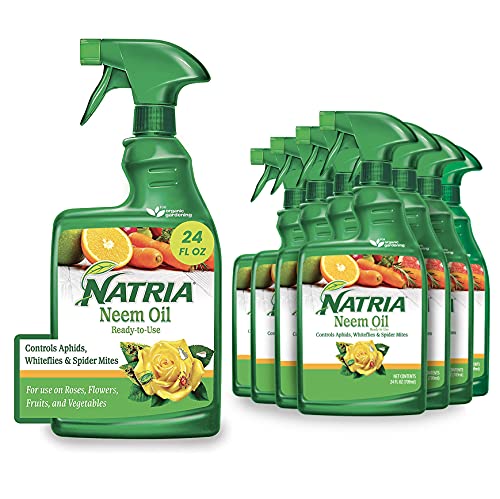
Natria 706250A Neem Oil Spray for Plants Pest Organic Disease Control, 24 Ounce 8 Pack, Ready-to-Use
INSECT KILLER: Controls Aphids, Whiteflies, Spider Mites, Fruit Flies and other listed pests
Mulching Benefits and Techniques in Summer
Applying mulch during summer effectively conserves soil moisture by reducing evaporation, which is essential for palm roots in USDA zones 9 to 11 where temperatures often exceed 90°F (32°C). A 3 to 4-inch layer of organic mulches, like shredded bark or wood chips, improves soil moisture retention and enriches the soil as it decomposes, supporting sustainable palm growth. Mulching also prevents water runoff and soil erosion by forming a protective barrier around the tree’s base. Applying mulch in a donut shape, leaving a few inches of space from the trunk, encourages proper air circulation and avoids rot. This technique moderates soil temperature, protecting roots from extreme heat, and provides essential nutrients while limiting weed competition, helping palms thrive under harsh summer conditions. Using materials with UV protection ensures that the mulch and surrounding area remain durable and effective even under intense sun exposure.
Recommended Products

BULK MULCH FOR LARGE PROJECTS: Pallet contains 80 bags of Scotts Nature Scapes Color Enhanced Mulch Deep Forest Brown; each 1.5 cu. ft. bag covers 6 sq. ft. when applied in a 3-inch layer

ORGANIC MULCH: With this Miracle-Gro Organic All Natural Mulch bulk pallet, you can cover your biggest landscaping and gardening projects

An extremely hardy evergreen palm tree with an attractive, compact crown with large, stiff, fan-like, green foliage and distinctive hairy black fibers covering its slender, graceful trunk. A striking specimen that is excellent for making a tropical statement in smaller landscapes and rock gardens. Works well in group plantings and containers.
Pruning Dead Fronds in Fall
Although tropical palms retain many green fronds through fall, removing only fully brown fronds during this season is crucial to prevent pest infestations and disease development. Pruning dead fronds in fall aligns with palm tree needs to maintain health, as these brown leaves no longer support nutrient absorption. Using sterilized shearing tools minimizes disease transmission risk between cuts, safeguarding the tree’s well-being. Careful pruning preserves the palm’s natural shape and encourages new growth, avoiding over-trimming that may stress the palm. Fall is the ideal season to perform this maintenance because it prepares tropical palms to thrive through cooler months. Regular pruning enhances the overall appearance and longevity of palm trees, making fall an optimum time to support ongoing health through targeted dead fronds removal. For a lush, maintenance-free alternative, artificial palms offer vibrant greenery without the need for pruning or watering.
Fall Preparations for Cold Weather
When temperatures fall below 45°F (7°C), palms in USDA zones 8 and colder require protective measures to avoid frost damage and maintain vigor during winter. Fall preparations include covering shorter palms with blankets or cloth sheets to retain warmth and shield against cold weather. Wrapping trunks and foliage with burlap or landscape fabric offers extra protection by insulating against frost and conserving moisture. Creating a makeshift greenhouse with poles and plastic sheets can provide enhanced warmth during chilly nights for more sensitive palms. It is important to prune dead fronds that may fall away in the fall, reducing pest risks and promoting healthy spring growth. Thorough watering before the ground freezes further supports root moisture, complementing these protective measures. Using UV-resistant materials in outdoor palm décor can help maintain decorative elements’ durability throughout colder seasons.
Winter Watering Adjustments
Water management is critical for palm trees during winter months, as their hydration needs decrease considerably in cooler climates, especially in USDA zones 8 and below. Winter watering adjustments involve reducing frequency to about once every six weeks to prevent waterlogged soil and root rot. Gardeners should monitor soil moisture by checking six inches deep, watering deeply only when the soil feels dry. Using well-draining soil is essential to avoid excess water retention that can stress roots during colder periods. Employing drip irrigation or soaker hoses helps deliver water gradually, minimizing soggy conditions. While it is important to protect palms from freezing conditions, increasing watering during temperature drops is counterproductive and may worsen cold stress. Careful winter watering adjustments preserve palm health until warmer seasons return. For indoor alternatives, considering maintenance-free faux Kentia palms can provide aesthetic value without the need for seasonal watering adjustments.
Protecting Palms From Freeze Damage
Palm trees grown in USDA zones 8 and below face significant risk of freeze damage during sudden cold snaps, especially when temperatures fall below 32°F (0°C). To protect palms, covering shorter specimens with blankets or cloth sheets helps retain warmth and prevents frost formation on leaves. Wrapping trunks and foliage with burlap or frost cloths adds vital insulation, allowing moisture to escape and reducing freeze damage. Makeshift greenhouses constructed using poles and plastic sheets can maintain temperatures above freezing around more vulnerable palms during cold nights. Implementing these protection strategies before temperatures drop is essential to preserving palm health. Preventing frost damage through timely, appropriate measures guarantees palms emerge from winter with minimal stress and better resilience for the growing season ahead. For those seeking durable options that maintain aesthetics despite harsh conditions, considering UV-resistant artificial palm trees offers a year-round alternative without the risk of freeze damage.
Early Spring Maintenance and Recovery
Although palm trees have endured winter dormancy, early spring demands thorough inspection for frost damage, followed by pruning dead or weakened fronds to encourage healthy new growth and reduce pest risk. Soil moisture levels should be checked by scraping six inches deep; if dry, palms must be watered every day, especially in sandy soils, to revitalize roots. Applying a slow-release fertilizer with an N-P-K ratio of 8-2-12 plus 4% magnesium around the trunk supports robust spring development. Deep watering guarantees moisture reaches the root zone, adjusted for recent rainfall. Regularly monitoring for pests and disease is vital, as early intervention prevents rapid decline. Feeding every six to eight weeks during this period optimizes nutrient uptake, fostering resilience and vibrant palm fronds necessary for seasonal recovery.
Frequently Asked Questions
How Do You Take Care of Tropical Palms?
Tropical palm care involves consistent water requirements, appropriate soil types, and understanding growth patterns to optimize health. Effective palm pruning techniques remove dead fronds, while pest management prevents infestations, ensuring vibrant, thriving palms in varied environments.
Can You Fertilize Palm Trees in the Fall?
Much like a car slowing before winter, fall fertilization for palm trees generally risks overloading during reduced seasonal growth. Timely palm nutrients protect palm tree health, while addressing nutrient deficiency cautiously can prevent damage and support resilience.
What Does Epsom Salt Do for a Palm Tree?
Epsom salt benefits palm trees by correcting magnesium deficiency, promoting chlorophyll production, and stimulating palm growth. Epsom salt application enhances soil health, improving nutrient uptake and overall vigor, supporting stronger, greener foliage and robust development.
How to Care for Potted Palm Trees in Winter?
Winter palm care requires frost protection by moving pots indoors and providing pot insulation. Maintaining indoor humidity prevents browning fronds. Water sparingly, ensuring light requirements with bright, indirect light, supporting healthy growth during cooler months.