As an Amazon Associate, we earn from qualifying purchases. Some links on this site are affiliate links at no extra cost to you. Our recommendations are based on thorough research and editorial judgment.

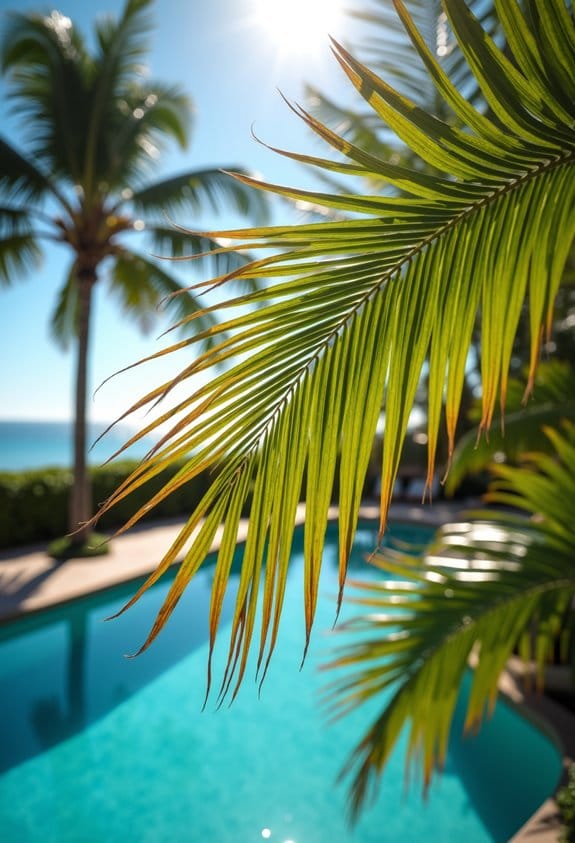
Understanding UV Damage on Palm Fronds: Signs and Prevention

UV damage on palm fronds occurs mainly from exposure to UV index levels above 8, especially between 10 AM and 4 PM, causing pale discoloration and crispy brown leaf edges. Young palms require gradual sun acclimation, increasing direct sunlight by 30 minutes every two days up to six hours. Consistent deep watering above 85°F and nutrient support with magnesium and potassium reduce stress effectively. Proper shade and mulch protect fronds while monitoring prevents lasting damage. Essential insights into prevention and care follow.
Key Takeaways
- UV damage on palm fronds shows as bleached discoloration, brown crispy edges, and necrotic patches from prolonged sun exposure above UV index 8.
- Young or newly transplanted palms are most vulnerable to UV stress, especially with high heat over 90°F and dry soil conditions.
- Differentiating UV damage involves noticing pale, thin fronds, while heat stress causes wilting and yellowing due to inadequate moisture.
- Prevent UV damage by gradually increasing sun exposure, starting with partial shade and increasing direct sunlight exposure over several days.
- Consistent deep watering, balanced nutrients, mulching, and selecting UV-resistant palm species help maintain frond health and prevent UV damage.
What Causes UV Damage on Palm Fronds
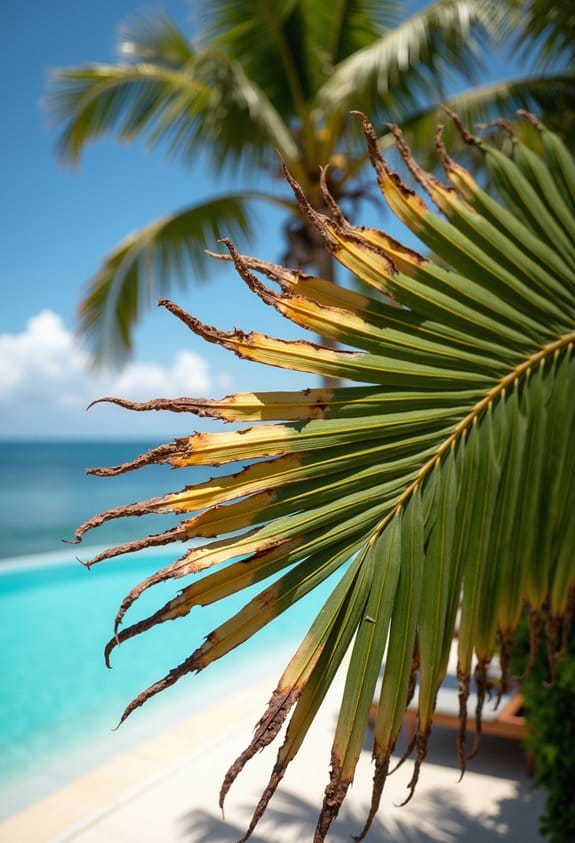
Although palm fronds are naturally adapted to sunny climates, ultraviolet (UV) damage occurs primarily during prolonged exposure to direct sunlight between 10 AM and 4 PM, when UV radiation peaks near UV index levels of 8 to 11. UV rays can penetrate leaf tissues, causing cell damage and impaired function. Young or newly transplanted palms are especially susceptible to heat stress because their thinner, less developed fronds lack adequate protective layers. Environmental factors such as temperatures exceeding 90°F and dry soil exacerbate this vulnerability, increasing the risk of damage. Prevention methods emphasize selecting heat-tolerant species, providing afternoon shade, and gradually acclimating palms to intense sunlight. These steps greatly reduce stress and improve resilience, helping palms maintain healthy fronds while minimizing UV-related harm during peak heat hours. Choosing palm trees with UV resistance also helps in preventing extensive damage and prolongs their healthy appearance outdoors.
Early Signs of UV Damage in Palm Trees
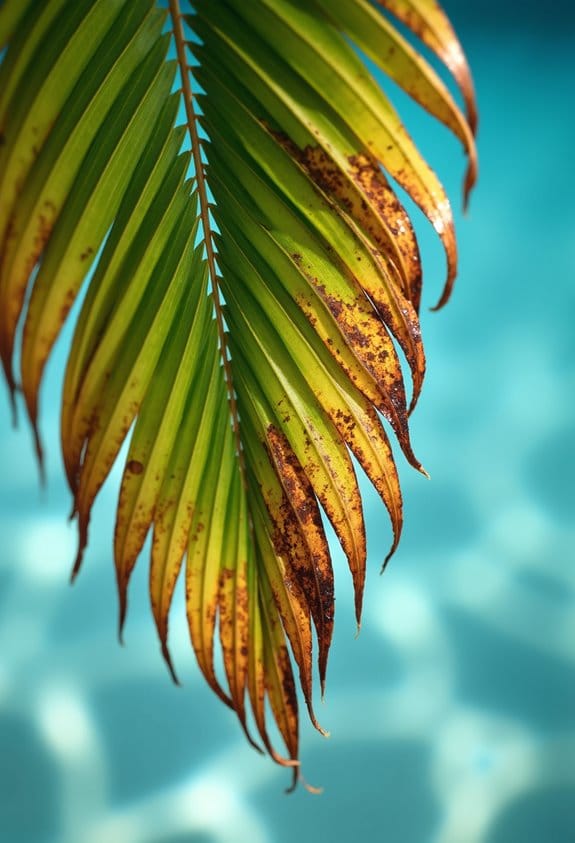
Several early indicators reveal UV damage in palm trees before severe decline occurs, enabling timely interventions to preserve health. Initial signs include discoloration of fronds, which may appear bleached or noticeably lighter due to prolonged sunlight exposure exceeding 5 hours daily. Leaf scorch emerges as brown patches or necrotic areas, typically on margins exposed to intense midday sun. Brown, crispy edges suggest moisture loss caused by UV stress impairing the frond’s ability to retain hydration. Wilting or drooping fronds indicate dehydration linked to sustained heat and UV radiation above 85°F. Additionally, stunted growth or slowed emergence of new fronds, often measured over monthly cycles, signals ongoing UV damage. Recognizing these early signs allows for targeted shade management or moisture adjustments to maintain palm health in high-UV zones. Using UV-resistant materials in artificial palms helps prevent similar damage by maintaining vibrant colors and durability outdoors.
How UV Radiation Affects Palm Physiology
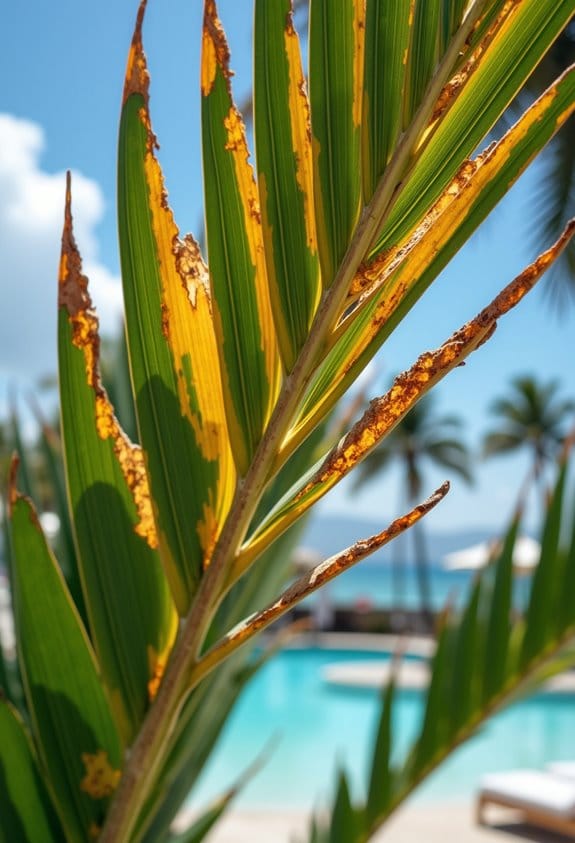
Numerous physiological processes within palm fronds are directly influenced by UV radiation exposure exceeding 5 hours daily, especially in regions where temperatures surpass 85°F. Prolonged sunlight under hot summers causes damage to chloroplasts, reducing photosynthesis efficiency and triggering reactive oxygen species production that harms cellular structures. Trees with thin bark and palms growing in full sun are particularly susceptible to sunscald, increasing risk for leaf scorch or leaf browning. Protective pigments like carotenoids and flavonoids diminish as UV intensity rises, leading to lighter-colored leaves and weaker defense mechanisms. Young palms and newly transplanted specimens lack developed UV protection, making them more vulnerable. Over time, accumulated UV damage results in visible leaf scorch, premature leaf drop, and impaired growth, emphasizing the need for careful monitoring in high-UV, hot summer climates to maintain palm health. Using UV-resistant materials can prolong palm lifespan and maintain vibrant foliage despite extensive sunlight exposure.
Differences Between UV Damage and Heat Stress
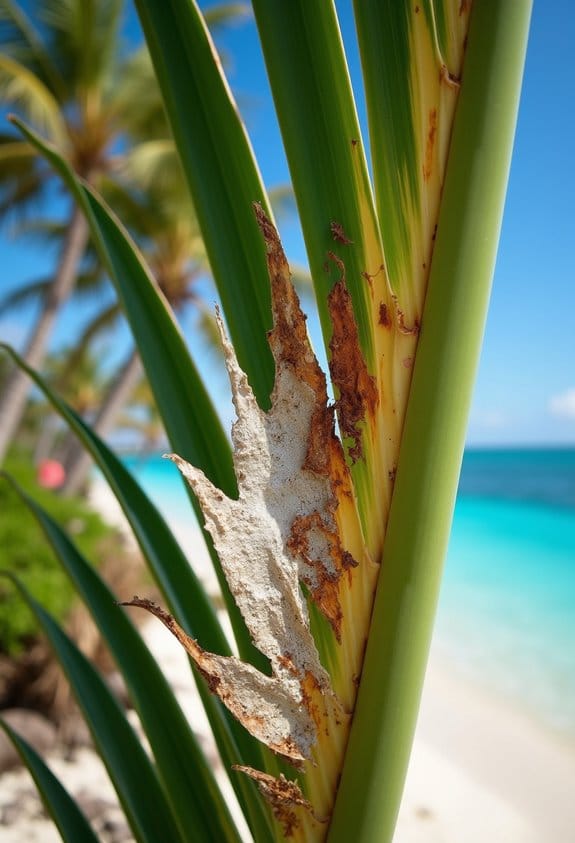
Three key differences distinguish UV damage from heat stress on palm fronds, primarily involving appearance, causes, and plant responses. UV damage shows as pale or white discoloration due to excessive sun exposure, often affecting tender plants not acclimated to full sunlight. Heat stress, conversely, results from high temperatures combined with inadequate soil moisture, causing wilting, yellowing, and brown leaf edges. UV damage leads to thin, crispy fronds lacking moisture, while heat stress triggers slower growth and premature leaf drop. Sunscald, a form of UV damage, typically targets sensitive areas exposed to intense radiation. Preventing UV damage involves gradually increasing sun exposure, whereas heat stress is managed by maintaining consistent soil moisture and selecting proper planting sites. Understanding these contrasts enables precise care to protect palm fronds effectively. Additionally, selecting palm varieties with strong UV resistance can significantly reduce the likelihood of damage and prolong frond vitality outdoors.
Identifying Sunburn and Sunscald on Palm Fronds
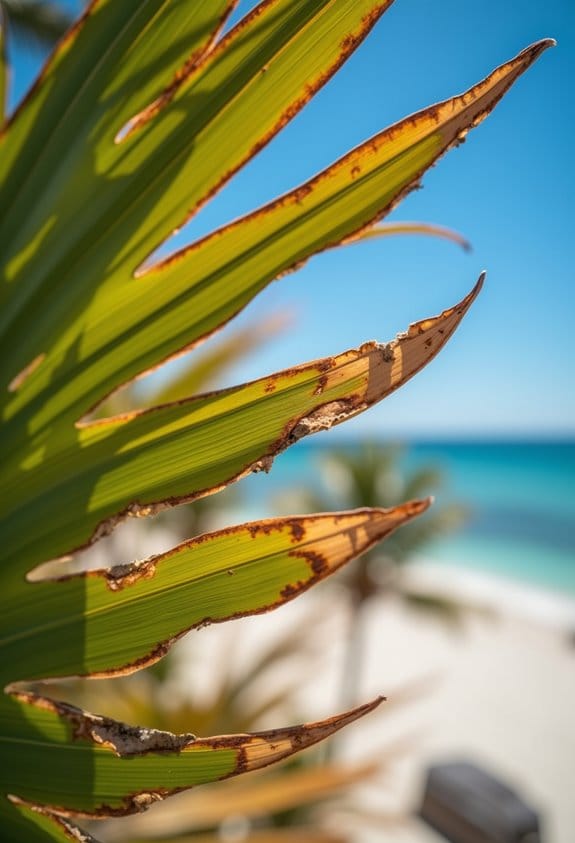
Identifying sunburn and sunscald on palm fronds requires close observation of specific symptoms such as brown, crispy edges or pale, bleached patches typically developing after exposure to UV levels exceeding 7 on the UV Index scale. Sunscald damage usually appears as lighter areas caused by sudden temperature fluctuations or intense light exposure, especially on younger, thinner fronds. Sunburn often results when fronds reflect sunlight excessively or face prolonged heat without adequate water, leading to crisping. These symptoms may cause premature leaf drop and stunted growth if neglected. Regular inspection can distinguish these visible signs to guide timely interventions such as shading and mulching. Awareness of subtle signs, including color changes and damage patterns, enables efficient management of heat and UV stress on palms, reducing long-term harm and supporting healthy growth. Using palm trees with UV-resistant materials can also minimize damage and prolong plant life in harsh sunlight conditions.
Environmental Factors Increasing UV Stress on Palms
Although palm fronds naturally endure sunlight, prolonged exposure to UV radiation levels above 7 on the UV Index during peak hours of 10 a.m. to 4 p.m. greatly increases cellular damage risk. Environmental factors intensify sun damage; extremely high temperatures near or exceeding 95°F combined with dry soil conditions reduce palms’ hydration, weakening their UV stress tolerance. Trees growing adjacent to reflective surfaces, like pavements or water, face elevated risk as UV rays bounce onto fronds, accelerating damage. Shade cloths with 30-50% density effectively reduce sunlight intensity, minimizing UV stress on young palms lacking robust protective pigments. Additionally, soil with poor moisture retention exacerbates vulnerability by limiting water availability critical for cellular repair. The southwest exposure in northern hemispheres further concentrates UV pressure, emphasizing the need for strategic environmental mitigation to protect palm health. Using weather-resistant finishes on surrounding decorative elements can further protect palms from intensive UV and environmental stressors.
Selecting Palm Species That Resist UV Damage
When selecting palm species for areas exposed to UV levels above 7 on the UV Index, preference should be given to varieties with proven heat tolerance and thick, waxy fronds that minimize water loss while enhancing UV resistance. Palms like the Date Palm (Phoenix dactylifera) and the Canary Island Date Palm (Phoenix canariensis) demonstrate robust foliage suited to withstand intense sunlight and temperatures exceeding 35°C. The Mexican Fan Palm (Washingtonia robusta) and Queen Palm (Syagrus romanzoffiana) also thrive in high sunlight conditions due to their adapted, waxy leaves. Choosing species native to sunny, arid environments guarantees inherent UV resistance and longevity. Strategically combining palms with varying degrees of durability creates a landscape resilient to UV damage, maintaining vitality across fluctuating weather and strong solar radiation. Additionally, selecting palms with UV-resistant frond materials ensures enhanced longevity and maintains aesthetic appeal under prolonged sun exposure.
Recommended Products

HANDCRAFTED EXCELLENCE – Each Cosapots planter is meticulously handmade with high-quality fiberglass and resin by skilled artisans under the guidance of Belgian architects.

Features - Outdoor-ready UV-Proof materials. See details below
PATIO REFRESH - Update your backyard or porch with inviting outdoor furniture. Effortlessly accommodate the needs of your outdoor space with furniture that's great for both entertaining and relaxing
Gradual Acclimation Techniques for Palm Exposure
How does a young palm adapt safely to intense sunlight without suffering damage? Gradual acclimation exposes palms to direct sunlight incrementally, beginning with dappled shade or partial sun for one week. Sun exposure then increases by 30 minutes every two days until the palm tolerates four to six hours of intense sunlight daily. Mulch around the base helps retain moisture while preventing overheating and soil erosion. Ensuring adequate air circulation reduces risks of pests and diseases common in stagnant environments. Careful leaf monitoring reveals stress signs, such as yellowing or browning edges, indicating adjustments are needed. Shade cloth or protective barriers can shield palms during hotter midday hours, facilitating a safer shift. This systematic approach strengthens palms, preparing them for long-term survival under full sun exposure without undue damage. Additionally, positioning birdhouses at an appropriate height can encourage pollinators and beneficial birds that help maintain a healthy palm ecosystem through natural pest control and seed dispersal, supporting local wildlife ecosystems.
Recommended Products

This necklace is made with real 14k yellow gold and is stamped with the appropriate 14k metal stamp

Pacifica 100% solution dyed polyester fabric

Costa's most high tech lens - 580 Glass provides superior clarity, ultra scratch-resistant, 100% UV protection and the best polarizing efficiency available.
Watering Strategies to Mitigate UV Stress
A key factor in reducing UV stress on palm fronds involves maintaining consistent, deep watering, ideally once per week during temperatures above 85°F (29°C). Effective watering strategies include using drip irrigation systems that deliver moisture directly to the palm’s root zone, minimizing evaporation under intense sunlight. Monitoring soil moisture regularly is vital, adjusting water frequency during heat spikes to prevent dehydration-related damage. Applying mulch around the base enhances soil moisture retention and protects roots from excessive heat. During extreme temperature episodes, increasing watering frequency temporarily can rejuvenate stressed palms, strengthening their defense against UV stress. These precise approaches guarantee palm fronds maintain hydration, reducing vulnerability to sunburn and desiccation, thereby preserving their health and appearance. Additionally, selecting palm varieties with UV-resistant materials can help withstand harsh sunlight while maintaining foliage quality.
Recommended Products

ROOT WATERING TOOL: The Underhill A-DD36-25 Deep Drip Spikes encourage deeper tree root growth by delivering water, oxygen, nutrients, and fertilizer directly into the soil. Save water and reduce surface evaporation.

Standard 3/4" Garden Hose Thread Connections

ROOT WATERING TOOL: The Underhill A-DD24-25 Deep Drip Spikes encourage deeper tree root growth by delivering water, oxygen, nutrients, and fertilizer directly into the soil. Save water and reduce surface evaporation.
Nutrient Support for UV-Damaged Palms
Nutrient management plays a critical role in supporting palm fronds recovering from UV damage, particularly through balanced applications containing magnesium, potassium, and iron. Conducting soil testing before fertilization identifies nutrient deficiencies, enabling targeted supplementation with a balanced fertilizer tailored to the palm’s specific needs. Regular use of slow-release fertilizers during the growing season maintains steady nutrient availability, which strengthens frond resilience against ongoing UV exposure. Additionally, foliar feeding with liquid fertilizers delivers essential minerals directly to UV-affected leaves, promoting faster recovery and vibrant foliage. Incorporating organic matter, such as compost or well-rotted mulch, enhances soil structure and moisture retention, optimizing nutrient uptake. This integrated approach guarantees palms receive thorough nutrient support, improving overall health and reducing the visible effects of UV damage on frond surfaces. For enhanced durability and color retention in harsh sunlight, consider selecting UV resistant palm trees that are specifically designed to withstand prolonged UV exposure.
Recommended Products

Package contains 160 tree and shrub fertilizer spikes and are produced to avoid wasteful runoff, mess, hazards and smells

COMPLETE TREE FOOD SPIKES: Lutz Iron Chlorosis Spikes offer a balanced tree fertilizer spike formula tailored for trees and shrubs. With essential nutrients like Iron (16%), Nitrogen (5%), Sulfur (4.8%), Phosphaate (3%), Potassium (3%), these plant food spikes combat common deficiencies and promote lush growth in your garden.

COMPLETE PALM TREE FOOD: Lutz Palm Tree Maintenance Spikes offer a balanced tree fertilizer spike formula tailored for palms and ferns. With essential nutrients like manganese (6%), magnesium (6%), potassium (6%), sulfur (10%), iron 1%), and copper (0.5%), these plant food spikes combat common deficiencies and promote lush growth in your garden, making them an ideal choice for enriching your tree spikes fertilizer routine.
Monitoring and Adjusting Care to Prevent Recurrence
Where is UV damage most likely to appear on palm fronds, and how can close observation prevent worsening conditions? UV damage typically shows on older, outer fronds as yellowing or browning edges, requiring frequent inspections at least biweekly. Adjusting care includes monitoring soil moisture closely, ensuring palms receive approximately 1 inch of water weekly, especially during temperatures above 85°F. Applying 3-4 inches of organic mulch around the root zone aids in moisture retention and temperature regulation, reducing UV stress. Introducing temporary shade structures during peak sun hours, from 10 a.m. to 4 p.m., shields delicate fronds and supports recovery. Gradually increasing sunlight exposure for young palms by 1 hour weekly allows acclimation while preventing UV damage recurrence. These precise steps help maintain palm health under intense solar conditions.
Recommended Products
S1 Wood chipper shredder comes with a larger 15.6-inch large cutting rotor, which is more efficent and faster speed than those mini wood chipper. It is equipped with 2 blades and 6 hammers for more consistent speeds and efficient shredding. The efficient feeding speed and the grilling device on the discharge outlet effortlessly transform debris and branch leaves into mulch, enriching your garden with rich organic nutrients.

BULK MULCH FOR LARGE PROJECTS: Pallet contains 80 bags of Scotts Nature Scapes Color Enhanced Mulch Deep Forest Brown; each 1.5 cu. ft. bag covers 6 sq. ft. when applied in a 3-inch layer

ORGANIC MULCH: With this Miracle-Gro Organic All Natural Mulch bulk pallet, you can cover your biggest landscaping and gardening projects
Frequently Asked Questions
How to Protect Palms From Sun Damage?
Protection from sun damage involves installing shade structures, applying UV resistant sprays, selecting resilient palm varieties, implementing deep watering techniques, and maintaining soil health to enhance moisture retention and nutrient availability, thereby ensuring palms’ robust growth.
What Are the Symptoms of Sunscald?
Sunscald symptoms include frond discoloration, such as light tan or white patches on palm leaves. Palm leaf effects also involve wilting or scorching, often caused by environmental factors like intense UV exposure and fluctuating temperatures.
How to Treat Black Spots on Palm Leaves?
Approximately 70% of palm diseases stem from fungal infections. Black spot treatments recommend removing affected fronds, applying fungicides, and addressing nutrient deficiencies as leaf discoloration solutions, essential steps in effective palm leaf care to prevent disease spread.
Should I Cut off Brown Palm Fronds?
Brown frond identification and frond health assessment are essential before removal. Proper pruning techniques recommend cutting only dead fronds during seasonal frond care to enhance palm longevity. This maintains plant health and prevents unnecessary stress.