As an Amazon Associate, we earn from qualifying purchases. Some links on this site are affiliate links at no extra cost to you. Our recommendations are based on thorough research and editorial judgment.

Best Sun Exposure Practices for Newly Planted Palms

Newly planted palms require gradual sun exposure to prevent leaf scorch, starting with 1-2 hours of direct sunlight and increasing by 30 minutes every 3-4 days. Young palms like Pygmy Date thrive under partial sun, receiving 4-6 hours daily, while established palms benefit from 6-8 hours of full sun. Temporary shade blocking 30-50% of sunlight protects delicate fronds during acclimation. Monitoring leaf color and soil moisture improves survival rates. Detailed practices guarantee palms develop robustly under ideal light.
Key Takeaways
- Start new palms with 1-2 hours of direct sun, increasing exposure by 30 minutes every 3-4 days to prevent leaf scorch.
- Use temporary shade structures blocking 30-50% sunlight during the first 3-6 months to protect young palms from stress.
- Choose shade-tolerant species like Pygmy Date or Chinese Fan Palm for partial sun planting locations.
- Monitor palms daily for yellowing, browning, or uneven growth to catch early signs of sun stress.
- Ensure gradual sun exposure boosts trunk strength and healthy frond development while balancing soil moisture levels.
Understanding Light Requirements for Young Palms
Light management is essential for young palms, especially during the initial establishment phase, when gradual sun exposure prevents leaf burn and stress. Newly planted palm trees, such as Pygmy Date and Chinese Fan Palms, generally thrive in partial sun or light shade, receiving 4-6 hours of indirect sunlight daily to optimize nutrient uptake. Full sun, defined as direct sunlight for 6-8 hours, suits established palms adapted to intense light, enhancing drought tolerance critical in hot climates like Arizona. Careful selection of palm species based on available sun exposure guarantees healthy growth and root development. Monitoring for stress indicators, including discoloration or wilt, allows timely adjustments in light conditions, promoting balanced photosynthesis and supporting overall plant vigor during this delicate growth phase. Choosing UV-resistant materials for outdoor palms ensures durability and sustained visual appeal despite prolonged sun exposure.
Gradual Acclimation to Direct Sunlight
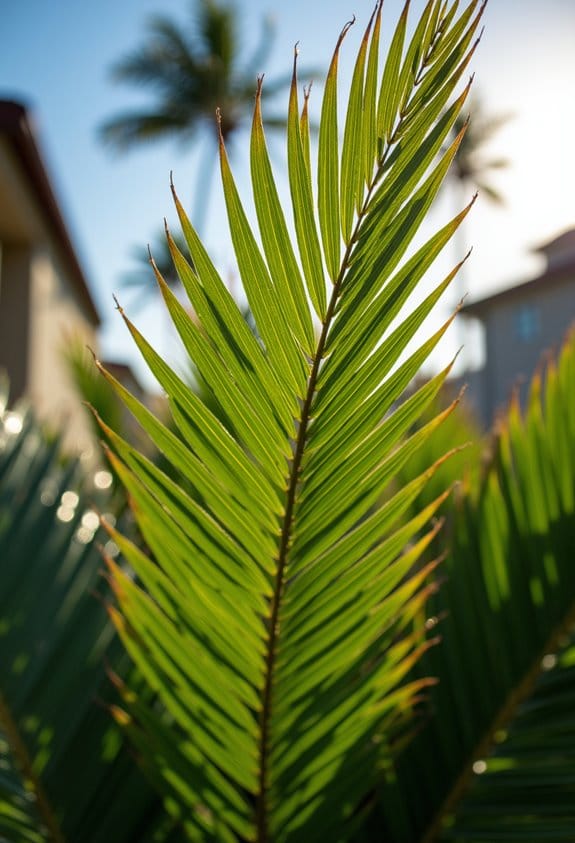
Because sudden exposure to intense sunlight can cause leaf scorch, newly planted palms require a carefully managed change to full sun over several weeks. Gradual exposure begins with only 1-2 hours of direct sun daily, preferably during cooler morning hours below 75°F, then increases by 30 minutes every 3-4 days. During this period, providing shade—such as shade cloth or taller plants—to diffuse sunlight helps reduce stress and prevents leaf burn. Even sun-tolerant species like Dypsis lanceolata benefit from this cautious approach. Monitoring palms for signs of stress while adjusting shade guarantees a smooth change. This method supports healthy chlorophyll development and strengthens palms against harsher midday sun, ultimately enhancing survival rates in USDA zones 9-11 by minimizing shock linked to abrupt sunlight exposure. Additionally, selecting palms with good weather resistance ratings ensures they can better withstand coastal environmental challenges during acclimation.
Identifying Signs of Sun Stress in Palms
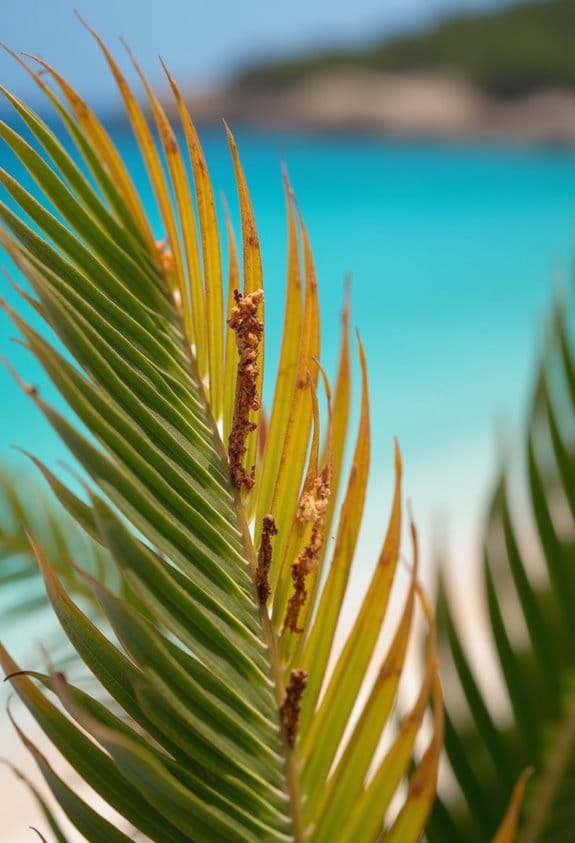
How can a gardener quickly recognize when a newly planted palm is experiencing sun stress? Key indicators include yellowing fronds, which often signal nutrient deficiencies or overexposure to direct sunlight. Leaf scorch appears as browning along the tips or edges of leaves, a clear sign the palm endures excessive sun or inadequate hydration. Sudden exposure to full sun can cause burnt leaf margins, especially if the palm lacks gradual acclimation from shade. Pulsating growth, seen as stunted or uneven leaf development, also reflects sun stress during early establishment. Additional symptoms are drooping fronds and premature leaf drop, which necessitate prompt attention. Regular inspections focused on these signs guarantee early intervention, maintaining palm health and encouraging healthy growth in sun-exposed planting sites. Using UV-resistant materials for palms in high sun areas helps minimize damage caused by harsh sunlight.
Selecting Ideal Planting Locations for New Palms
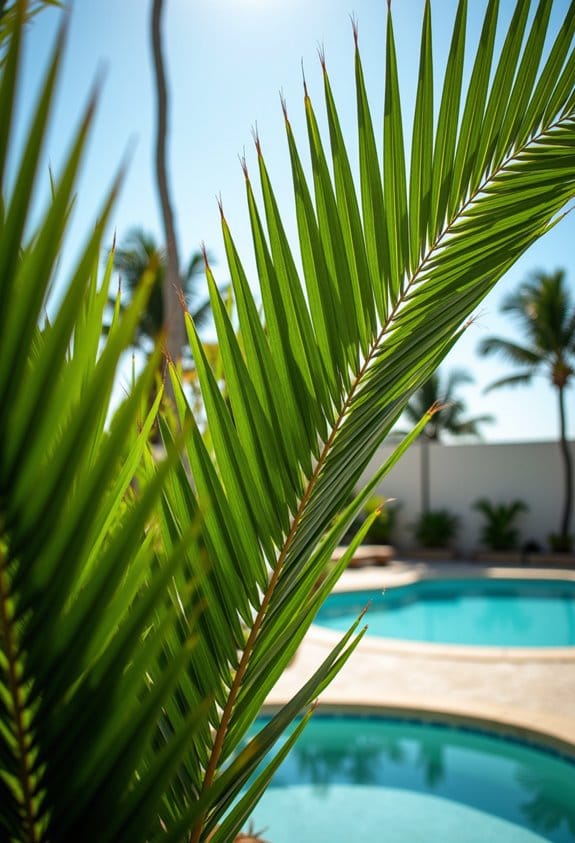
Selecting an appropriate planting location for new palms begins with understanding their sunlight needs, which vary depending on species and climate. Full sun palms thrive with 6-8 hours of direct sunlight daily, while shade-preferring types require less than 4 hours. The site must have well-drained soil to prevent root rot yet retain enough moisture for growth. Assess the local climate carefully; palms in hot, arid zones may need more shade than those near coastal regions. Avoid locations where nearby trees or structures cast shadows that reduce sunlight exposure for full sun palms. Newly planted palms should gradually acclimate by increasing sunlight exposure over several weeks to prevent sunburn, especially when moved from shaded nurseries to sunnier outdoor settings. This step guarantees healthy, vigorous establishment. It is also essential to choose a location within suitable USDA zones 9-11 to ensure optimal soil warmth and palm growth.
Managing Shade and Shelter During Establishment
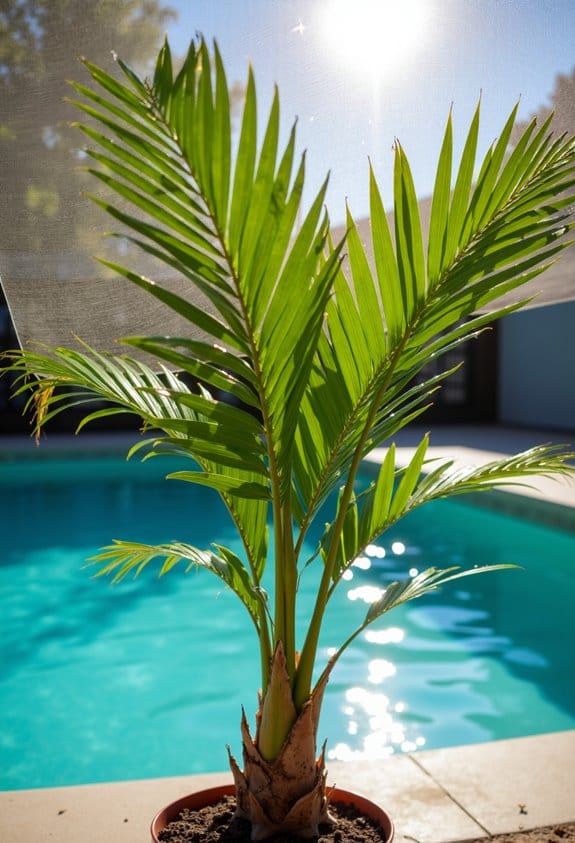
While new palms often require full sun for ideal growth, managing shade and shelter during the first three to six months is critical to avoid leaf burn and stress. Temporary shade, such as shade cloth providing 30-50% sun blockage, helps young palms acclimate by reducing exposure to intense midday rays. For species like Dypsis lanceolata, introducing shade structures within USDA zones 9-11 supports healthy adaptation without stunting growth. Monitoring leaf condition daily for signs like wilting or discoloration guarantees early detection of sun stress. Gradually increasing sun exposure by adjusting the palm’s position or removing shade promotes robust development. Consistent protection through this phase optimizes photosynthesis while preventing sun damage during establishment under temperatures ranging from 75°F to 90°F. This balance enables palms to thrive long-term in full sun environments. Additionally, selecting palm varieties constructed with UV-resistant materials enhances their ability to withstand harsh sunlight during early growth stages.
Adjusting Watering Schedules Based on Sun Exposure
Because sun exposure directly affects soil moisture evaporation rates, watering schedules for newly planted palms must adjust accordingly to promote successful root establishment. In hot summer temperatures above 100 degrees Fahrenheit, palms in full sun often require daily watering to prevent dehydration and sustain root growth. Checking soil moisture at six inches deep is essential; if dry, watering should be applied deeply using drip irrigation or soaker hoses to enhance absorption without causing oversaturation. Newly planted palms in partial sun or shade generally need watering every 2-3 days unless unusually warm conditions increase evaporation. Adjusting frequency based on palm size and local climate supports healthy roots while avoiding waterlogging. This balance guarantees ideal soil moisture and contributes directly to vigorous root establishment and long-term palm health. Using mulch can also help retain soil moisture and reduce excessive evaporation in high sun exposure areas.
Protecting Palms From Extreme Heat and Sunburn
Newly planted palms exposed to extreme heat above 95 degrees Fahrenheit require careful protection to prevent leaf scorch and sunburn, especially during peak sunlight from 10 a.m. to 4 p.m. To protect palms, providing shade with cloth or lattice screens reduces direct solar intensity, allowing gradual acclimation. Monitoring soil moisture is critical; increased watering frequency helps maintain hydration and alleviates heat stress. Mulching around the base with 3 to 4 inches of organic material conserves moisture and buffers soil temperature fluctuations. In extreme heat periods, relocating palms temporarily to shaded locations further protects them until establishment. Additionally, applying anti-transpirant sprays diminishes moisture loss from leaves, enhancing resilience against the intense sun. Incorporating UV-resistant materials in palm care can further help maintain leaf vibrancy despite harsh sunlight exposure. These practices collectively protect newly planted palms, ensuring healthy growth by mitigating damage from excessive heat and preserving moisture effectively.
Seasonal Considerations for Sun Exposure
As seasonal sunlight intensity shifts, palms require tailored sun exposure practices according to their growth stage and climate zone. Young palms benefit from gradual acclimation to full sun, especially during peak summer months, when midday shade reduces the risk of leaf burn. In temperate zones, 6-8 hours of direct sun typically supports healthy growth, but intermediate partial shade helps these palms adjust. Monitoring soil moisture closely guarantees new palms receive sufficient water, as increased sun exposure accelerates evaporation and drying. Regularly inspecting foliage for signs of stress such as wilting or discolored leaves allows timely adjustments to sun exposure or irrigation. Balancing sun exposure with strategic shade application during intense heat waves optimizes young palms’ resilience and promotes steady development without compromising their physiological health. Additionally, choosing palms with UV resistance can enhance their ability to withstand intense sunlight over time.
Choosing Palm Species Suitable for Full Sun
Selecting palm species that flourish under full sun exposure involves understanding their individual light needs and resilience to heat and drought. Palms such as the Mexican Fan Palm (Washingtonia robusta) and Canary Island Date Palm (Phoenix canariensis) thrive with at least 6-8 hours of direct sunlight daily, making them suitable for hot, arid climates. Fast-growing species like the Queen Palm (Syagrus romanzoffiana) prefer full sun to develop strong, robust trunks across varied soil conditions. Full sun palms generally exhibit higher drought tolerance, essential for regions like Arizona where water conservation is critical. Proper species selection prevents disease susceptibility linked to inadequate light. Gradual acclimation of young palms from shade to full sun exposure further supports healthy growth, reducing risk of leaf burn and stress during early establishment stages. For outdoor palms, ensuring they are planted in soil with good drainage and stable positioning is also key to supporting durability under harsh weather conditions, as emphasized by stability requirements for outdoor palms.
Long-Term Benefits of Proper Sun Exposure Practices
Proper sun exposure practices directly influence the long-term health and structural strength of palms, especially sun-adapted species like the Mexican Fan Palm (Washingtonia robusta) and Canary Island Date Palm (Phoenix canariensis). Gradually increasing sun exposure allows these palms to develop a robust trunk capable of withstanding environmental pressures. Consistent, ideal sunlight enhances healthy frond development, supporting a lush canopy that improves both resilience and aesthetics. Palms receiving adequate sun exposure avoid weak, spindly growth, reducing susceptibility to disease and pest infestations common in low-light conditions. Over several years, this careful acclimation promotes stability and vigor, aligning with palms’ natural light requirements in USDA hardiness zones 9–11. Ultimately, proper sun exposure fosters robust growth, contributing to a landscape’s long-term visual appeal and ecological balance, while ensuring palms thrive for decades with minimal maintenance. Using umbrellas made of weather-resistant materials can help manage sun exposure effectively for newly planted palms.
Frequently Asked Questions
How to Protect Palms From Sun Damage?
Protection from sun damage involves sunburn prevention through shade cloth installation, consistent watering techniques to maintain moisture, mulch application to regulate soil temperature, and wind protection to reduce stress on palms during acclimation periods after planting.
How to Care for a Newly Planted Palm Tree?
Newly planted palms supposedly thrive if one masterfully drowns them with perfect palm watering techniques, obsessively debates soil drainage tips, agonizes over nutrient requirements, dramatizes planting depth guidelines, and meticulously selects the “right” palm species.
What Not to Do With a Palm Tree?
One should avoid improper palm tree positioning, overwatering mistakes causing root rot, ignoring sunburn symptoms, neglecting transplant shock signs, and applying incorrect fertilizers that lead to nutrient deficiencies, all of which negatively impact palm health and growth.
What to Put at the Base of a Palm Tree?
Mulch types like shredded bark serve at a palm’s base coincidentally enhancing landscape design and water retention. Combined with soil amendments and strategic placement, they aid pest prevention, balancing aesthetics and health effectively in palm cultivation.