As an Amazon Associate, we earn from qualifying purchases. Some links on this site are affiliate links at no extra cost to you. Our recommendations are based on thorough research and editorial judgment.

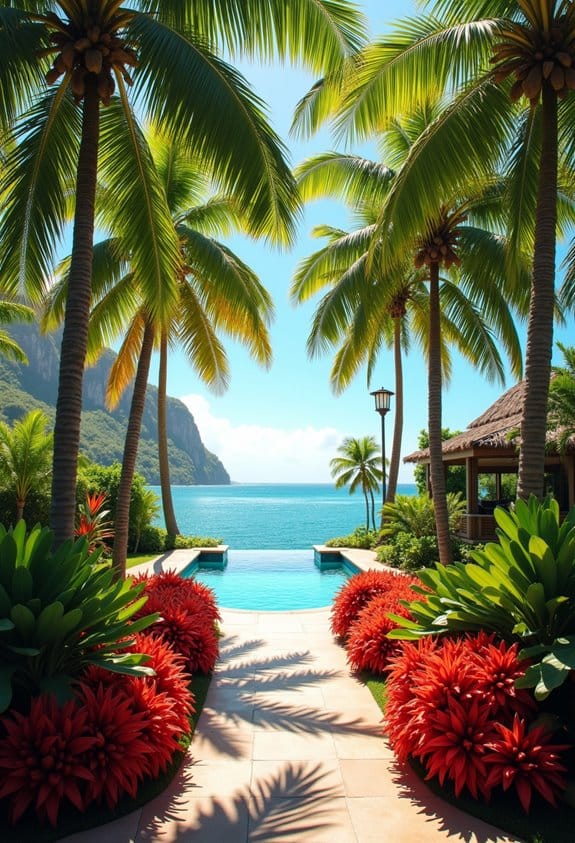
Best Companion Plants for Palms in Tropical Landscapes

Ideal companion plants for palms in tropical landscapes thrive between 75 and 95°F in USDA zones 9 to 11, favoring sandy or loamy soil with consistent moisture. Combining broad-leaf philodendrons, feathery ferns, and colorful bromeliads creates striking texture and year-round interest. Shade-tolerant species like Soft Tree Fern and leopard plant flourish beneath palms at 50-70% sunlight, while drought-resistant agaves and aloe vera reduce water needs. Efficient landscape designs balance dense shade and open sun, supporting biodiversity and low maintenance—a well-rounded approach awaits further detail.
Key Takeaways
- Select a mix of slow- and fast-growing tropical plants like philodendrons and ti plants to achieve balanced, visually appealing landscapes around palms.
- Include colorful bromeliads and anthuriums to provide vibrant contrast and seasonal blooms supporting biodiversity under palm canopies.
- Use drought-resistant succulents such as agaves and aloe vera for low-water companion options that complement palms in warm, sunny areas.
- Incorporate shade-tolerant plants like soft tree ferns and leopard plants beneath palms to thrive in 50-70% filtered sunlight and retain soil moisture.
- Apply organic mulch and maintain regular watering to support companion plants’ root health and promote airflow around palms for sustainable tropical garden design.
Understanding Tropical Palm Environments
The tropical palm environment is defined by warm temperatures averaging 75 to 95°F, high humidity levels above 70%, and distinct wet and dry seasons that shape plant growth cycles. Palms in tropical landscapes typically reach heights exceeding 20 feet, creating diverse microclimates beneath their canopies. These varying light conditions influence the choice of companion plants, which must tolerate either full sun or dappled shade during the growing season. Soil composition, often sandy or loamy, requires attentive moisture and nutrient management to support healthy palm and companion plant development. Selecting both slow- and fast-growing companion plants guarantees balance and visual interest amid palm structures. Understanding these environmental parameters is crucial for designing resilient tropical landscapes that maximize the complementary qualities of palms and their plant partners throughout the year. Incorporating weather-resistant palm trees can enhance these landscapes by providing year-round durability and aesthetic appeal in varying climate conditions.
Selecting Plants for Color and Texture Contrast
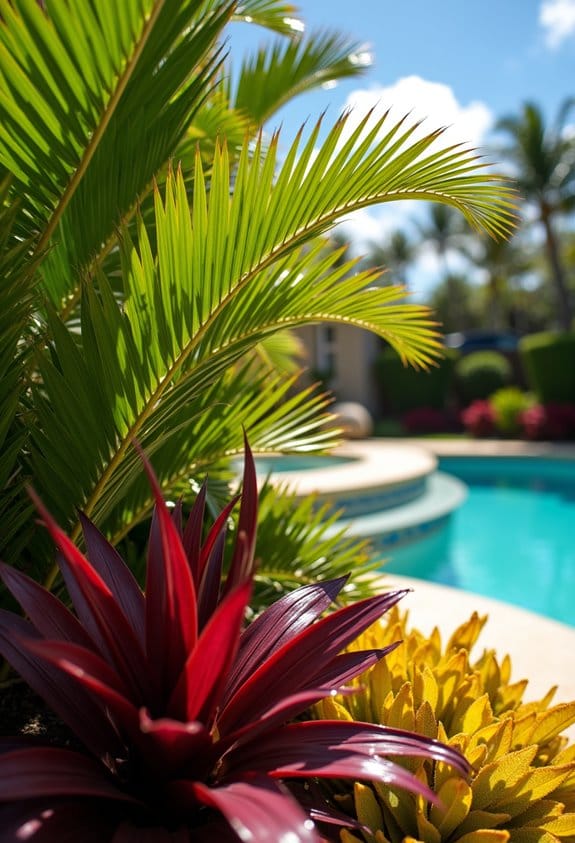
When selecting companion plants for palms, incorporating a variety of colors and textures considerably enhances the overall landscape design by introducing visual complexity and seasonal interest. In tropical gardens, pairing broad-leaf philodendrons with feathery ferns creates striking color and texture contrast. Palms and cycads with their rigid, sculptural forms are complemented effectively by colorful plants like ti plants, bromeliads, and anthuriums, which provide vibrant hues and unique leaf shapes. Using different growth heights, such as ground covers like leopard plant at palms’ bases, adds vertical depth. Additionally, selecting companion plants that bloom sequentially, including orchids and hibiscus, maintains year-round visual appeal. Incorporating drought-resistant succulents like aloe offers distinctive shapes and conserves water, making the landscape both attractive and sustainable. For outdoor palm plantings, choosing species with UV-resistant fronds ensures vibrant colors and durability throughout the seasons.
Recommended Products

Perfect piece for office waiting areas or as a dining table centerpiece

[CURATED SELECTION] – Hand-selected live decorative houseplants sourced from professional local growers.

Perfect centerpiece for a bedroom's dresser or end table
Native vs. Exotic Companion Plants
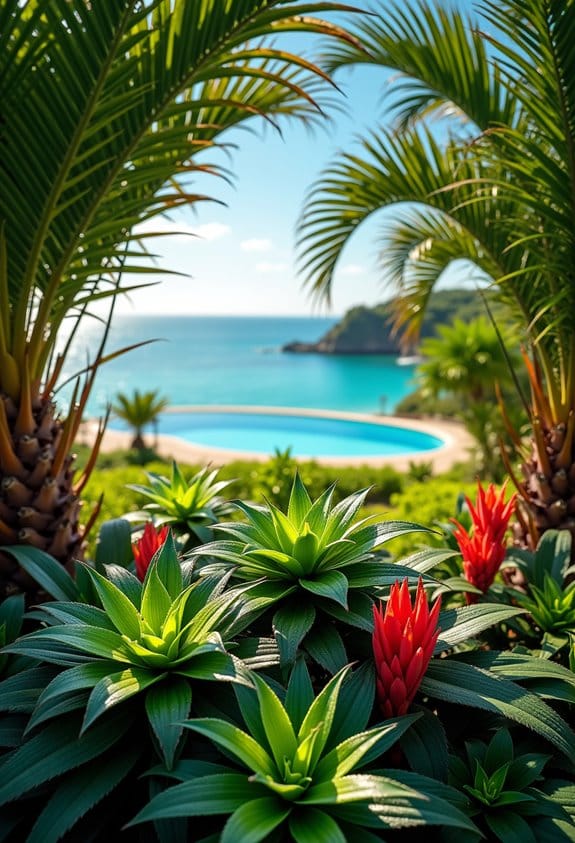
Biodiversity forms an essential foundation for sustainable garden design, especially when selecting companion plants for palms in USDA hardiness zones 9 through 11, where daytime temperatures average 75 to 90°F (24 to 32°C). Native plants, such as Eschscholzia californica and Salvia species, provide ecological benefits by supporting local pollinators and lepidoptera, while typically being drought-resistant and requiring minimal irrigation. Exotic companion plants, including bromeliads and hibiscus, enhance tropical landscapes with vibrant colors and varied textures, creating striking visual contrasts with palms. A balanced combination of native and exotic companion plants promotes a healthy ecosystem that preserves biodiversity and guarantees aesthetic appeal. This approach leverages the adaptability and ecological functions of native species alongside the ornamental characteristics of exotic plants to craft resilient, visually engaging tropical garden environments. Complementing these plant choices with energy-efficient outdoor lighting such as palm tree string lights can further enhance the ambiance and usability of tropical landscapes.
Recommended Products

[Variety of sizes] -- Vickerman offers artificial Mini Bamboo Tree in multiple sizes. This item is 8' tall from top to bottom and measures 96"H x " 48"W x 48"L. The size of this Mini Bamboo Tree makes it perfect for Home Decor to tie together any living space.

🌴This 10 feet majestic artificial phoenix palm tree features large, vivid palm fronds filled with countless arching feather-like leaves with realistic palm texture. It looks so natural and great! If you're aiming for a tropical paradise atmosphere, this is definitely the best choice. Your friends, partners, and relatives will be in awe as this extra tall palm tree awaits to dance in the warm tropical breezes

Add a tropical feel to any room decor with this realistic palm tree loaded with 25 branches and 1095 leaves.
Drought-Resistant Options for Palm Gardens
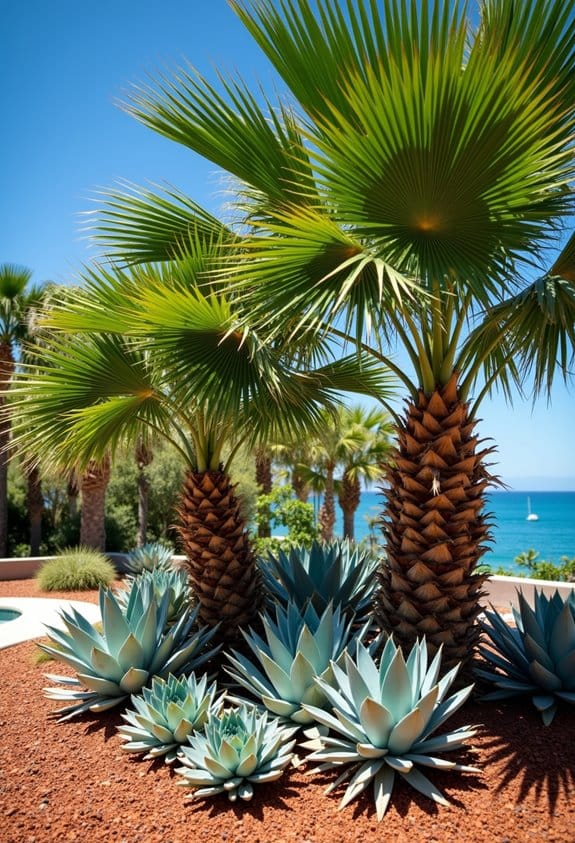
Although palm gardens often thrive in warm USDA zones 9 through 11 with temperatures ranging from 75 to 90°F (24 to 32°C), selecting drought-resistant companion plants remains essential for watering efficiency. Succulents, agaves, and certain cacti flourish in arid conditions, complementing palm aesthetics while requiring minimal water. Aloe vera, prized for its healing gel and pollinator attraction, adds both function and beauty. Native species like California poppy (Eschscholzia californica) provide seasonal color and biodiversity, enhancing the garden’s ecological balance. Tropical ground covers such as rubber plant (Ficus elastica) offer lush greenery with low water demands once established. Additionally, Pink Jasmine (Jasminum polyanthum) creates a fragrant and vibrant backdrop, minimizing irrigation needs. Together, these drought-resistant plants contribute to a sustainable, beautiful garden, optimizing water use without sacrificing visual appeal. Choosing companion plants that are also UV-resistant helps maintain vibrant colors and durability alongside palm trees in outdoor settings.
Recommended Products

Meticulous Design & Good Quality: Unlike other general fake plants, It upgrades the nice and stable pot, even without replacing another pot. They are of the good quality in terms of color, texture and material. It has a more realistic look and touch.


Shade-Tolerant Understory Plants
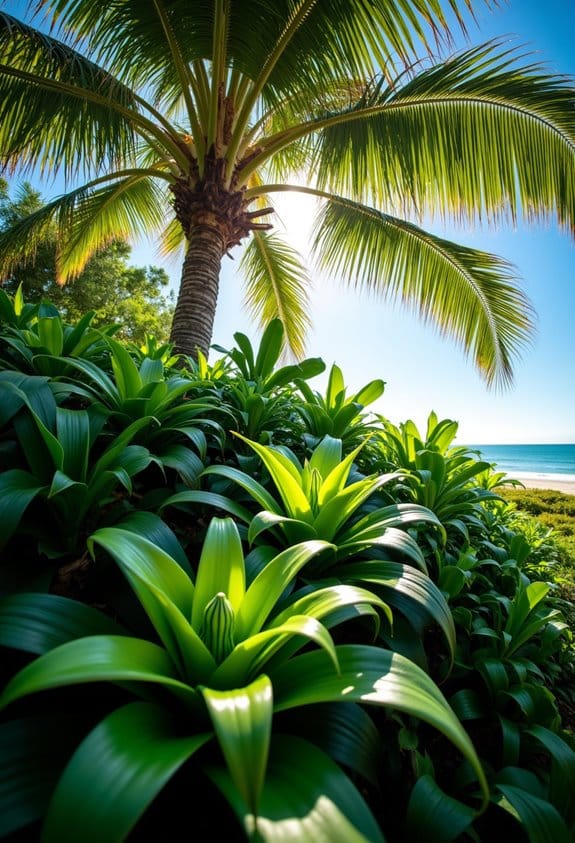
Shade-tolerant understory plants perform well beneath palms in USDA zones 9 through 11, where filtered sunlight ranges between 50 and 70 percent of full sun intensity. Ferns such as the Soft Tree Fern (Dicksonia antarctica) can exceed four yards in height, requiring well-drained soil and protection from direct midday sun for ideal growth. The Leopard Plant (Farfugium japonicum Giganteum) flourishes in rich, moist soil with partial shade, providing ground cover with glossy green leaves and bright yellow flowers that enhance tropical landscapes. Medicinal Aloe (Aloe barbadensis) also thrives under afternoon shade, adding ornamental appeal to palm understories. Incorporating shade-tolerant understory plants as companion plants beneath palms enriches biodiversity by offering habitat for local wildlife, while contributing texture and layered structure to tropical landscapes. Additionally, selecting palms with weather-resistant materials ensures that the overall landscape endures coastal climate conditions while maintaining visual appeal.
Recommended Products

CREATE A MINIATURE HEDGE — Evergreen Bush Adds Privacy Year Round

When received, the plant will be in seasonal condition with appropriate foliage. If shipped between November 1st and March 1st, the plant may be dormant and trimmed. Plant is fully rooted in the pot ready for immediate planting

Thrives in Shade: Majesty Green Power Shade thrives in low-light and shaded areas, making it the ideal solution for lawns that struggle to grow in areas with limited sunlight. This grass seed blend is crafted with carefully selected, shade-adapted grass varieties that are known for their ability to perform exceptionally well in low-light spaces such as trees, or in other partially sunlit spaces
Seasonal Blooming and Year-Round Interest
How can landscape designers achieve vibrant color displays around palms throughout the year? Integrating seasonal blooming companion plants like hibiscus and bougainvillea guarantees vivid floral interest in tropical landscapes during warm months, often between 70°F and 90°F. Selecting year-round companions such as philodendrons and bromeliads adds lush foliage and intermittent blooms, maintaining dynamic greenery in USDA zones 10-11. Native perennials like Salvia species provide nectar-rich blossoms aligned with specific flowering seasons, supporting local pollinators. Layered planting schemes incorporating alocasia contribute distinctive foliage textures, sustaining visual intrigue when flowers subside. Combining evergreen and flowering species strategically around palms, spaced roughly 3 to 5 feet apart, balances aesthetics and plant health. This approach delivers consistent, vibrant displays, enhancing tropical landscapes with color and texture throughout the year without seasonal gaps. Additionally, incorporating UV-rated artificial foxtail palms into the design can provide year-round greenery with minimal maintenance, supplementing live plants beautifully.
Watering Practices for Companion Plants
An effective watering strategy for companion plants near palms involves adjusting frequency according to sun exposure, with full sun specimens requiring watering every two to three days when temperatures range from 75°F to 90°F in USDA zones 10-11. Plants grow healthiest when watering practices account for their specific needs; for instance, bromeliads and alocasia benefit from overhead irrigation that mimics tropical rainfall. Companion plants generally prefer well-drained soil that remains consistently moist but avoids waterlogging, reducing root rot risks and encouraging robust root development. Newly planted companions need more frequent watering during initial growth phases to establish roots. Monitoring soil moisture regularly guarantees watering schedules align with environmental conditions. Partial shade species may only require weekly watering, while full sun plants demand more frequent moisture to maintain health and vigor under intense tropical sunlight. Using UV-resistant materials for the palms and companion plants ensures their appearance and longevity are maintained despite exposure to intense light.
Enhancing Wildlife Habitat With Companion Species
When companion species are carefully chosen to include native perennials and shrubs, palms’ surrounding landscapes can support essential nectar and pollen sources that attract local lepidoptera and pollinators. For example, Salvia species planted in USDA zones 9-11 provide vibrant blooms between 65-85°F, enhancing biodiversity while enriching ecosystem health. Incorporating colorful bromeliads and ferns creates microhabitats that shelter insects and small birds, fostering a thriving wildlife habitat. Selecting drought-resistant natives also aids water retention in sandy, well-drained soils, benefiting palms and resident fauna. By using diverse companion plants with varying heights from 12 to 36 inches, gardeners promote layered vegetation that sustains a balanced ecosystem. This strategic plant integration appreciably improves wildlife habitat, increases pollinator activity, and supports long-term tropical landscape resilience. Additionally, choosing plants with UV-resistant features ensures they maintain vibrancy and durability in outdoor tropical settings.
Designing Dense vs. Open Palm Landscapes
Although both dense and open palm landscapes serve distinct aesthetic and ecological purposes, their design principles vary greatly in plant selection and spatial arrangement. Dense designs cluster multiple palm species with shade-tolerant companion plants such as anthuriums, ferns, and bromeliads, creating rich undergrowth that enhances biodiversity and moisture retention, ideal for zones 10 to 12 with temperatures above 60°F. In contrast, open landscapes space palms more widely, incorporating sun-loving companion plants like alocasia and haworthia to maintain airflow and sunlight penetration. Ground covers in open landscapes favor drought-tolerant species to avoid competition with palm roots. These approaches highlight different interactions between palm species and companion plants, balancing visual harmony with practical growth conditions to optimize tropical garden aesthetics across varied spatial designs. Choosing the right companions should also factor in maintenance requirements to ensure a harmonious and sustainable landscape design.
Maintenance Strategies for Vibrant Gardens
Because palms thrive best with carefully chosen companions, maintenance strategies should focus on balancing water, light, and space requirements to sustain vibrant foliage year-round. Selecting low-maintenance companion plants reduces effort while enhancing landscape appeal. A consistent watering routine tailored to palms’ tropical zones 10–11 and their companions prevents root stress, promoting healthy growth. Regular pruning of companion plants prevents overcrowding, ensuring palms receive sufficient airflow and sunlight between 6–8 hours daily. Diversifying plant species within the garden diminishes pest and disease risks, improving ecosystem resilience. Applying 2–3 inches of organic mulch around 3-foot-wide palm bases conserves soil moisture and suppresses weeds, reducing frequent watering needs. These strategies collectively support a thriving, colorful tropical garden, where companion plants and palms coexist efficiently with minimal upkeep. Incorporating UV-resistant artificial palm trees can be an effective way to maintain garden aesthetics while minimizing maintenance in harsher outdoor conditions.
Incorporating Ferns and Bromeliads in Palm Settings
How can incorporating ferns and bromeliads enhance palm garden landscapes? Ferns like Soft Tree Fern (Dicksonia Antarctica) provide lush undergrowth beneath palm trees, creating textured contrast in tropical landscapes. These ferns prefer shaded, humid areas under palm canopies, thriving in USDA zones 9-11 with temperatures from 60°F to 80°F. Bromeliads add vibrant color and form diversity, growing well at palm bases and attracting hummingbirds, enriching local biodiversity. Their tolerance for filtered light complements that of ferns, supporting a colorful palette that enlivens tropical settings. Together, ferns and bromeliads form multi-layered plantings that improve soil moisture retention, benefiting all species involved. This combination not only mimics natural palm-rich ecosystems but also promotes visual appeal and plant health, making them ideal companion choices within tropical landscape designs.
Recommended Products

A tropical, evergreen fern, it's also called "giant sword fern" because its sword-shaped fronds can be 4 feet long, with the entire plant approaching a width of 6 feet.

[CHARACTERISTICS]- The photo is just a reference. These are the characteristics of the plant: leaf Height: 1.97 inches, Length: 5.91 inches, Width: 0.79 inches, leaves per plant 2 or 3.

6 Plants Total!
Frequently Asked Questions
What Plants Look Good Around Palm Trees?
Palm tree companions such as vibrant groundcovers, tropical flowers, and plants with contrasting foliage complement palm trees effectively. These selections enrich landscapes by enhancing color diversity, texture, and visual interest beneath and around the palm trunks.
What Tropical Plants to Plant Together?
Tropical gardens flourish when drought-tolerant plants with colorful foliage harmonize alongside fragrant flowers. Integrating tropical groundcovers enhances visual depth, creating a serene, low-maintenance environment that balances vibrancy with resilience, ideal for cohesive, thriving landscapes.
What Palms Can Tolerate Full Sun?
Palm species such as Queen Palm, Mexican Fan Palm, Pindo Palm, and Coconut Palm exhibit significant heat tolerance and thrive under full sun conditions. These palms maintain vigor with consistent sun exposure and appropriate soil and watering practices.
What Plants Go Well With Palms?
Beneath swaying palms, tropical groundcovers weave a green tapestry, while colorful foliage punctuates the scene. Drought resistant plants and low maintenance companions create harmony, ensuring resilient beauty dances effortlessly within sun-drenched, tropical gardens.