As an Amazon Associate, we earn from qualifying purchases. Some links on this site are affiliate links at no extra cost to you. Our recommendations are based on thorough research and editorial judgment.

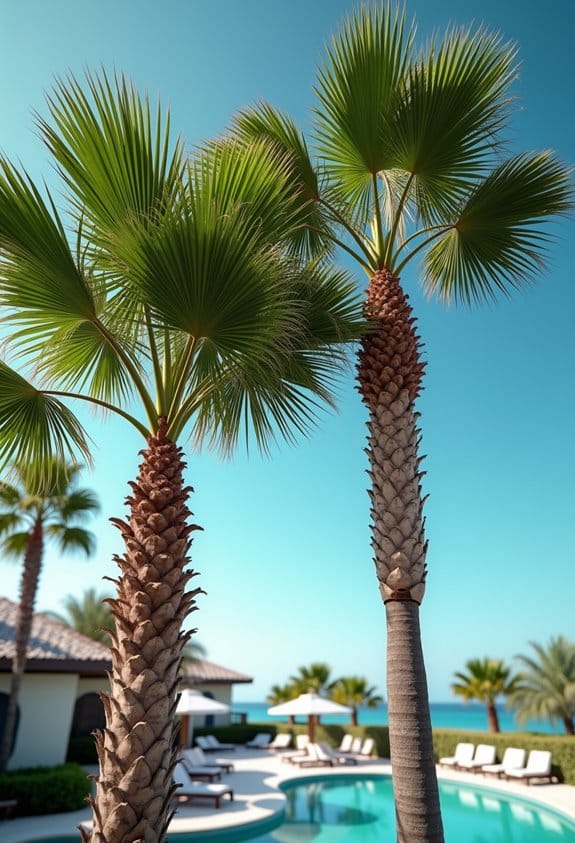
Clumping vs. Single-Trunk Palms: Choosing the Right Type

Clumping palms produce several trunks from one base, forming dense clusters ideal for screened privacy in confined spaces up to 6 feet wide, thriving in USDA Zones 8-11 with filtered light and poorer soils. Single-trunk palms, like the Royal Palm, soar vertically up to 100 feet, require full sun, well-drained soil, and spacing of 10 feet or more in warmer Zones 10-11. Maintenance differs, as clumping palms need frequent pruning. More insights await on selecting palms precisely to your site.
Key Takeaways
- Clumping palms have multiple stems forming dense clusters, ideal for privacy screens and small spaces, while single-trunk palms feature a tall, solitary stem for vertical accents.
- Single-trunk palms are better suited for large gardens needing vertical focus; clumping palms fit confined spaces with growth spreading horizontally.
- Maintenance differs: single-trunks require less pruning but careful height management; clumping palms need more frequent pruning to manage multiple stems.
- Climate suitability varies: clumping palms tolerate colder zones (8-11), whereas single-trunk palms prefer warmer zones (10-11) with some cold-hardy exceptions.
- Visual impact combines texture and height: single-trunks offer sleek focal points, clumping palms provide lush, dense foliage for natural screening.
Defining Clumping Palms
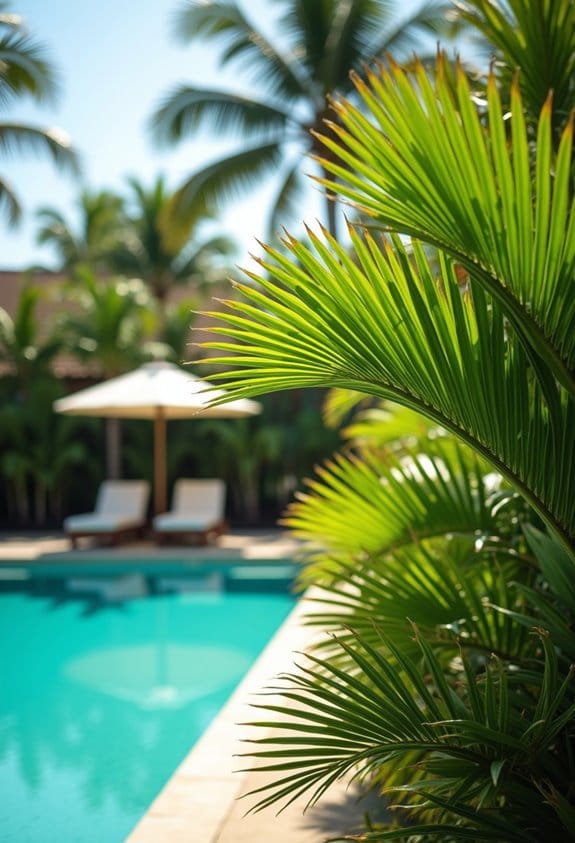
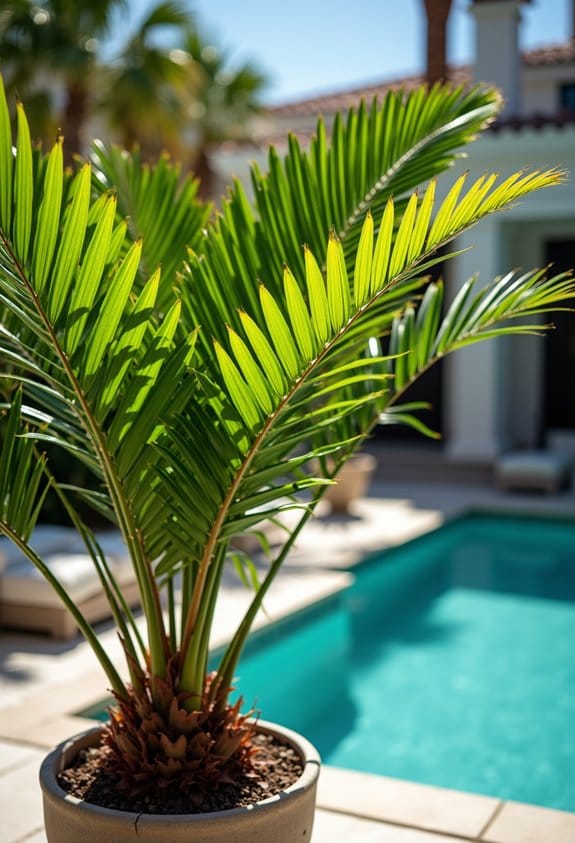
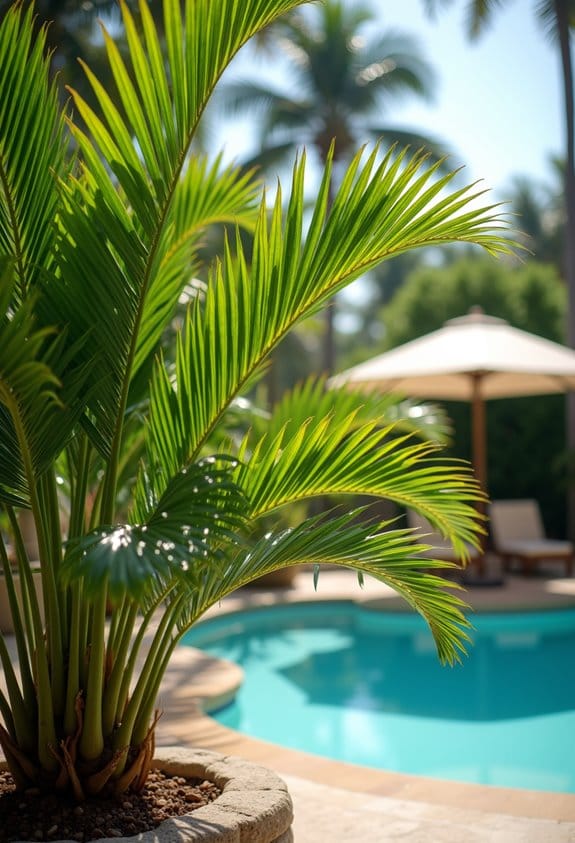
Clumping palms are defined by their growth pattern, featuring multiple stems or trunks emerging from a single root system, which creates a dense, bushy appearance. Species like the European Fan Palm (Chamaerops humilis) and the Ruffled Fan Palm (Licuala grandis) offer unique foliage, adding texture and depth to landscape designs. These palms generally exhibit slower growth, requiring patience as they gradually expand their clumps over time. Their multiple stems improve adaptability, allowing survival in various soil types and USDA zones 8 through 11. The dense appearance of clumping palms provides effective natural screening or privacy barriers. Maintenance is simplified, as self-cleaning fronds reduce pruning needs. Overall, clumping palms balance aesthetic appeal and functional benefits, making them versatile, durable choices within diverse garden or commercial planting schemes. Additionally, integrating solar string lights can enhance the ambiance and functionality of landscapes featuring clumping palms.
Defining Single-Trunk Palms
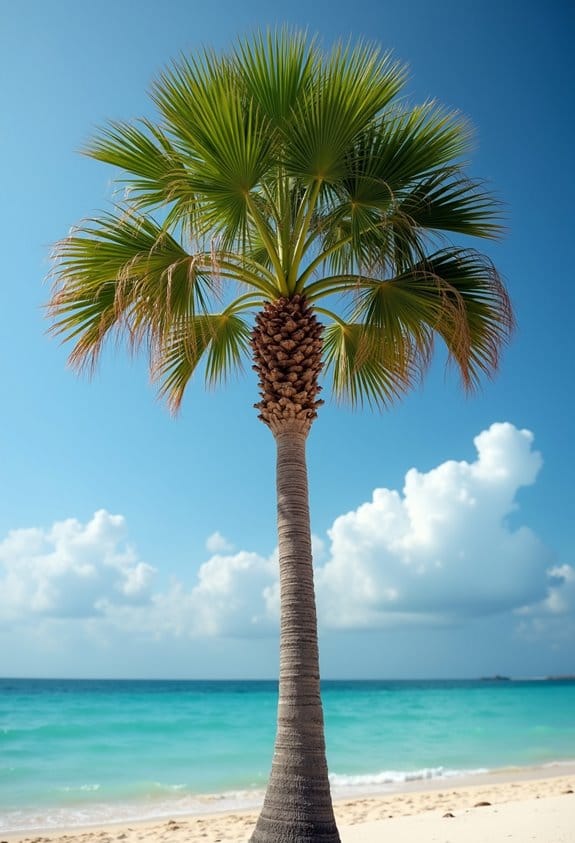
A defining characteristic of single-trunk palms is their solitary, upright stem that often reaches impressive heights, exemplified by the Royal Palm (Roystonea regia), which can grow up to 100 feet tall. These palms feature a uniform trunk diameter, contributing to their clear verticality and making them suitable as a striking focal point in landscapes. The straightforward growth habit of single-trunk palms contrasts with the bushier clumping types, providing a sleek aesthetic line. Maintenance typically involves less frequent pruning since old fronds shed naturally, ensuring a tidy appearance. Their dramatic upright trunk and consistent form make single-trunk palms ideal for use along streets or as standalone specimens, especially when a clean, structured look is desired in medium to large garden spaces. For those looking to capture the beauty of palms indoors or in areas with less natural growth conditions, artificial Kentia palms with realistic silk leaves and adjustable branches offer an appealing alternative.
Visual Appeal and Landscape Impact
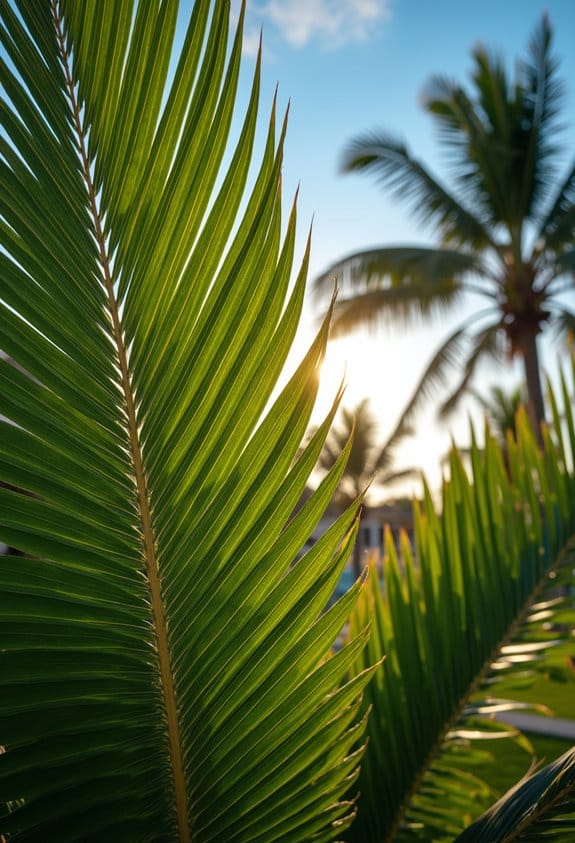
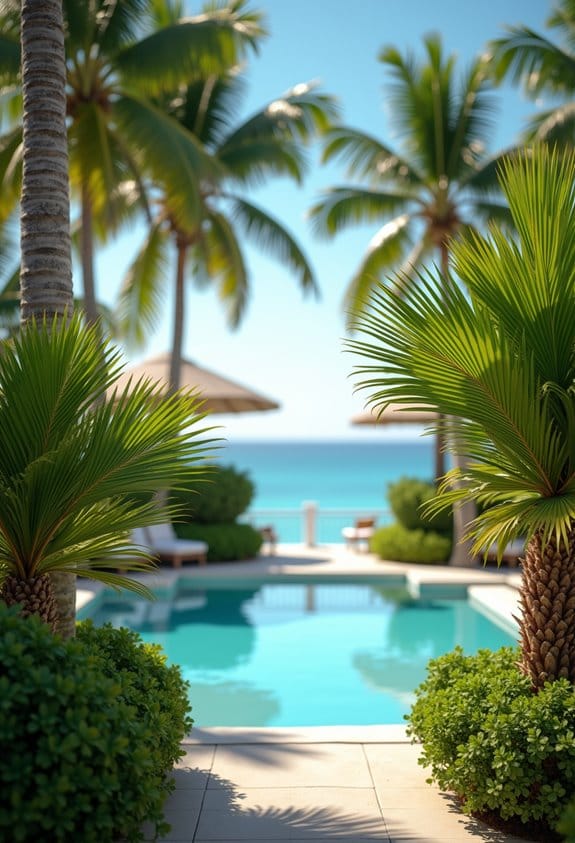
When incorporated thoughtfully, single-trunk palms like the Royal Palm (Roystonea regia) provide a striking vertical accent that can reach heights up to 100 feet, drawing the eye upward in larger landscapes. Their sleek trunk structure and elongated leaf type lend elegance to formal landscaping designs. In contrast, clumping palms such as Chamaerops humilis form bushy, dense clusters producing a lush appearance, ideal for creating privacy screens in tighter garden spaces. The contrasting growth habits between single-trunk and clumping palms enhance visual interest by combining vertical drama with textured fullness. Landscaping plans benefit from these differences, using single-trunk palms as focal points and clumping palms for layered depth. Understanding trunk structure and leaf type is essential when selecting palms to achieve specific visual impact and landscape functionality. Additionally, artificial options with UV resistance offer durable alternatives that maintain vibrant visual appeal in various outdoor settings.
Space Requirements and Growth Patterns
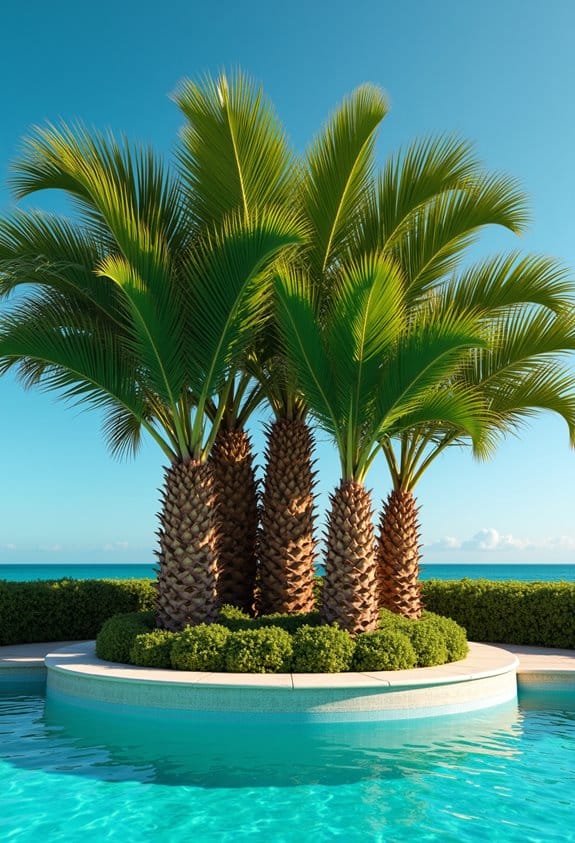
Effective landscape planning hinges on understanding the distinct space requirements and growth patterns of various palm species. Clumping palms, characterized by multiple trunks emerging from their base, occupy less horizontal space and create a bushier appearance, making them excellent for confined spaces or dense landscape designs. In contrast, single-trunk palms exhibit a uniform growth pattern, growing taller with a single central trunk that demands significant vertical and horizontal space, ideal for open gardens where dramatic visual impact is desired. Clumping palms can be planted closer together without hindering growth, fitting comfortably within spaces as narrow as 6 feet. Meanwhile, single-trunk palms often require at least 10 feet of spacing and grow beyond 30 feet tall, affecting their placement in zones where height and spread must be carefully considered for ideal landscape balance. Artificial palm trees designed with adjustable branches offer an adaptable solution for fitting palms into various space constraints while maintaining a natural look.
Maintenance and Care Differences
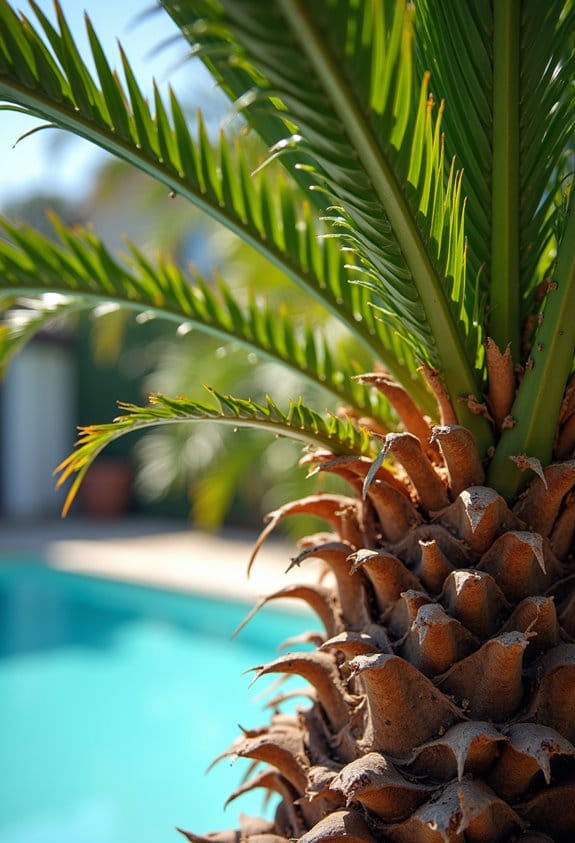
Although palms are generally low-maintenance plants, distinct care requirements separate single-trunk and clumping varieties, impacting pruning frequency, watering routines, and injury prevention strategies. Single-trunk palms, with their singular growth form, typically need less pruning since old fronds shed naturally. However, their height and slender trunks require careful monitoring to avoid mechanical injuries, especially in windy zones 9-11. Clumping palms demand more frequent pruning to control multiple stems and manage spacing, preventing nutrient competition. Water needs also vary: single-trunk palms require consistent watering, about 10-15 gallons weekly during the first two years, while resilient clumping palms tolerate intermittent dryness after establishment. Proper maintenance of each type’s growth form guarantees healthy landscaping outcomes, balancing detailed care with practical routines focused on pruning, watering, and spatial management. Choosing palms with sturdy trunks and stability features can help reduce damage risks while maintaining aesthetic appeal in outdoor settings.
Privacy and Screening Capabilities
Several palm species demonstrate varied privacy and screening capabilities based on their growth patterns and foliage density. Clumping palms, like the European Fan Palm, feature a bushy growth habit with dense foliage, making them excellent for privacy screens in spaces as narrow as two feet wide. Their height and density can be customized through strategic spacing, allowing layered screening in landscaping applications. In contrast, single-trunk palms such as the Royal Palm offer impressive vertical height, reaching up to 50 feet, serving as striking focal points but providing limited screening due to more spaced-out fronds. While single-trunk palms create elegant vertical accents, clumping palms yield quicker, fuller privacy barriers and airflow-friendly screening. Selecting palms according to desired privacy and focal impact guarantees functional and aesthetic success in outdoor design. Additionally, considering palms with salt spray tolerance ensures longevity and health in coastal garden settings.
Ideal Uses in Garden and Landscape Design
When designing gardens or landscapes, the choice between clumping and single-trunk palms greatly influences both aesthetics and functionality. Clumping palms provide dense, bushy forms ideal for privacy screening in residential areas, requiring low maintenance while enhancing textures in informal landscape design. Single-trunk palms, such as the Royal Palm reaching 50-70 feet, serve as striking focal points in large open spaces or entryways, offering vertical height that enhances the visual dynamic. Their strategic placement encourages light penetration, benefiting understory plants and promoting overall garden health. Combining both palm types creates layered heights and varied textures, essential for a balanced, visually engaging landscape design. This thoughtful integration supports functional uses like screening alongside dramatic accents while maintaining ecological balance through improved growth conditions for companion plants. Additionally, incorporating sun protection features like canopies in outdoor elements can enhance comfort and usability in garden spaces where palms are featured.
Climate and Hardiness Considerations
How do climate and hardiness zones determine the success of palm selection in landscaping? Selecting palms aligned with USDA Zones and local climate prevents damage from unsuitable temperatures. Clumping palms, such as the European Fan Palm, are typically more cold-hardy, thriving in Zones 8-11 and enduring frost better than many single-trunk palms. Conversely, single-trunk varieties like the Royal Palm prefer warmer climates, limited to Zones 10-11, and are vulnerable to colder winters. Cold-hardy species, including the Needle Palm, survive winter temperatures as low as 5°F (-15°C), making them resilient options in harsher climates. For gardeners, choosing cold-hardy, clumping palms guarantees landscape durability and aesthetic appeal through winter fluctuations. Understanding climate and hardiness factors remains essential in selecting palms that balance beauty, resilience, and environmental compatibility. Additionally, for year-round tropical aesthetics, all-weather artificial palm trees offer a durable alternative that withstands a wide temperature range and requires minimal maintenance.
Common Varieties for Clumping Palms
Although clumping palms are often chosen for their dense growth habit, their diversity offers unique benefits suitable for various landscapes and indoor spaces. The European Fan Palm (Chamaerops humilis) produces multiple stems, ideal for privacy screens and dense foliage. Adonidia merrillii, or Christmas Palm, grows 3-25 feet tall and features bright red berries that add seasonal color. Rhapis excelsa, known as Lady Palm, thrives indoors with slow growth up to 12 feet in low light. Sabal minor, or Dwarf Palmetto, reaches 2-10 feet and tolerates cold, suitable for southern zones. Chamaedorea microspadix (Hardy Bamboo Palm) grows to 4 feet, thriving in frost-prone partial shade. These clumping palms offer versatility, blending form and function across diverse settings. When considering options for outdoor use, selecting palms with UV-resistant fronds enhances durability and long-term appearance.
Recommended Products

Tropical Elegance: Features lush, cascading green fronds, adding a touch of sophistication to any indoor or outdoor space.


Sufficient Quantity: you will get 4 packs of tufted rocking chair cushions; These cushions measure about 43.4 x 21 x 3.3 inch, the classic size is suitable for most styles of chairs, the quantity is enough to meet your daily use or replacement needs; Note: due to vacuum packaging, the product will arrive in a slightly compressed state, please wait a few days, or tap gently to return it to its fluffiest state
Popular Single-Trunk Palm Species
Single-trunk palms offer a striking vertical element to landscapes and indoor designs, with species varying widely in height, trunk texture, and climate adaptability. The Royal Palm (Roystonea regia) stands tall up to 100 feet, featuring a smooth gray solitary trunk admired in tropical landscapes. The Coconut Palm (Cocos nucifera), reaching 50-100 feet, thrives in USDA zones 10-12 and is prized for its iconic fruit production. The Windmill Palm (Trachycarpus fortunei), a cold hardy single-trunk species, grows 10-30 feet tall, tolerating temperatures as low as 5°F (-15°C). Canary Island Date Palm (Phoenix canariensis) attains 40-60 feet, often used in subtropical landscape architecture for its robust trunk and majestic form. Together, these species offer diverse heights and resilient options for distinct outdoor environments. Choosing palms with cold hardiness ensures they can survive harsh winter conditions and prolong their lifespan in outdoor settings.
Tips for Selecting Palms Based on Site Conditions
When selecting palms for specific site conditions, careful evaluation of space, light, soil, and climate guarantees healthy growth and ideal landscape impact. Clumping palms, ideal for smaller areas, spread horizontally up to 6 feet wide, fitting narrower spaces. Single-trunk palms, growing vertically up to 50 feet, suit larger landscapes demanding height. Sunlight exposure is essential; clumping palms like the shade-tolerant Rhapis excelsa thrive in filtered light, while single-trunk palms such as Syagrus romanzoffiana need full sun. Soil conditions vary; single-trunk palms require well-drained soils to avoid root rot, whereas clumping types tolerate poorer soils. Cold hardiness also guides selection—Rhapidophyllum hystrix withstands temperatures near 0°F, ideal for cooler zones. Consider growth rate and maintenance; faster-growing single-trunk palms demand more upkeep than gradual, low-maintenance clumping varieties.
Recommended Products

THICK AND RICH: Vanilla almondmilk creamer is a rich, thick, luscious non-dairy creamer deserving of your morning coffee

Instantly Lush & Lifelike Paradise: Enjoy the vibrant, full look of mature tropics year-round! Features a single realistic coconut trunks and abundant fronds with countless detailed leaves boasting authentic palm texture. Arrives ready to shape for a perfectly natural silhouette.

GET MORE REWARDS POINTS: Scan the MySimilac QR code on select products to earn points toward a Reward
Frequently Asked Questions
How to Pick a Good Palm Plant?
A good palm plant selection requires evaluating light requirements, soil types, and humidity levels. Proper watering techniques, pest prevention, disease management, pruning tips, and suitable fertilizer options guarantee ideal palm plant care and long-term health.
Which Palm Trees Attract Palmetto Bugs?
Palmetto bug habitats often coincide with clumping palms and coconut palms due to trapped moisture. Effective palm tree maintenance, pest prevention strategies, and incorporating insect repellent plants offer nature friendly solutions for outdoor pest control and landscaping tips.
What Is the Most Low Maintenance Palm Tree?
The Windmill Palm excels in low maintenance due to high drought tolerance, minimal pruning, low fertilizer and water needs, moderate growth rate, strong pest resistance, adaptable to varied soils, climates, and sun exposure, making it highly efficient for diverse landscapes.
Which Palm Tree Is the Prettiest?
Among the most beautiful palms, the Lipstick Palm’s vibrant red crown shaft exemplifies stunning palm foliage, rare palm trees, and colorful palm bark, making it a standout in exotic palm landscapes featuring elegant palm fronds and unique palm shapes.