As an Amazon Associate, we earn from qualifying purchases. Some links on this site are affiliate links at no extra cost to you. Our recommendations are based on thorough research and editorial judgment.


Pathway Design Through Palm Groves and Gardens

Pathways through palm groves in USDA zones 9–11 require 4–6 ft wide durable materials like natural stone, permeable concrete pavers, or gravel for excellent drainage and minimal root damage. Designs favor smooth curves to complement 30-ft tall palms with 8–12 ft canopies, ensuring safe circulation and aesthetic flow. Incorporating seating near mature palms enhances user comfort, while sustainable materials and native plants promote environmental health. Further details reveal how these elements combine for a seamless garden experience.
Key Takeaways
- Design curved pathways at least 4-6 ft wide to protect mature palm root zones and enhance natural flow.
- Use durable, permeable materials like natural stone or permeable concrete pavers for drainage and aesthetic harmony.
- Incorporate sensory elements such as diverse textures, water features, and wooden boardwalks to enrich the visitor experience.
- Position ergonomic seating near palms and viewpoints, including amenities like litter bins and subtle evening lighting.
- Apply sustainable practices using locally sourced, eco-friendly materials and native plants for erosion control and habitat support.
Selecting Materials for Garden Pathways
When designing pathways through palm groves, selecting materials requires careful consideration of durability, maintenance, and environmental factors, such as soil type and climate zones 9 through 11. Natural materials, including stone and gravel, provide excellent drainage and resonate with the organic aesthetic of palm groves while minimizing weed growth. These options typically require less upkeep in hot, humid climates but may shift on loose soil if not properly stabilized. Concrete pavers present a more durable and customizable choice, resisting wear in high-traffic areas and offering various colors and patterns to complement garden themes. Choosing permeable concrete pavers also improves water drainage, reducing runoff in rainy seasons. A balanced material selection enhances both function and appearance, supporting sustainability and ensuring pathways thrive in diverse environmental conditions characteristic of subtropical and tropical zones. Additionally, incorporating weather-resistant materials used in artificial palm trees can contribute to the durability and longevity of garden pathways.
Planning the Layout Around Palm Groves

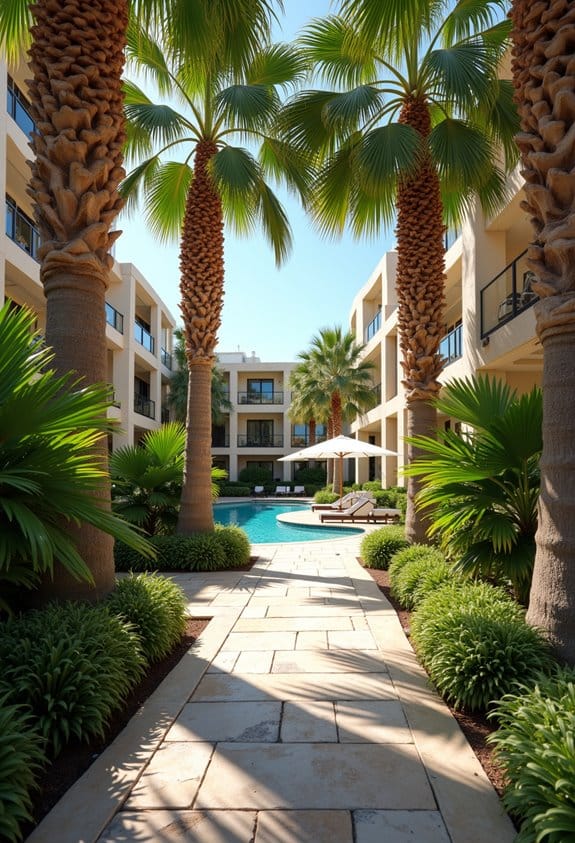
Although palm groves provide a lush, tropical backdrop, careful planning of pathway layouts must secure smooth circulation while preserving mature palms with trunks reaching up to 30 feet and canopy spreads spanning 8 to 12 feet. Pathways should feature flowing curves that complement the natural form of palm groves, offering seamless navigation through the garden. Designers must account for palm canopy widths and root spread by maintaining sufficient pathway width, typically between 4 to 6 feet, to prevent damage. Using materials like natural stone or pavers assures durability and aesthetic harmony. Strategically placed benches along pathways create resting points, enhancing visitor experience without disturbing palms. Seasonal changes in palm appearance necessitate flexible layouts that remain inviting year-round, integrating complementary planting and landscape elements to maintain clear, accessible paths throughout varying weather conditions. Additionally, incorporating durable, UV-resistant materials in pathway features helps maintain their longevity and visual appeal despite exposure to sun and extreme weather.
Enhancing Sensory Experiences With Path Design
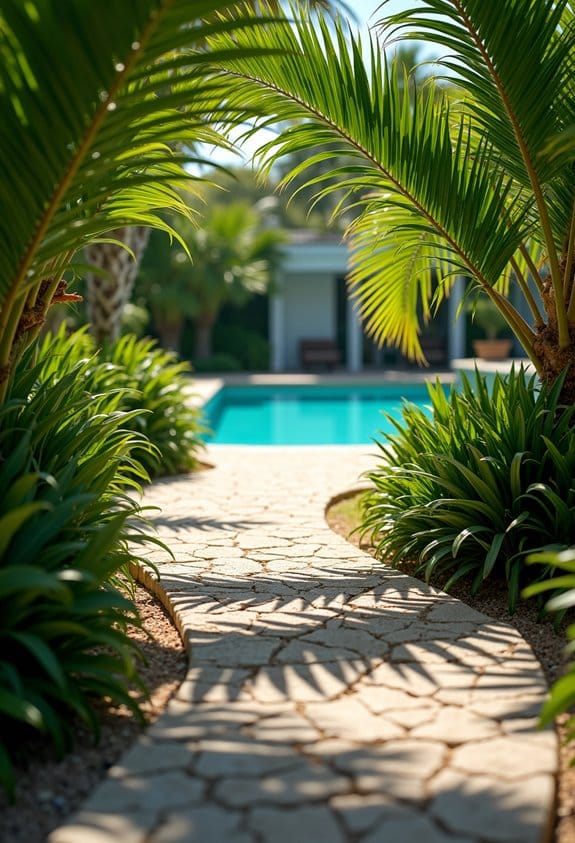
Since sensory engagement enriches visitor interaction, pathway designs through palm groves should intentionally stimulate sight, sound, and touch with natural elements and varied textures. Curved pathways winding gently through dense palm clusters create a tropical vibe, encouraging slow exploration and observation of lush foliage. Incorporating wooden boardwalks, roughly 1.2 meters wide, offers tactile contrast and adapts well to uneven terrain typical in zone 9A climates averaging 21–27°C. Integrating ambient features like trickling water fountains at intervals of 30 meters can subtly enhance auditory stimuli without overwhelming natural sounds. Diverse surfaces—smooth river stones, soft Bermuda grass patches, and rustic clay pavers—offer deliberate textural variation beneathfoot, heightening tactile awareness while complementing the tropical aesthetic. Such pathway design strategies foster fully immersive sensory experiences, balancing form and function within palm grove landscapes. Selecting planters made from weather-resistant materials can further enhance the durability and aesthetic continuity of adjoining garden features.
Integrating Seating and Rest Areas Along Paths

Strategically placing ergonomic benches, approximately 1.5 meters long and 0.5 meters high, along pathways in palm groves provides essential resting spots for visitors traversing zone 9A climates with average temperatures of 21–27°C. Positioning seating areas near mature palms or scenic viewpoints maximizes visitor engagement by offering comfortable nature observation points. Benches designed with ergonomic contours accommodate diverse users, promoting longer enjoyment of the lush surroundings. Including litter bins and ashtrays adjacent to seating areas maintains cleanliness, preserving the garden’s appeal. Additionally, subtle luminaries along paths enhance safety and ambiance during evening hours, encouraging use beyond daylight. These thoughtfully integrated seating arrangements support social interaction and rest, enriching the overall pathway experience within palm groves without disrupting the natural landscape’s harmony. Integrating solar palm tree lights along pathways can provide eco-friendly illumination, enhancing nighttime safety while maintaining the tropical aesthetic.
Sustainable Practices in Pathway Construction
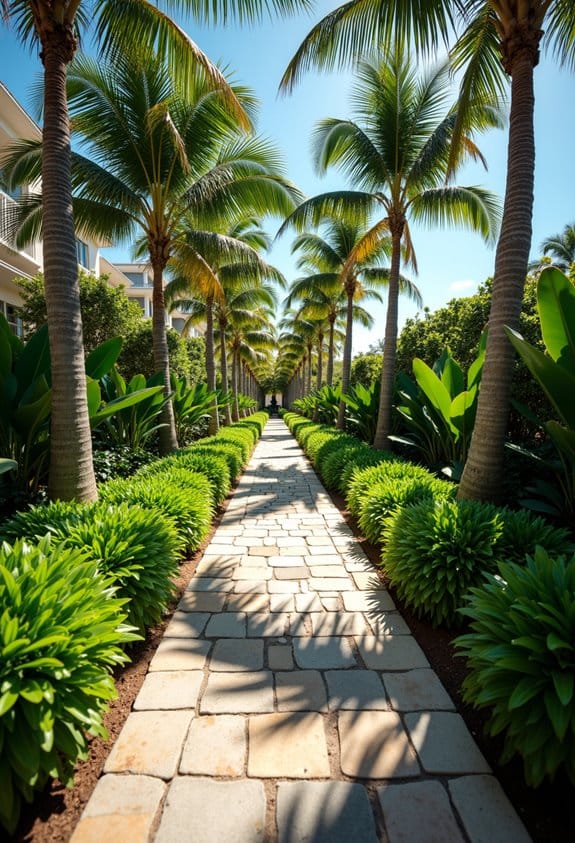
Incorporating permeable materials such as recycled concrete or crushed stone, typically laid in 10 to 15-centimeter-thick layers, allows water to infiltrate pathways and reduces surface runoff in zone 9A palm groves with average temperatures of 21–27°C. Sustainable practices prioritize locally sourced materials to minimize transportation emissions and support regional economies in side yard installations. Integrating native plants alongside pathways offers natural erosion control and encourages local wildlife habitats, enhancing biodiversity. Rain gardens adjacent to paths capture stormwater, filtering it to maintain healthy soil conditions. Additionally, eco-friendly materials like FSC-certified wood for boardwalks or recycled rubber pavers lower environmental impact. Implementing these measures in pathway construction fosters long-term sustainability while maintaining functional and attractive designs within palm groves and their side yards. Choosing UV-resistant artificial sago palm trees can further complement the sustainability of garden designs by providing long-lasting, low-maintenance greenery compatible with outdoor environments.
Frequently Asked Questions
How Do You Prevent Roots From Damaging Pathway Surfaces?
Studies show that tree roots cause 70% of urban pathway damage. To prevent this, root barriers are installed alongside durable surface materials such as reinforced concrete or permeable pavers, effectively restricting root growth and protecting pathway integrity.
What Lighting Options Work Best for Palm Grove Pathways?
Solar lights and LED lanterns work best for palm grove pathways due to their energy efficiency, low heat emission, and durability. These options provide subtle illumination, enhancing safety while preserving the natural ambiance without disturbing plant growth or wildlife.
How Can Pathways Be Designed for Wheelchair Accessibility in Gardens?
Wheelchair accessibility requires using wheelchair friendly materials, ensuring smooth surfaces, and adhering to path width guidelines that enable easy navigation. Designing with gradual slopes, adequate turning spaces, and non-slip textures further enhances mobility and safety within garden pathways.
What Maintenance Is Required for Natural Stone Garden Paths?
Maintenance of natural stone garden paths requires regular stone sealing to prevent weather damage and staining. Additionally, moss removal is essential to avoid slippery surfaces and preserve the path’s aesthetic and structural integrity over time.
How Do Pathways Impact Local Wildlife in Palm Groves?
Pathways can transform wildlife corridors into epic obstacle courses, dramatically increasing habitat fragmentation. This disrupts animal movement and breeding, making the natural flow of palm grove ecosystems struggle like marathon runners forced to hop over fences.