As an Amazon Associate, we earn from qualifying purchases. Some links on this site are affiliate links at no extra cost to you. Our recommendations are based on thorough research and editorial judgment.

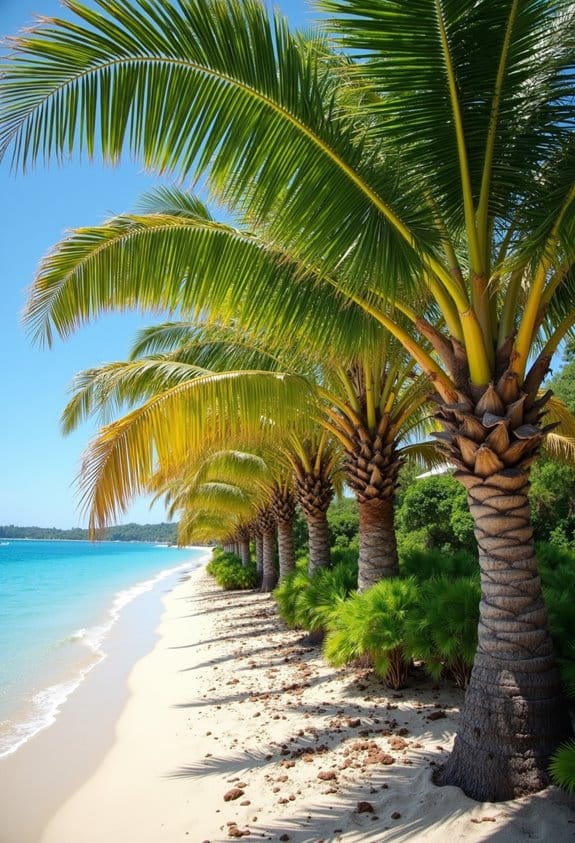
Coastal Erosion Control Using Strategic Palm Planting

Strategic palm planting effectively stabilizes sandy coastal soils vulnerable to erosion by using species like the Cabbage Palm with root systems reaching 60 centimeters deep. Spacing palms 3 to 5 meters apart encourages robust root development, while combining native palms with grasses improves soil binding and reduces wind damage. These palms serve as natural windbreaks, lessening soil displacement from storms and sea-level rise. Maintaining palms involves watering, mulching, and pruning for resilience. Further insights reveal precise planting and care techniques enhancing coastal protection.
Key Takeaways
- Palm trees stabilize coastal soil with deep, fibrous roots that prevent erosion on sandy shorelines.
- Planting native palms like Cabbage, Foxtail, and Royal Palms enhances soil anchoring and wind resistance.
- Strategic spacing of 3-5 meters optimizes root growth and maximizes erosion control efficiency.
- Combining palms with native ground covers like Firebush and Beach Sunflower improves biodiversity and soil stability.
- Maintenance practices such as watering, mulching, pruning, and pest monitoring ensure palm health and long-term coastal protection.
Understanding Coastal Erosion and Its Impact
Although coastal erosion is a natural process occurring along shorelines worldwide, its effects are greatly worsened by human activities and climate change. Coastal erosion threatens valuable land and infrastructure, especially in vulnerable zones like Charleston’s Atlantic coast. Rising sea levels, driven by climate change, increase wave action and storm surge intensity, accelerating soil loss. Effective erosion control often involves planting native plants with deep root systems, which aid soil stabilization by binding particles and reducing runoff. These plants, adapted to saltwater and harsh conditions, improve ecosystem resilience against rising waters. Implementing native vegetation strategies not only mitigates erosion but also supports biodiversity. Maintaining a diverse mix of native plants enhances soil integrity, protecting coastal environments from severe erosion impacts while promoting long-term sustainability amid a changing climate. Coastal palms play a significant role in this process by helping in the stabilization of soil to reduce erosion and improve ecosystem health in USDA zones 9-11.
The Role of Palm Trees in Erosion Control
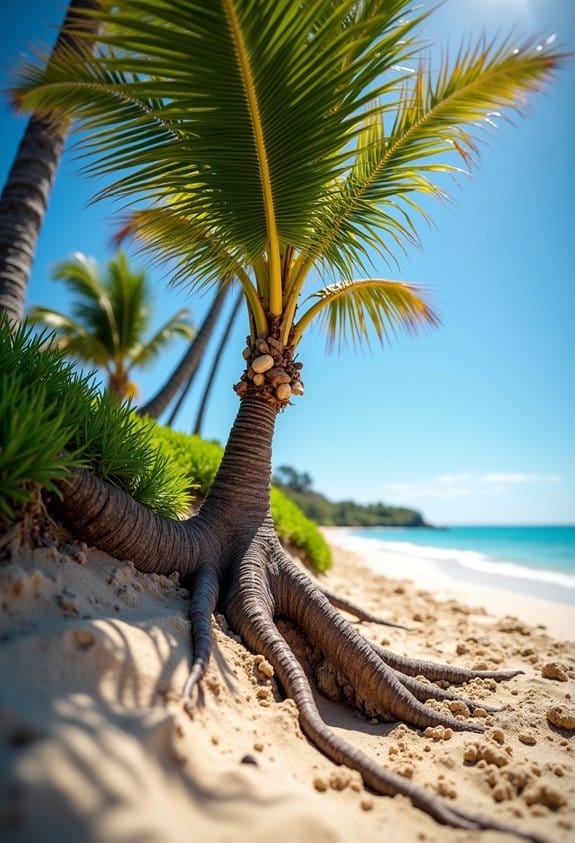
In coastal regions such as Charleston’s Atlantic shoreline, palm trees play a notable role in erosion management due to their specialized root systems. These trees possess a dense root system, particularly fibrous roots reaching depths of up to 60 centimeters, which considerably enhances soil stability by binding sandy coastal soils. This binding effect decreases erosion caused by wind and wave action, common in coastal environments. Additionally, palm trees function as natural windbreaks, reducing wind velocity near the surface and limiting soil particle displacement. Native grasses often thrive alongside palms, further improving ground cover and erosion resistance. The combined presence of palm trees and native grasses creates a resilient coastal buffer that effectively minimizes soil loss, promoting long-term ecosystem stability while sustaining local biodiversity essential to erosion control strategies. Moreover, the UV-resistant leaves of palm species contribute to their longevity and effectiveness in harsh coastal climates, ensuring continuous protection against erosion.
Recommended Products

🌴This 10 feet majestic artificial phoenix palm tree features large, vivid palm fronds filled with countless arching feather-like leaves with realistic palm texture. It looks so natural and great! If you're aiming for a tropical paradise atmosphere, this is definitely the best choice. Your friends, partners, and relatives will be in awe as this extra tall palm tree awaits to dance in the warm tropical breezes

Instantly Lush & Lifelike Paradise: Enjoy the vibrant, full look of mature tropics year-round! Features a single realistic coconut trunks and abundant fronds with countless detailed leaves boasting authentic palm texture. Arrives ready to shape for a perfectly natural silhouette.

Selecting Palm Species for Coastal Resilience
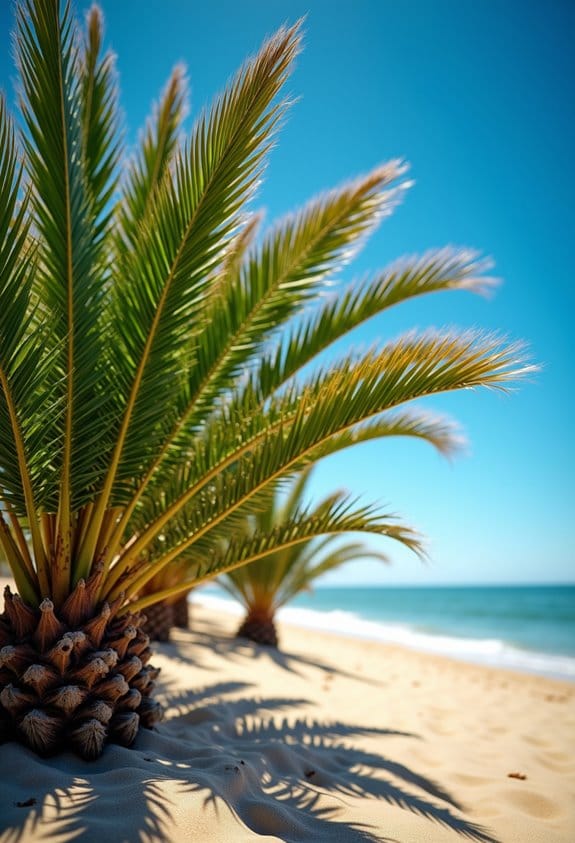
When selecting palm species for coastal resilience, attention must be given to root depth, salt tolerance, and wind resistance to guarantee ideal soil stabilization in zones exposed to salt spray and frequent winds. Native palms like the Cabbage Palm (Sabal palmetto) have dense root systems that anchor sandy soil on sand dunes, crucial for mitigating erosion intensified by sea level rise. Salt-tolerant species such as the Foxtail Palm (Wodyetia bifurcata) thrive near coastlines, supporting environmental preservation by reducing soil degradation. The tall Royal Palm (Roystonea regia) acts as a windbreak, lessening wind velocity and protecting soil integrity. Strategic selection using palms with robust, dense roots enhances soil stability and supports long-term resilience in fragile coastal ecosystems, especially where rising seas threaten low-lying areas. Additionally, choosing palms with UV resistant materials can improve their longevity and color retention in harsh coastal sunlight, contributing to sustainable landscape management.
Recommended Products

DIMENSIONS: 24 Inch – 6’ (182. 88cm) net length and 24” (60. 96cm) net width
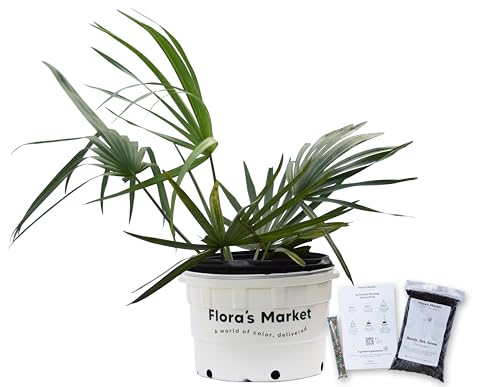
COMPACT PALMETTO PALM - Sabal Minor, or Dwarf Palmetto, features fan-shaped, blue-green leaves that add a tropical touch to gardens and landscapes

The Saw Palmetto ‘Green’ is known for growing wild in Florida’s natural landscape; however, it is also a common plant for home landscapes throughout the state as well. It tolerates a range of conditions, and it is a fantastic provider of texture beneath trees, or as a filler, hedge, backdrop, or accent.
Planting Techniques for Effective Erosion Management
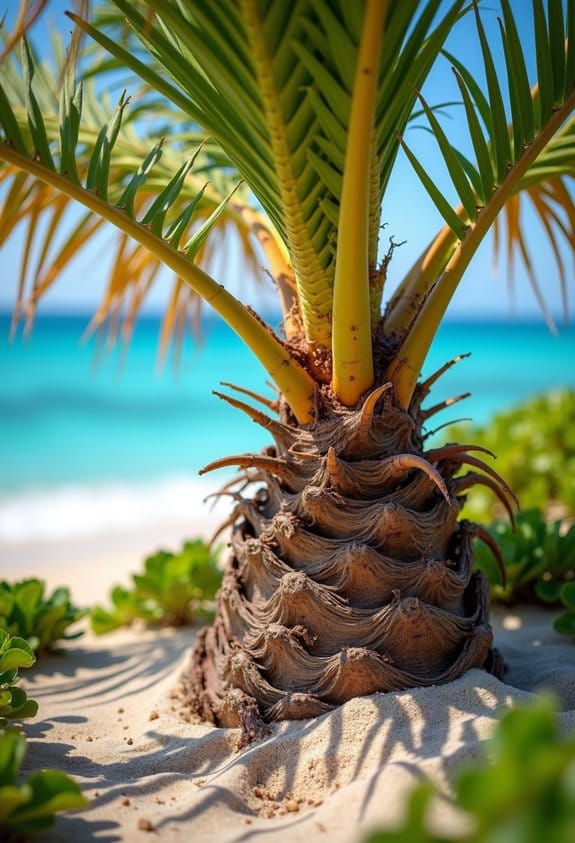
Effective planting techniques play a pivotal role in maximizing the erosion control benefits of palms selected for coastal zones. Palms with deep root systems, such as Cabbage Palms, anchor soil effectively, enhancing stability on sandy coastal slopes prone to erosion. Proper spacing of plants—typically 3 to 5 meters apart—allows roots to develop fully, creating a dense network that binds soil securely. Incorporating palms into a thorough management plan includes mixing native species like Firebush and Beach Sunflower to promote biodiversity while reinforcing soil stability. Strategic planting on slopes with 10-15% grade guarantees water absorption reduces runoff intensity. This approach to coastal erosion management utilizes robust root systems and thoughtful plant placement, combining ecological and practical principles to safeguard vulnerable shorelines effectively against washouts during storms. Additionally, choosing palms with durable, weather-resistant designs ensures long-lasting erosion control benefits in various coastal climates.
Maintenance Practices to Ensure Palm Health and Stability
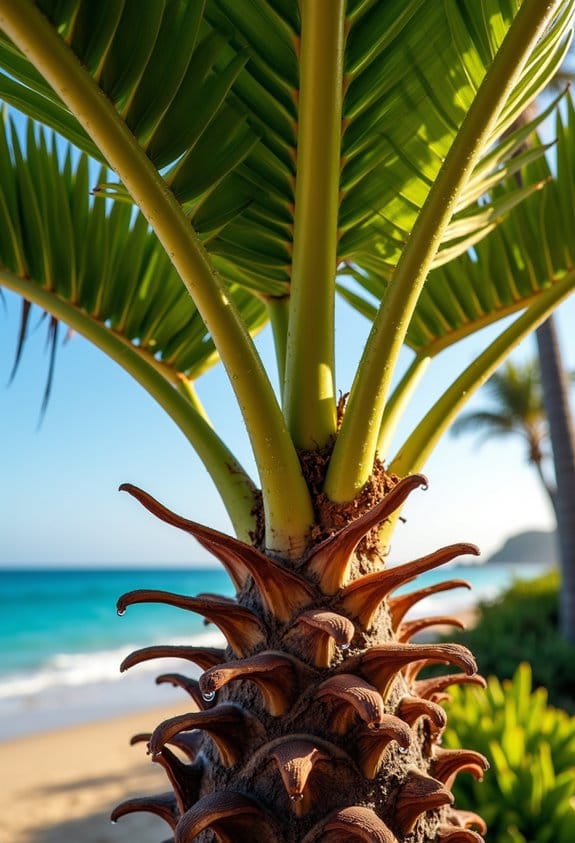
Maintaining palm health requires regular watering of young plants, especially during their first 12 to 18 months, to develop strong root systems that stabilize soil on coastal slopes. In dunes exposed to salty winds and variable rainfall, mulching around palm plants conserves moisture and suppresses weed growth, supporting soil stability. Pruning removes dead fronds, reducing wind damage risk and encouraging vigorous growth critical for erosion control. Maintenance practices also include periodic inspections for pests and diseases, which can weaken palms and increase soil erosion vulnerability. Installing stakes for palms up to 1.5 meters tall provides extra support under local climate conditions characterized by strong storms, ensuring young palms remain upright. Coordinated, consistent maintenance safeguards these palm plants’ role in protecting dunes from degradation. Using UV-resistant materials in palm planting can enhance durability and long-term stability in harsh coastal environments.
Integrating Palms With Other Natural Erosion Control Methods
Integrating palms with native grasses like Smooth Cordgrass and shrubs such as Wax Myrtle enhances coastal erosion control by combining plant species with complementary root structures. In Palm Beach County, this approach strengthens the dune system, where palms’ deep roots stabilize sandy soil, effectively protecting the soil from washout caused by heavy rain. Palms also serve as natural windbreaks, reducing damage from coastal winds that accelerate erosion. Combining palms with rain gardens or bioswales further manages stormwater runoff, slowing water flow over the terrain. This multi-layered planting scheme balances surface-binding and deep-rooted plants, preserving natural beauty while strengthening erosion defenses. Strategically selecting plants for erosion guarantees a resilient system that withstands tropical storm patterns common in Zone 10 climates along Florida’s coast. Additionally, selecting palms with sturdy bases ensures these trees remain stable and effective against strong coastal winds.
Frequently Asked Questions
Do Palm Trees Help With Erosion?
Ironically, palm trees stand firm against eroding chaos, showcasing root system effectiveness. Their tropical flora resilience highlights coastal vegetation importance. Environmental impact assessment affirms palm tree benefits as erosion mitigation strategies, proving nature’s subtle guardians protect shifting sands with quiet strength.
What Are Some of the Strategies Used for Coastal Erosion Abatement?
Strategies for coastal erosion abatement include mangrove conservation techniques, beach nourishment strategies, living shoreline initiatives, soil stabilization methods, sediment transport analysis, and dune restoration practices, all aimed at enhancing shoreline resilience and reducing erosion impacts effectively.
What Is the Best Plant to Stop Erosion?
The best plant to stop erosion is a native plant with deep roots, which enhances soil stability in coastal ecosystems. Such plants create effective erosion barriers, support plant diversity, and sustain natural habitats critical for long-term coastal resilience.
What Plants Are Good for Coastal Erosion?
Ironically, native species like sea oats, beach sunflowers, and dune grasses excel at dune stabilization while requiring minimal beach nourishment. Their vegetation diversity enhances soil health and supports habitat restoration, proving nature’s own solutions surpass costly human interventions.