As an Amazon Associate, we earn from qualifying purchases. Some links on this site are affiliate links at no extra cost to you. Our recommendations are based on thorough research and editorial judgment.


Carbon Sequestration Capacity of Different Palm Species

Different palm species store carbon primarily through their above-ground biomass, including slender trunks and leaves, with mature palms like Socratea exorrhiza holding about 159.50 kg of carbon. Palms generally sequester less carbon than broad-leaved tropical trees but play a crucial role in soil carbon storage through root systems. Their carbon storage varies with environmental factors such as rainfall near 4,000 mm and temperature. Specialized allometric models improve biomass estimates, essential for accurate forest carbon inventories. Further insights reveal how palms contribute uniquely to tropical carbon cycles.
Key Takeaways
- Palm species vary in carbon storage, with mature types like Socratea exorrhiza storing up to 159.50 kg of carbon per individual.
- Palms store less above-ground biomass than hardwood trees due to slender trunks and smaller canopies, impacting overall carbon sequestration.
- Specialized allometric models are necessary for accurate biomass estimation because palms lack secondary growth typical of dicotyledonous trees.
- Environmental factors such as rainfall near 4,000 mm and temperature significantly influence palms’ carbon sequestration capacity in tropical ecosystems.
- Including palms in forest carbon inventories corrects underestimations, as they contribute around 5-15% of carbon stocks in tropical forests.
Ecological Significance of Palms in Tropical Forests
Although palms constitute only a small fraction of the above-ground biomass in tropical forests, their ecological significance is substantial due to their diversity and functional roles. Encompassing over 2,600 species, palms contribute importantly to carbon sequestration by capturing atmospheric carbon and storing it in their tissues. Mainly found in tropical and subtropical wetland zones, palms support complex food webs, which aids in maintaining forest health and resilience. Their capacity for carbon storage complements that of larger trees, especially in nutrient cycling and habitat provision. Despite their relatively lower biomass percentage, palms influence essential ecosystem processes that enhance long-term carbon retention. Research gaps remain, particularly concerning non-commercial palm species, underscoring the need for focused study on their quantitative contributions to overall carbon dynamics within tropical forests. In addition, advances in understanding palms’ material durability, such as their inherent UV resistance, may provide insights relevant to their ecological functions and longevity.
Overview of Carbon Storage Mechanisms in Plants
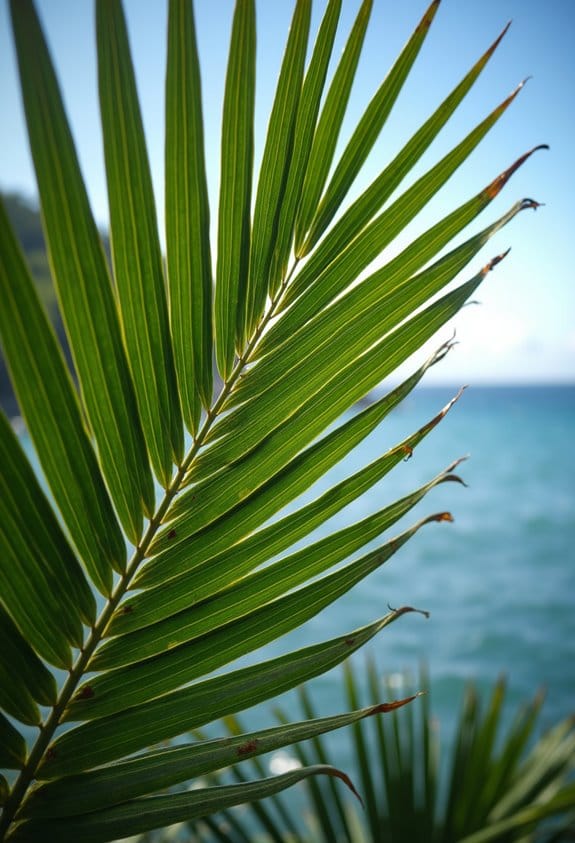
Plants store carbon primarily through the process of photosynthesis, which converts atmospheric carbon dioxide (CO₂) into organic compounds within their tissues. This process results in carbon stocks distributed between above-ground biomass and soil carbon pools. The above-ground biomass includes leaves, stems, and branches, where carbon accumulates as structural material. In contrast, soil carbon derives from root exudates, decaying plant matter, and microbial activity, playing an essential role in long-term carbon retention. Different species contribute variably to these stocks; palms store less carbon above ground than many trees due to lower wood density and biomass volume. However, palms enhance soil carbon by promoting soil structure through their root systems. Together, above-ground biomass and soil carbon form a dynamic system critical for understanding carbon sequestration efficiency in diverse ecosystems. Additionally, understanding the durability and structural attributes of palm species can provide insights into their carbon storage potential and ecological value.
Recommended Products


Uniform germination propagation mats provide a consistent and controlled environment for seed germination, nsuring uniform sprouting and growth of seedlings.

Ideal for Palms, Ferns, Cycads, Ixora, and Ornamental Plants
Differences in Carbon Sequestration Between Palms and Woody Trees
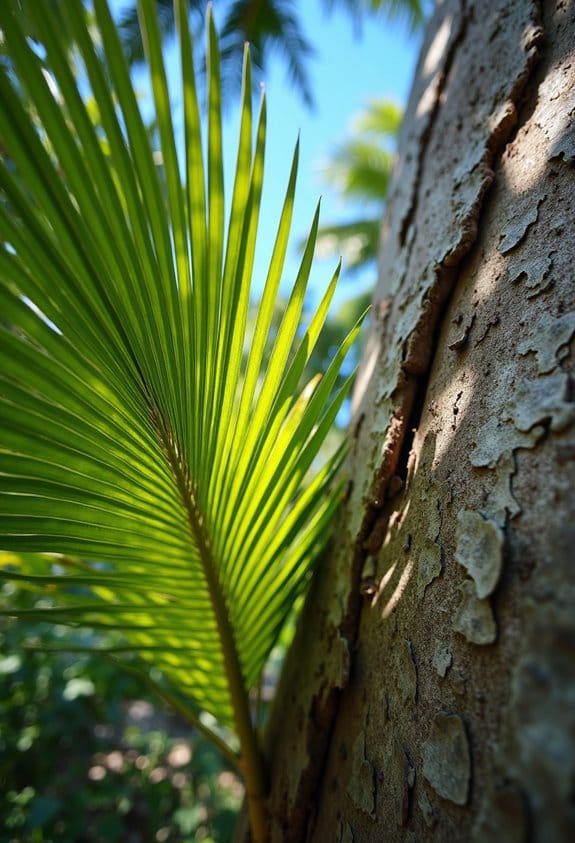
Examining carbon sequestration reveals notable differences between palms and woody trees, largely driven by variations in structure and biomass accumulation. Palms, belonging to the Arecaceae family, often store less above-ground biomass in tropical forest settings than hardwood and softwood trees. Their slender trunks and limited canopy spread restrict total biomass compared to the broad, dense crowns and extensive root systems of woody dicotyledonous trees, which serve as more effective carbon sinks. Despite palms contributing roughly 32.9% of carbon stocks in certain tropical habitats, their role in overall carbon sequestration remains comparatively modest. This difference is essential for understanding forest carbon dynamics, as woody trees typically accumulate more biomass carbon, enhancing carbon storage capacity considerably. Consequently, biomass distribution and tree architecture fundamentally influence the contrasting carbon sink functions of palms and woody trees in tropical forests. Additionally, the height and structure of palms compared to woody trees also impacts their ability to sequester carbon effectively in different environments.
Allometric Models for Estimating Palm Biomass

Accurate estimation of palm biomass requires allometric models tailored to their distinctive structure, which differs markedly from woody dicotyledonous trees. Traditional models often fall short because palms exhibit unique growth forms without secondary growth, affecting biomass distribution. Currently, few allometric models specifically address palm species, limiting reliable carbon stock assessments across tropical regions. Expanding sample sizes and including diverse palm types, such as fan and pinnate-leaved species, would improve model accuracy. Ground-based validation remains vital to support remote sensing techniques, ensuring biomass measurements reflect actual palm growth dynamics in varied climates typically ranging from 20°C to 35°C. Developing robust allometric equations rooted in multiple geographic zones and structural measurements, including stem diameter and height, is essential for advancing carbon stock estimations in palms and clarifying their ecological roles. Incorporating data from realistic palm models used in artificial palm research may provide valuable structural insights to enhance these allometric models.
Comparative Analysis of Carbon Content in Palm Species

Several palm species, including members of the Arecaceae family, demonstrate varied carbon content that impacts ecosystem carbon storage differently than hardwood trees. The carbon fraction in palms, while generally lower than in dicotyledonous trees, still supports a meaningful carbon sink, especially in mature specimens like Socratea exorrhiza and older date palms. Date palms over 20 years old can hold approximately 159.50 kg of carbon in their above-ground biomass. Their unique growth form necessitates incorporating greater diversity in carbon inventory models, as traditional allometric methods for woody dicots underestimate palm biomass. Despite palms’ typically lower carbon stock, their role contributes to ecosystem carbon budgets uniquely. Consequently, using species-specific data on carbon fractions guarantees accurate assessment of palms’ carbon storage potential within varied ecosystems. Artificial palm trees with UV-resistant materials showcase the importance of material durability under environmental conditions, which parallels considerations in the study of palm species’ resilience and carbon sequestration capabilities.
Regional Variations in Palm Carbon Storage Capacity
Carbon storage capacity in palm species varies greatly across different geographic regions, influenced by factors like climate, soil type, and species composition. Tropical palm trees exhibit distinct carbon sequestration abilities, with species like the date palm storing up to 159.50 kg of aboveground biomass carbon per plant after 20 years. Soil organic carbon (SOC) also contributes markedly, comprising 32.9% of total carbon stocks in date palm farms. Regional ecosystems, such as Caribbean lowland rainforests, host palms like Socratea exorrhiza and Iriartea deltoidea, which play key roles in carbon cycling despite limited study. The diversity of the Arecaceae family across tropical zones highlights unique carbon storage capacities and underpins varying ecological functions critical for understanding and maximizing palm trees’ role in reducing atmospheric carbon. Advances in artificial palm materials with UV-resistant features ensure long-lasting installation in outdoor settings, supporting ecological and aesthetic goals simultaneously.
Role of Palm Root and Stem Structures in Carbon Allocation
The distinctive architecture of palm trees, characterized by fibrous, lightweight stems and extensive shallow roots, plays an essential role in their carbon allocation patterns. Palms typically exhibit lower dry biomass in their stems compared to hardwood species, which influences their net carbon storage capacity. Their shallow root systems enhance their ability to absorb nutrients efficiently, yet this limits deep soil carbon input relative to deep-rooted trees. Palm biomass distribution favors leaves over stems, altering carbon allocation dynamics during growth. Species within the Arecaceae family show diverse root and stem carbon sequestration potentials, affecting overall ecosystem carbon cycling. Understanding these structures’ allometric relationships remains fundamental for accurately estimating palm contributions to tropical forest carbon stocks and optimizing carbon management strategies. Additionally, the growth size and speed of palms, often reaching between 4-7 feet under ideal conditions, influence their overall biomass and thereby their carbon sequestration potential.
Impact of Environmental Factors on Palm Carbon Sequestration
Although palm species naturally thrive in tropical zones, their carbon sequestration capacities depend heavily on specific environmental factors such as temperature, precipitation, and soil properties. Ideal average annual rainfall near 4,000 mm significantly enhances the amount of carbon palms can store, particularly in dense tropical rainforest ecosystems. Soil organic carbon, accounting for about 32.9% of total forest carbon stocks, highlights the critical role of healthy soil in carbon retention. However, rising temperatures linked to climate change can reduce sequestration efficiency by increasing plant respiration and lowering photosynthetic activity. Diverse palm growth forms further influence carbon storage variations, emphasizing the need to take environmental conditions into account carefully when estimating palms’ contributions to forest carbon. Overall, monitoring these factors is essential for understanding and enhancing palm carbon sequestration under shifting climates. Additionally, the use of durable, UV-resistant materials in artificial palm trees helps maintain long-lasting tropical decor in commercial environments.
Methods for Measuring Palm Biomass and Carbon Stocks
When measuring palm biomass and carbon stocks, specialized methods account for the unique structure of palms, which differ markedly from typical woody trees in height, diameter, and growth form. Traditional allometric models relate palm height and stem diameter to biomass but often miss nuances due to palm morphology. Ground-based techniques involving harvesting and module separation—dividing stems, roots, and leaves—play an important role in validating these models. Categorizing palms by age classes further refines total carbon estimates, revealing biomass differences between younger and older palms. Expanding allometric studies to include diverse palm species across geographic zones will better understand palms’ carbon sequestration capacity. This approach guarantees more accurate biomass and carbon stock estimations, highlighting the important role palms play in carbon cycling and ecosystem carbon storage. Moreover, understanding the durability and UV resistance of palm species can inform the selection of palms best suited for long-term biomass studies and environmental resilience.
Implications for Forest Carbon Inventories and Climate Policy
Numerous forest carbon inventories currently omit palm species, resulting in a consistent underestimation of forest carbon stocks by as much as 5-15% in tropical regions rich with Arecaceae diversity. Palms possess a different structure than typical woody dicots, challenging standard allometric models that fail to capture their carbon sequestration accurately. Including palms in carbon inventories enhances estimates, reflecting their unique biomass and ecological roles in carbon storage. These species also support biodiversity, indirectly boosting carbon sequestration through habitat provision. Climate policies can benefit from integrating palm-specific data, ensuring more effective carbon emission mitigation strategies. Expanding research on palm biomass and carbon stocks will fill current knowledge gaps, enabling better forest management and policy decisions that acknowledge palms’ significant yet underestimated contribution to global carbon cycles. Artificial palm trees offer durable, weather-resistant designs suitable for year-round use in both indoor and outdoor settings, highlighting the potential for all-weather palm trees to symbolize carbon sequestration benefits in public awareness and education.
Frequently Asked Questions
How Fast Do Different Palm Species Grow Compared to Other Trees?
Palm growth rates generally surpass many tree species initially, achieving quicker tree height comparison milestones. This rapid vertical growth enhances their carbon capture efficiency early on, though long-term sequestration often favors slower-growing hardwoods with greater biomass accumulation.
Can Palm Byproducts Be Used for Sustainable Bioenergy?
Palm byproducts, including palm fiber, can be utilized for sustainable bioenergy through biomass conversion technologies. These processes optimize energy yield, making palm residues a viable renewable resource for producing biofuels and reducing reliance on fossil fuels.
What Are the Economic Benefits of Growing Palms in Reforestation Projects?
The economic benefits of growing palms in reforestation projects include enhanced economic value through sustainable resource production, substantial job creation in planting and maintenance, and significant market potential for palm-derived products, fostering local economic development.
Do Palm Species Contribute to Soil Carbon Storage?
Surprisingly, palm species do contribute to soil carbon storage. Their extensive root systems enhance soil nutrients, promoting microbial activity critical for carbon cycling. This interaction gradually increases soil organic matter, supporting long-term carbon sequestration beneath these tropical plants.
How Does Palm Tree Lifespan Affect Long-Term Carbon Sequestration?
Palm longevity impact directly influences carbon storage potential, as longer-lived palms sequester carbon over extended periods. This contributes to ecological stability factors by maintaining consistent biomass and reducing carbon release from frequent turnover or decay events.