As an Amazon Associate, we earn from qualifying purchases. Some links on this site are affiliate links at no extra cost to you. Our recommendations are based on thorough research and editorial judgment.

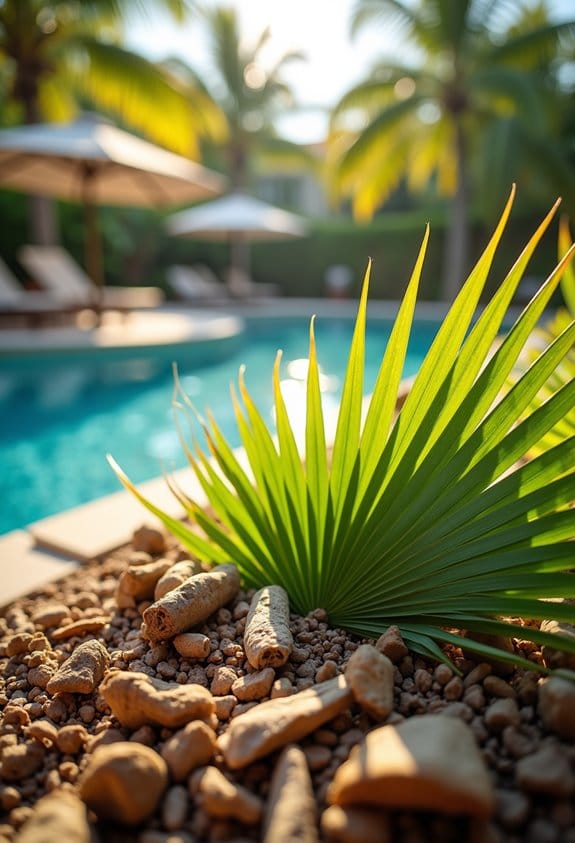
Composting Palm Fronds and Natural Debris

Composting palm fronds requires shredding into small pieces to overcome their high lignin and carbon content near 100:1, balancing with nitrogen-rich materials for a 25:1 to 30:1 carbon-to-nitrogen ratio. Maintaining moisture around 40-60% and using methods like Hügelkultur or no-dig layering supports microbial activity and accelerates decomposition. Proper preparation prevents anaerobic conditions and contamination. This process produces nutrient-rich humus while reducing landfill waste and sequestering carbon. Additional techniques and safety practices enhance effective palm debris management.
Key Takeaways
- Chop palm fronds into small pieces to increase surface area and speed up microbial decomposition in compost.
- Balance the high carbon content of palm fronds by adding nitrogen-rich materials to achieve a 25:1 to 30:1 C:N ratio.
- Use composting methods like no-dig layering or Hügelkultur to enhance moisture retention and nutrient cycling in palm debris compost.
- Maintain moisture levels between 40-60% to support healthy microbial activity and effective breakdown of palm fronds.
- Follow local regulations for safe disposal of toxic palm waste and participate in community awareness campaigns on proper composting.
Challenges in Composting Palm Fronds
Although composting palm fronds offers valuable organic material, their high lignin content and tough molecular structure present considerable challenges for microbial decomposition, often extending the process over months or even years. Dried palm fronds impede compost breakdown due to their resilient fibers, whereas fresh fronds can retain moisture, causing dense packing that promotes anaerobic zones. This slows decomposition by limiting oxygen availability. To optimize the carbon to nitrogen ratio, it is recommended to shred palm fronds finely and blend them with nitrogen-rich materials, ideally targeting a C:N ratio between 25:1 and 30:1. Without such measures, palm fronds may decompose exceedingly slowly, sometimes requiring decades. Effective compost management calls for this balance to support microbial activity, accelerating breakdown and ultimately producing rich compost suitable for nutrient cycling and soil enhancement. Additionally, considering durable, weather-resistant materials used in artificial palm trees can provide insight into how natural frond composition affects decomposition in outdoor environments.
Importance of Composting Palm Debris
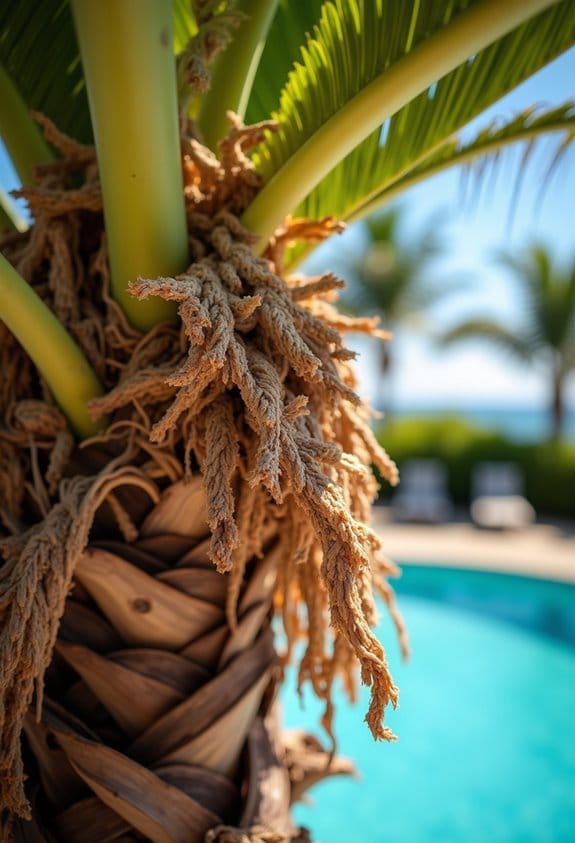
Effective composting of palm debris, especially palm fronds, plays a significant role in environmental management by capturing carbon dioxide and returning it to the soil in a stabilized form. Palm fronds contain high lignin levels, essential for developing stable humus that improves organic matter in compost. This enriched compost acts as valuable soil amendments, enhancing soil fertility, structure, and water retention. Incorporating palm fronds in composting reduces landfill waste, promoting sustainability through efficient resource recycling. Properly processed palm debris produces nutrient-rich compost, supporting healthy plant growth and mitigating climate change by sequestering carbon over the long term. Consequently, composting palm fronds not only addresses waste challenges but also offers a practical, eco-friendly solution for improving soil health and advancing sustainable landscaping practices. Many artificial palm trees use UV-resistant materials to maintain vibrant appearance outdoors, highlighting the importance of protecting natural foliage from environmental damage.
Preparing Palm Fronds for Composting
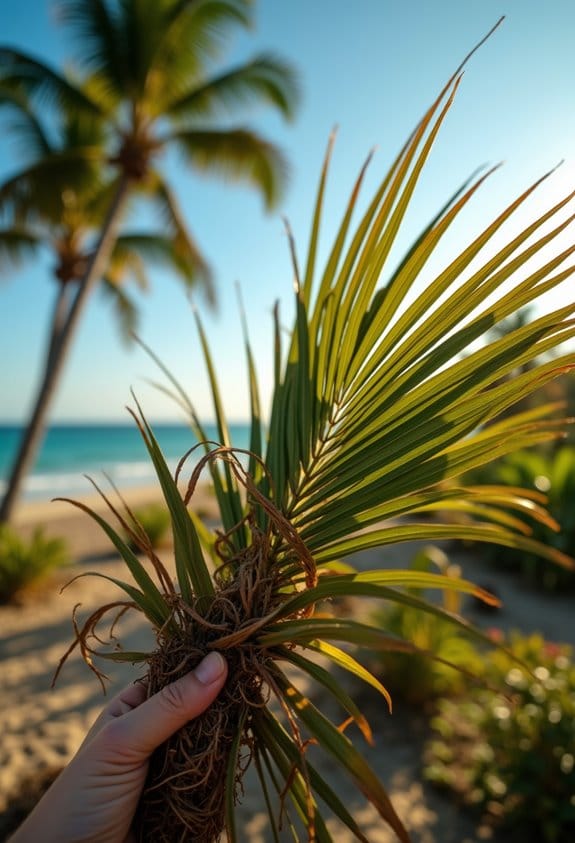
Chopping palm fronds into smaller, manageable pieces is an essential first step in preparing them for composting, as it greatly increases the surface area available for microbial activity. Using a palm frond mulcher or heavy-duty mower effectively reduces the fibrous material into fragments typically 2 to 6 inches long. Allowing freshly cut palm fronds, or green waste, to dry for several days before shredding improves ease of handling and speeds decomposition when mixed with nitrogen-rich materials like grass clippings. This preparation promotes balanced microbial breakdown in the compost pile. It is important to keep palm fronds separate from yard or food waste, as contaminants can inhibit decomposition processes. Properly prepared palm fronds create a more homogenous compost, ensuring efficient cycling of nutrients, especially nitrogen, critical to sustaining microbial populations. Utilizing UV-resistant materials in outdoor environments ensures the palm fronds retain their properties better if used decoratively before composting.
Managing Carbon to Nitrogen Ratios in Palm Compost
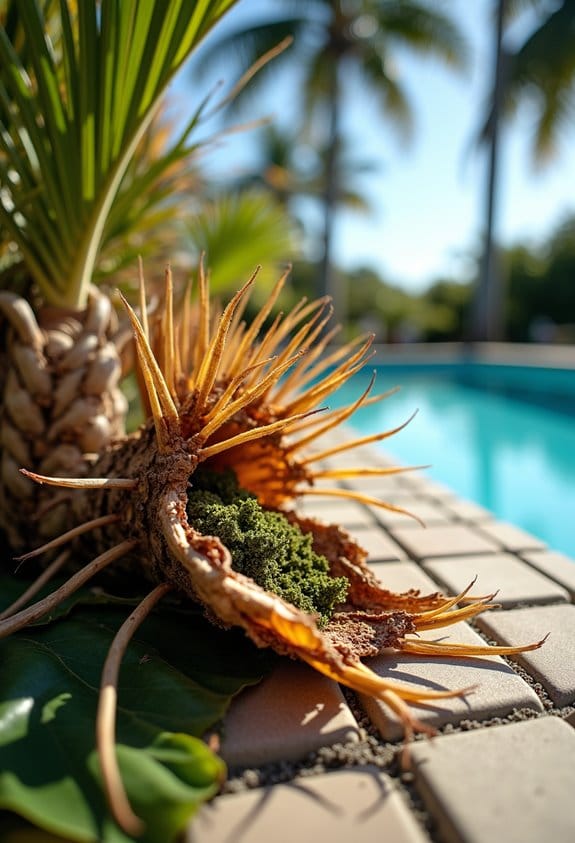
Balancing the carbon to nitrogen (C:N) ratio is a fundamental aspect of managing palm frond compost, as palm material is primarily carbon-rich with a ratio near 100:1. Effective composting requires adjusting this ratio to about 25 to 30 parts carbon per one part nitrogen, making it essential to incorporate nitrogen-rich materials like grass clippings or kitchen scraps. Shredding palm fronds increases their surface area, speeding microbial colonization and aiding decomposition. Employing a “one bucket greens, two buckets browns” approach helps maintain proper C:N balance in the compost pile. Regularly monitoring and adjusting inputs prevents imbalances, ensuring microbial activity remains ideal for nutrient cycling. This careful management of carbon to nitrogen ratio is key to transforming tough, lignin-heavy palm fronds into rich, usable compost. Using palm tree décor materials made from eco-friendly sources can complement sustainable garden practices when incorporating palm waste composting.
No-Dig and Hügelkultur Methods for Palm Frond Composting
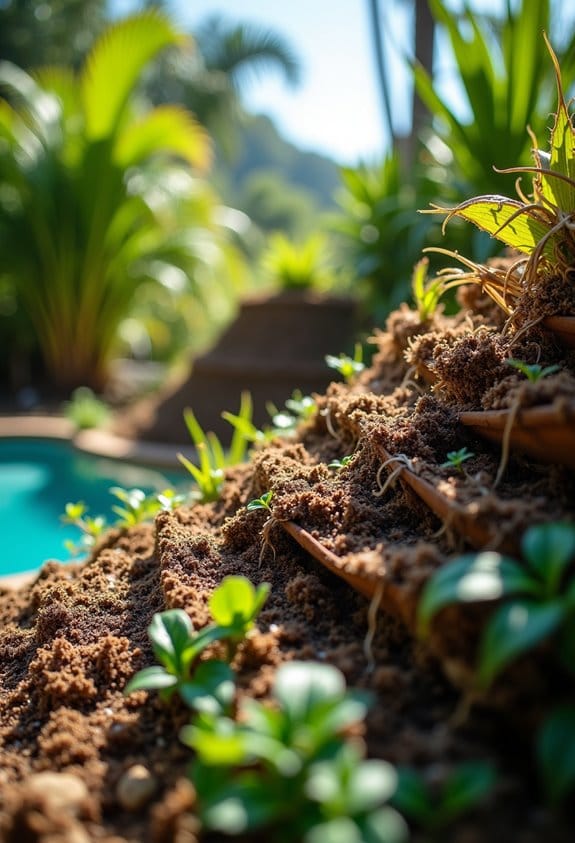
Several practical approaches exist for composting palm fronds without disturbing soil layers, particularly the no-dig and Hügelkultur methods. No-dig gardening involves layering shredded palm fronds with nitrogen-rich materials like green leaves or grass clippings, allowing gradual decomposition over 12 to 18 months. In Hügelkultur, palm fronds serve as a carbon-rich base in mounds, alternated with nitrogen-rich layers to stimulate microbial activity. Shredding palm fronds before layering increases surface area, speeding decomposition. Both methods optimize moisture retention and nutrient cycling, vital for soil health, especially in temperate zones between 15–25 °C. Regularly monitoring moisture—maintaining 40-60% water content—is essential to sustain microbial populations and efficient composting. These techniques offer sustainable, low-impact options for recycling palm fronds into valuable organic matter, reinforcing soil structure without mechanical disturbance. Additionally, incorporating realistic silk leaves from artificial palms can improve understanding of natural palm frond structure for more effective shredding and layering.
Mulching Uses for Palm Leaves and Fronds
A substantial layer of fallen palm leaves and fronds, typically 3 to 5 centimeters thick, functions effectively as mulch to maintain soil moisture and reduce erosion in garden beds. Shredded palm material, applied as mulch for garden use, decomposes slowly, providing long-lasting ground cover that improves soil structure. To enhance decomposition, compost palm fronds with high in nitrogen materials such as green clippings or kitchen scraps. Palm fronds make an excellent mulch component because their fibrous texture retains moisture without compacting soil excessively. However, excessive mulch depth may cause moisture buildup near plant trunks, risking rot. Moderation guarantees healthy soil aeration alongside moisture retention. Incorporating shredded palm fronds into mulching practices enriches the garden ecosystem gradually while sustaining ideal moisture levels for surrounding plants, supporting robust growth throughout growing zones 7 to 11. For those seeking year-round greenery without the upkeep, UV-resistant faux palm trees provide an attractive alternative to natural palms that require mulching and composting.
Recommended Products

EFCUT C30 Wood Chipper Shredder has a 15.6 inch cutting rotor with 2 blades + 6 hammers turning out smaller shreds with high feeding speed, grilling device on discharge outlet turning shreds and leaves on branches into mulches

Heavy Duty - Equipped with 2× chipper blades (20M0409) and 6× J type hammer slices, our wood chipper`s rotor disc features strong configurations. With a large 2.0 bushels collection bag capacity, it is perfect for heavy-duty use. Suitable for forestry, gardens, landscaping.

EFFFICIENT PERFORMANCE; This Mini Wood Chipper Shredder Mulcher design has a Reduction Ratio of 15:1, capable of high volume Chipping/Shredding/Mulching via the Large Extended Feeing Chute for upto 3" MAX branches, limbs and debris
Safe Disposal and Handling of Toxic Palm Species
When managing palm fronds in the garden, recognizing toxic palm species such as the Sago Palm within the Family Arecaceae is crucial for safe disposal and handling. Toxic seeds from these palms pose significant health risks to humans and pets if ingested. Proper landscaping practices require identifying toxic varieties beforehand to avoid unintended exposure. For safe disposal, palm waste—including fronds and seeds—should be contained securely in durable bags to prevent environmental contamination. Local regulations often mandate separate disposal methods for toxic palm waste, minimizing risks to wildlife and other compost materials. Community awareness campaigns support these efforts by educating residents on identifying toxic palms and managing waste responsibly. Adhering to these guidelines promotes safety while maintaining environmentally sound landscaping practices. Additionally, using durable storage solutions ensures that palm waste is stored safely and protected from environmental damage prior to disposal.
Frequently Asked Questions
Why Are Palm Fronds Not Compostable?
Palm frond characteristics, including high lignin content, cause composting limitations by slowing organic matter breakdown. Their fibrous nature impacts compost quality, raising environmental impact concerns. Alternative disposal methods are necessary due to prolonged decomposition and contamination risks.
Do Palm Leaves Make Good Compost?
Palm leaves offer palm frond benefits through slow nutrient release but require specialized composting techniques to accelerate the decomposition process. Once processed, they enhance mulch applications by improving soil structure and nutrient content, promoting sustainable gardening practices.
What to Do With Old Palm Fronds?
Approximately 60% of palm fronds consist of fibrous material slowing palm frond decomposition. Effective palm fronds recycling includes using shredded palm mulch benefits, exploring palm leaf crafts, and optimizing palm frond uses to enhance soil and sustainability.
What Leaves Should Not Be Composted?
Leaves from toxic plants, beech, oak, holly, and sweet chestnut should not be composted, as they may harbor pathogens, create acidic foliage, attract pests, and inhibit decomposition. Wood chips are preferable for healthy compost balance.