As an Amazon Associate, we earn from qualifying purchases. Some links on this site are affiliate links at no extra cost to you. Our recommendations are based on thorough research and editorial judgment.

Supporting Pollinators With Palm-Based Landscape Design

Supporting pollinators with palm-based landscape design requires selecting native palms like Sabal palmetto suited to USDA zones 8 to 11, providing nectar-rich flowers across seasons. Integrate three to five sequentially blooming flowering plants and shrubs to extend nectar availability. Incorporate shallow water features about 15 cm deep with landing spaces to offer hydration safely during 20-35°C temperatures. Minimize pesticide use by employing Integrated Pest Management and hand weeding to protect beneficial insects. The following explores effective strategies for resilient, pollinator-friendly palm landscapes.
Key Takeaways
- Incorporate native palms like Sabal palmetto that provide nectar-rich flowers to attract and support diverse pollinators.
- Integrate three to five native flowering plants and shrubs with staggered bloom times for continuous nectar and pollen supply.
- Design shallow water features with gentle edges, native aquatic plants, and landing sites to provide safe hydration for pollinators.
- Minimize pesticide use through integrated pest management and mechanical weed control to protect beneficial insects and ecosystem health.
- Enhance soil health with organic compost and select resilient palm species suited to USDA zones 8-11 for long-term pollinator habitat stability.
Importance of Pollinators in Palm-Based Landscapes
Pollinators, including bees and butterflies, serve as essential agents for the reproduction of many flowering plants within palm-based landscapes, directly supporting biodiversity. Approximately 75% of global food crops rely on animal pollination, highlighting pollinators‘ crucial role in these ecosystems. Diverse native flowering plants integrated among palms provide continual nectar and pollen sources across seasons, sustaining pollinator lifecycles. Varied palm species create specialized microhabitats that nurture a wider range of pollinator species, enhancing ecological resilience. Managing palm landscapes with minimal pesticide use safeguards these important pollinators, ensuring ongoing reproduction and ecosystem health. Such practices promote stronger, more productive palm-based environments that balance aesthetic appeal with functional biological support, benefitting both plants and pollinators alike. Incorporating sustainable lighting such as LED palm tree outdoor lights can enhance nighttime environments without harming pollinator activity.
Selecting Native Palm Species for Pollinator Support
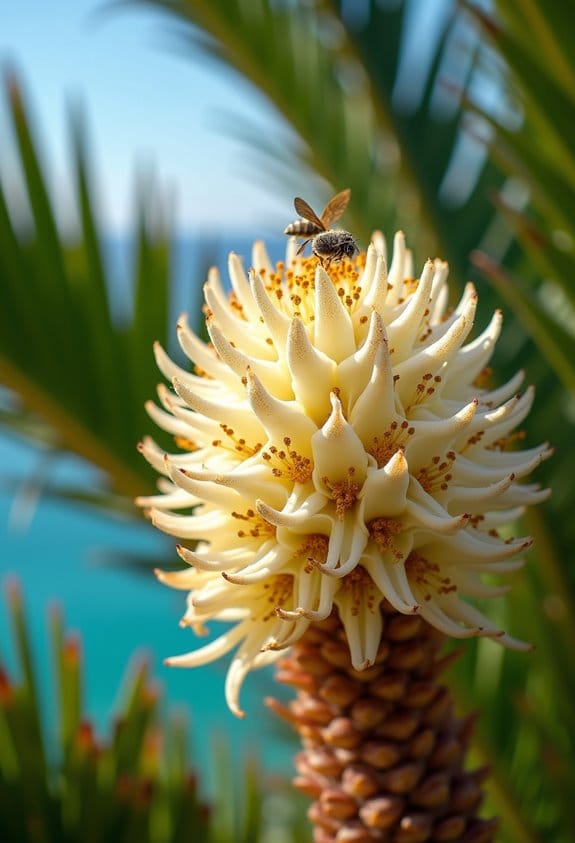
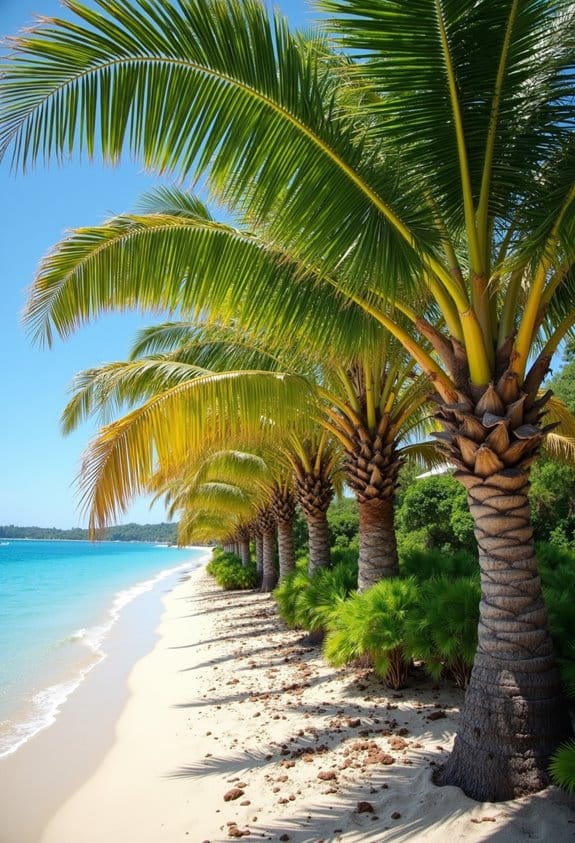
Selecting native palm species plays a critical role in fostering habitats that support diverse pollinator populations, such as bees and butterflies. Native species adapted to local climates, like the Sabal palmetto, produce nectar-rich flowers that attract pollinators and offer fronds for shelter. Choosing palms that thrive within USDA Hardiness Zones 8 to 11 guarantees resilience against pests and diseases, promoting ecosystem stability. These palms create seasonal flowering windows, supplying continuous nectar and pollen from early spring through fall. Planting native palms enhances biodiversity by supporting beneficial insects and enabling natural pest control, aligning with integrated pest management principles. Incorporating palms that grow 10 to 20 feet tall with spreads of 6 to 12 feet efficiently fills your landscape while providing critical resources for pollinators year-round in a practical, ecological manner. Additionally, selecting palms with weather-resistant features ensures their longevity and sustained habitat benefits in coastal garden environments.
Integrating Flowering Plants and Shrubs With Palm Trees
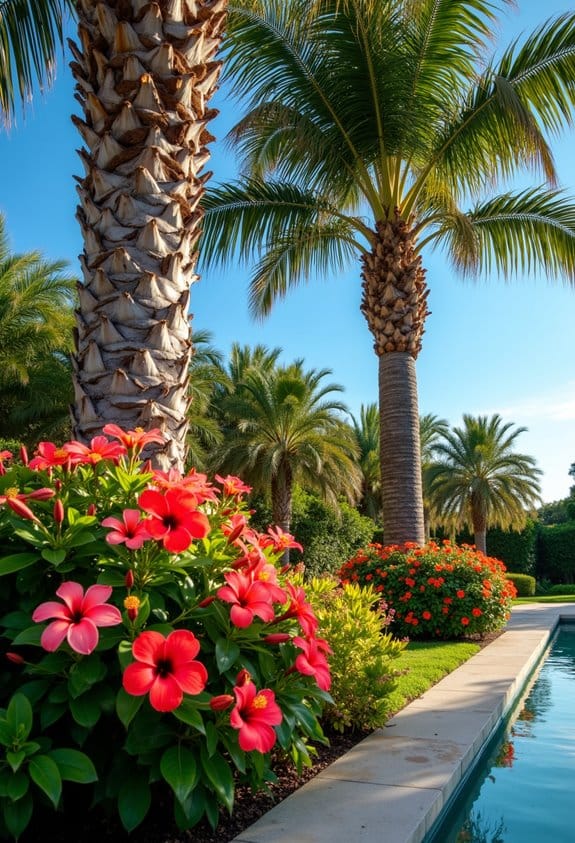
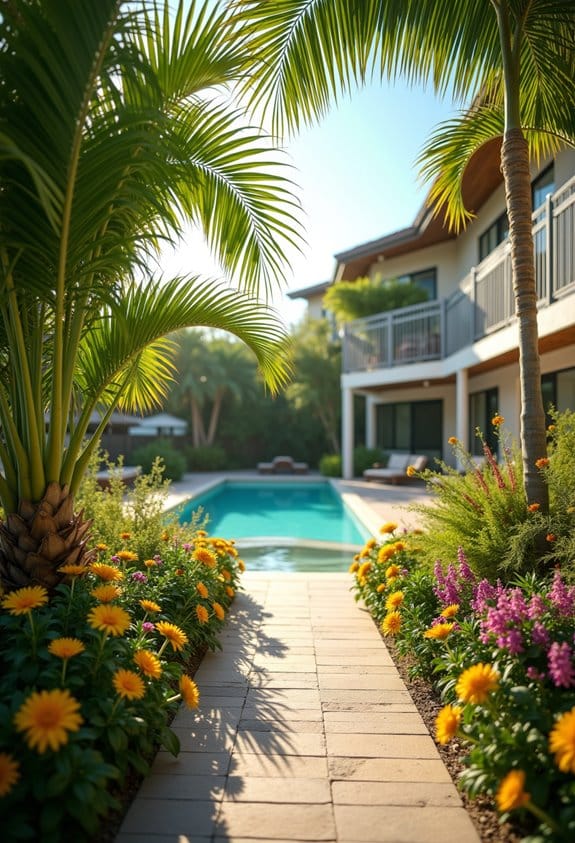
Integrating three to five flowering plants and shrubs around palm trees enhances habitat complexity, offering shelter and varied food sources for pollinating insects. Selecting native plants that bloom sequentially provides nectar and pollen throughout the growing season, supporting pollinator diversity effectively. Flowering shrubs like hibiscus and bougainvillea complement palm height, attracting bees, butterflies, and hummingbirds with vibrant colors and abundant blooms. Choosing low-maintenance native plants adapted to similar soil and moisture conditions—such as sandy loam with pH 6.0–7.5 and annual temperatures between 65°F and 85°F—minimizes irrigation and chemical inputs. Incorporating a mix of perennial and annual native plants creates layered flower beds roughly 3 to 5 feet wide, promoting biodiverse environments that sustain pollinators and encourage natural pest control within zones 9 to 11. Additionally, selecting UV-resistant artificial palms can provide year-round greenery without maintenance, complementing the flowering plants and supporting dynamic landscape design.
Recommended Products


Highly fragrant summer flowers attract bees and butterflies.

Viburnum suspensum is a handsome evergreen with a spreading habit and coarse texture. It has an attractive compact form growing to 6-12 ft (1.8-3.7 m) in height with about an equal spread if left untrimmed. The coarse leaves are dark green and densely cover the shrub.
Designing Water Features to Sustain Pollinators
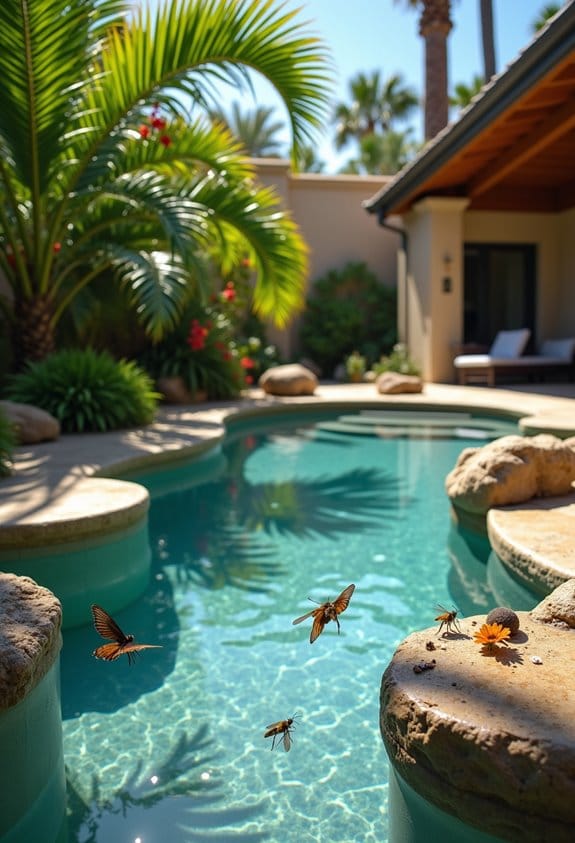
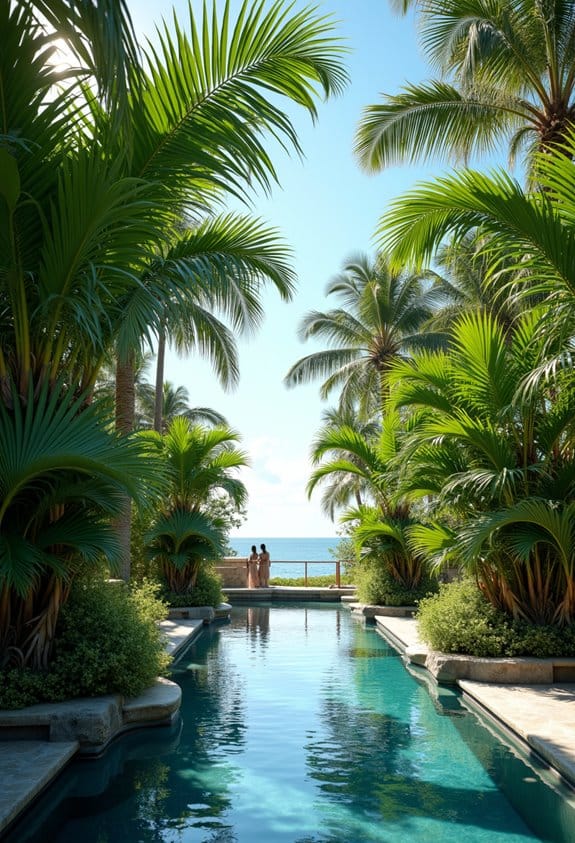
Although water sources may be overlooked in landscape design, carefully planned water features greatly support pollinators by providing essential hydration during hot weather and drought. Effective water features include small ponds or birdbaths with shallow edges of 1 to 2 inches, allowing safe access for bees, butterflies, and other insects. Incorporating native aquatic plants around these features, such as pickerelweed or water lilies, enhances biodiversity and offers shelter. Placing rocks or pebbles within water features creates secure landing sites that reduce drowning risks. Maintaining water features regularly, especially in zones with temperatures above 85°F, prevents mosquito breeding and guarantees clean water sources. Such thoughtful design promotes healthier pollinator populations, contributing substantially to the resilience of palm-based landscapes in warm, drought-prone environments. Additionally, choosing landscape elements made from UV-resistant materials helps ensure longevity and consistent habitat support for pollinators.
Recommended Products

Hand crafted in the USA! 100% cast stone (concrete) construction.

Three Piece Birdbath - Combined weight 61 lbs
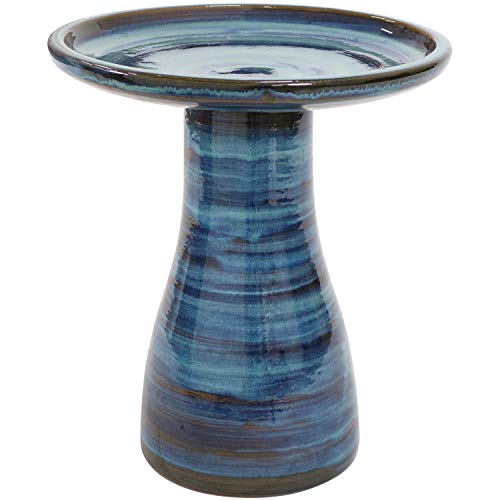
LARGE WATER CAPACITY: This pedestal bird bath measures 18" in diameter x 21" H. The bowl measures 18" in diameter (16" inner) x 4" H with a 1.5" bowl depth. The base measures 10.5" in diameter x 18.5" H. The inner base diameter measures 9" at the bottom and 3.5" at the top. The hollow interior has a height of 17.75". The bird bath weighs 38.2 lbs and holds 1 gallon of water.
Minimizing Pesticide Use in Palm Landscape Management
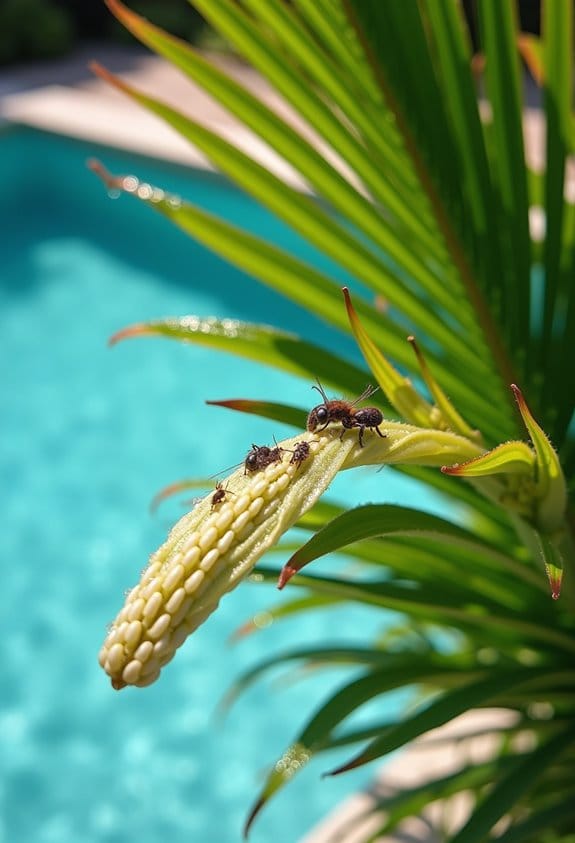
When managing palm landscapes, minimizing pesticide use is essential to protect pollinators that frequent the area, especially near tree trunks and understory plants within a 3 to 5-foot radius. Integrated Pest Management (IPM) encourages monitoring pest populations rather than default chemical application. Spot treatments using soft pesticides, such as horticultural soaps and oils, reduce risks to beneficial insects supporting pollinators. Avoiding pesticide application near palm bases safeguards nesting and foraging habitats critical for pollinator species. The use of herbicides should be limited, as they threaten native plants providing essential food and shelter. Mechanical weed control methods, including hand-pulling and careful mowing, effectively manage unwanted vegetation while preserving pollinator-friendly conditions. These strategies collectively advance minimizing pesticide use within palm landscape management to foster healthy, resilient pollinator populations. Additionally, incorporating real sago palm trees into your design can support local wildlife by providing shelter to small animals and insects, enhancing the ecosystem while maintaining natural pest control.
Recommended Products
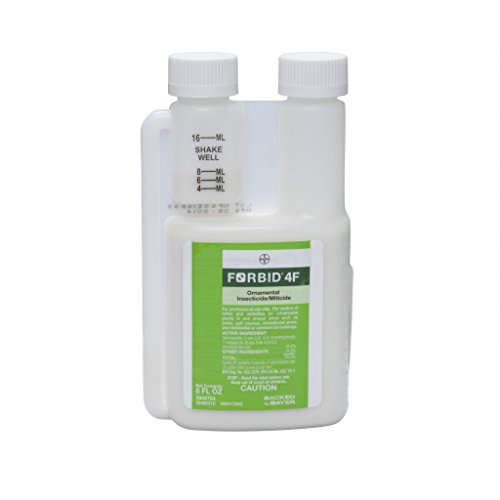
Description: Forbid 4F offers outstanding knockdown and residual control of mites and all stages of whiteflies for four to eight weeks.

Avid , the number one insecticide for mites and leaf miners, has expanded its labeling to include suppression of aphids, trips, and whiteflies

Concentrated vinegar used in place of environmentally harmful chemicals.
Maintenance Practices for Healthy Pollinator Habitats
Successful maintenance of pollinator habitats depends on consistent evaluation of soil quality, moisture levels between 30-60%, and sunlight exposure ranging from 6 to 8 hours daily. Maintenance practices for healthy pollinator habitats include regular removal of invasive plants using eco-friendly methods to preserve native species essential for supporting pollinators. Incorporating cover crops enhances soil structure and nutrient levels, reducing erosion and providing additional forage. Newly established habitats require consistent weeding and moisture monitoring during the first two to three years, with maintenance gradually reduced as vegetation stabilizes. Composting and nutrient addition prior to planting create a fertile foundation that supports robust, low-maintenance native palm landscapes. Avoiding pesticides and implementing Integrated Pest Management protects pollinator health while maintaining ecosystem balance within garden landscapes designed specifically to nurture pollinator populations. Using UV-resistant materials in landscaping helps ensure that plant life remains vibrant and durable, providing consistent habitat quality for pollinators.
Recommended Products

Highly Concentrated Formulation: Our Vinegar 50% solution boasts an industrial-strength concentration, providing a potent cleaning action for rigorous applications. Designed for the toughest tasks where less concentrated solutions may not suffice.

BROADFORK – The perfect ergonomic home gardening tool for turning, tilling, lifting, and aerating soil without heavy lifting; prepping your spring garden has never been easier

SOFTENS & FLATTENS RAISED SCARS: Formulated with 97% liquid silicone to create an optimal healing environment that helps regulate collagen production. This silicone scar gel effectively softens & flattens hypertrophic scars, keloids, and surgical scars, reducing their height and improving overall texture.
Resources for Enhancing Pollinator-Friendly Palm Landscapes
A successful pollinator-friendly palm landscape integrates diverse native flowering plants that bloom sequentially to guarantee continuous nectar and pollen supply from early spring through late fall. Essential resources include microhabitats such as insect hotels measuring 30×30 cm, positioned near palm bases to encourage nesting. Water features like shallow bird baths, approximately 15 cm deep, provide hydration during temperatures between 20-35°C. Integrating organic compost applications of 5 kg per 10 m² supports soil health, enhancing nutrient availability for plants and pollinators alike. Implementing integrated pest management (IPM) with minimal pesticide use protects beneficial insect populations while maintaining ecosystem balance. Designing palm gardens with native plant clusters within USDA zones 8-11 encourages pollinator diversity, making the landscape resilient, functional, and attractive to a range of pollinating species throughout growing seasons. Additionally, choosing palm species and materials that withstand temperature extremes from -20F to 120F ensures longevity and consistent habitat quality in varying climates, a key factor for durability and stability.
Frequently Asked Questions
How Do Different Palm Species Affect Local Butterfly Populations?
Different palm species influence local butterfly populations by serving as butterfly hostplants, providing essential nectar and breeding sites. Variations in palm morphology and flowering patterns directly affect butterfly diversity, abundance, and reproductive success within their habitats.
What Are the Best Times to Plant Palms for Pollinator Benefit?
Just as a clock strikes at the perfect hour, the best seasonal timing to plant palms is early spring. This guarantees roots establish before peak pollinator activity, maximizing habitat support during vital butterfly and bee foraging periods.
Can Palms Be Used to Support Nocturnal Pollinators?
Palms can support nocturnal pollinators by providing resources during nocturnal foraging. Certain palm species release scents or nectar at night, attracting bats and moths, thereby contributing to the ecosystem by facilitating nocturnal pollination activities effectively.
How Do Soil Conditions Impact Palm-Based Pollinator Habitats?
Soil conditions directly affect palm health and flower production, influencing pollinator attraction. Adequate soil nutrients enhance palm vigor, supporting robust blooms that provide necessary resources for pollinators, thereby sustaining a thriving habitat within palm-based landscapes.
Are Palm Seed Byproducts Useful for Pollinator Nesting Materials?
Palm seed byproducts serve as gentle whispers of nature’s quilt, providing valuable nesting materials. Their fibrous texture offers an inviting embrace for pollinators seeking cozy shelters, subtly enhancing habitat quality with sustainable, natural resources.